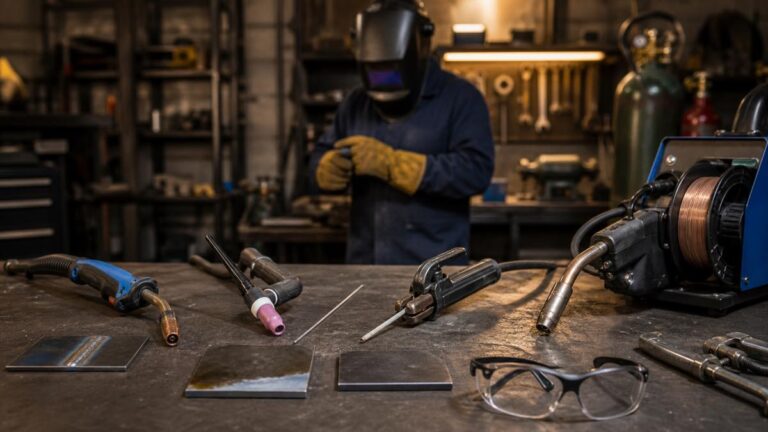
Protective Equipment Essentials for Beginner Welders
Protective equipment essentials for beginner welders start with one simple idea: welding PPE is not decoration. It is the gear that helps protect your eyes, face, skin, lungs, hearing, feet, and clothing while you work around arc light, sparks, hot metal, fumes, electricity, and fire hazards.
New welders often think first about buying a machine, wire, rods, or a project table. That matters, but PPE should come before practice beads. A small practice weld can still throw sparks, burn skin, damage eyes, ignite nearby material, and expose you to fumes. This guide gives beginners a practical welding PPE checklist and explains what each item does.
Mark Dawson beginner note: do not treat PPE as something you upgrade later. Learn with the gear you would trust for real work: a proper welding helmet, safety glasses, gloves, flame-resistant clothing, safe footwear, ventilation, and a fire-safe workspace.
Quick Answer: What PPE Does a Beginner Welder Need?
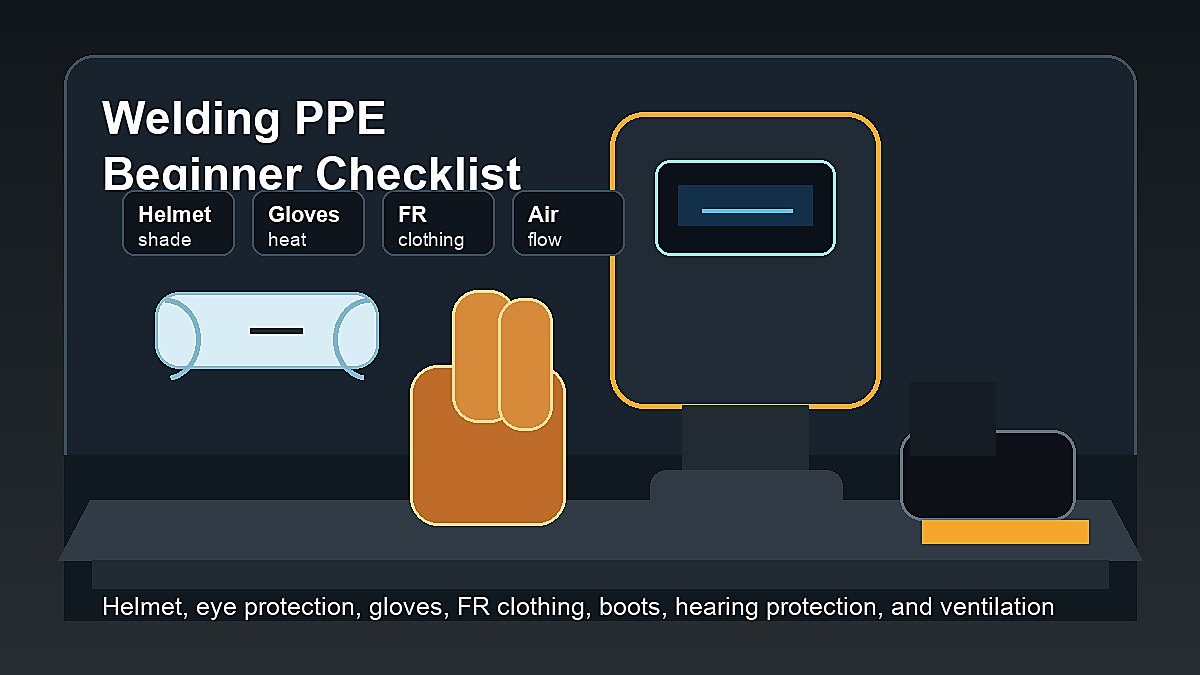
A beginner welder usually needs a welding helmet with the correct shade, safety glasses, welding gloves, flame-resistant clothing, leather boots, hearing protection when grinding or working in loud areas, ventilation or fume control, and basic fire safety equipment nearby. The exact setup depends on the process, material, workspace, and job risk.
| PPE Item | What It Protects | Beginner Buying Note |
|---|---|---|
| Welding helmet | Eyes, face, arc flash exposure | Choose the right lens shade or a quality auto-darkening helmet. |
| Safety glasses | Eyes during grinding, chipping, setup | Wear them under the helmet and during cleanup. |
| Welding gloves | Hands from heat, sparks, cuts | MIG/stick gloves are heavier; TIG gloves are thinner for control. |
| FR clothing | Skin from sparks, spatter, UV exposure | Avoid synthetic clothing that can melt. |
| Boots | Feet from sparks, drops, hot metal | Leather boots are better than sneakers. |
| Ventilation | Fume exposure | Use fresh air movement or local exhaust when needed. |
1. Welding Helmet
Your welding helmet protects your face and eyes from arc radiation, sparks, spatter, and bright light. The lens shade must match the welding process and amperage range. A lens that is too light can be unsafe. A lens that is too dark can make it hard to see the joint, which can also create poor work habits.
Many beginners like auto-darkening helmets because they make it easier to position the torch before starting the arc. A passive helmet can still work well, but it takes more practice to flip down at the right time. Whichever style you use, inspect the lens, cover plates, shell, headgear, and battery or sensor function before welding.
2. Safety Glasses Under the Helmet
Safety glasses are easy to skip because the helmet already feels protective. Do not skip them. The helmet is mainly for welding arc exposure and face protection. Safety glasses help protect your eyes when grinding, brushing, chipping slag, cutting wire, fitting parts, and cleaning the work area.
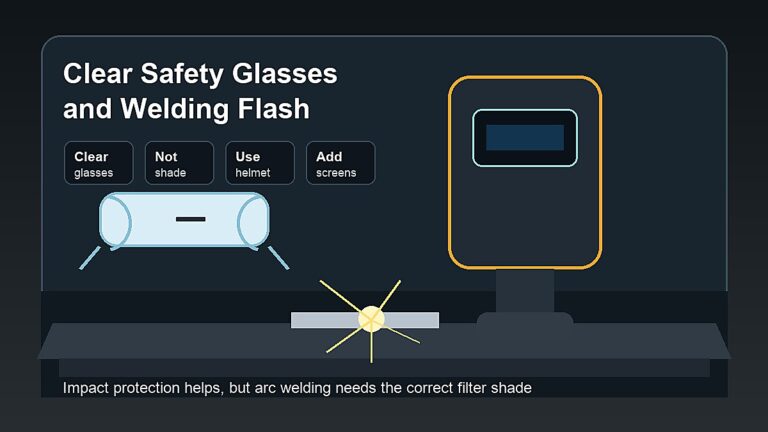
Clear safety glasses do not replace a welding helmet. They are for impact protection during prep and cleanup. New welders learning what welding is should remember that arc light is different from ordinary shop glare. Use a proper welding lens for welding.
3. Welding Gloves
Welding gloves protect your hands from heat, sparks, spatter, sharp metal edges, and brief contact with hot workpieces. The right glove depends on the process. MIG and stick welding usually need heavier gloves because spatter and heat are higher. TIG welding often uses thinner gloves because finger control matters more.
Beginners should not grab hot metal to test whether it cooled. Use pliers, mark hot parts, and give the work time to cool. Gloves reduce risk, but they are not permission to handle glowing metal carelessly.
4. Flame-Resistant Clothing
Welding exposes skin to sparks, spatter, hot slag, and ultraviolet radiation. Flame-resistant cotton, welding jackets, leather sleeves, and leather aprons can help protect exposed skin. Avoid polyester, nylon, and other synthetic clothing that can melt against your skin when hit by sparks.
Button your shirt, cover your arms, and avoid open pockets that can catch sparks. Cuffed pants can trap hot slag, so straight-leg pants over boots are usually safer. Home shop welders should review Home Welding Setup for Beginners before practicing.
5. Welding Boots and Foot Protection
Sneakers are a poor choice for welding. Sparks and hot metal can burn through fabric. A dropped plate or grinder can injure your foot. Leather work boots give better coverage, heat resistance, and support. For more demanding work, metatarsal guards or safety-toe boots may be needed.
Keep laces covered when possible, and avoid shoes with mesh, soft fabric, or exposed openings. Hot sparks always seem to find the weakest spot in beginner clothing.
6. Hearing Protection
Welding itself may not always be the loudest part of the job. Grinding, cutting, chipping, hammering, compressors, and shop equipment can be loud enough to require hearing protection. Earplugs or earmuffs are simple, low-cost gear that many beginners forget until the work gets noisy.
Choose hearing protection that fits your helmet and work area. If earmuffs interfere with helmet fit, use properly inserted earplugs. Do not let comfort problems become a reason to work unprotected.
7. Fit, Comfort, and Visibility
PPE only works when it fits and stays in place. A helmet that slips down, gloves that make the gun hard to hold, sleeves that leave your wrist exposed, or boots that make footing awkward can all create bad habits. Beginners should test PPE before striking an arc, not halfway through a bead.
Put on the full setup and do a dry run. Can you see the joint? Can you reach the work without exposing your wrist or neck? Can you move the torch smoothly? Can you bend, clamp, and pick up tools without the helmet blocking your view? Small fit problems become bigger once the arc starts.
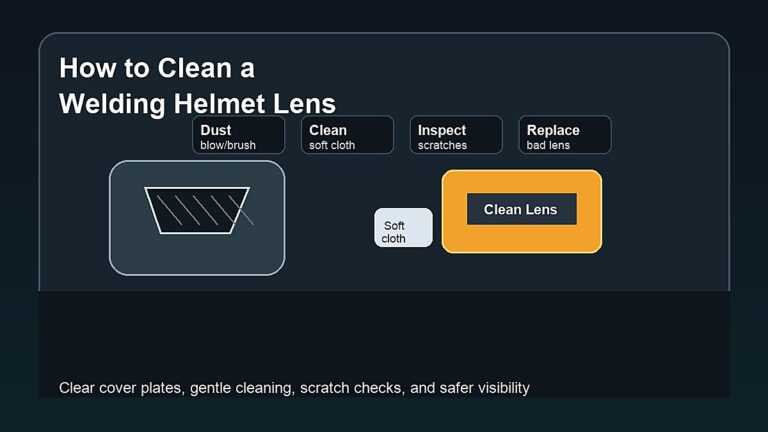
Visibility matters as much as comfort. A dirty cover lens, fogged safety glasses, poor shop lighting, or an awkward helmet angle can make a beginner chase the arc instead of watching the joint. Clean lenses and good lighting help you weld more safely and inspect your work more honestly.
8. Respiratory Protection, Ventilation, and Fumes
Welding fumes depend on the base metal, filler metal, coating, process, and ventilation. Flux core, stick welding, galvanized steel, painted metal, stainless steel, and unknown coatings can create serious fume concerns. Beginners should avoid welding mystery scrap, coated materials, or containers unless they have proper training and hazard information.
Good ventilation means contaminated air is controlled, not just blown across your helmet. A fan that pushes fumes through your breathing zone can make exposure worse. For technical safety guidance, review OSHA welding, cutting, and brazing guidance, AWS safety and health fact sheets, and NIOSH welding safety resources.
9. Fire Safety Gear Around the Work Area
Welding PPE is personal protection, but the workspace needs protection too. Keep flammable materials away from the welding area. Sweep the floor, move cardboard, remove oily rags, protect nearby walls, and check both sides of the workpiece when sparks can pass through gaps.
Keep the correct fire extinguisher nearby and know how to use it before starting. For beginner practice, use a fire-safe work surface and avoid welding near vehicles, fuel, sawdust, paint, solvents, or storage shelves. Many beginner welding mistakes start before the arc is struck.
Process-Specific PPE Notes
MIG welding, stick welding, TIG welding, and flux core welding share many PPE needs, but the comfort balance changes. MIG and flux core can throw more spatter, so heavier gloves, sleeves, and jacket coverage are common. Stick welding also creates slag and spatter, so face, hand, and clothing coverage matter during both welding and chipping.
TIG welding often looks cleaner, but it still creates arc radiation, hot metal, and fume hazards depending on the material. TIG gloves are usually thinner because filler control matters, yet the rest of the body still needs protection. Do not let a clean-looking process make you casual about UV exposure or fumes.
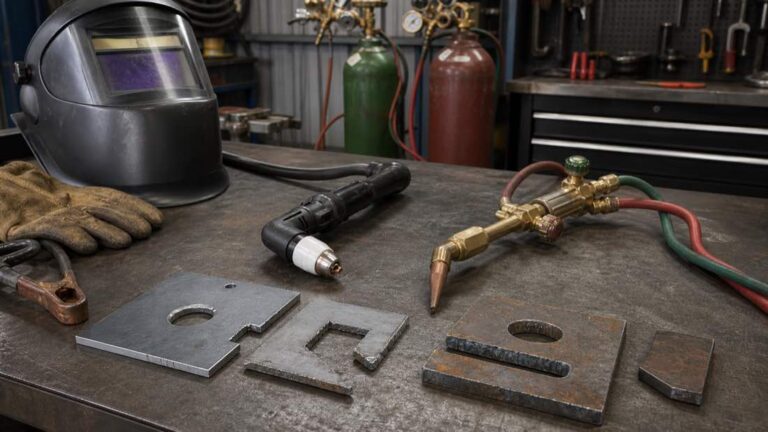
Cutting and grinding add their own risks. A face shield may be useful over safety glasses for grinding, and hearing protection is often needed. Plasma cutting, oxy-acetylene work, and hot cutting should be handled with process-specific PPE and training. The PPE list should change when the process changes.
Beginner PPE Checklist Before Welding
- Helmet lens shade is correct for the process and amperage.
- Safety glasses are on before grinding, brushing, or welding.
- Gloves match the process and are dry and undamaged.
- Arms, neck, and torso are covered with flame-resistant clothing.
- Boots are leather or suitable shop footwear, not mesh sneakers.
- Ventilation or fume control is planned before welding starts.
- Fire hazards are moved away from the work area.
- Metal is clean and clamped before striking an arc.
- Machine manual and safety instructions have been read.
What Beginners Should Not Wear While Welding
Do not weld in shorts, sandals, mesh shoes, synthetic athletic clothing, loose scarves, dangling jewelry, or thin gloves. Avoid oily clothing, torn sleeves, open pockets, and exposed skin. If clothing can melt, catch sparks, or leave skin uncovered, it does not belong near a welding arc.
Also think about what is under your PPE. A welding jacket over a synthetic shirt may still create burn risk if sparks get inside. A better beginner habit is simple: natural-fiber or flame-resistant layers, covered skin, clean clothing, and no shortcuts.
How to Maintain Welding PPE
PPE needs inspection just like a welder, regulator, torch, or grinder. Replace cracked cover lenses, damaged helmet shells, worn gloves, burned sleeves, broken headgear, and boots with holes. A small opening in the wrong place can let sparks, slag, or UV exposure reach skin or eyes.
Store PPE away from oil, water, grinding dust, and sharp scrap. Keep gloves dry. Clean the helmet lens before practice. Check auto-darkening helmet batteries or controls when the helmet requires them. A beginner who keeps PPE in good shape will have fewer distractions and a safer practice routine.
Simple First-Practice PPE Setup
For a first practice session on clean mild steel, use a properly shaded welding helmet, safety glasses, dry welding gloves, a flame-resistant jacket or cotton layers, long pants over leather boots, and a clear work area with ventilation. Keep a fire extinguisher nearby, clamp the metal securely, and let hot parts cool before handling.
Start with short beads on scrap. Stop after each bead and check both the weld and the workspace. Look for hot metal placement, smoke movement, sparks landing near clutter, and any exposed skin. Good PPE habits are easier to build during slow practice than during a rushed repair.
How Much Should Beginners Spend on Welding PPE?
You do not need to buy the most expensive gear on day one, but you should not buy gear that makes you unsafe or uncomfortable. A helmet that fits poorly, gloves that are too stiff, or sleeves that leave gaps will make practice harder. Start with reliable basic PPE, then upgrade as you learn your process and workspace.
Beginners still building a setup can use What Do Beginners Need to Start Welding? and the Welding Tools & Gear hub to plan the first shop list.
Common Beginner PPE Mistakes
- Wearing a helmet but forgetting safety glasses underneath.
- Using thin work gloves for hot MIG or stick welding practice.
- Welding in synthetic clothing that can melt.
- Grinding without eye and hearing protection.
- Using a fan that blows fumes across the breathing zone.
- Practicing near cardboard, fuel, paint, sawdust, or oily rags.
- Buying a helmet without checking shade range, fit, or lens condition.
- Handling hot metal because gloves make it feel safe for a moment.
FAQ
What protective equipment does a beginner welder need first?
Start with a proper welding helmet, safety glasses, welding gloves, flame-resistant clothing, leather boots, ventilation, and fire safety gear. Add hearing protection for grinding and loud shop work.
Can I weld with clear safety glasses?
No. Clear safety glasses do not replace a welding helmet or correct welding lens shade. They help with impact protection during prep and cleanup, but welding requires proper eye and face protection for arc exposure.
Are normal work gloves safe for welding?
Normal work gloves are usually not enough for welding heat and spatter. Use welding gloves matched to the process. Heavier gloves are common for MIG and stick. Thinner TIG gloves are used when finger control matters.
Do beginners need a respirator for welding?
It depends on the material, process, fume exposure, and ventilation. Respiratory protection should be selected based on the hazard, not guessed. Beginners should avoid coated or unknown metals and use recognized safety guidance when fumes are a concern.
What clothing should I avoid while welding?
Avoid synthetic clothing, shorts, sandals, mesh shoes, oily clothing, open pockets, loose jewelry, and exposed skin. Choose flame-resistant or suitable natural-fiber clothing that covers your arms, torso, neck, legs, and feet.
Final Advice
The best beginner welding PPE setup is the one you will actually wear every time: helmet, safety glasses, gloves, flame-resistant clothing, boots, hearing protection when needed, ventilation, and a fire-safe work area. Build the habit before you build the project. Once PPE becomes automatic, learning welding safety and basic technique becomes much easier.