
TIG welding for beginners starts with clean material, a correctly prepared tungsten, stable shielding gas, and coordinated control of the torch and filler rod. The process is formally called gas tungsten arc welding or GTAW. It can produce precise, clean welds, but the learning curve is steeper than many wire-feed processes.
This hub organizes TIG fundamentals into a practical sequence from welding basics to machine capability, torch setup, tungsten, gas, filler metal, puddle control, and safer practice. Begin on non-critical coupons, change one variable at a time, and use the machine manual and consumable data for the exact equipment.
TIG Welding Beginner Roadmap
1. Understand GTAW
Start with What Is Welding? to understand the arc, weld pool, filler metal and shielding. TIG uses a non-consumable tungsten electrode to create the arc. Filler rod may be added separately by hand. Argon or another specified shielding gas protects the tungsten and molten weld from atmospheric contamination.
2. Match the machine to the material
Confirm input power, output range, duty cycle, current type, starting method, remote amperage control and torch compatibility. Many common steel and stainless applications use DC TIG, while aluminum commonly requires an AC-capable machine and suitable setup. Do not assume every multiprocess welder supports the TIG functions needed for every metal.
3. Prepare the torch and tungsten
Choose tungsten type and diameter according to the machine, current, material and manufacturer guidance. Fit the correct collet, collet body or gas lens, cup and back cap. Prepare the tungsten using a dedicated clean grinding method appropriate for the application. Replace or regrind a contaminated tip rather than trying to weld through an unstable arc.
4. Set shielding gas correctly
Use the specified gas, regulator or flowmeter, sound hoses and leak-free connections. Gas flow that is too low can allow contamination; excessive flow can create turbulence and pull air into the shielding zone. Drafts, torch angle, cup size, joint geometry and distance from the work also affect coverage. Secure cylinders upright and handle them according to recognized safety practices.
5. Clean the base metal and filler rod
TIG is sensitive to contamination. Remove oil, moisture, paint, heavy oxide and other material using a method suitable for the alloy. Keep filler rod clean and correctly identified. Use the Welding Rods and Electrodes hub for broader filler terminology, and review the beginner aluminum welding guide before working with that alloy.
6. Practice heat, torch and filler control
Begin by forming and moving a small puddle on clean scrap without filler. Then coordinate short filler additions while keeping the tungsten out of the pool. Maintain a consistent arc length, torch angle and travel speed. Practice starts, stops and restarts before lap, T- and butt joints. Use the Welding Defects hub to identify porosity, undercut, contamination, lack of fusion and heat-related problems.
Core TIG Skills to Build
Arc-length control
Keep the tungsten close enough for a focused arc without touching the puddle. Distance changes can alter heat concentration and bead control.
Heat control
Use machine settings and remote control deliberately. Excess heat can widen the bead, increase distortion and make thin material harder to manage.
Filler timing
Add filler at the leading edge of the pool without striking the tungsten. Keep the rod protected and avoid dragging contamination into the joint.
Clean restarts
Use suitable pre-flow and post-flow, protect the cooling tungsten and weld, and clean contaminated stops before restarting.
TIG Welding Safety
TIG welding still produces ultraviolet radiation, hot metal, electric shock risk, fumes, compressed-gas hazards and fire risk even when the process looks clean. Wear a suitable helmet, safety glasses, welding gloves and flame-resistant clothing. Keep the workspace dry, secure cylinders, inspect connections, protect nearby people from the arc and provide ventilation or fume control appropriate for the material.
Do not weld unknown metals, hazardous coatings or sealed containers. Stainless steel, aluminum and surface treatments introduce material-specific concerns. Plan the area with the home welding setup guide, review common beginner mistakes, and use the Welding Tools and Gear hub for equipment planning. Critical work requires suitable training, procedures and inspection.
Latest TIG Welding Guides
-
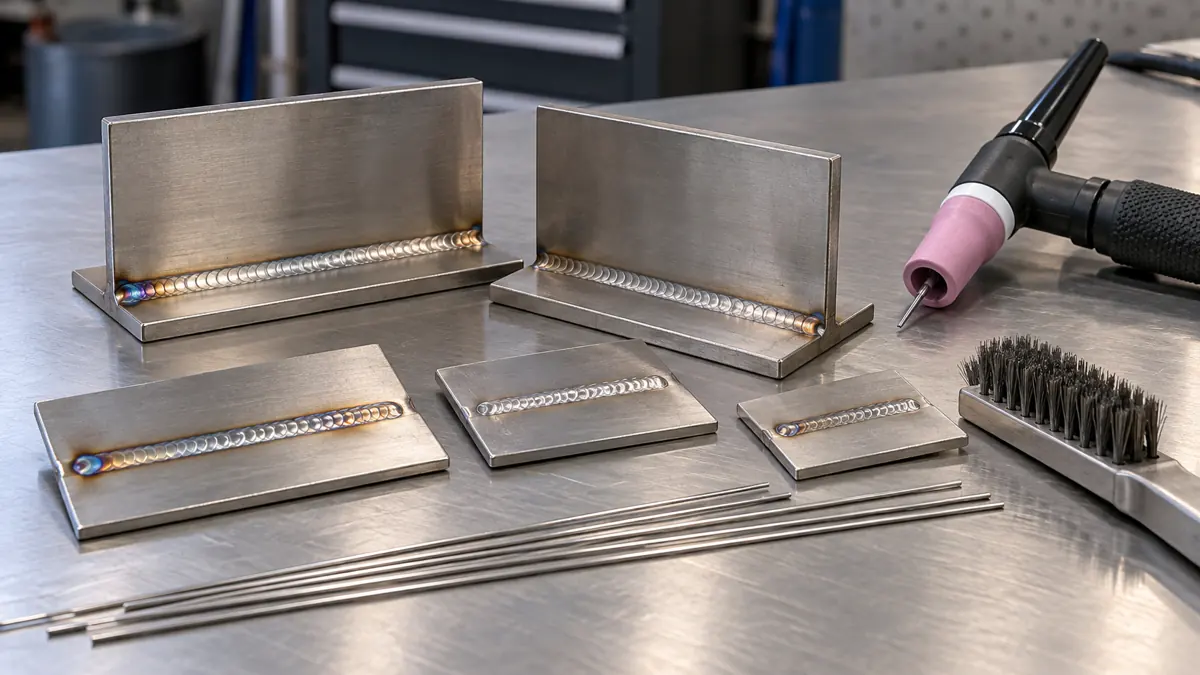
How to TIG Weld Stainless Steel for Beginners
A beginner practice sequence for stainless TIG welding, covering known material, clean preparation, filler selection, shielding, heat control and inspection limits.
-
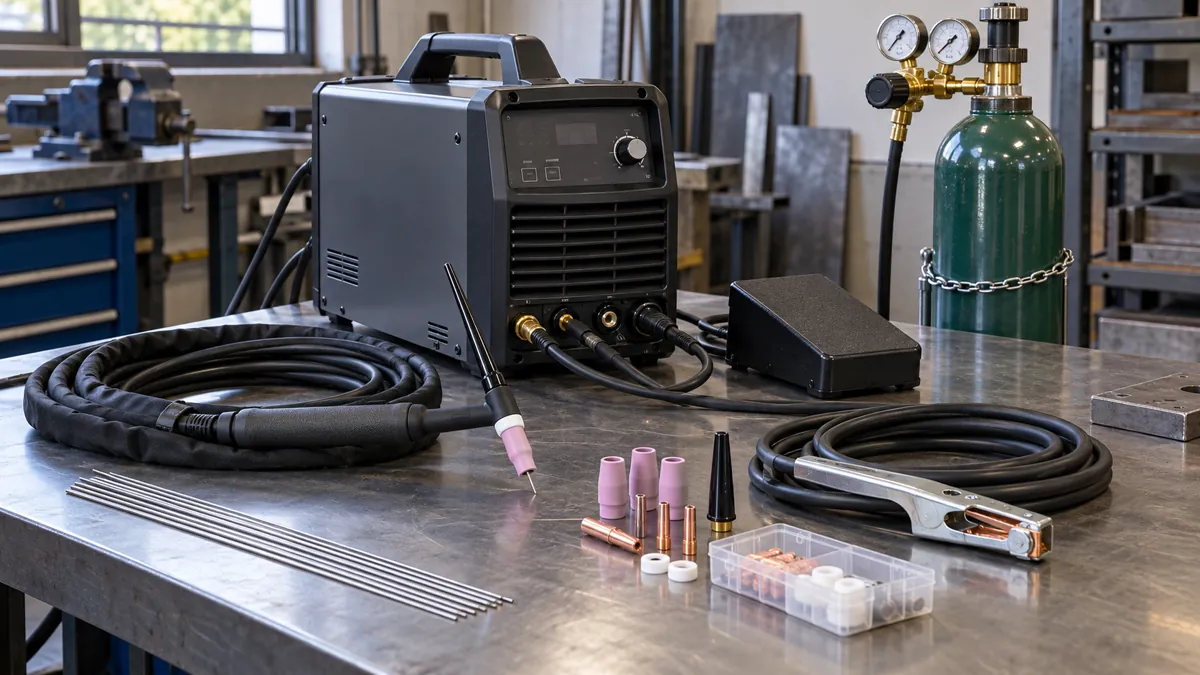
How to Choose a TIG Welder for Beginners
Choose your first TIG welder around your material, available power and learning setup. Check AC/DC capability, controls, duty cycle, accessories and support before buying.
-
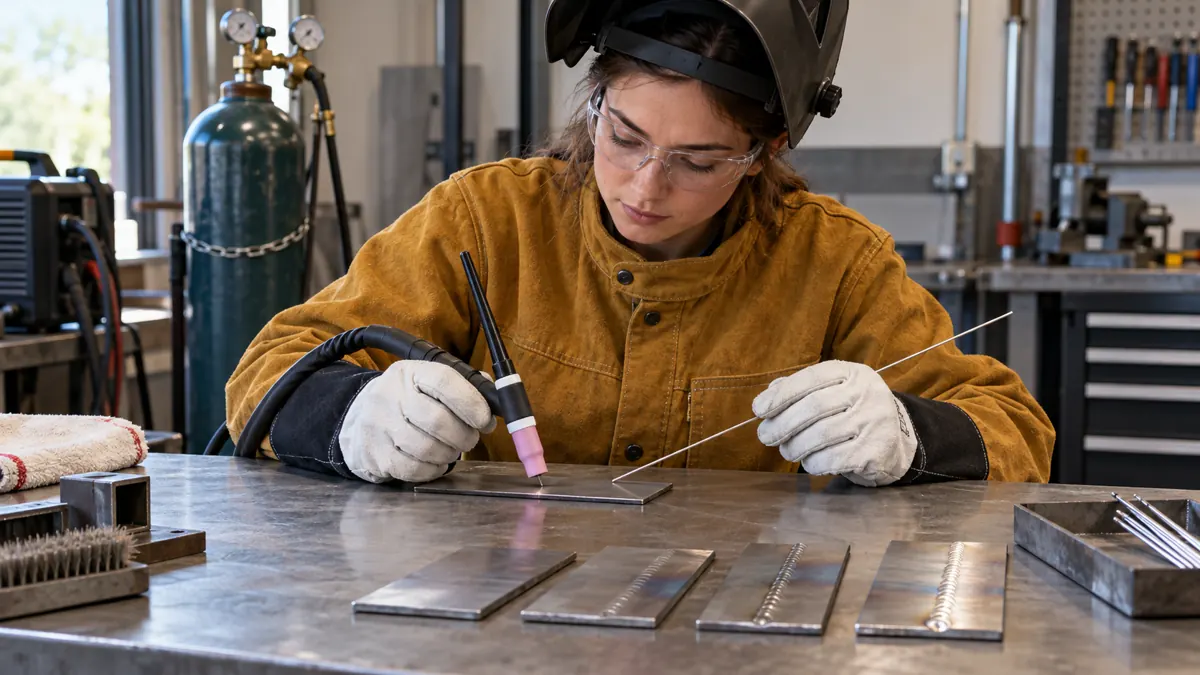
How Long Does It Take to Learn TIG Welding?
Plan your TIG welding learning around repeatable skills, useful practice and feedback. Compare beginner milestones with job-specific qualification requirements.
-
TIG Welding Tips and Techniques
TIG practice becomes more useful when torch control, filler timing and cleanliness are treated as separate skills. A contaminated tungsten or unstable hand position…
-

How to Choose the Right Tungsten Electrode Size
Beginner guide to choosing TIG tungsten electrode size by amperage, metal thickness, AC/DC current, collet fit, tip shape, overheating, and safety.
-
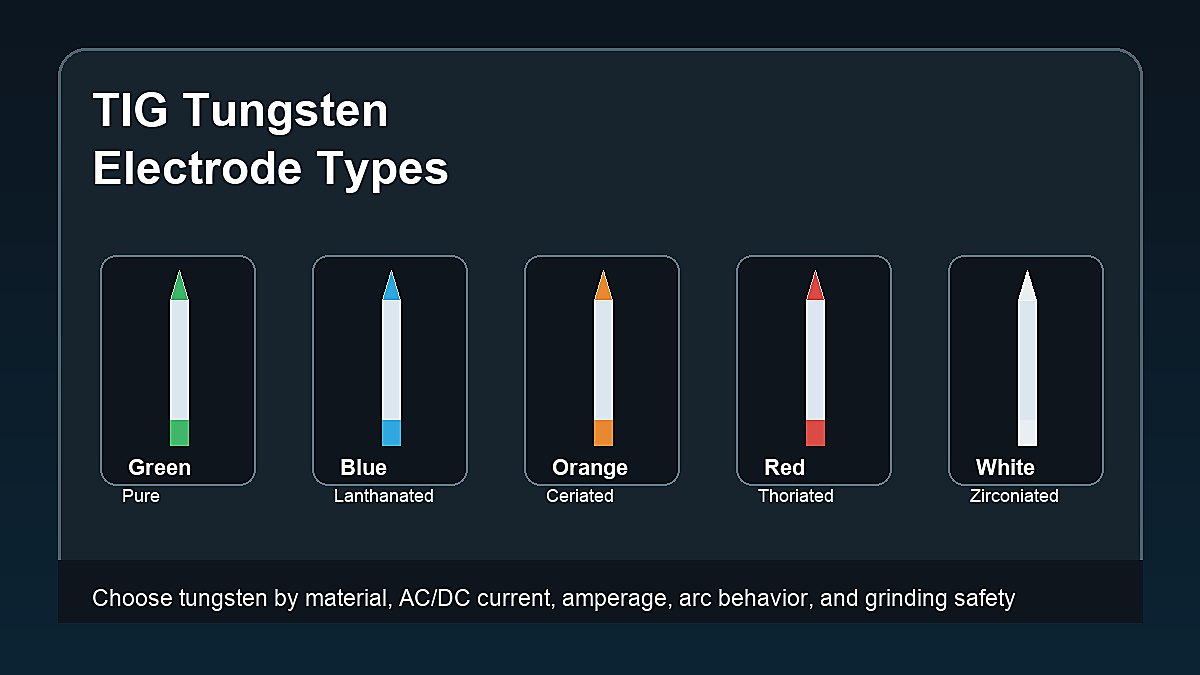
Different Types of Tungsten for TIG Welding
Beginner guide to TIG tungsten types: pure, lanthanated, ceriated, thoriated, zirconiated, color codes, AC/DC use, grinding, and safety.
TIG Welding FAQ
Is TIG welding difficult for beginners?
TIG generally requires more coordination than MIG because the torch, filler rod and heat control may be managed separately. Focused practice on clean coupons makes the sequence easier to learn.
Can every TIG welder weld aluminum?
No. Aluminum TIG commonly requires an AC-capable machine with suitable controls, torch, tungsten, filler and shielding gas. Check the machine specification before buying or setting up.
Does TIG welding use shielding gas?
Yes. TIG normally uses an external shielding gas, commonly argon for many applications. The correct gas and flow depend on the material, procedure, torch setup and manufacturer guidance.
What should a TIG beginner practice first?
Practice holding a short stable arc and moving a small puddle on clean scrap. Add filler only after torch distance, travel speed and heat control become more consistent.