How to Choose the Right Tungsten Electrode Size

If you are learning how to choose the right tungsten electrode size, start with three factors: amperage, material thickness, and the TIG torch parts you are using. Tungsten diameter affects arc stability, current capacity, starting behavior, overheating, and how easily the electrode holds its tip.
Common TIG tungsten sizes for beginners include 1/16 inch, 3/32 inch, and 1/8 inch. A 3/32 inch tungsten is often a practical general-purpose starting size for many mild steel and stainless practice jobs, while smaller or larger sizes make sense for lower or higher amperage work.
Mark Dawson beginner note: do not choose tungsten size by guesswork alone. Use your welder manual, the tungsten manufacturer’s range, and a short scrap test. The right size should start cleanly, hold the arc, and avoid overheating at your amperage.
Quick Answer
Choose tungsten electrode size by matching the diameter to the amperage range and material thickness. Use smaller tungsten, such as 1/16 inch, for low-amperage thin metal. Use 3/32 inch tungsten for many general beginner TIG jobs. Use 1/8 inch tungsten for higher amperage, thicker material, or some aluminum work. The collet, collet body, cup, and machine setup must match the tungsten diameter.
| Tungsten Size | Best Beginner Use | Watch For |
|---|---|---|
| 1/16 inch | Lower amperage and thin material | Overheats if pushed too hard |
| 3/32 inch | General TIG practice range | May be too large for very low amps |
| 1/8 inch | Higher amperage and thicker work | Can start poorly at low amps |
| Small metric sizes | Fine low-amp work | Needs matching torch parts |
| Larger sizes | Special high-amp work | Not usually first beginner choice |
Why Tungsten Size Matters
The tungsten electrode carries the arc. If it is too small for the amperage, it can overheat, erode, ball up, split, or contaminate the weld. If it is too large for the amperage, it may be harder to start and may not give the focused arc you want at low current.
The electrode must also fit the torch parts. Collets are sized to hold specific tungsten diameters. If the collet is wrong, the tungsten may slip, sit off-center, or fail to make good electrical contact.
Tungsten size works together with tungsten type. Before choosing diameter, understand the electrode family in Different Types of Tungsten for TIG Welding.
1/16 Inch Tungsten
1/16 inch tungsten is useful for lower amperage TIG work and thinner material. It can start nicely at lower current and gives a small, focused arc when the setup is correct. It is often used for delicate practice, thin mild steel, thin stainless, and small parts.
The limit is heat capacity. If you push a small tungsten too hard, it may overheat or lose its point. That can make the arc unstable and contaminate the weld. Beginners sometimes use small tungsten because it feels precise, then wonder why it breaks down at higher amperage.
Use 1/16 inch when the amperage is low enough and the material is thin enough to justify it. If the point disappears quickly, step up in diameter or check your amperage and polarity.
3/32 Inch Tungsten
3/32 inch tungsten is a common beginner workhorse. It covers a useful range for many mild steel and stainless TIG practice jobs. It is large enough to handle moderate amperage but not so large that it feels like a specialty high-current electrode.
Many beginners can start with 3/32 inch lanthanated tungsten and learn basic DC TIG technique. That keeps the consumable setup simple while practicing arc length, filler rod timing, torch angle, and travel speed.
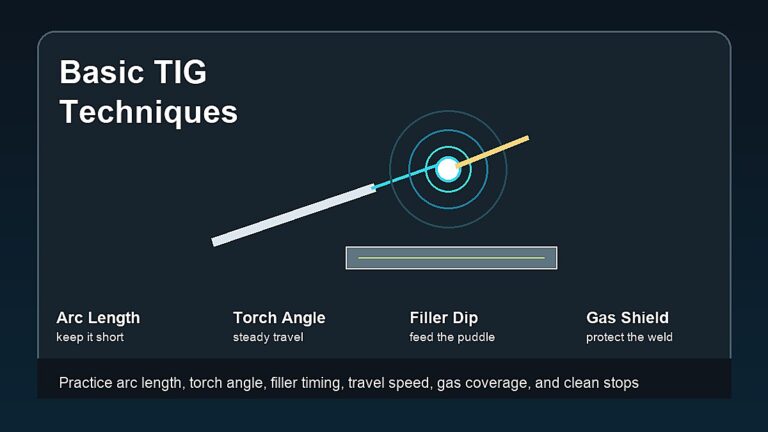
It may not be ideal for very thin metal or very low amperage starts. If the arc feels lazy at low current, a smaller tungsten may respond better. For technique basics, read Basic TIG Welding Techniques for Beginners.
1/8 Inch Tungsten
1/8 inch tungsten handles higher amperage than smaller common sizes. It can be useful for thicker material, higher-current aluminum work, or jobs where a smaller tungsten overheats. It has more mass and can carry more heat.
The tradeoff is low-amperage behavior. A large tungsten may not start as easily or feel as focused at low amps. Beginners working on thin material may find it harder to control than 1/16 or 3/32 inch tungsten.
Do not buy only 1/8 inch tungsten for all TIG practice. It is useful, but it is not the most comfortable size for every beginner job.
Match Tungsten Size to Amperage
Amperage is the main reason tungsten size matters. Lower amperage usually pairs better with smaller electrodes. Higher amperage needs larger electrodes that can carry current without overheating. The exact range depends on tungsten type, current type, polarity, machine, and tip shape.
Use manufacturer amperage ranges as a starting point, not a law of nature. If your tungsten overheats within the listed range, check tip shape, gas coverage, AC balance, polarity, and whether the machine settings match the job.
When in doubt, run short tests on scrap. A stable arc, clean tip, and controlled puddle are better evidence than a copied setting from a random chart.
Match Tungsten Size to Metal Thickness
Material thickness affects amperage, and amperage affects tungsten size. Thin sheet usually needs lower current and smaller tungsten. Thicker material usually needs more current and a larger tungsten. This is why size charts often connect electrode diameter to amperage rather than thickness alone.
For beginner practice, do not jump between very thin sheet and thick plate in the same session. Choose consistent coupons so you can see how one tungsten size behaves. Changing material thickness every bead makes troubleshooting harder.
If the weld puddle is too wide, the edge burns away, or the part distorts quickly, the issue may be too much heat for the material rather than tungsten size alone.
AC vs DC Tungsten Size
DC TIG on steel and stainless often uses a pointed tungsten. AC TIG on aluminum may place different heat loads on the electrode depending on machine settings. Older machines and modern inverters can behave differently.
For AC aluminum, a tungsten that is too small can overheat quickly. A larger tungsten may hold up better, but it still needs the right machine settings and tip preparation. AC balance, frequency, and tungsten type all affect how the electrode behaves.
For DC low-amp steel practice, a tungsten that is too large can feel unresponsive. Choose the size for the current range, not only for the material name.
Collet, Collet Body, and Cup Fit
The tungsten diameter must match the collet size. A 3/32 inch tungsten needs a 3/32 inch collet. A mismatched collet can hold poorly, cause bad electrical contact, or let the tungsten sit off-center in the cup.
The collet body, gas lens, and cup should also work with the tungsten stickout and shielding needs. Larger tungsten may need different torch parts than a smaller setup. Keep your TIG torch consumables organized by size.
A slipping tungsten is not fixed by simply tightening the cap harder. Check the collet size, collet condition, torch assembly, and whether the tungsten is seated correctly.
Tip Shape and Tungsten Size
Tip shape changes how the arc behaves. A long sharp taper can focus the arc but may overheat on small tungsten at higher current. A truncated point can be more durable. AC aluminum setups may use different tip shapes depending on the machine and tungsten type.
Grind lengthwise, not around the tungsten. Circular grinding marks can encourage the arc to wander. Use a clean grinding wheel or dedicated tungsten grinder when possible.
Do not breathe tungsten grinding dust. This is especially important with thoriated tungsten. Use proper dust control and safety habits.
Signs the Tungsten Size Is Wrong
- The tungsten overheats, balls, splits, or erodes quickly.
- The arc wanders even with clean metal and good gas.
- Arc starts are difficult at low amperage.
- The tip melts back during a short bead.
- The puddle feels too broad or unfocused.
- The tungsten cannot hold a point at the amperage used.
- The electrode slips because the collet size is wrong.
How Filler Rod and Tungsten Size Work Together
Tungsten size does not choose filler rod size by itself, but both need to match the job. A small low-amperage weld on thin metal may use a smaller tungsten and a smaller filler rod. A higher-amperage weld on thicker metal may need larger tungsten and larger filler.
If the filler rod is too large for the puddle, it can chill the weld and make the bead lumpy. A tungsten that is too small for the heat can make the arc unstable before the filler has a chance to wet in. The two choices should support the same amperage range.
Beginners should practice with a simple combination instead of changing both every few minutes. For example, clean mild steel coupons, one tungsten size, one filler size, and one amperage range make it easier to see what your hands are doing.
Machine Type and Tungsten Size
Modern inverter TIG machines can behave differently from older transformer machines. Inverters often have better low-amperage control and adjustable AC settings. That can change which tungsten size feels best for aluminum and thin material.
Older transformer machines may need different tungsten preparation, especially on AC aluminum. Some older advice about pure tungsten and balled tips comes from those machines. Modern manuals may recommend lanthanated tungsten and a different tip shape.
This is why the welder manual matters. A general size chart can get you close, but your machine, torch, tungsten type, and current settings decide the final setup.
Low-Amp TIG Size Tips
Low-amperage TIG is common for thin sheet, small parts, and delicate practice. A smaller tungsten can start and focus better at low current. Oversized tungsten can make the arc feel wide or sluggish, especially for a beginner trying to learn puddle control.
Low-amp TIG also needs clean material and stable hand position. A smaller tungsten will not fix poor gas coverage, dirty filler, or a long arc. Keep the setup clean and practice short beads before trying actual thin-metal projects.
For thin TIG control, technique matters as much as tungsten size. Review Basic TIG Welding Techniques for Beginners before blaming the electrode.
High-Amp TIG Size Tips
Higher amperage puts more heat into the tungsten. If the electrode is too small, the tip can break down quickly. Larger tungsten gives more current capacity, but it also needs matching torch parts and enough amperage to start and run well.
High-amperage TIG can also require better torch cooling, larger cups, more attention to duty cycle, and careful hand protection. The tungsten is only one piece of a hotter setup.
If you are using high amperage because the material is thick, consider whether TIG is the best process for that job. TIG can weld thick material, but it may be slower than other processes.
Do Not Oversolve With Tungsten Size
Beginners often change tungsten size when the real problem is somewhere else. Porosity, gray color, dirty starts, and unstable puddles can come from gas coverage, contaminated metal, wrong polarity, dirty filler, or poor torch angle.
Use a simple troubleshooting order. First check tungsten contamination. Then check gas flow, leaks, and drafts. Then check cleaning and filler rod condition. After that, look at tungsten size and type. This prevents random changes from hiding the real problem.
For shielding problems, read What Gas Do You Use for TIG Welding?.
Beginner Selection Steps
- Choose the material and thickness.
- Estimate the amperage from the machine manual or a reliable chart.
- Pick a tungsten diameter that fits that current range.
- Install the matching collet and torch parts.
- Grind the tip for the current type and material.
- Run a short scrap test.
- Check arc stability, tip condition, and bead shape.
- Adjust one variable at a time.
Common Beginner Mistakes
- Using one tungsten size for every job.
- Forcing 1/16 inch tungsten into high amperage work.
- Using 1/8 inch tungsten for low-amp thin metal and getting poor starts.
- Installing the wrong collet size.
- Changing tungsten size before checking dirty metal or gas coverage.
- Grinding the electrode sideways.
- Continuing after dipping tungsten into the weld pool.
- Ignoring the welder manual and manufacturer amperage range.
Safety Notes
Tungsten size affects arc performance, but TIG welding still involves UV radiation, hot metal, electric shock risk, fumes, shielding gas hazards, burns, and grinding dust. Wear proper PPE and keep the work area clean and ventilated.
Review OSHA welding hazards guidance, OSHA welding, cutting, and brazing requirements, and AWS safety resources. For shielding gas setup, read What Gas Do You Use for TIG Welding?.
FAQ
What tungsten size should a beginner start with?
Many beginners start with 3/32 inch tungsten because it works across a useful range for mild steel and stainless practice. Very thin or very high-amperage work may need another size.
When should I use 1/16 inch tungsten?
Use 1/16 inch tungsten for lower amperage and thinner material. Avoid pushing it too hard because it can overheat or lose its point.
When should I use 1/8 inch tungsten?
Use 1/8 inch tungsten for higher amperage, thicker work, or some aluminum TIG setups. It may not start as well at low amperage.
Does tungsten size affect arc stability?
Yes. A tungsten that is too small can overheat, while one that is too large can start poorly at low amperage. Correct size helps the arc stay focused.
Does the collet need to match tungsten size?
Yes. The collet must match the tungsten diameter so it can hold the electrode securely and make proper electrical contact.
Final Advice
Choose tungsten electrode size by amperage first, then material thickness, current type, and torch parts. For many beginners, 3/32 inch tungsten is a practical starting point, but low-amp thin metal and higher-amp aluminum work may need different diameters.
For the full TIG learning path, continue with the TIG Welding hub and compare related tungsten and torch setup guides.