Arc Welding Safety
Learn arc welding safety basics for beginners, including PPE, arc flash, electric shock, fumes, ventilation, fire prevention, and safe workspace setup.
SMAW and stick welding rods, amperage, polarity, positions, and field welding tips.

Learn arc welding safety basics for beginners, including PPE, arc flash, electric shock, fumes, ventilation, fire prevention, and safe workspace setup.
Stick welding uses a consumable coated electrode held in an electrode holder. The coating produces shielding and slag as the rod melts. Beginners must learn to maintain arc length as the rod gets shorter, then remove slag before examining the weld.

Compare gas welding and arc welding for beginners, including heat source, equipment, speed, use cases, safety risks, and which process makes sense first.
Better stick welds come from controlling the arc and cleaning the joint, not from adding a more elaborate hand motion. Use the same electrode and joint for a practice session so you can see what each adjustment changes.

Learn whether it is safe to touch a welding rod during stick welding and how to avoid shock, burns, hot stubs, and unsafe rod changes.

Compare flux core and stick welding for beginners so you can choose the better process for outdoor repair, home projects, practice, and steel thickness.

Use this beginner arc welding rod size chart to choose stick rod diameter and starting amperage ranges for common SMAW practice.

Learn whether a stick welder can be used for spot welding and what beginners should know about tack welds, plug welds, sheet metal, and safety.
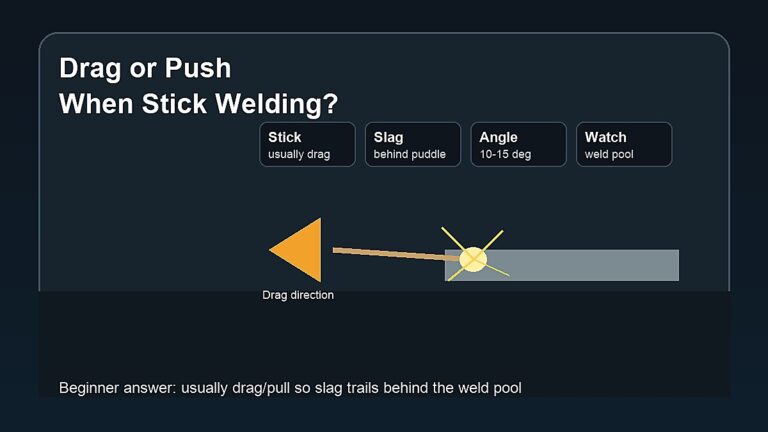
Learn whether beginners should drag or push when stick welding, how rod angle affects slag and penetration, and what mistakes to avoid.
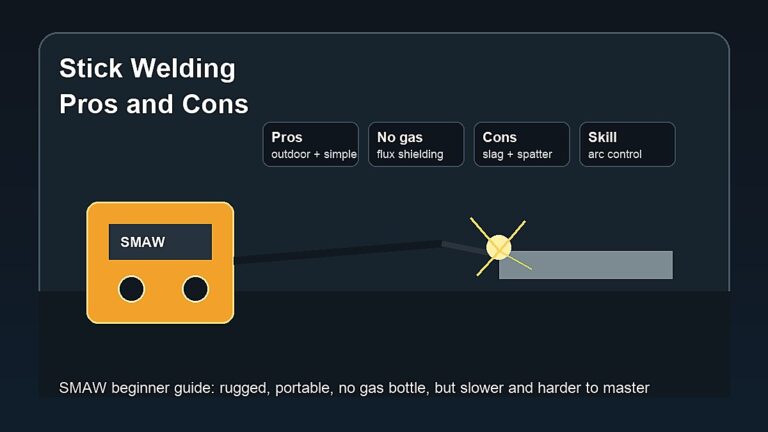
Learn the pros and cons of stick welding for beginners, including outdoor use, equipment cost, rod choices, slag, spatter, difficulty, and safety.