Arc Welding Safety

Arc welding safety starts before the first spark. Arc welding can expose beginners to ultraviolet radiation, eye injury, burns, electric shock, fumes, fire, hot metal, compressed gas, grinding debris, and unsafe workpiece movement. A good weld is not worth a bad injury.
Arc welding includes stick welding, MIG welding, TIG welding, and flux core welding. Each process has its own setup, but the core safety habits are similar: protect your eyes and skin, control fumes, prevent shock, remove fire hazards, secure the work, and understand the machine before welding.
Mark Dawson beginner note: do not treat PPE as optional because you are “only practicing.” Practice welds make the same UV light, sparks, heat, fumes, and shock risk as real welds.
Quick Arc Welding Safety Checklist
- Wear a welding helmet with the correct shade.
- Use safety glasses under the helmet.
- Wear welding gloves and flame-resistant clothing.
- Keep your skin covered from arc rays and sparks.
- Use ventilation or fume control suitable for the job.
- Keep flammable materials away from the work area.
- Inspect leads, clamps, electrode holder, gun, torch, and machine.
- Keep yourself dry and avoid wet work areas.
- Secure the workpiece before welding.
- Let hot metal cool or mark it clearly.
Arc Flash and Eye Protection
The welding arc emits intense visible light, ultraviolet radiation, and infrared radiation. Looking at an arc without proper protection can cause painful eye injury, often called arc eye or welder’s flash. It can also burn exposed skin like a severe sunburn.
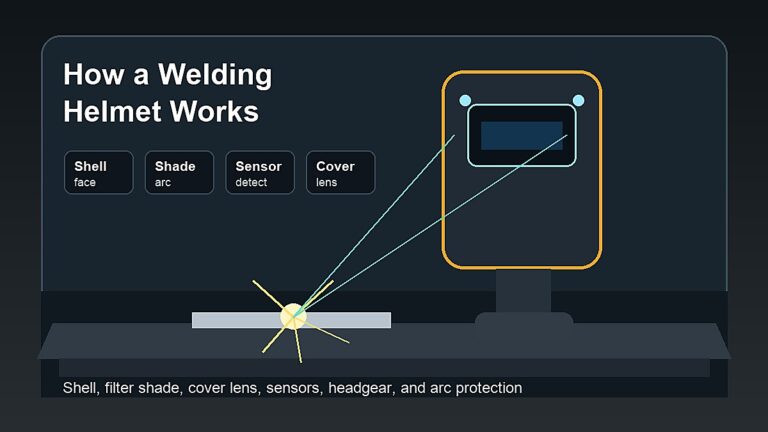
Use a welding helmet with a shade appropriate for the process and amperage. Auto-darkening helmets are convenient, but the lens, sensors, battery, and shade settings must work correctly. Safety glasses still matter because grinding, chipping slag, and wire brushing can throw debris after the hood is lifted.
Protect bystanders too. A helper, child, customer, or neighbor can get arc flash without being the welder. Use screens, curtains, barriers, and clear warnings when welding in shared spaces. For helmet basics, see How to Use a Welding Helmet.
Skin, Gloves, and Clothing
Arc rays can burn exposed skin. Sparks and spatter can melt synthetic fabric, ignite frayed clothing, and drop into pockets or cuffs. Wear flame-resistant cotton, leather, or welding-rated clothing. Avoid polyester, nylon, and other melt-prone clothing near sparks.
Use welding gloves suited to the process. Stick and flux core welding often need heavier gloves because of slag, spatter, and heat. TIG gloves are thinner for control but may not protect as well from heavy spatter. Keep gloves dry because wet gloves can increase shock risk.
Close shirt pockets, avoid cuffed pants, and use boots that protect your feet from sparks. Hot slag can find small openings. The goal is to give sparks nowhere easy to land and stay.
Electric Shock Safety
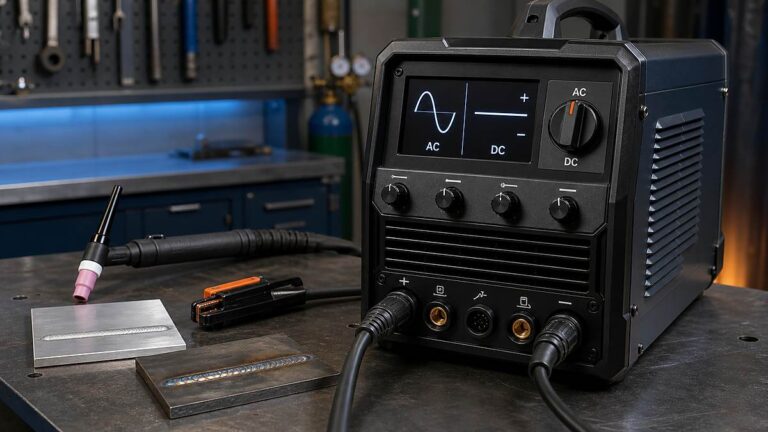
Arc welding uses electrical current, so shock safety matters. Keep your body, gloves, clothing, and work area dry. Avoid welding while standing in water or leaning against grounded metal with bare skin. Inspect electrode holders, MIG guns, TIG torches, leads, plugs, and work clamps before use.
Attach the work clamp to clean metal close to the weld when practical. A poor work return path can cause arc instability and can send current through unwanted paths. Damaged insulation, loose connections, and exposed conductors should be fixed before welding.
Turn off the machine before changing parts when the manual requires it. Do not wrap welding leads around your body. If a machine behaves strangely, stop and inspect instead of pushing through the problem.
Fume and Ventilation Safety
Welding fumes can come from the filler metal, base metal, coatings, paint, oil, rust, galvanizing, cleaning chemicals, and shielding or flux materials. Stick and flux core welding can produce heavy fumes. MIG and TIG can look cleaner, but they still need ventilation and material awareness.
Work in a well-ventilated area and keep your head out of the fume plume. Local exhaust, fume extraction, and respirator programs may be needed depending on the material and job. Galvanized, painted, solvent-contaminated, or unknown coated metal needs proper hazard control before welding.
Chlorinated brake cleaner and welding are a dangerous combination. Heat and arc exposure can create highly toxic gases from some chemicals. Clean metal with products that are safe for welding, and make sure residues are gone before striking an arc.
Fire Prevention
Arc welding throws sparks and hot metal farther than beginners expect. Clear the area of sawdust, cardboard, rags, fuel, solvents, leaves, insulation, plastic, and other flammables. Check both sides of the workpiece because sparks can pass through gaps, holes, and seams.
Keep a suitable fire extinguisher nearby and know how to use it. For larger or higher-risk jobs, use a fire watch after welding because sparks can smolder before a fire becomes visible. Be careful around vehicles, walls, floors, and enclosed spaces where sparks can hide.
Never weld on tanks, drums, sealed containers, fuel containers, or unknown vessels. Even “empty” containers can hold explosive vapors or residues. Container work is not beginner practice.
Hot Metal and Workpiece Handling
Welded metal can stay hot long after it stops glowing. Beginners often burn themselves by picking up a part that looks safe. Use pliers, tongs, gloves, or clear marks to identify hot parts. Keep hot metal away from cords, hoses, tables, and flammable surfaces.
Before welding, clamp or fixture the workpiece so it cannot move unexpectedly. Clamps, fixtures, magnets, and stable tables help prevent movement. A falling workpiece can burn, crush, or pull leads and torches unexpectedly. Round pipe, small coupons, and awkward brackets can shift when the tack weld shrinks.
Grinding, Chipping, and Cleanup Hazards
Many welding injuries happen during preparation and cleanup. Grinding throws sparks and wheel debris. Chipping slag can send sharp pieces toward your eyes. Wire wheels can throw wires. Keep safety glasses on under the helmet and use face protection when grinding or chipping.
Use the right grinding wheel for the material and tool speed. Do not use cracked wheels or missing guards. Let the grinder reach speed before contact and keep cords away from sparks and sharp edges.
Process-Specific Safety Notes
| Process | Extra Safety Focus |
|---|---|
| Stick welding | Hot slag, fumes, rod stubs, shock risk, outdoor fire spread |
| MIG welding | Shielding gas, wire-feed pinch points, spatter, cylinder handling |
| Flux core | More smoke, slag, spatter, ventilation, fire watch |
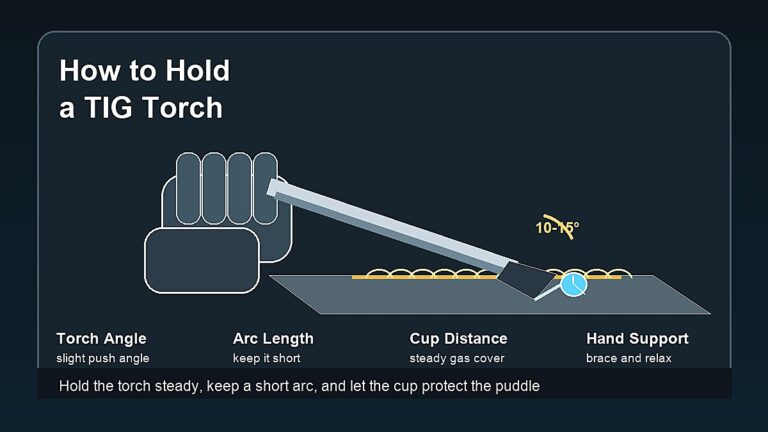
| TIG welding | High UV exposure, hot tungsten, shielding gas, foot control awareness |
For process background, read Types of Welding Explained, Stick Welding, MIG Welding, and Welding Safety.
Compressed Gas and Cylinder Awareness
Not every arc welding process uses gas, but MIG and TIG usually do. Shielding gas cylinders store compressed gas under high pressure. A damaged valve or falling cylinder can become dangerous quickly. Keep cylinders upright, capped when moved or stored, and secured with a chain or strap.
Use the correct regulator for the gas and inspect hoses for damage. Open cylinder valves according to the manufacturer’s instructions. Shielding gases such as argon and carbon dioxide can displace oxygen in poorly ventilated spaces, so gas safety is also ventilation safety.
Flux core and stick welding may avoid shielding gas cylinders, but they can create more smoke and slag. The absence of a cylinder does not mean the process is automatically safer.
Confined Spaces and Poor Ventilation
Confined spaces are not beginner welding areas. Tanks, pits, crawl spaces, containers, and closed rooms can trap fumes, reduce oxygen, and make rescue difficult. Welding in those places may require permits, monitoring, ventilation, standby help, and procedures beyond normal garage practice.
Even a small room can become unsafe if fumes build up. A fan that only blows fumes past your face is not a real plan. The goal is to remove contaminated air and bring in clean air without disturbing shielding gas at the weld.
Bystander and Home Shop Safety
Home shops often have people nearby who do not understand arc hazards. Children, helpers, customers, and neighbors should not be able to walk into the arc view or spark area. Close doors, use welding curtains, and explain that the bright light is not safe to watch.
Keep extension cords, air hoses, gas hoses, and welding leads arranged so people do not trip. Sparks can damage cords and hoses, so route them away from the weld zone when possible. A clean floor is part of safety, not just neatness.
Emergency Habits Before You Weld
Before starting, know how to shut off the machine, disconnect power, close gas cylinders, and call for help if needed. Keep a phone nearby but away from sparks and metal dust. Tell someone if you are welding alone, especially when grinding, lifting, or working outside.
Have basic first-aid supplies for minor cuts and burns, but do not treat serious eye pain, electrical shock, smoke inhalation, or deep burns as small problems. Stop work and get medical help when symptoms are serious or unusual.
Pre-Weld Inspection
A short inspection before welding prevents many beginner problems. Look at the machine settings, electrode or wire, shielding gas if used, work clamp, leads, torch, holder, and extension cord. Check that the work clamp bites clean metal and that the cable insulation is not cracked or burned.
Inspect the material too. Paint, oil, rust, moisture, galvanizing, plating, and mystery coatings can change the fume and fire risk. Clean the weld area and the clamp area. If you cannot identify the coating or contamination, stop and research it before welding.
Fit-up is also safety. A loose part can shift when the tack cools. A part balanced on a corner can fall when touched by the electrode. Clamp first, then weld.
Safe Tack Welding Habits
Tack welds are small, but they still produce full arc brightness, sparks, heat, and fumes. Lower the helmet for every tack. Keep gloves on. Do not hold two pieces together with bare fingers close to the tack area. Heat travels quickly through small metal parts.
Place tacks where they will not pull the part out of alignment or trap slag in the final weld. After tacking, check whether the work moved. A bad tack can crack, break, or create a sharp hot edge that catches gloves or sleeves.
After-Weld Fire Watch
Fire risk does not end when the arc stops. Sparks can roll under benches, into cracks, behind wall panels, or inside nearby material. After welding, look around the area for smoke, smell, glowing spots, and hot debris. Check the back side of the workpiece if sparks or heat could have passed through.
Keep the extinguisher nearby during cleanup, not just during welding. Grinding after welding can throw a fresh shower of sparks into the same area. If the job involved wood, insulation, vehicles, dry leaves, or enclosed cavities, stay alert longer before leaving the shop.
Practice Jobs Beginners Should Avoid
Beginners should avoid learning on trailer frames, vehicle suspension parts, roll cages, pressure vessels, fuel tanks, lifting hooks, ladders, structural posts, and public-use railings. These jobs can fail in ways that hurt people. They also may require codes, procedures, inspection, or certified welders.
Better practice work includes clean scrap coupons, small non-critical brackets, practice beads, lap joints, and T-joints. Use those projects to build arc control and safety habits before the weld has real consequences.
Beginner Workspace Setup
- Choose a stable, fire-resistant work surface.
- Clear flammables from the welding and spark area.
- Set up ventilation before welding starts.
- Place the extinguisher where you can reach it quickly.
- Check helmet, gloves, clothing, and safety glasses.
- Inspect leads, clamps, gun, torch, and machine settings.
- Secure the workpiece with clamps or fixtures.
- Warn bystanders and block arc view.
- Make a test weld on scrap before the real part.
- Check the area again after welding for heat and smoldering material.
Common Beginner Safety Mistakes
- Welding with exposed arms, neck, or ankles.
- Looking at tack welds without lowering the helmet.
- Grinding without safety glasses.
- Welding near rags, cardboard, fuel, or wood dust.
- Handling metal before checking whether it is hot.
- Welding painted, galvanized, or unknown coated metal without fume control.
- Using wet gloves or welding in damp conditions.
- Letting bystanders watch the arc.
- Ignoring damaged leads, loose clamps, or cracked holders.
Official Safety References
For current safety guidance, review OSHA welding hazards guidance, OSHA welding fume guidance, and AWS safety resources. Manufacturer manuals for your specific machine, helmet, respirator, and consumables also matter.
FAQ
What is the biggest safety hazard in arc welding?
There is no single hazard for every job. Arc flash, electric shock, fumes, fire, and burns are all serious. The biggest risk depends on the process, material, workspace, and safety habits.
Can arc welding damage your eyes?
Yes. Looking at an arc without proper eye protection can cause painful eye injury. Use a welding helmet with the correct shade and protect bystanders from the arc.
Do I need ventilation for arc welding?
Yes. Welding fumes can be hazardous, especially with flux processes, coated metals, galvanized steel, paint, oil, or unknown materials. Use ventilation or fume extraction suitable for the job.
Is arc welding dangerous for beginners?
It can be dangerous if safety rules are ignored. Beginners can practice safely only when they use proper PPE, ventilation, fire prevention, dry conditions, and non-critical clean practice metal.
What should you not weld?
Sealed containers, fuel tanks, unknown vessels, solvent-contaminated parts, and safety-critical parts should be left to trained people with the right inspection and cleaning procedures. Avoid coated metals unless you understand the fume hazards and controls.
Final Advice
Arc welding safety is a habit, not a checklist you read once. Protect your eyes, skin, lungs, workspace, and bystanders every time. Start on clean scrap, follow the machine manual, and do not attempt critical repairs until you have proper training.