Can You MIG Weld Cast Iron to Mild Steel?

Can you MIG weld cast iron to mild steel? Sometimes, but it is not a simple beginner MIG job. Cast iron and mild steel behave differently under heat. A casting can crack when it is heated and cooled too quickly, and a normal mild-steel MIG wire is often the wrong filler for a reliable repair.
For light, non-critical repairs, some welders use controlled MIG procedures with nickel wire or specialty filler, careful preheat, short welds, peening, and slow cooling. For important parts, cast iron repair should be handled by someone who understands the casting, filler choice, heat control, and inspection needs.
Mark Dawson beginner note: the bead is not the only test. Cast iron can crack beside the weld, under the bead, or later after the part cools. If the part carries weight, pressure, vehicle loads, or safety risk, do not learn on that part.
Quick Answer
You can sometimes join cast iron to mild steel with MIG, but beginners should treat it as a repair procedure, not a normal fabrication weld. The safest beginner answer is: do not use ordinary ER70S-6 steel wire and random settings on a critical cast iron part. If the repair matters, use a qualified procedure, often involving nickel-based filler, preheat, controlled heat input, and slow cooling.
| Question | Beginner Answer | Why It Matters |
|---|---|---|
| Can MIG join cast iron to mild steel? | Sometimes | Procedure and filler choice matter |
| Is normal steel MIG wire ideal? | Usually no | Cracking and hard brittle areas are possible |
| Does preheat help? | Often yes | It reduces thermal shock |
| Can beginners repair critical castings? | No | Failure can be dangerous |
Why Cast Iron Is Difficult to Weld
Cast iron contains much more carbon than mild steel. That carbon changes how the metal behaves during welding. Some cast irons machine well and dampen vibration, but they can be brittle compared with mild steel. When a weld area heats and cools unevenly, cracking becomes a real risk.
Mild steel is more ductile. It can stretch and move more than cast iron before it breaks. When you weld the two together, the steel side and cast iron side do not expand, cool, and shrink the same way. The joint can put high stress into the cast iron, especially near the heat-affected zone.
Old castings add another problem. They may hold oil, carbon, paint, rust, old brazing, repair metal, or contamination in pores and cracks. That contamination can cause porosity, poor fusion, smoke, and weak welds.
Why Normal MIG Wire Can Be a Problem
Many beginners think a MIG welder with mild-steel wire should weld anything that looks like iron or steel. That is risky with cast iron. Standard mild-steel wire may create a hard, crack-sensitive weld area when used on cast iron. The joint may also pull too hard on the casting as it cools.
Nickel-based filler is often used in cast iron repair because it can handle the cast iron side more gently than plain steel filler. Some MIG repair procedures use nickel wire, while many traditional cast iron repairs use stick electrodes or TIG/brazing methods. The right choice depends on the casting, load, service temperature, and repair goal.
For MIG process limits, review Advantages and Disadvantages of MIG Welding. MIG is useful, but it is not the best answer for every metal and repair.
Cast Iron to Mild Steel: What Usually Matters
- Cast iron type: gray iron, ductile iron, and unknown castings behave differently.
- Part condition: cracks, oil, previous repairs, and age affect weldability.
- Filler choice: nickel-based filler is common for cast iron repair.
- Preheat: controlled heating can reduce thermal shock.
- Short beads: small welds help limit heat stress.
- Slow cooling: insulation or controlled cooldown can reduce cracking.
- Service risk: non-critical brackets are different from engine, vehicle, or lifting parts.
Preheat and Slow Cooling
Preheat is used to reduce the temperature difference between the weld zone and the rest of the casting. A cold casting with a hot weld bead can crack because the heated area expands and shrinks while the surrounding metal resists movement.
The correct preheat temperature depends on the casting and procedure. Beginners should not guess on important parts. Some small repairs use localized warmth and short beads. Larger or more critical castings may need a controlled furnace-style approach or a procedure written for that specific material.
Cooling matters too. Letting a hot cast iron repair cool quickly in open air can create stress. Welders may use insulation, dry sand, welding blankets, or controlled cooling methods. The goal is to avoid a sudden temperature drop that shocks the casting.
Short Beads and Peening
Cast iron repair often uses short weld beads instead of one long weld. Short beads limit heat input and reduce shrinkage stress. After a short bead, some welders lightly peen the bead while it is still hot to help counter contraction stress. Peening must be done carefully; heavy hammering can damage the repair.
This is another reason cast iron repair is not the same as running a long MIG bead on mild steel. The technique is slower. The welder is managing heat, stress, and cracking risk, not just filling a joint as fast as possible.
When MIG May Make Sense
MIG may make sense for a non-critical cast iron to mild steel repair when the welder has the right filler, can clean the casting, can control preheat and cooling, and understands that the repair is not guaranteed just because the bead looks good. Examples might include a light-duty fixture, a shop bracket, or a practice coupon made for learning.
MIG is usually a poor first choice for cracked engine blocks, exhaust manifolds, suspension parts, machine bases under heavy load, pressure parts, lifting points, and anything where failure can hurt someone. Those jobs need professional evaluation.
If the joint is really steel to steel, learn normal technique first with MIG Welding Techniques for Beginners. Cast iron repair should come later, after you already understand heat, travel speed, fit-up, and weld defects.
Better Alternatives to Consider
Sometimes the better repair is not MIG welding. Brazing may be suitable for some cast iron repairs because it uses lower heat than fusion welding. Stick welding with nickel electrodes is common in cast iron repair. TIG may offer better control for some small repairs. Mechanical fastening, straps, plates, or redesign may be safer for non-cosmetic parts.
The right option depends on what the part does. A decorative casting has different requirements from a pump housing, machine base, exhaust manifold, or vehicle bracket. Before choosing a process, decide what loads, heat, vibration, and consequences the repair must handle.
How to Inspect the Casting Before Welding
Before any repair, clean enough of the part to see what you are working on. Cast iron can hide cracks under paint, grease, rust, and carbon. A crack that looks short on the surface may run farther than expected. If you weld only the visible end, the crack can keep growing after the part cools.
Look for oil-soaked areas, old brazing, previous weld beads, missing chunks, thin edges, and threaded holes near the repair. Oil inside a casting can smoke and contaminate the weld. Old repair metal may not match the base casting. Thin sections can overheat quickly while thicker sections pull heat away.
For a serious repair, inspection may include dye penetrant, magnetic particle testing, machining, or professional evaluation. A beginner does not need those tools for scrap practice, but the idea matters: do not weld blind. Understand the crack, the load path, and the metal condition before choosing MIG.
Joint Design Between Cast Iron and Mild Steel
The joint design can make the repair easier or much harder. A small steel tab welded onto the edge of a thin casting is a high-risk setup because the weld pulls on a brittle area as it cools. A larger pad, bolted backing, strap, or redesign may spread the load better than a small bead.
If the steel piece can be bolted instead of welded, that may be safer for a beginner repair. If the casting can be drilled and tapped without cracking, a mechanical bracket may avoid the heat problem entirely. If heat is required, keep the steel fit-up close so the weld does not need to bridge a large gap.
Think about how the finished part will move. Mild steel can flex. Cast iron often cannot tolerate the same bending. A rigid steel brace welded across a casting may transfer stress into the cast iron instead of solving the original problem.
Why Non-Critical Practice Comes First
Cast iron practice should start on scrap, not on a part you need tomorrow. Find an old non-critical casting and a piece of mild steel, clean both, and use the practice only to understand heat behavior, puddle control, cracking, and cooling. The goal is learning, not proving that every casting can be repaired the same way.
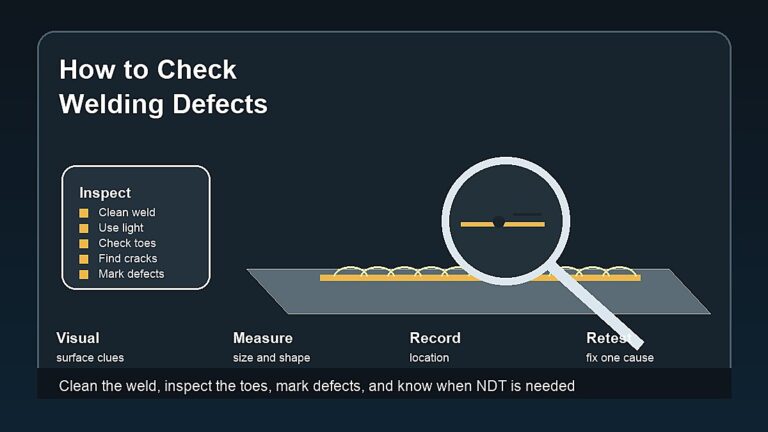
After the practice weld cools, inspect it closely. Look for cracks beside the bead, cracks at the ends, undercut, porosity, hard glassy areas, and separation at the edge of the weld. If the practice piece cracks, that is useful information. It tells you the real repair needs a better procedure or a different joining method.
For common MIG defect thinking, see Common MIG Welding Issues. Cast iron adds extra cracking risk, but the same habit of diagnosing defects before continuing still applies.
Example: Steel Bracket on a Cast Iron Base
Suppose a beginner wants to attach a mild-steel bracket to an old cast iron machine base. The first question is not which wire speed to use. The first question is whether welding is needed at all. A bolted bracket with a wide footprint may be easier to inspect, easier to remove, and less likely to crack the base.
If welding is still considered, the base should be cleaned, checked for cracks, warmed according to a real procedure, and welded in short sections. The bracket should fit closely so the weld is not forced to fill a large gap. After welding, the repair should cool slowly and be inspected again.
That slower workflow may feel excessive for a small bracket, but it is the difference between welding mild steel and repairing cast iron. Mild steel projects often reward speed and consistency. Cast iron repairs reward patience and restraint.
Beginner Decision Checklist
- Identify whether the part is truly cast iron and what type if possible.
- Decide whether the repair is non-critical or safety-related.
- Clean the casting and inspect for cracks, oil, and old repairs.
- Choose filler based on the repair procedure, not convenience.
- Plan preheat, short beads, and slow cooling before welding.
- Practice on scrap or a non-critical casting before the real part.
- Stop if new cracks appear during heating or welding.
Common Mistakes
- Using normal mild-steel MIG wire without understanding cracking risk.
- Welding a cold casting with a long hot bead.
- Skipping cleaning because the metal looks solid.
- Cooling the repair too quickly after welding.
- Repairing a critical vehicle, lifting, or pressure part as practice.
- Assuming all cast iron behaves the same.
- Ignoring cracks that continue past the visible repair area.
Safety Notes
Cast iron repair can involve hot metal, sparks, UV radiation, electric shock, fumes, grinding dust, fire risk, sharp cracked metal, and failure risk if the part is put back into service incorrectly. Old castings may contain oil, paint, coatings, or unknown contamination that changes fume and fire hazards.
Use proper PPE, ventilation, eye protection, gloves, flame-resistant clothing, and a fire-safe workspace. Do not weld closed housings or contaminated parts without proper cleaning and hazard review. Review OSHA welding hazards guidance, OSHA welding fume guidance, and AWS safety resources. For beginner safety basics, use the Welding Safety hub.
FAQ
Can you weld cast iron to mild steel with normal MIG wire?
It is not recommended for a reliable repair. Normal mild-steel MIG wire can create cracking and hard brittle areas on cast iron. Use a proper repair procedure and filler.
What filler is used for cast iron to steel?
Nickel-based filler is common for cast iron repair, but the right filler depends on the cast iron type, mild steel part, load, heat, and repair method.
Do you need to preheat cast iron before MIG welding?
Often yes. Preheat can reduce thermal shock and cracking, but the correct temperature depends on the part and repair procedure.
Is brazing better than MIG for cast iron?
Sometimes. Brazing uses lower heat than fusion welding and may be a better option for some cast iron repairs, but it still needs correct preparation and safety judgment.
Can beginners repair an engine block with MIG?
No. Engine blocks and similar castings need professional inspection and repair decisions. A beginner MIG repair can crack, leak, or fail after the part returns to service.
Final Advice
MIG welding cast iron to mild steel is possible only when the repair procedure fits the casting, filler, heat control, and service risk. For beginners, the smart path is to avoid critical cast iron repairs, practice on non-critical scrap, and get qualified help when the part matters.
If the repair feels uncertain, choose the slower route: inspect first, plan the heat, and get experienced help before the casting is damaged beyond repair.