Welding Safety Equipment Checklist for Home Shops
A home-shop welding safety checklist covering personal protection, the welding station, surrounding hazards and post-work checks.

Safety gear, health risks, shop safety, PPE, ventilation, and welding protection guides.
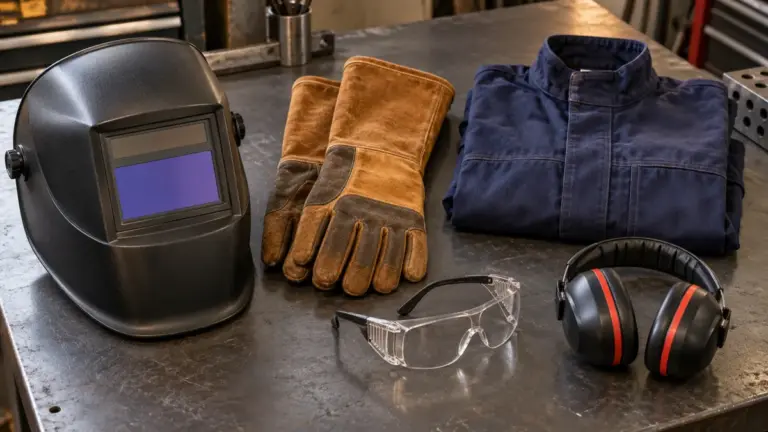
A home-shop welding safety checklist covering personal protection, the welding station, surrounding hazards and post-work checks.
A welding safety equipment checklist should connect each item to a hazard. Buying a helmet and gloves leaves gaps if fumes, noise, flying particles, hot metal or nearby people are unprotected. Review the actual task before treating the list as complete.

Use this beginner welding lens shade chart to choose safer helmet filter shades for stick, MIG, TIG, flux core, plasma, gas welding, and cutting.
A welding safety routine must control the work area as well as protect the person holding the torch. A helmet cannot stop a fire behind a partition, and an open door does not by itself establish adequate fume control. Decide whether the job can be done safely before preparing to strike an arc.
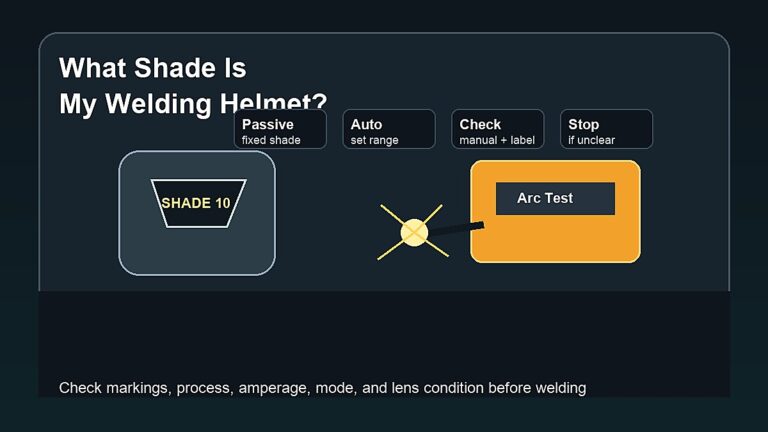
Learn how to check your welding helmet shade, read markings, use auto-darkening controls, match shade to welding process, and avoid unsafe lens mistakes.
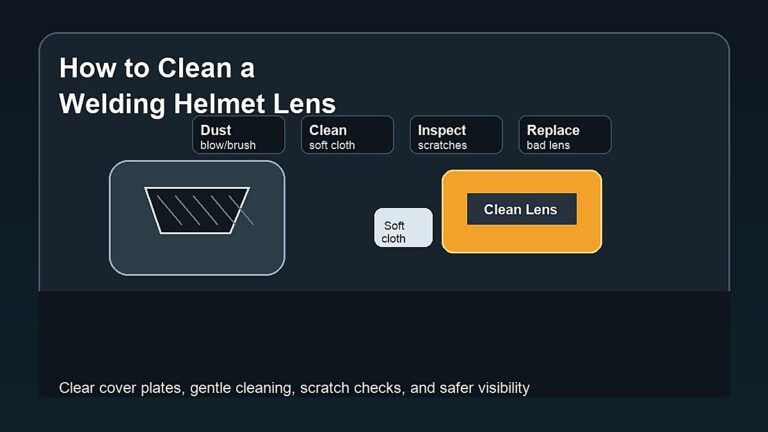
Learn how to clean a welding helmet lens safely so visibility stays clear without scratching the cover lens or damaging the auto-darkening filter.
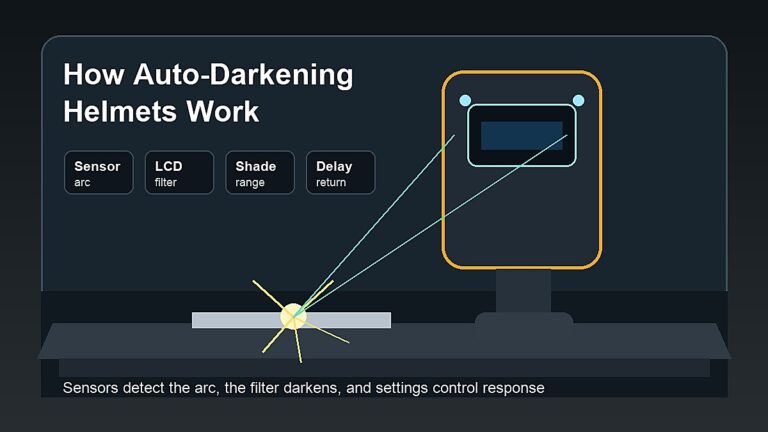
A beginner guide to how auto-darkening welding helmets work, including sensors, filter lenses, shade settings, delay, sensitivity, batteries, and safety checks.
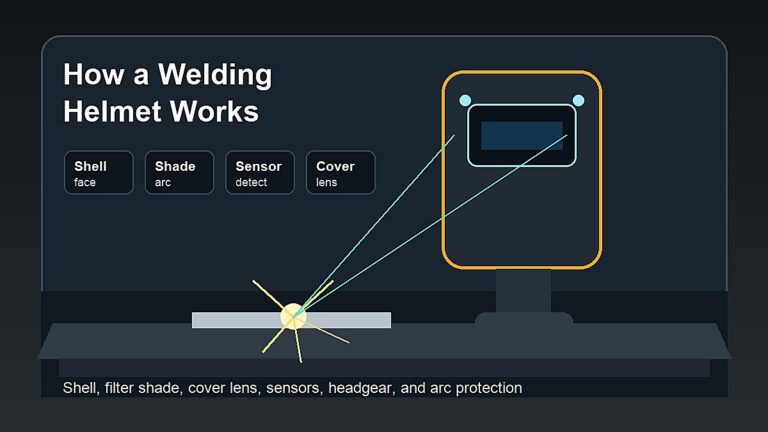
A beginner guide to how welding helmets work, including filter shade, shell protection, cover lenses, auto-darkening sensors, and safety checks.
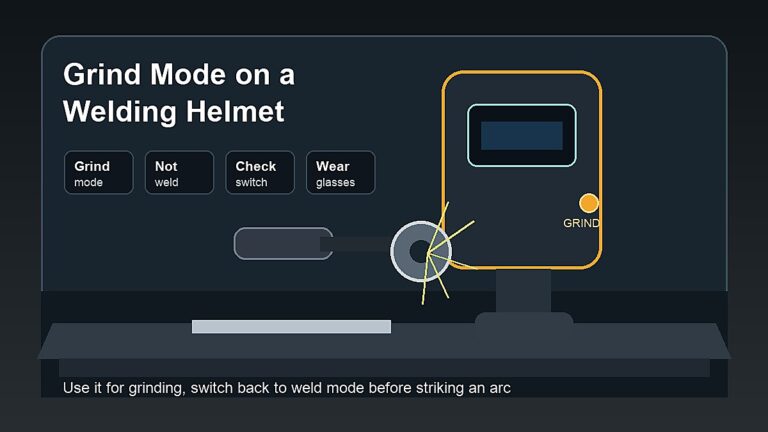
Learn what grind mode on a welding helmet does, when to use it, and why beginners must switch back to weld mode before striking an arc.
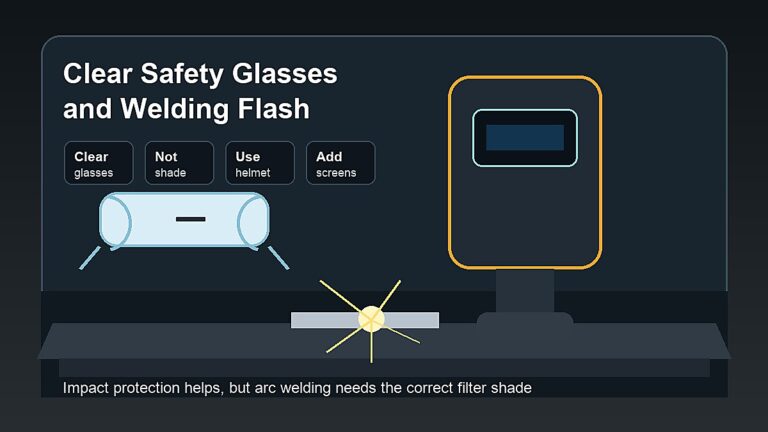
Clear safety glasses help with impact protection, but they do not replace a welding helmet or proper filter shade for welding flash protection.