Do Clear Safety Glasses Protect From Welding Flash?
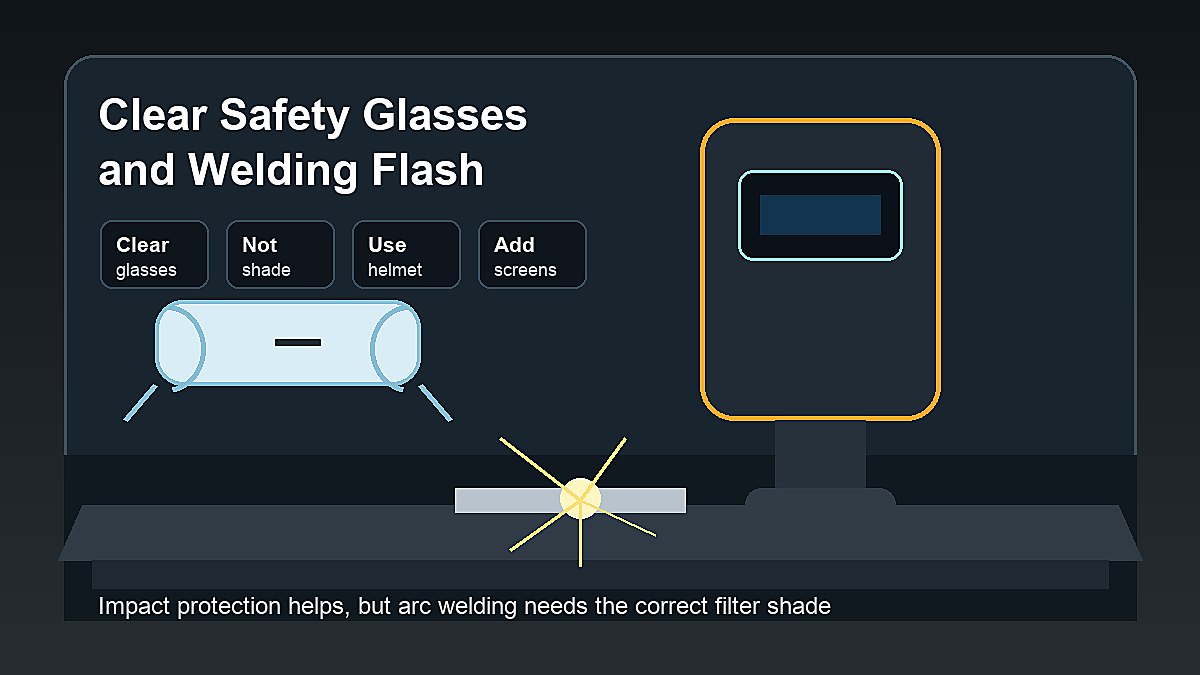
Do clear safety glasses protect from welding flash? No, clear safety glasses do not replace a welding helmet or a proper welding filter shade. Clear safety glasses can help protect your eyes from flying particles during grinding, brushing, chipping, cutting wire, and cleanup, but they are not enough protection for looking at a welding arc.
Welding flash, often called arc eye or welder’s flash, can happen when eyes are exposed to welding arc radiation without proper protection. A quick tack weld, a reflected arc, or watching someone weld from the side can still be risky. Beginners need to understand the difference between impact protection and arc protection before practicing.
Mark Dawson beginner note: clear safety glasses belong under your welding helmet, not instead of it. Think of them as backup impact protection for prep and cleanup. The welding arc still needs a correct shade lens, helmet, screen, or other approved eye and face protection.
Quick Answer
Clear safety glasses do not protect enough from welding flash because they do not provide the dark filter shade needed for arc welding. They may provide impact protection and some models may offer UV protection for general shop hazards, but a welding arc requires a welding helmet, hand shield, or properly shaded welding eye protection matched to the process.
| Protection | Clear Safety Glasses | Welding Helmet |
|---|---|---|
| Flying particles | Yes, if safety-rated | Helps protect face, but glasses still matter underneath |
| Arc brightness | No, not enough | Yes, with correct shade |
| UV/IR arc exposure | Not a welding substitute | Designed for welding when rated and used correctly |
| Grinding cleanup | Useful | May not be enough alone for impact tasks |
| Watching someone weld | No | Use proper shade or stay behind screens |
What Welding Flash Means
Welding flash is eye injury or irritation from exposure to welding arc radiation. It is commonly associated with ultraviolet radiation from the arc. Symptoms can include eye pain, gritty feeling, watering, redness, light sensitivity, and delayed discomfort after exposure. Symptoms should be handled by a medical professional, especially if pain is severe or vision changes.
Beginners sometimes assume danger only exists when they stare directly at a long weld. That is not a safe assumption. Short tack welds, reflected light, nearby welding, and accidental exposure can all create problems. Arc safety has to be planned before the machine turns on.
Why Clear Safety Glasses Are Not Enough
Clear safety glasses are usually made for impact protection, not for viewing an arc. A clear lens lets too much visible light through for welding and does not provide the welding shade you need. Even glasses marked for safety use are not automatically welding filter lenses.
The key difference is purpose. Safety glasses protect against chips, dust, wire ends, and particles. Welding helmets protect against arc radiation, bright light, sparks, spatter, and face exposure when the correct filter is used. You need both in many welding workflows.
What Clear Safety Glasses Do Protect Against
Clear safety glasses are still important in a welding shop. They help protect your eyes when you grind mill scale, cut wire, chip slag, brush welds, clamp parts, drill holes, or clean metal. Many eye injuries happen during prep and cleanup, not only during the weld itself.
That is why beginners should wear safety glasses under the helmet. When the helmet is lifted after the bead, the glasses are still there. This habit fits with the checklist in Protective Equipment Essentials for Beginner Welders.
Clear Glasses vs Welding Filter Lenses
A clear safety lens and a welding filter lens solve different problems. The clear lens is meant for seeing normally while reducing impact risk from small flying objects. A welding filter lens is meant to reduce the intense arc light to a safer viewing level for a specific welding or cutting process.
This difference matters because a lens can be safety-rated for impact and still be the wrong lens for welding. Look for the protection type, shade, and instructions instead of assuming that any eye protection is good enough. In welding, the words “safety glasses” and “welding lens” do not mean the same thing.
Beginners should also avoid improvised protection. Stacked sunglasses, smoked plastic, tinted face shields, camera filters, or dark shop glasses are not a substitute for proper welding eye protection. If the item is not made and rated for the welding or cutting task, do not use it to view the arc.
What You Need for Welding Flash Protection
For arc welding, use a welding helmet or hand shield with the correct lens shade for the process and amperage. Auto-darkening helmets can be safe when they are rated, tested, and set correctly. Passive helmets can also be safe when the shade is correct and the helmet is used consistently.
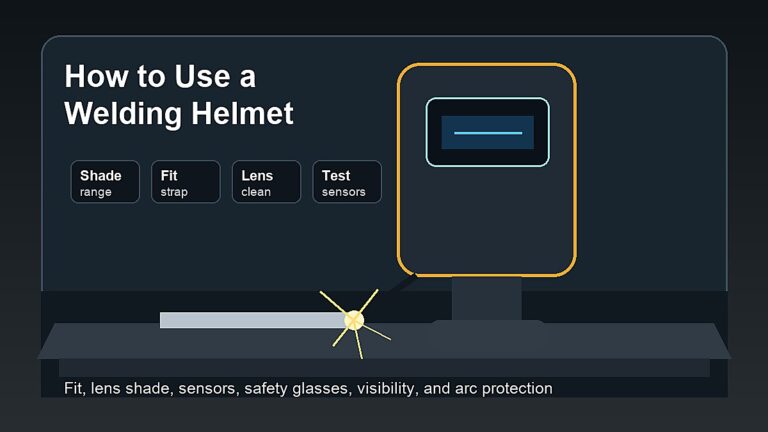
For helmet setup, read How to Use a Welding Helmet Safely. For auto-darkening concerns, read Are Auto-Darkening Welding Helmets Safe?. The right answer is not clear glasses versus helmet. It is safety glasses plus proper welding eye and face protection.
What to Do If You Think You Got Flashed
If your eyes were exposed to an arc, stop welding and move away from the work. Do not keep practicing to finish a bead. Eye symptoms can be delayed, so feeling fine immediately after exposure does not prove that everything is okay.
Get medical advice for eye pain, light sensitivity, vision changes, severe watering, or a gritty feeling that does not settle. WeldingPilot is an educational resource, not medical guidance. The safest beginner habit is prevention: proper shade before every arc, clear safety glasses for impact tasks, and screens for people nearby.
Can Bystanders Get Welding Flash?
Bystanders can be exposed to welding arc radiation if they are close enough, looking toward the arc, or standing where reflected arc light reaches them. Someone watching from the side with clear glasses is not properly protected from the arc.
Use welding screens, curtains, shields, or controlled work areas to protect people nearby. Warn others before welding, especially in garages, schools, shared shops, and job sites. Pets and children should be kept away from welding areas completely.
Shop Setup to Prevent Accidental Arc Exposure
Good eye protection also depends on the workspace. Face the welding table so the arc is not visible from doorways, walkways, or common work areas. Use screens or curtains where people may pass nearby. Put up a simple warning before practice if you share the shop with family, coworkers, or classmates.
Reflection matters too. Shiny metal, light-colored walls, polished stainless, and odd work angles can bounce arc light. A beginner may focus on direct viewing and forget about reflected exposure. Screens, body position, and controlled access help reduce that risk.
Process-Specific Notes
MIG, TIG, stick, and flux core welding all produce arc light that requires proper welding eye protection. The details can vary by amperage and process, but the core rule does not change: clear safety glasses alone are not enough for arc welding.
Grinding and cutting bring extra impact hazards. That is when clear safety glasses, goggles, or a face shield may be needed depending on the task. The PPE changes with the job, so check your process before switching from welding to cleanup.
Beginner Scenarios Where People Get It Wrong
The first common scenario is the quick tack weld. A beginner has the parts clamped, sees a tiny gap, and thinks one fast tack with clear glasses will be fine. That is still arc welding. Put the helmet down before the tack, even if the arc lasts only a moment.
The second scenario is watching someone else weld. A friend says, “Do not look at it,” but the arc is still visible in the corner of your eye. Clear glasses do not make that safe. Stand behind a screen, use proper shaded protection, or leave the area until the welding is done.
The third scenario is cleanup after welding. The arc is off, so the helmet comes up. Now grinding dust, slag chips, wire ends, and sharp metal become the main eye hazards. This is where clear safety glasses are very useful. The mistake is using them for the wrong hazard.
A Safer Beginner Workflow
Set up the work area first: move bystanders away, place screens if needed, clear flammables, and put on safety glasses. Then lower the welding helmet, check the shade or auto-darkening mode, and weld. After the bead, keep safety glasses on while brushing, chipping, grinding, and moving parts.
This workflow keeps each piece of PPE in its proper role. The helmet handles the arc. The safety glasses help with impact hazards. Screens protect nearby people. Gloves and clothing protect skin. No single item does every job.
Before every practice session, pause and name the hazard in front of you. Arc light needs a shaded welding lens. Grinding needs impact protection. Bystanders need screens or distance. Fumes need ventilation. This simple habit keeps beginners from asking one piece of gear to solve every safety problem. It also makes your setup easier to inspect before work starts. Good protection is matched to the hazard, not guessed. That habit becomes more valuable as your projects become more complicated.
What About Tinted Safety Glasses?
Tinted safety glasses are not automatically welding glasses. Some lenses are tinted for sun glare or comfort, not for welding arc exposure. Welding protection must be rated and shaded for the process. Do not assume a dark-looking lens is safe for arc welding.
Oxy-fuel cutting, brazing, plasma cutting, and arc welding may require different shade levels and protection styles. Check the manual, workplace rules, and recognized safety guidance for the work being done.
Common Beginner Mistakes
- Making a quick tack weld with only clear safety glasses.
- Watching someone weld from across the shop without a proper shade.
- Assuming UV-rated clear glasses are enough for arc welding.
- Using sunglasses or tinted shop glasses as welding lenses.
- Lifting the helmet too soon after the arc starts.
- Skipping safety glasses under the helmet during grinding and cleanup.
- Letting bystanders stand where they can see the arc.
Safety Warning
Welding can expose eyes and skin to ultraviolet radiation, infrared radiation, bright visible light, sparks, hot metal, fumes, fire hazards, and electric shock. Use proper welding eye and face protection, safety glasses, PPE, screens, and ventilation. Review OSHA welding, cutting, and brazing guidance, AWS safety and health fact sheets, and NIOSH welding resources.
Beginner Eye Protection Checklist
- Wear clear safety glasses for prep, grinding, brushing, and cleanup.
- Use a welding helmet or hand shield with the correct shade for arc welding.
- Keep helmet lenses clean and replace damaged cover plates.
- Check auto-darkening mode, sensors, and batteries before welding.
- Use welding screens or curtains to protect people nearby.
- Never use sunglasses as welding protection.
- Stop welding if your eyes feel exposed, strained, or flashed.
FAQ
Can I tack weld with clear safety glasses?
No. Tack welds still create arc radiation. Use a welding helmet or properly shaded welding eye protection before every tack.
Do safety glasses block UV from welding?
Some safety glasses may offer UV protection for general hazards, but clear safety glasses are not a substitute for a welding filter shade. Arc welding requires proper welding eye and face protection.
Can welding flash happen from reflection?
Reflected arc light can still be hazardous. Use screens, correct helmet shade, and controlled work areas to reduce exposure.
Are sunglasses safe for welding?
No. Sunglasses are not welding lenses. They do not replace a welding helmet, hand shield, or properly shaded welding filter.
Should I wear safety glasses under a welding helmet?
You should wear them under the helmet because they help protect your eyes when grinding, chipping, brushing, fitting parts, and cleaning up after the weld.
Final Advice
Clear safety glasses are useful shop PPE, but they do not protect enough from welding flash. Wear them under your helmet, use the correct welding shade, keep bystanders behind screens, and treat every arc as something that needs proper eye and face protection. For the bigger safety picture, start with Welding Safety.