
Welding safety for beginners begins before the arc starts. Identify the material, process, power source, fumes, fire hazards, nearby people, gas cylinders, hot surfaces and cleanup work before choosing PPE or setting the machine. A helmet is essential, but it is only one part of a safe system.
This hub organizes core hazards into a practical learning path connected to welding basics, machine setup and process-specific guidance. It is educational information, not a replacement for qualified training, employer procedures, manufacturer instructions, exposure assessment, local requirements or emergency planning.
Beginner Welding Safety Roadmap
1. Assess the task and material
Know what metal, coating and contamination may be present. Paint, plating, galvanizing, stainless alloys, solvents and residues can change the fume and fire risk. Do not weld on sealed containers or equipment that may have held fuel, chemicals or pressurized material. Stop when the material or previous service cannot be identified.
2. Protect eyes, face and skin
Use a welding helmet with a suitable lens shade and protection appropriate for the process and current. Wear safety glasses with side protection under the helmet because chipping, brushing and grinding can send particles around the face shield. Cover exposed skin with flame-resistant clothing and use welding gloves suited to the heat and dexterity required.
3. Control fumes and gases
Keep your breathing zone away from the plume and provide ventilation, local exhaust or other controls appropriate for the process and material. A fan pointed randomly at the weld can disturb shielding gas without controlling exposure. Confined spaces, coated metals and some alloys require assessment and controls beyond ordinary garage practice. Respiratory protection must be selected and used within an appropriate program when required.
4. Prevent fire and manage hot work
Remove combustible materials, inspect hidden spaces where sparks can travel, and keep suitable fire-control equipment accessible. Screens can protect nearby people from arc radiation and sparks. Mark or isolate hot metal after welding because it may look cool while still causing burns. Workplace hot work may require permits, fire watch duties and post-work monitoring.
5. Reduce electrical risk
Inspect the machine, holder or gun, torch, work lead, cables and connections before use. Keep equipment and gloves dry, avoid damaged insulation and follow grounding and input-power instructions. Disconnect power before internal service. The home welding setup guide covers workspace planning, but electrical installation and repair should be handled by qualified people.
6. Handle cylinders and equipment correctly
Secure cylinders upright, protect valves, use compatible regulators and fittings, and keep cylinders away from damage, heat and electrical circuits. Move them with suitable equipment and follow supplier instructions. Process pages for MIG welding and TIG welding provide setup context; stick welding avoids an external shielding cylinder but still presents arc, fume, fire and electrical hazards.
Essential Safety Checks
Before welding
Identify the material, remove fire hazards, inspect equipment, secure the work, set screens, confirm ventilation and put on complete PPE.
During welding
Keep your head out of the plume, watch cable and hose placement, protect others, maintain stable footing and stop when conditions change.
After welding
Isolate hot parts, shut down equipment correctly, close cylinders where applicable, inspect for fire and clean slag or grinding debris safely.
When to stop
Stop for unknown materials, damaged equipment, inadequate ventilation, unstable cylinders, wet conditions, nearby combustibles or work beyond your training.
Connect Safety to Welding Quality
Safe preparation also supports better welds. Clean material, secure fit-up, suitable settings and correct consumables reduce uncertainty. Use the Welding Rods and Electrodes hub for consumable selection, the Welding Defects hub for visible problems, and Beginner Welding Mistakes for common setup and practice errors. The Welding Tools and Gear hub helps organize equipment choices.
Trusted Welding Safety Resources
- OSHA welding, cutting and brazing hazards and solutions
- American Welding Society safety and health resources
Use current official guidance that applies to your location, workplace and task. For symptoms after exposure, burns, eye injury, breathing difficulty, electric shock or other emergencies, follow local emergency procedures and seek appropriate medical help.
Latest Welding Safety Guides
-
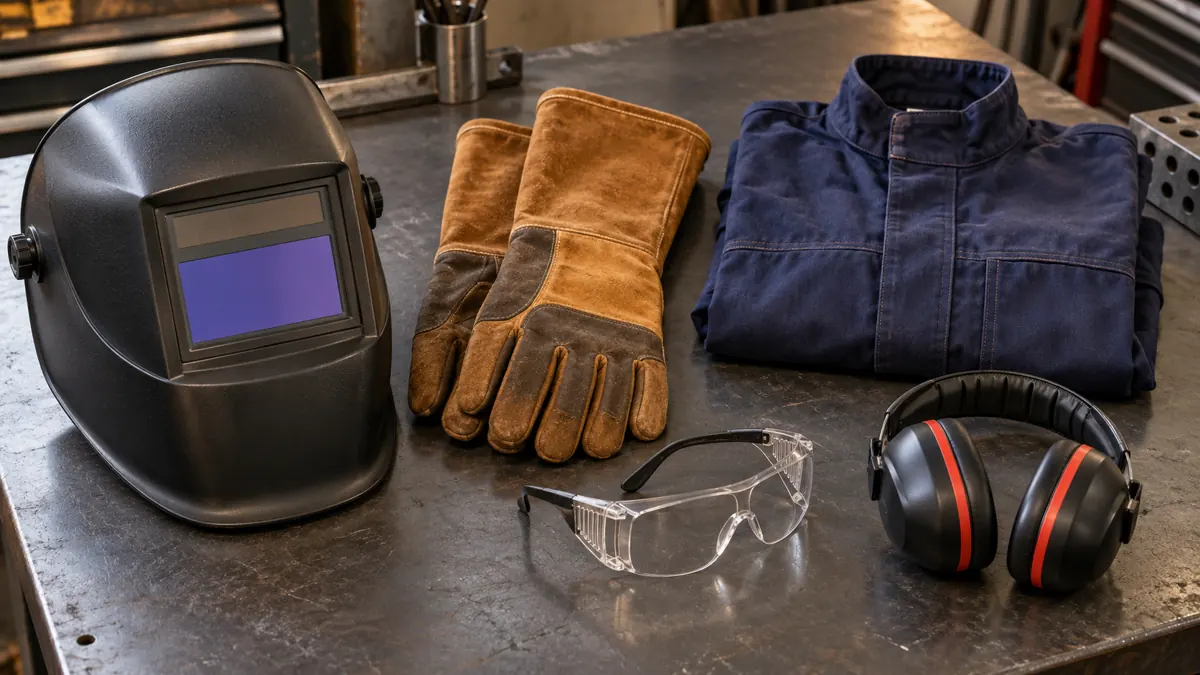
Welding Safety Equipment Checklist for Home Shops
A home-shop welding safety checklist covering personal protection, the welding station, surrounding hazards and post-work checks.
-
Welding Safety Equipment Checklist
A welding safety equipment checklist should connect each item to a hazard. Buying a helmet and gloves leaves gaps if fumes, noise, flying particles,…
-
Welding Safety Rules Every Beginner Should Know
A welding safety routine must control the work area as well as protect the person holding the torch. A helmet cannot stop a fire…
-

Welding Lens Shade Chart for Beginners
Use this beginner welding lens shade chart to choose safer helmet filter shades for stick, MIG, TIG, flux core, plasma, gas welding, and cutting.
-
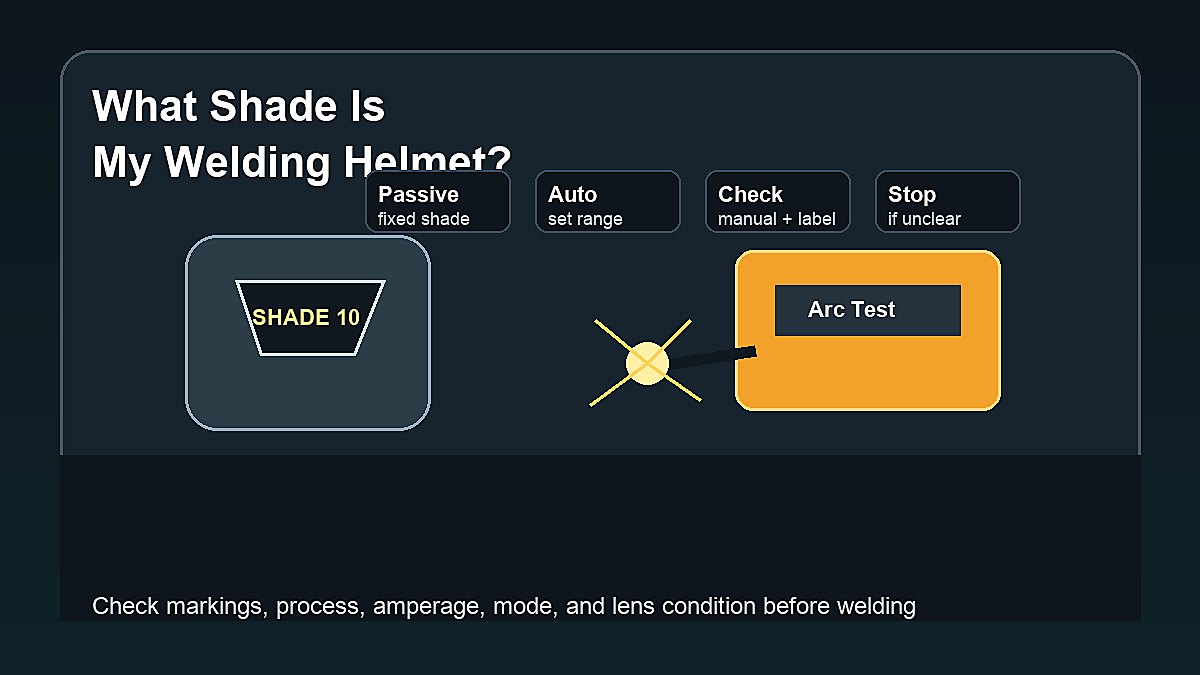
How Do I Know What Shade My Welding Helmet Is?
Learn how to check your welding helmet shade, read markings, use auto-darkening controls, match shade to welding process, and avoid unsafe lens mistakes.
-
How to Clean a Welding Helmet Lens
Learn how to clean a welding helmet lens safely so visibility stays clear without scratching the cover lens or damaging the auto-darkening filter.
Welding Safety FAQ
What PPE does a beginner welder need?
A typical starting set includes a suitable welding helmet, safety glasses, welding gloves, flame-resistant clothing and appropriate footwear. The exact protection depends on the process, task and hazard assessment.
Is welding in a garage safe?
A garage may be suitable only when fire hazards, fumes, power, cylinders, nearby people and stored materials are controlled. An open door alone may not provide adequate fume control.
Can a fan replace welding ventilation?
Not automatically. A fan can move fumes or disrupt shielding gas without controlling exposure. Ventilation should be selected for the process, material, workspace and exposure conditions.
Why is welding on a sealed container dangerous?
Heat can ignite residues or increase pressure, causing fire, explosion or toxic exposure. Unknown and previously used containers require specialized procedures and should not be treated as beginner work.