What Is Welding? Beginner’s Guide to Welding Basics
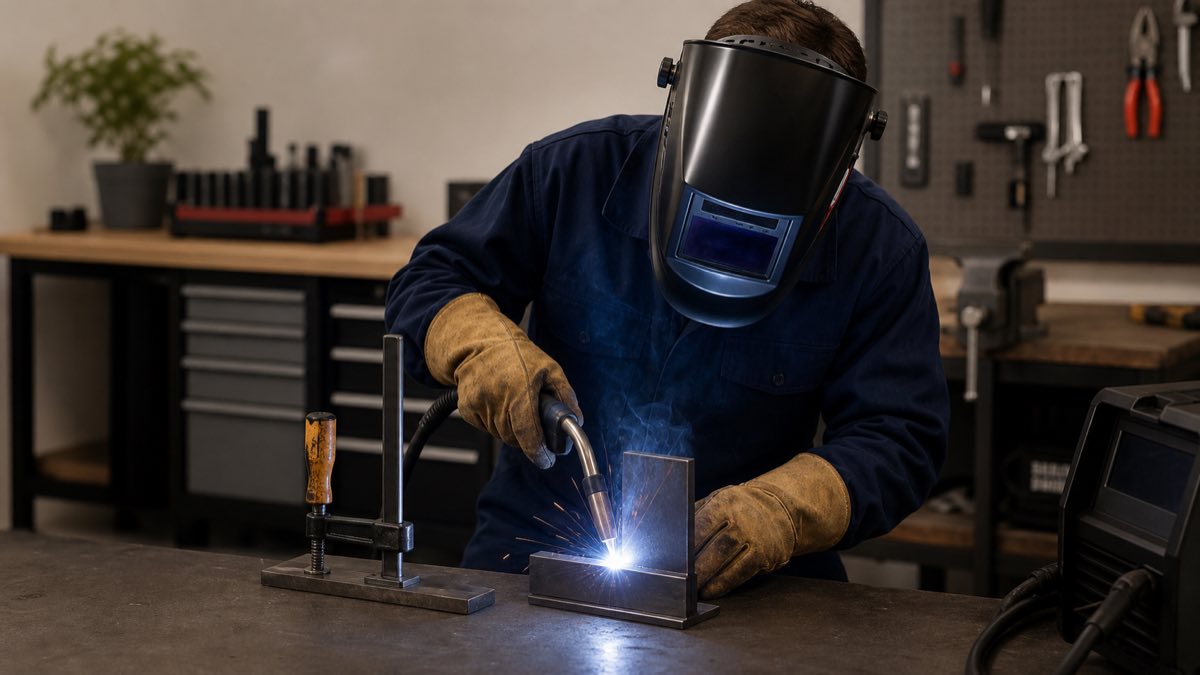
Welding is a metal-joining process that uses heat, pressure, or both to fuse parts together. You see it in shop tables, trailer repairs, gates, brackets, car panels, farm equipment, pipe work, and thousands of everyday metal projects. In most beginner welding, an electric arc creates enough heat to melt the base metal and often a filler metal, forming a strong joint as the molten weld pool cools.
If you are new to welding, the names can feel overwhelming: MIG, TIG, stick, flux core, rods, wire, shielding gas, amperage, polarity, weld pool, slag, and spatter. This guide explains the basics in plain English so you can understand what welding does, how the main processes differ, and what to learn first.
Mark Dawson’s beginner note: Do not judge a weld only by whether the metal sticks together. A useful weld needs the right process, clean material, enough heat, proper joint fit-up, and safe working conditions.
Quick Answer: What Is Welding?
Welding is the process of joining materials, usually metals, by creating a bond at the joint. Most common welding methods use heat to melt the edges of the parts and sometimes add filler metal. When the molten metal cools, it forms a welded joint.
For beginners, the most common welding processes are MIG welding, TIG welding, stick welding, and flux core welding. Each process uses a different setup, but the goal is the same: create a clean, controlled weld that is strong enough for the job.
How Welding Works
Most beginner welding uses an electrical circuit. The welding machine sends current through an electrode, wire, or tungsten torch. When the arc forms between the electrode and the workpiece, it creates intense heat. That heat melts the metal at the joint and forms a small puddle called the weld pool.
The welder controls the arc, travel speed, angle, and filler material. Good control helps the weld pool tie into both sides of the joint. Poor control can cause weak welds, porosity, undercut, too much spatter, or lack of fusion.
Think of a simple steel bracket. If the metal is clean, clamped firmly, and welded with the right heat, the weld can tie both pieces together. If the metal is rusty, the travel speed is too fast, or the arc is unstable, the weld may look raised on top while barely bonding to the base metal underneath.
Main Types of Welding for Beginners
| Process | Best For | Beginner Difficulty | Key Notes |
|---|---|---|---|
| MIG Welding | Garage projects, mild steel, fabrication, auto work | Easy to moderate | Uses wire and shielding gas. Often the easiest process for beginners to start with. |
| Flux Core Welding | Outdoor work, repairs, dirty metal, no-gas setups | Easy to moderate | Similar to MIG but uses flux-filled wire. Creates more smoke and slag. |
| TIG Welding | Clean welds, thin metal, stainless, aluminum | Harder | Uses a tungsten electrode and separate filler rod. Requires more coordination. |
| Stick Welding | Outdoor repair, thicker steel, farm and field work | Moderate | Uses flux-coated rods. Good for rugged work but takes practice to control. |
MIG Welding
MIG welding uses a machine-fed wire electrode and usually a shielding gas. The wire acts as both electrode and filler metal. Because the machine feeds the wire automatically, beginners can focus on torch angle, travel speed, stickout, and keeping the weld pool steady.
For many home shop users, MIG is the first process to learn because it is flexible and easier to practice on mild steel. Start with the MIG Welding hub when you are ready to learn settings, gas, wire, and basic technique.
Flux Core Welding
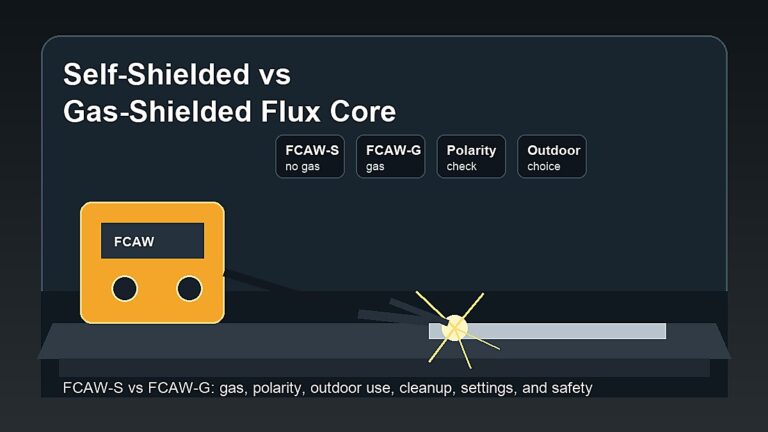
Flux core welding also uses wire, but the wire contains flux inside. Some flux core wires do not require external shielding gas, which makes them useful outdoors where wind can blow away shielding gas. The tradeoff is more smoke, slag, and cleanup.
TIG Welding
TIG welding uses a non-consumable tungsten electrode to create the arc. The welder often adds filler rod by hand while controlling the torch and heat. TIG can make very clean welds, but it takes patience and coordination. It is common for stainless steel, aluminum, thin metal, and precise work.
Stick Welding
Stick welding uses a flux-coated electrode rod. The rod melts into the joint while the flux creates shielding and leaves slag on top of the weld. Stick welding is popular for repair work, thicker steel, outdoor welding, and situations where a simple machine setup is useful.
Basic Welding Equipment Beginners Need
You do not need a huge shop to start learning, but you do need the right safety gear and a sensible setup. A basic beginner welding setup usually includes:
- Welding machine matched to the process you want to learn
- Welding helmet with the correct shade or auto-darkening lens
- Welding gloves suitable for MIG, TIG, or stick welding
- Flame-resistant jacket or sleeves
- Safety glasses for grinding and cleanup
- Clamps, magnets, or fixtures to hold metal securely
- Wire brush, chipping hammer, and grinder for cleaning
- Proper work surface and fire-safe workspace
- Ventilation or fume control appropriate for the work
If you are building your first setup, the Welding Tools & Gear hub will be the place for buying guides, tool lists, helmets, gloves, and beginner equipment comparisons.
Simple Projects That Use Basic Welding
Beginners should start with practice pieces before trying important repairs. Once you can run consistent beads, simple projects can help you learn measuring, cutting, clamping, tacking, and finishing.
- Scrap metal bead practice coupons
- Small steel shelf brackets
- Basic welding table accessories
- Simple cart frame practice
- Gate latch or hinge practice on scrap before real repair work
Avoid safety-critical repairs while learning. Trailer frames, vehicle parts, lifting points, pressure vessels, structural members, and workplace repairs should be handled with qualified training and proper inspection.
Welding Safety Comes First
Welding is useful, but it is not harmless. Welding can involve fire, hot metal, sparks, electric shock, fumes, gas cylinders, ultraviolet radiation, burns, and eye injury. Before practicing, read your machine manual, use proper PPE, remove fire hazards, and make sure the workspace is suitable for welding.
For safety learning, start with the Welding Safety hub. Official references such as OSHA’s welding, cutting, and brazing guidance and the American Welding Society safety resources are also worth reviewing before you begin.
Common Beginner Welding Terms
| Term | Meaning |
|---|---|
| Arc | The electrical discharge that creates welding heat. |
| Weld pool | The molten metal puddle created during welding. |
| Electrode | The wire, rod, or tungsten used to carry the arc. |
| Filler metal | Metal added to fill the joint and build the weld. |
| Shielding gas | Gas that protects the weld pool from contamination. |
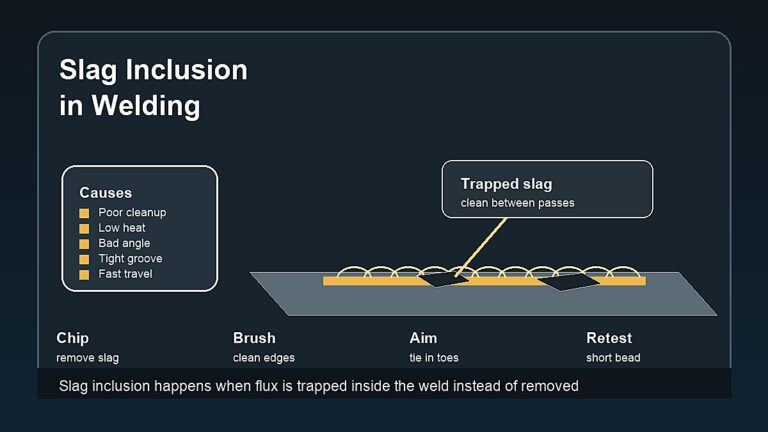
| Slag | A hardened protective layer left by flux-based welding processes. |
| Porosity | Gas holes in the weld caused by contamination, gas problems, or technique issues. |
| Undercut | A groove melted beside the weld that is not properly filled. |
What Should a Beginner Learn First?
The best first step is not buying the most expensive machine. It is learning the basic safety rules, understanding the main welding processes, and practicing on clean scrap metal with simple joints. A good beginner path looks like this:
- Learn basic welding safety and PPE.
- Choose one process to start with, usually MIG or flux core for home shop learning.
- Read the machine manual and understand polarity, wire, gas, and settings.
- Practice running straight beads on clean scrap steel.
- Learn how travel speed, angle, and heat affect the weld.
- Move to simple lap joints, T-joints, and butt joints.
- Study common defects so you can fix problems early.
Once you can run consistent beads, you can move into beginner projects, rod selection, MIG settings, TIG basics, stick welding technique, or weld defect troubleshooting.
Common Beginner Mistakes
- Skipping safety prep: Welding around flammable materials or without proper PPE can create serious risk.
- Welding dirty metal: Paint, oil, rust, and moisture can cause contamination and weak welds.
- Using random settings: Start with the machine chart or manual, then test and adjust on scrap.
- Moving too fast: Excessive travel speed can create narrow, weak welds with poor tie-in.
- Ignoring fit-up: Gaps, poor clamping, and misalignment make welding harder.
- Not learning defects: Porosity, undercut, slag inclusion, and lack of fusion are easier to fix when you know what caused them.
Is Welding Hard to Learn?
Welding is not impossible to learn, but it does take practice. Many beginners can learn basic MIG or flux core welding faster than TIG or stick welding. The hard part is not only making the metal stick together; it is making a weld that is clean, consistent, and suitable for the job.
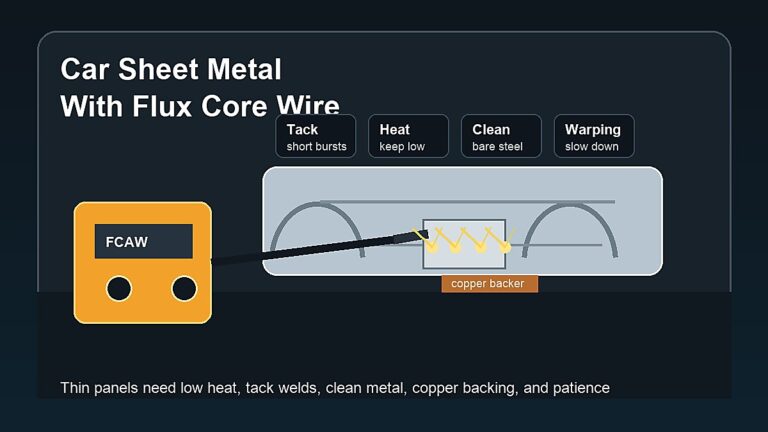
For non-critical practice projects, a beginner can improve quickly with clean material, simple joints, good lighting, correct PPE, and repeated practice. For structural, vehicle, pressure, workplace, or safety-critical welding, get qualified training and professional guidance.
A Practical Beginner Welding Learning Path
Welding becomes easier to learn when you follow a sequence instead of collecting random tips. The goal of your first weeks is not to finish an important repair. It is to build safe habits, understand one machine, and learn what a controlled weld pool looks like on clean practice metal.
Step 1: Understand the processes and risks
Start by comparing the main types of welding. MIG and self-shielded flux core are common starting points for home users, while stick suits rugged outdoor work and TIG demands more coordination. Before striking an arc, review the Welding Safety hub and your machine manual. Learn how the arc, hot metal, fumes, UV radiation, electricity, sparks, and shielding-gas cylinders can affect the work area.
Step 2: Prepare a controlled practice area
Use the home welding setup guide to plan a dry, stable and fire-safe workspace. Keep combustible storage away, provide suitable ventilation or fume control, clamp the work securely, and place tools where you can reach them without crossing hot metal. A helmet, safety glasses, welding gloves and flame-resistant clothing belong in the setup before consumables or project material.
Step 3: Practice one variable at a time
Begin with clean mild-steel coupons and run straight beads. Use the machine chart as a starting point, then change only one variable at a time: travel speed, work angle, arc length or wire speed. Label the practice pieces so you can compare the results. After the beads become more consistent, move to a lap joint, T-joint and butt joint before attempting a useful object.
Step 4: Build simple projects and inspect the result
Choose from these beginner welding projects only after you can produce repeatable practice beads. Measure and tack the project first, check alignment, and then complete short welds without overheating the assembly. Compare each result with the common beginner welding mistakes, especially dirty metal, poor fit-up, random settings, excessive travel speed and weak safety preparation.
This learning path is meant for non-critical practice. Keep a notebook with the machine settings, material thickness, consumable, joint type and result from each session; those records make patterns easier to recognize. Trailer frames, vehicle suspension parts, lifting points, pressure vessels, structural members and workplace repairs require suitable qualifications, procedures and inspection. If failure could injure someone, use trained professional help rather than treating the job as beginner practice.
Beginner Welding FAQ
What is the easiest type of welding for beginners?
MIG welding is often the easiest process for beginners because the machine feeds the wire automatically and the arc is easier to control than TIG or stick. Flux core can also be beginner-friendly, especially for outdoor work.
Can I teach myself to weld?
You can learn basic welding concepts and practice beads on scrap metal, but formal training is strongly recommended for safety, technique, and any work that affects strength or public safety.
What metal should beginners practice welding?
Clean mild steel is usually the best practice material. It is common, affordable, and easier to learn on than aluminum, stainless steel, or very thin sheet metal.
Do you need gas to weld?
Some processes use shielding gas, such as MIG and TIG. Stick welding and many flux core wires use flux instead, so they may not need an external gas cylinder.
Is welding dangerous?
Welding can be dangerous if safety rules are ignored. Risks include burns, eye injury, fire, electric shock, fumes, and UV exposure. Proper PPE, ventilation, fire safety, and training are essential.
What is the difference between welding, brazing, and soldering?
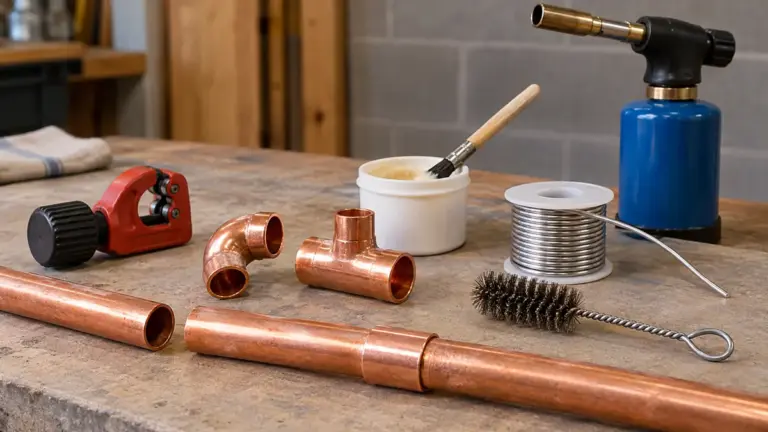
Welding usually melts the base metal at the joint. Brazing and soldering use a filler material that melts below the melting point of the base metal. Welding is generally used when a stronger fused joint is needed, but the right process depends on the material and job.
What type of welding makes the strongest weld?
No single process is always the strongest. A strong weld depends on the material, joint design, preparation, filler metal, settings, technique, and inspection. MIG, TIG, stick, and flux core can all make strong welds when used correctly for the job.
Next Steps
If you are completely new, start with the Welding Basics hub and review Welding Safety before striking an arc. After that, choose one process to learn first: MIG Welding for a beginner-friendly shop setup, Stick Welding for rugged outdoor repair practice, or TIG Welding when you are ready for cleaner, more precise work.