Welding Boots for Beginners
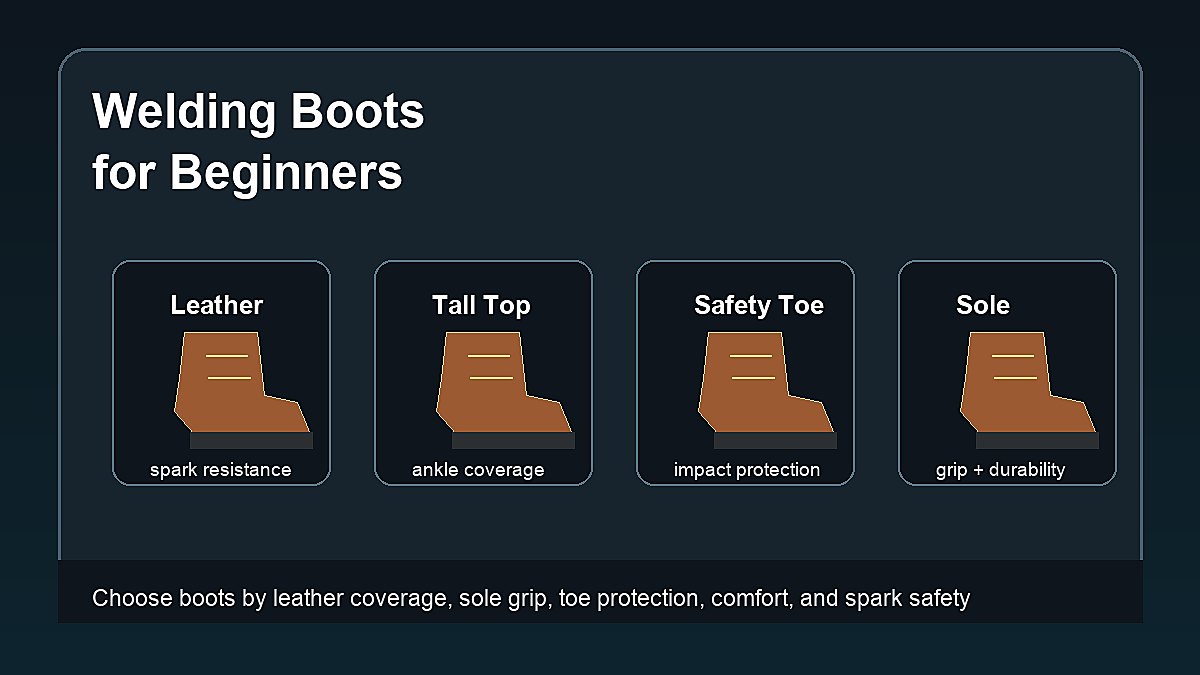
Welding boots for beginners should protect your feet from sparks, hot slag, dropped metal, sharp scrap, and shop surfaces while still being comfortable enough to wear during practice. Good welding boots usually have leather uppers, safe ankle coverage, durable soles, a secure fit, and toe protection suited to the work.
Beginners often focus on the helmet and gloves first, but footwear matters every time sparks fall or a hot coupon lands near your feet. Mesh sneakers, fabric shoes, sandals, and lightweight synthetic work shoes do not belong near welding practice.
Mark Dawson beginner note: if sparks can fall into the top of your shoe, the shoe is wrong for welding. A boot should reduce places where hot metal can enter, melt fabric, or sit against your skin.
Quick Answer
The best welding boots for beginners are sturdy leather work boots with closed uppers, ankle coverage, good sole grip, and enough protection for sparks, hot metal, and dropped parts. Safety toes and metatarsal guards can be useful when handling heavy metal, but the first priority is avoiding fabric, mesh, open tops, and boots that let sparks fall inside.
| Feature | Why It Matters | Beginner Note |
|---|---|---|
| Leather upper | Resists sparks better than fabric | Avoid mesh and synthetic uppers |
| Ankle coverage | Protects from sparks and sharp scrap | Taller boots reduce exposed gaps |
| Safety toe | Helps with dropped metal | Useful for shop handling |
| Metatarsal guard | Protects top of foot | Helpful for heavier work |
| Durable sole | Grip and hot surface resistance | Check condition often |
Why Welding Boots Matter
Welding creates hazards at floor level. Sparks fall, slag breaks loose, cutoffs roll, clamps drop, and hot metal can look cool before it is safe to touch. Your feet are often close to the work area, especially in a small garage or driveway setup.
Ordinary shoes can fail quickly around welding. Mesh can let sparks through. Synthetic fabric can melt. Low-cut shoes leave the ankle exposed. Loose openings can collect hot slag. Thin soles may not hold up well around sharp scrap, grinding dust, or rough concrete.
Boots are part of a complete PPE setup, not an accessory. For the full checklist, read Welding Safety Equipment for Beginners.
Leather Uppers
Leather is common in welding footwear because it handles sparks and abrasion better than fabric. A smooth or full leather upper gives fewer places for sparks to hide compared with mesh panels, open stitching, or soft synthetic material.
This does not mean every leather boot is perfect for welding. Thin fashion leather, large fabric panels, exposed foam, and open designs are poor choices. Look for practical work boots that can handle shop use, not boots made only for appearance.
Leather also needs care. Oil-soaked or chemical-contaminated boots should not be used near sparks. Dry, cracked leather can lose strength. Keep boots clean enough that damage and contamination are easy to spot.
Boot Height and Ankle Coverage
A taller boot gives better ankle coverage than a low work shoe. That matters because sparks and slag often fall downward and bounce. If your pants ride up or a spark lands near your ankle, a taller boot can reduce exposure.
Six-inch and eight-inch work boots are common choices. The exact height depends on comfort, job type, and how your pants fit over the boot. What matters most is that hot debris cannot easily fall into the top opening.
Wear pants over the boot tops unless your PPE setup is specifically designed differently. Tucking pants into boots can create a pocket where sparks and slag collect. Cuffless pants are safer because cuffs can catch hot debris.
Safety Toe vs Soft Toe
A safety toe helps protect against dropped metal, tools, clamps, and workpieces. This is useful in welding because metal parts are often heavy, awkward, and sharp. Steel toe and composite toe boots are common options.
Soft toe boots can still be used for light practice if the overall boot is safe and the work is not heavy. But if you move plate, tubing, cylinders, fixtures, or heavy projects, safety toe protection becomes more valuable.
Do not assume a safety toe makes a boot good for welding. A safety toe protects the front of the foot from impact, but it does not automatically fix fabric uppers, open tops, poor soles, or melted synthetic panels.
Metatarsal Guards
Metatarsal guards protect the top of the foot behind the toe area. They can be built into the boot or added externally on some models. They are helpful when heavy parts, slag, or sparks might hit the top of the foot.
Most home beginners do not need metatarsal guards for every light practice bead, but they are worth considering for fabrication, shop work, farm repair, industrial training, or jobs where heavy metal handling is normal.
If your work involves repeated cutting, grinding, and moving thick material, top-of-foot protection can matter as much as toe protection. A small hot part trapped on the boot tongue can burn through faster than beginners expect.
Sole Grip and Heat Resistance
Boot soles should provide grip on concrete, metal dust, driveway surfaces, and shop floors. Welding areas can become slippery from grinding dust, small cutoffs, water, oil, or clutter. Poor traction can make you stumble while holding hot metal or a torch.
Heat and abrasion also matter. You may step near hot cutoffs, sharp slag, and rough metal. Check the sole for cuts, melting, separation, or embedded metal. A damaged sole can reduce grip and create a trip hazard.
Electrical hazard ratings may be relevant for some work boots, but they do not replace welding electrical safety. Keep the work area dry, inspect leads, and follow the welder manual. For hand and clothing PPE, see Types of Welding Gloves for Beginners and Welding Jacket vs Welding Sleeves for Beginners.
Laces, Pull-On Boots, and Spark Traps
Lace-up boots fit securely, but exposed laces can catch sparks, burn, or wear out. If you use lace-up boots for welding, keep laces tied, avoid frayed ends, and inspect them often. Some welding boots use lace covers or metatarsal flaps to reduce spark exposure.
Pull-on boots remove the lace issue and can shed sparks better when they fit correctly. The tradeoff is that some pull-on boots feel loose for climbing, crouching, or long shop sessions. A loose boot can be unsafe if it affects balance or catches while you move around material.
The best choice is the one that stays secure and does not collect sparks. Avoid boots with deep fabric tongues, open mesh panels, loose straps, or decorative stitching that can trap debris.
Comfort and Fit
Comfort is part of safety. If boots hurt, slip, or feel unstable, you may rush, stand poorly, or avoid wearing them. Welding practice often includes standing, crouching, grinding, cutting, clamping, and moving scrap. The boots should support all of that.
Check toe room, heel hold, arch support, ankle movement, and whether the boot works with your pants. Try crouching and stepping around before welding. A boot that feels fine for walking may pinch when you squat near a low workpiece.
Break-in is normal for leather boots, but pain is not a feature. If a boot distracts you enough that you focus on your feet instead of the weld area, it is not helping your safety.
What Not to Wear
- Mesh sneakers or running shoes.
- Sandals, slip-ons, or open-top shoes.
- Synthetic shoes that can melt from sparks.
- Low-cut shoes that expose ankles.
- Boots with holes, separated soles, or loose laces.
- Oil-soaked or chemical-contaminated footwear.
- Loose pants tucked into boots where sparks can collect.
Beginner Buying Checklist
- Choose leather uppers with minimal fabric panels.
- Pick enough boot height to cover the ankle.
- Consider safety toe protection if handling heavy metal.
- Consider metatarsal protection for heavier shop work.
- Check the sole for grip and durability.
- Avoid designs that catch sparks or slag.
- Make sure pants can sit safely over the boot tops.
- Choose comfort good enough for full practice sessions.
Pants and Boot Openings
Your boots and pants work together. A good boot can still become unsafe if pants are tucked into the top or if cuffs catch sparks. Hot slag does not need a large opening. One small path into the boot can create a painful burn before you can react.
Wear welding-safe pants over the boot tops and avoid rolled cuffs. The pant leg should cover the boot opening without dragging on the floor or catching on clamps. If the pants ride up when you crouch, check the boot height and pant length before welding.
Do not pair good welding boots with thin synthetic pants. Sparks can melt synthetic fabric near the ankle, and that can defeat the point of having protective footwear. Clothing and boots should be planned as one system.
Floor Hazards in a Beginner Shop
The floor around a welding project can become messy fast. Small offcuts, wire ends, grinder dust, clamps, extension cords, and hot coupons all create foot hazards. Boots help, but they do not replace a clean work area.
Before welding, clear a stable standing area. Make sure leads and cords are routed so you are not stepping over them while holding the torch or stinger. Keep hot parts in a marked location instead of dropping them randomly near your feet.
Good soles matter in this environment. A boot with poor traction can slip on dust, metal chips, or smooth concrete. If the tread is worn flat or packed with debris, clean or replace the boots before the shop floor becomes part of the problem.
Different Jobs Need Different Foot Protection
Light bench practice does not create the same foot risk as cutting plate, repairing farm equipment, or moving heavy tubing. Match the boot to the work. A sturdy leather soft-toe boot may be fine for short practice beads, while fabrication and repair work often justify safety toes and better top-of-foot protection.
Plasma cutting and grinding can send sparks and hot debris across the floor. Stick welding and flux core welding can create more slag and spatter. MIG and TIG may feel cleaner, but dropped parts, sharp edges, and hot coupons still matter.
If the job involves cylinders, heavy fixtures, trailer parts, vehicle parts, or structural material, use boots suited to that environment and get proper training. Footwear is only one layer of risk control.
Budget Advice for First Boots
Beginners do not need the most expensive boots on day one, but they should avoid false savings. A cheap pair with mesh panels, poor soles, or open tops is not a welding bargain. Spend first on leather coverage, secure fit, and basic durability.
If you already own leather work boots, inspect them honestly. They may be acceptable for light practice if they cover the ankle, fit well, and have no fabric panels or major damage. If they have holes, melted areas, loose soles, or exposed foam, retire them from welding use.
Upgrade when the work gets heavier. Safety toes, metatarsal guards, lace covers, and tougher soles become more useful as you handle larger parts, cut more material, and spend longer hours in the shop.
Boot Care and Inspection
Inspect boots before welding. Look for holes, cracked leather, burned laces, separated soles, exposed foam, loose stitching, and embedded metal. Replace or repair boots that no longer protect properly.
Clean off grinding dust, slag, and metal chips. Let wet boots dry naturally away from high heat. Do not keep welding in boots contaminated with oil, fuel, solvent, or unknown chemicals.
Store boots away from sharp scrap and welding spatter. Treat them like PPE, not just footwear. If a boot has been badly burned or soaked with a flammable substance, remove it from welding use.
Common Beginner Mistakes
- Welding in sneakers because it is only practice.
- Tucking pants into boots and creating a spark pocket.
- Buying safety toes with unsafe fabric uppers.
- Ignoring frayed laces and open tongues.
- Standing on cluttered floors with poor sole grip.
- Handling hot metal near shoes with exposed mesh.
- Forgetting that grinding and cutting create foot hazards too.
Safety Notes
Welding boots are one part of PPE. You still need a welding helmet, safety glasses, gloves, flame-resistant clothing, ventilation, fire control, and safe workholding. Welding can involve sparks, hot metal, electric shock, fumes, UV radiation, and fire hazards.
Review OSHA foot protection requirements, OSHA welding hazards guidance, and AWS safety resources. For helmet protection, read Types of Welding Helmets for Beginners.
FAQ
What boots should beginners wear for welding?
Beginners should wear sturdy leather work boots with ankle coverage, durable soles, and a secure fit. Safety toes are useful when handling heavy metal, but fabric or mesh shoes should be avoided.
Are steel toe boots good for welding?
Steel toe boots can be good for welding when the rest of the boot is suitable: leather upper, safe coverage, durable sole, and no spark-catching design. The safety toe alone does not make a boot welding-safe.
Can I weld in regular work boots?
Some regular leather work boots can work for light welding practice if they cover the ankle and do not have mesh, fabric panels, open tops, or damaged soles. Check the boot condition and design before welding.
Should pants go over welding boots?
Yes, pants usually should go over boot tops so sparks and slag do not fall inside. Avoid cuffs that can catch hot debris.
Do beginners need metatarsal welding boots?
Not always. Metatarsal guards are helpful for heavier shop work, dropped material, and top-of-foot exposure. Light home practice may not require them, but they add protection when the work gets heavier.
Final Advice
For beginners, welding boots should be leather, secure, protective, and hard for sparks to enter. Start with sturdy leather work boots that cover the ankle, then add safety toe or metatarsal protection when your projects involve heavier metal handling. Do not weld in mesh, synthetic, open, or damaged footwear.