Welding Jacket vs Welding Sleeves for Beginners

Welding jacket vs welding sleeves is a practical PPE choice for beginners. A welding jacket gives more complete upper-body coverage, while welding sleeves protect the arms and can feel cooler during light shop work. The safer choice depends on sparks, spatter, welding position, material, process, heat, comfort, and whether your torso and wrists stay covered.
Beginners often want the lightest protection that feels comfortable. Comfort matters, but uncovered skin can be burned by sparks, hot metal, and UV radiation from the arc. The goal is not to dress heavily for every tiny tack weld; it is to match protection to the hazard without leaving obvious gaps.
Mark Dawson beginner note: if you are unsure whether sleeves are enough, start with more coverage. It is easier to remove protection after you understand the job than to learn about spatter, slag, or arc burn the hard way.
Quick Answer
A welding jacket is better when you need full torso and arm protection from sparks, spatter, heat, and UV exposure. Welding sleeves are better for lighter work when your torso is already protected by suitable flame-resistant clothing and you mainly need arm coverage. Most beginners should own a jacket first, then add sleeves for lighter MIG, TIG, fitting, and short practice sessions.
| Option | Best For | Beginner Note |
|---|---|---|
| Welding jacket | Full upper-body protection | Best first choice for sparks and spatter |
| Welding sleeves | Arm protection with cooler fit | Only works if torso clothing is safe |
| Leather jacket | Heavy sparks, stick, flux core | More protection, hotter to wear |
| FR cotton jacket | Light MIG/TIG shop work | Cooler but less spatter resistant than leather |
| Leather sleeves | Arm and wrist spark protection | Watch for chest and neck gaps |
What a Welding Jacket Does
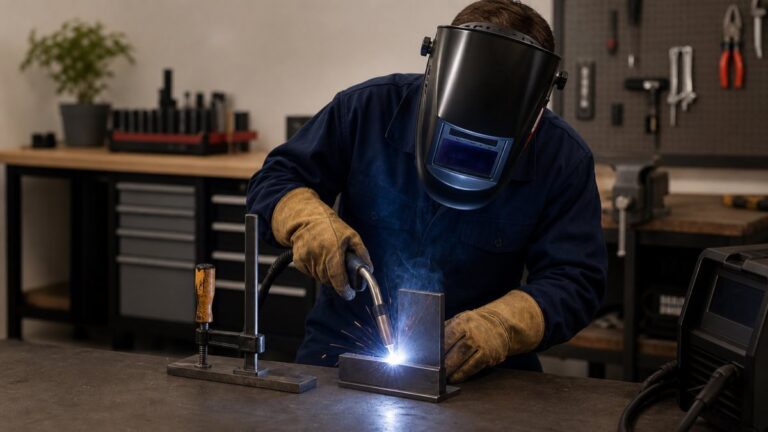
A welding jacket covers the torso, shoulders, arms, and usually the wrists. It helps protect against sparks, spatter, hot slag, radiant heat, and UV exposure. A jacket also reduces the chance that sparks fall into shirt pockets, sleeve openings, or gaps around the waist.
This makes a jacket a strong first PPE purchase. It is especially useful when you are learning because beginners change angle, distance, and body position often. One awkward tack weld can send sparks in a direction you did not expect.
A jacket should fit well enough to move in without hanging loose around the torch, grinder, or rotating tools. It should button, snap, or close securely. Open front gaps can catch sparks and expose ordinary clothing underneath.
What Welding Sleeves Do
Welding sleeves protect the arms from wrist to upper arm or shoulder, depending on design. They are popular because they are cooler and easier to put on than a full jacket. Sleeves can be useful for short welds, light TIG work, fitting, cutting, grinding, and practice where the main exposure is on the forearms.
The weakness is coverage. Sleeves do not protect your chest, stomach, neck, or shirt front. They also may leave gaps at the wrist or upper arm if they do not overlap gloves and clothing. For sleeves to be safe, the rest of your clothing still needs to be suitable for welding.
Sleeves are an addition to PPE, not a shortcut around it. If you wear sleeves over a thin synthetic shirt, the sleeves may protect your arms while your torso stays vulnerable to sparks and melted fabric.
Leather vs FR Cotton
Leather welding jackets and sleeves handle heat, sparks, and spatter well, which is why they are common for stick welding, flux core welding, overhead work, and rough repair jobs. Leather can feel hot and heavy, but the extra protection can be worth it when sparks and slag are frequent.
Flame-resistant cotton is lighter and cooler. It can work well for lighter MIG or TIG practice when spatter is limited and the job is controlled. It is not the same as ordinary cotton workwear. Look for clothing intended for welding or flame-resistant use, and follow the manufacturer’s care instructions because washing and contamination can affect performance.
Synthetic shirts, polyester hoodies, nylon jackets, and stretchy athletic clothing should stay away from welding. Sparks can melt synthetic fabric into skin. If you use sleeves, make sure the shirt underneath is not creating a new hazard.
MIG, TIG, Stick, and Flux Core Choices
MIG welding often works well with an FR cotton jacket for light shop practice, but heavier spatter or longer sessions may call for leather sleeves or a leather jacket. If you are learning on mild steel and doing repeated beads, think about comfort and consistent coverage.
TIG welding usually creates less spatter, so sleeves plus proper FR clothing can be practical for some light bench work. Do not let the cleaner process fool you. TIG still produces UV radiation and hot metal, and exposed forearms can burn even when there is little visible spatter.
Stick welding and flux core welding often throw more sparks, slag, and spatter. Beginners using these processes should lean toward a jacket or leather sleeves with safe torso clothing. For hand protection with these processes, read Types of Welding Gloves for Beginners.
When a Jacket Is the Better Choice
- You are brand new and still learning body position.
- You are stick welding or flux core welding.
- You are welding overhead, vertical, or in awkward positions.
- Sparks can hit your chest, stomach, shoulders, or neck area.
- You are working around slag, heavy spatter, or hot repair parts.
- Your shirt is not welding-safe.
- You want one simple first PPE choice with fewer coverage gaps.
A jacket is not perfect. It can be hot, bulky, and uncomfortable in warm weather. But for many beginners, it removes guesswork. If the jacket fits and closes correctly, it gives more predictable coverage than sleeves alone.
When Sleeves Make Sense
- Your torso is already covered with suitable FR clothing.
- The job is light MIG or TIG work with limited spatter.
- You need cooler protection for short practice sessions.
- You are fitting, tacking, or doing bench work with controlled sparks.
- The sleeve cuffs overlap your gloves and shirt correctly.
- You are not welding overhead or in a position where sparks fall onto your body.
Sleeves are useful when they are part of a complete clothing plan. They are not enough if they leave the chest exposed, ride up at the wrist, or sit over unsafe fabric.
Fit, Gaps, and Overlap
Good PPE coverage depends on overlap. Gloves should overlap sleeves or jacket cuffs. The jacket front should close. The collar should not leave your neck exposed to sparks. Sleeves should stay in place when you reach, bend, or change torch angle.
Loose clothing can catch on clamps, grinders, wire, rods, and sharp corners. Tight clothing can restrict movement and make you fight your body position. Try the jacket or sleeves in the same posture you will use while welding, not only while standing upright.
Look for practical details: secure snaps, good stitching, wrist coverage, high-wear reinforcement, and fabric that does not feel flimsy. A tiny wrist gap can be enough for spatter to find skin.
Heat Stress and Comfort
More coverage can also mean more heat. Beginners should take heat stress seriously, especially in garages, summer weather, or longer practice sessions. A leather jacket can protect well but may become uncomfortable if you keep welding without breaks.
Plan short sessions, drink water, improve shop airflow, and pause before fatigue affects judgment. Do not remove PPE while the hazard is still present. Instead, choose the right material and session length so you can stay protected without overheating.
Sleeves can be a comfort upgrade for lighter jobs, but comfort should not create exposed skin. If sparks are hitting your shirt, switch to a jacket or heavier protection.
Welding Position Changes the Choice
Flat bench welding is usually easier to protect against because sparks tend to fall away from the body. Vertical, overhead, and awkward repair positions are different. Sparks and slag can land on the shoulders, chest, neck, cuffs, and lap. In those positions, sleeves alone leave too many exposed areas for most beginners.
Overhead welding is a special case. Beginners should avoid overhead practice until they have safe supervision and proper PPE, because hot spatter can fall directly onto clothing and skin. A leather jacket, full gloves, helmet, safe cap or head coverage, and careful work positioning are much more appropriate than light sleeves.
Even simple tack welding can change risk when the part is clamped above waist height or at an angle. Before starting, imagine where sparks will fall. If the likely path crosses your shirt, neck, or waist, a jacket is the better choice.
Pockets, Collars, and Small Details
Small clothing details matter in welding. Open chest pockets can catch sparks. Frayed cuffs can burn. Loose strings can ignite or catch on tools. A collar that leaves the neck open can allow UV exposure and spatter burns, especially when you lean close to the work.
A good welding jacket closes securely and does not leave an easy path for sparks. Snaps are common because they are easier to close with gloves than tiny buttons. Some jackets have stand-up collars, inside pockets, or reinforced sleeves. Those details are useful only if the jacket still fits and is comfortable enough to wear.
If you choose sleeves, check the upper-arm attachment. Elastic, snaps, straps, or shoulder coverage should keep the sleeve from sliding down while you reach. A sleeve that slips during a weld can expose skin at the exact wrong time.
Hot Weather and Short Practice Sessions
Hot weather is one reason beginners reach for sleeves. That is understandable, but the safer answer is usually better session planning, not bare skin. Shorter practice runs, shade, airflow, hydration, and lighter FR clothing can help reduce heat stress while keeping protection in place.
If the job is light TIG or short MIG tacks on a bench, sleeves over safe FR clothing may be reasonable. If the job is flux core outside, stick welding, heavy grinding, or repair work with unknown spark direction, a cooler feeling is not enough reason to leave the torso exposed.
Stop before fatigue changes your decisions. Heat, sweat, and discomfort can make beginners rush, skip checks, or remove PPE too early. A slightly slower session with proper protection is better than a longer session that ends with burned arms or clothing.
First-Buy Decision Guide
If you can only buy one item, choose a welding jacket. It gives broader protection and works across more beginner situations. A medium-weight FR cotton jacket can be a comfortable first option for light MIG and TIG, while leather or leather-panel jackets make more sense for stick, flux core, and heavier sparks.
Add sleeves when you already understand your process and want cooler arm protection for controlled tasks. Sleeves are also useful as backup protection for fitting, cutting, and quick shop work, but they should not replace the jacket for jobs with heavy spatter or uncertain body exposure.
A practical beginner kit can include one jacket for real welding practice and one pair of sleeves for lighter prep or short controlled welds. That gives flexibility without turning sleeves into the only layer of protection.
Care and Inspection
- Inspect for holes, burns, torn seams, and thin spots.
- Keep clothing dry and free from oil, solvents, and fuel.
- Follow the manufacturer’s washing instructions for FR cotton.
- Replace gear that no longer closes or stays in place.
- Shake out sparks, slag, and grinding dust after work.
- Store jackets and sleeves away from sharp scrap and chemical contamination.
FR clothing can lose effectiveness if it is contaminated or cared for incorrectly. Leather can dry, crack, or become stiff. PPE should be checked like any other tool before the job starts.
Beginner Setup Recommendation
If you are building your first welding PPE kit, start with a jacket, helmet, safety glasses, gloves, leather boots, and a fire-safe workspace. Add sleeves later for lighter jobs where the jacket feels excessive but your torso clothing is still safe.
This approach keeps the first setup simple. For a complete list, read Welding Safety Equipment for Beginners. For helmet selection, see Types of Welding Helmets for Beginners. For first-shop setup, read What Beginners Need to Start Welding.
Common Beginner Mistakes
- Using sleeves over a synthetic shirt.
- Leaving wrist gaps between gloves and sleeves.
- Welding overhead with light clothing.
- Choosing comfort while ignoring spatter direction.
- Wearing an open jacket front near sparks.
- Assuming TIG does not need skin protection.
- Continuing to use burned or oil-contaminated clothing.
- Forgetting that grinding and cutting also create sparks.
Safety Notes
Welding jackets and sleeves help protect skin and clothing, but they do not replace a helmet, safety glasses, gloves, ventilation, fire control, or safe workholding. Welding can involve UV radiation, hot metal, sparks, electric shock, fumes, and fire hazards.
Review OSHA welding hazards guidance, OSHA personal protective equipment requirements, and AWS safety resources. For shade selection around arc exposure, read Welding Lens Shade Chart for Beginners.
FAQ
Are welding sleeves enough for beginners?
Welding sleeves can be enough for light work only when the torso is covered by suitable flame-resistant clothing and there are no major coverage gaps. A jacket is safer for many beginners because it gives fuller protection.
Is a leather welding jacket better than FR cotton?
Leather usually handles sparks and spatter better, while FR cotton is lighter and cooler. Leather is often better for stick, flux core, and rough work. FR cotton can work for lighter MIG or TIG when conditions are controlled.
Can I weld in a regular cotton shirt?
Ordinary cotton is better than synthetic fabric, but it is not the same as welding-rated flame-resistant clothing. For welding, use PPE intended for heat, sparks, and arc exposure.
Why should I avoid polyester while welding?
Polyester and other synthetic fabrics can melt when hit by sparks or heat. Melted fabric can stick to skin and make burns worse.
Should sleeves overlap welding gloves?
Yes. Sleeves and gloves should overlap so sparks cannot reach the wrist. Check the overlap while your arms are in the actual welding position.
Final Advice
For most beginners, a welding jacket is the better first choice because it gives fuller protection with fewer gaps. Welding sleeves are useful later for lighter jobs, but only when the rest of your clothing is safe for welding and the process does not expose your torso to sparks, spatter, or UV radiation.