Welding Cart for Beginners
Beginner guide to welding carts: welder fit, gas cylinder chains, shelves, cable hooks, wheels, stability, storage, and small-shop safety.

Welder reviews, helmets, gloves, tables, carts, plasma cutters, and buying guides.

Beginner guide to welding carts: welder fit, gas cylinder chains, shelves, cable hooks, wheels, stability, storage, and small-shop safety.

Beginner guide to welding tables: steel tops, size, thickness, clamping, grounding, fire safety, height, portability, and first shop setup.

Compare the main types of welding gloves for beginners, including MIG, TIG, stick, flux core, leather, heat-resistant, and cut-resistant glove choices.

Compare welding jackets and welding sleeves for beginners, including coverage, comfort, materials, heat, sparks, fit, and when each one makes sense.

Compare the main types of welding helmets for beginners, including passive, auto-darkening, fixed shade, variable shade, flip-front, and PAPR helmets.

Choose a beginner welder by the material, workspace and power supply you have. A large advertised maximum amperage is less useful than stable control in the range your actual work needs. This page is a buying framework, not a tested ranking or a promise that one machine suits every beginner.

Beginner welding gloves should match the process and the movements you need to make. A thick glove that works for heavy spark exposure may make TIG filler control awkward. A thin, dexterous glove can be unsuitable for a hotter task. This guide compares selection criteria rather than claiming hands-on product tests.

Beginner checklist for welding safety equipment: helmets, gloves, jackets, safety glasses, respirators, ventilation, fire protection, and shop setup.

The best welding helmet for a beginner is one that provides appropriate protection, fits securely and lets the wearer use its controls correctly. This is a selection guide, not a hands-on product ranking. It does not claim that a particular model has been tested by WeldingPilot.
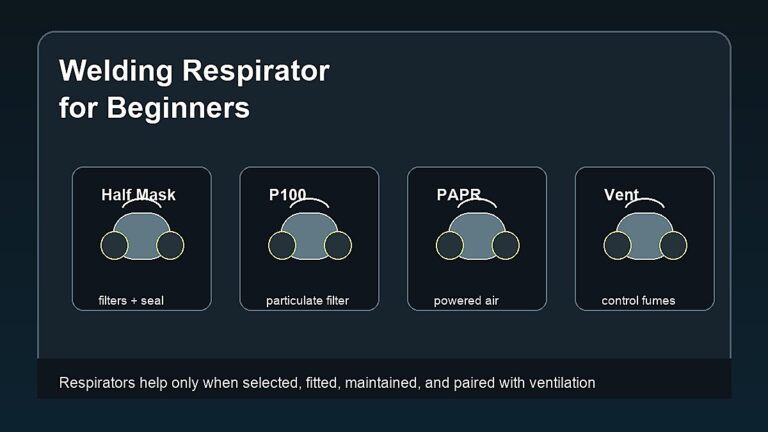
Beginner guide to welding respirators: fumes, P100 filters, half masks, PAPR helmets, fit, seal checks, ventilation, cartridges, and safety limits.