Different Flux Core Welding Wire Types Explained
Learn the main flux core welding wire types, how to read common wire labels, and how beginners can choose the right wire for the job.

Flux core wire, gasless MIG, auto body repair, stainless, and beginner flux welding guides.
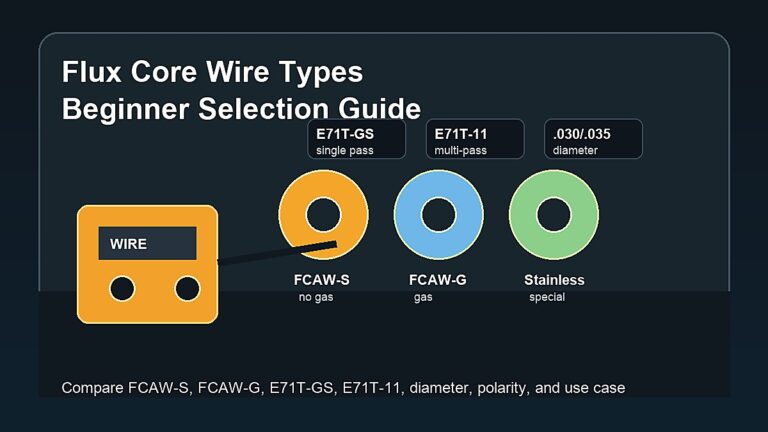
Learn the main flux core welding wire types, how to read common wire labels, and how beginners can choose the right wire for the job.
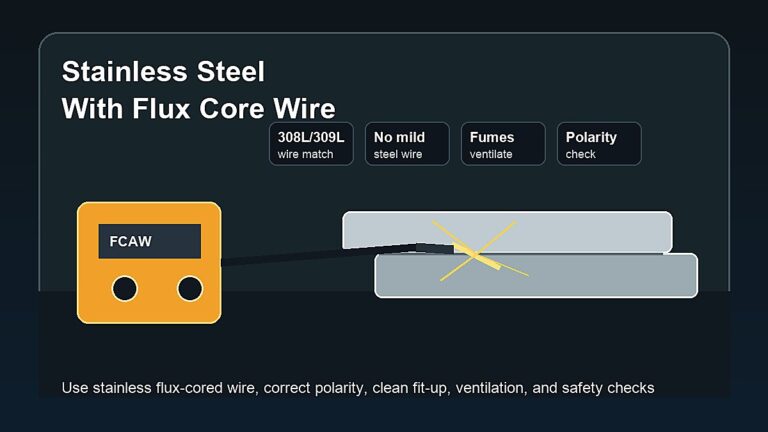
Learn whether flux core works on stainless steel, which wire matters, what beginners should avoid, and when TIG or gas MIG is a better choice.

For a beginner choosing between solid-wire MIG and self-shielded flux core, start with the workspace and material. MIG is often convenient for clean steel in a sheltered shop. Self-shielded flux core can remove the need for a gas cylinder, but adds slag cleanup and typically more smoke and spatter.
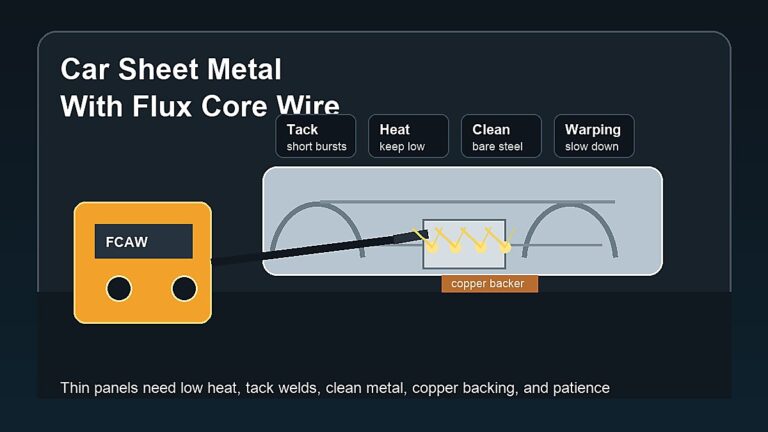
Learn whether flux core wire works on car sheet metal, what can go wrong, and how beginners can reduce burn-through, warping, and messy welds.
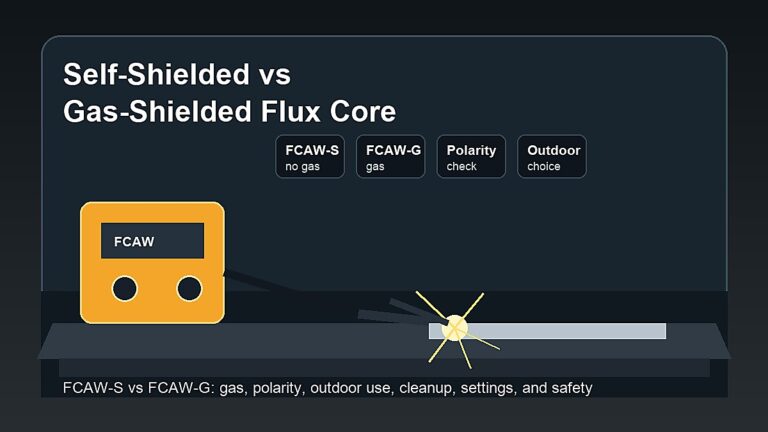
Compare self-shielded and gas-shielded flux core wire for beginners, including gas needs, polarity, outdoor use, weld appearance, cleanup, and safety.
Self-shielded flux-core welding uses tubular wire whose flux provides shielding. It does not require an external gas cylinder, but it still creates fumes, spatter and slag. Gas-shielded flux-cored wire is a different consumable and does require the specified gas.
A beginner guide to flux core welding settings, including voltage, wire speed, polarity, stickout, drag angle, travel speed, test beads, and safety checks.
A beginner comparison of stick vs flux core welding covering learning curve, cost, outdoor use, material thickness, cleanup, safety, and first-machine choice.
A beginner step-by-step guide to MIG welding flux core with self-shielded wire, polarity, setup, drag angle, stickout, slag cleanup, and safety checks.
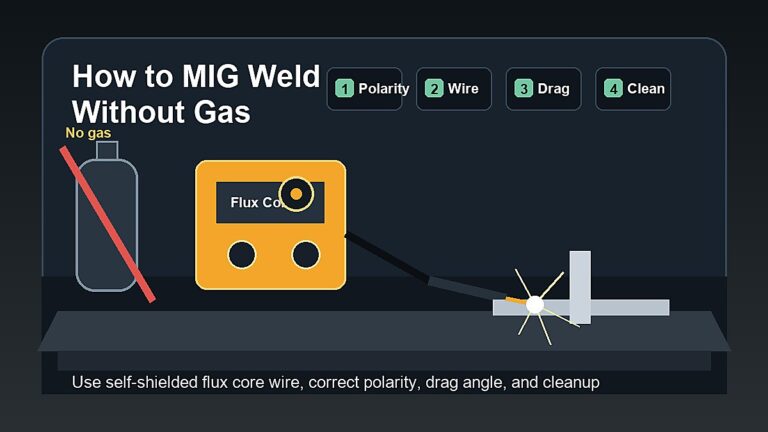
Step-by-step beginner guide to MIG welding without gas using self-shielded flux core wire, with setup, polarity, technique, troubleshooting, and safety tips.