Self-Shielded vs Gas-Shielded Flux Core Wire
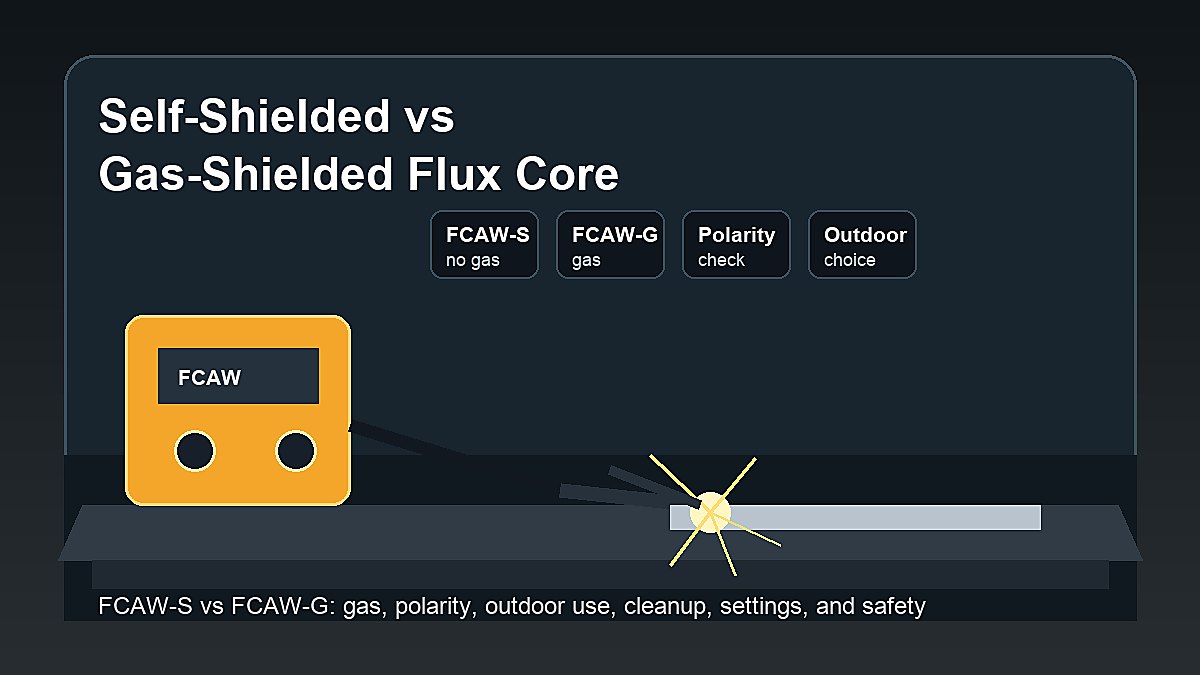
Self-shielded vs gas-shielded flux core wire is one of the first things beginners need to understand before buying wire or changing settings. Both wires are flux-cored, but they are not used the same way. Self-shielded flux core wire creates its own shielding from the flux inside the wire. The gas-shielded type also uses flux, but it still needs an external shielding gas.
The mistake is assuming every spool labeled “flux core” is gasless. Some flux-cored wires are made for no-gas welding. Others are made for gas-shielded work. If you run the wrong wire with the wrong setup, the weld can become porous, smoky, spattery, weak-looking, or nearly impossible to tune.
Mark Dawson beginner note: always read the wire label before loading a spool. The label tells you whether the wire needs gas, what polarity it wants, what positions it supports, and what settings range to start with. Guessing wire type is a fast way to create bad welds.
Quick Answer
Self-shielded flux core wire, often called FCAW-S, does not need an external shielding gas and is usually the better beginner choice for outdoor, portable, and no-gas welding. FCAW-G, often called dual shield, needs external shielding gas and is more common for shop, fabrication, and higher-deposition work. Beginners should usually start with self-shielded wire unless their machine, gas setup, and project specifically call for dual shield wire.
| Feature | Self-Shielded Flux Core | Gas-Shielded Flux Core |
|---|---|---|
| Gas bottle | Usually not needed | Required |
| Common name | FCAW-S, gasless flux core | FCAW-G, dual shield |
| Outdoor use | Better for wind and portability | Gas shield must be protected |
| Beginner fit | Simpler setup | More advanced setup |
| Polarity | Check label; often DCEN for many wires | Check label; often different from FCAW-S |
What Self-Shielded Flux Core Wire Is
Self-shielded flux core wire has ingredients inside the tubular wire that create shielding as the wire burns. That shielding helps protect the molten weld pool from the surrounding air. Because the wire creates its own shielding, no external gas cylinder is normally needed.
This is the wire most beginners mean when they say “gasless MIG” or “no-gas flux core.” It is popular for small 120V machines, garage repairs, outdoor practice, and portable welding. For step-by-step technique, read How to MIG Weld Flux Core for Beginners.
What Gas-Shielded Flux Core Wire Is
The gas-assisted version also has flux inside the wire, but it is designed to be used with external shielding gas, often CO2 or an argon/CO2 blend depending on the wire and procedure. The flux and gas work together to protect and shape the weld.
This process is common in heavier fabrication and shop environments. It can offer high deposition rates and good productivity, but it is not the simplest first setup for most beginners. You need the correct gas, regulator, flow rate, polarity, machine output, and wire type.
Why the Difference Matters
The difference matters because the shielding method changes the entire setup. Self-shielded wire is designed to protect itself. A dual shield wire expects an external gas shield. Running gas-shielded flux core without gas can produce severe porosity and poor weld quality.
Polarity may also be different. Many self-shielded beginner wires use DCEN, but you must check the label. Dual shield products often use a different polarity. Treat each wire spool as its own instruction source, not as a generic flux core product.
Which Wire Is Better for Beginners?
Self-shielded flux core is usually better for beginners because the setup is simpler. You do not need a gas bottle, regulator, hose, gas flow setting, or wind protection for a gas shield. That makes it easier to focus on polarity, stickout, drag angle, travel speed, and slag cleanup.
Dual shield wire can be excellent, but it adds more variables. Beginners who already have a capable machine, proper gas setup, and a shop environment may learn it later. For a first no-gas setup, self-shielded wire is usually the cleaner learning path.
Outdoor vs Indoor Use
Self-shielded wire is a strong choice outdoors because it does not depend on an external gas cloud. Wind can still create smoke and safety problems, but it will not blow away a gas shield the same way it can with gas MIG or gas-shielded flux core.
FCAW-G works best where the shielding gas can be protected. In a shop, it can be productive and clean enough for serious fabrication when used correctly. Outside in wind, gas coverage can become unreliable unless the work is shielded from drafts.
Polarity and Settings
Polarity must match the wire. Many self-shielded flux core wires use DCEN, but not every wire follows the same pattern. Gas-assisted flux core often uses DCEP, but again, the wire label and procedure matter. Never assume based on the word “flux.”
Voltage, wire speed, stickout, and contact-tip-to-work distance also depend on the exact wire and material thickness. For more setup detail, read Flux Core Welding Settings for Beginners.
Weld Appearance and Cleanup
Self-shielded flux core often produces more smoke, spatter, and slag than gas MIG. The weld can be strong when done correctly, but beginners should expect cleanup. Chip and brush slag before judging the bead or adding another pass.
Dual shield can produce productive welds in the right shop setup, but it still creates slag and needs cleanup. It is not the same as solid wire MIG. The weld appearance, slag system, gas, and settings depend on the wire classification and procedure.
Common Wire Label Terms
- FCAW-S: self-shielded flux-cored arc welding.
- FCAW-G: gas-shielded flux-cored arc welding.
- Gasless: usually means self-shielded, but still verify the label.
- Dual shield: common shop term for gas-shielded flux core.
- DCEN or DCEP: polarity requirement.
- E71T-11 and similar codes: wire classification details.
Can You Use Gas With Self-Shielded Wire?
Do not add gas to self-shielded wire unless the manufacturer says the wire is designed for that use. More shielding is not automatically better. Flux core wires are engineered for specific shielding methods, polarity, and operating ranges.
Adding the wrong gas or using the wrong setup can change arc behavior and weld quality. Follow the wire data sheet, not shop rumors. If the label says self-shielded, set it up as self-shielded unless the manufacturer documentation says otherwise.
Can You Run Gas-Shielded Flux Core Without Gas?
No. A gas-assisted flux core wire is designed to use external shielding gas. Running it without gas can cause porosity and poor weld quality because the wire is not providing all the shielding by itself. This is a common beginner mistake when buying the wrong spool.
If your weld suddenly has holes, heavy contamination, and a terrible arc after changing wire, check whether the new wire requires gas. Do that before blaming the machine or your technique.
How to Identify the Wire Before Welding
Look at the spool label, box, or data sheet before loading the wire. Search for words such as self-shielded, gas-shielded, gasless, dual shield, FCAW-S, FCAW-G, polarity, shielding gas, and wire classification. If the label lists a shielding gas and flow rate, the wire is not meant to run without gas.
Also check wire diameter. A beginner machine may be set up for 0.030 inch wire, while the spool may be 0.035 inch or another size. The drive roll, contact tip, and machine settings must match. For tuning help, use Flux Core Welding Settings for Beginners.
Machine Compatibility
Not every wire-feed welder is ready for every flux core wire. A small no-gas machine may not have a gas solenoid, regulator connection, or output range for gas-shielded flux core. A larger MIG machine may run both, but it still needs the correct drive rolls, polarity, gas, and settings.
Before buying wire, check the machine manual. Look for supported wire diameters, polarity change instructions, duty cycle, and recommended wire types. If the machine only supports self-shielded flux core, buying dual shield wire will create problems rather than better welds.
Common Beginner Mistakes
- Buying gas-shielded wire for a no-gas machine.
- Assuming every flux core spool is self-shielded.
- Using the wrong polarity after changing wire.
- Installing the wrong contact tip or drive roll.
- Trying to use outdoor wind protection rules for shop gas shielding.
- Judging the weld before removing slag.
- Ignoring fumes because there is no gas bottle.
Which Wire Should a Home Beginner Start With?
Most home beginners should start with self-shielded flux core wire that matches the machine. It keeps the setup smaller, avoids gas-cylinder cost, and works for common practice beads, simple brackets, and outdoor learning. It also connects naturally to the no-gas articles on WeldingPilot, including Gasless MIG Welding for Beginners.
Move to gas-shielded flux core later if your projects and equipment justify it. That usually means a capable machine, protected shop environment, proper gas setup, and a reason to use higher-deposition flux core rather than solid wire MIG or self-shielded wire.
How This Affects Weld Quality
Using the correct wire type affects porosity, slag behavior, bead shape, penetration, spatter, and cleanup. A self-shielded wire run with the right polarity and stickout can make useful welds. A gas-shielded wire run without gas can create holes and contamination almost immediately.
If you are troubleshooting bad beads, start with wire identity before settings. Confirm whether the wire is self-shielded or gas-shielded, then check polarity, contact tip, drive roll, metal prep, and travel speed. Many beginner defects start with a spool mismatch, not a lack of effort.
Real Examples for Beginners
Use self-shielded wire for simple driveway practice, light brackets, outdoor repairs, and small jobs where dragging out a gas cylinder would make the setup harder. It is also useful when you are learning how wire speed, voltage, stickout, and travel angle affect the bead.
Use gas-shielded flux core when the job, machine, and shop setup are built for it. That usually means heavier fabrication, longer welds, thicker steel, and a controlled workspace where the gas shield is protected. If the project is still basic garage practice, solid wire MIG or self-shielded flux core may make more sense.
For a home beginner, the simplest decision is this: if your welder has no gas connection, buy self-shielded wire only. If your welder has a gas connection, still check whether the wire is meant for gas. Do not use the presence of a gas bottle as permission to run any flux core spool.
First Test Beads After Changing Wire
Whenever you change from one wire type to another, make test beads on scrap before welding a real part. Clean the steel, set the correct polarity, match the contact tip to the wire, and start with the settings chart or wire data sheet. Run short beads, then chip slag and brush the surface before judging the result.
A good test bead should have steady sound, reasonable bead shape, and tie-in at the edges. If the arc stubs into the plate, burns back, spits heavily, or leaves holes after cleanup, stop and check the basics. Wire identity, polarity, and gas requirement should be checked before fine-tuning voltage or wire speed.
Beginners often keep turning knobs when the real problem is setup. A wrong-polarity self-shielded wire can feel rough even if the wire feed is smooth. A dual shield wire without gas can look contaminated no matter how careful your travel speed is. Fix the setup first, then practice technique.
Troubleshooting Setup Symptoms
- Lots of tiny holes after cleanup: check whether the wire needs gas, then check metal cleanliness and wind.
- Arc feels harsh and bead sits high: confirm polarity, stickout, wire speed, and voltage.
- Wire burns back to the tip: check contact tip size, feed tension, stickout, and voltage balance.
- Slag trapped in the weld: clean between passes and avoid outrunning the puddle.
- Too much smoke indoors: improve ventilation, review fume hazards, and avoid coated or unknown metals.
- Machine overheats quickly: check duty cycle, material thickness, and whether the machine is undersized for the job.
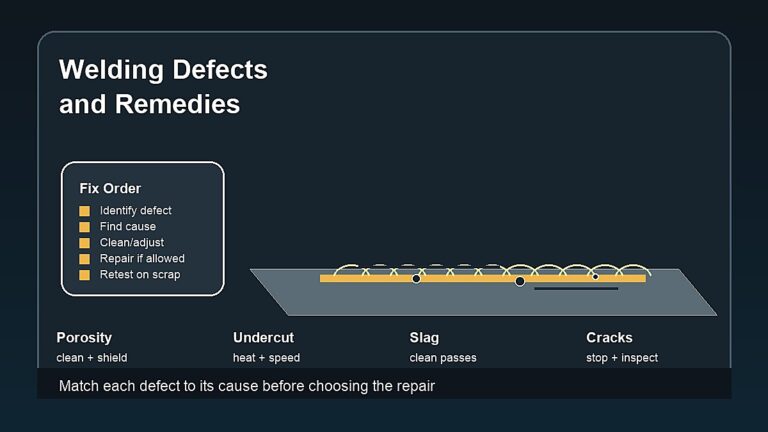
For defect diagnosis beyond wire choice, the Welding Defects hub will help you connect symptoms such as porosity, undercut, slag inclusion, and spatter to likely causes.
Buying Checklist for Beginners
- Confirm the wire is self-shielded if you do not have gas.
- Match wire diameter to your machine, drive roll, and contact tip.
- Check polarity before welding.
- Check position rating if you plan vertical or overhead practice.
- Buy wire that matches mild steel practice if you are starting out.
- Store wire dry and clean.
- Do not buy gas-shielded wire by mistake for a no-gas machine.
Safety Notes
Both self-shielded and gas-shielded flux core welding can create fumes, smoke, sparks, spatter, slag, hot metal, arc radiation, and fire risk. Wear a welding helmet, safety glasses, gloves, flame-resistant clothing, and suitable footwear. Use ventilation or fume control, especially indoors.
Never weld unknown coatings, sealed containers, galvanized metal, or contaminated scrap without proper training and hazard control. Review OSHA welding, cutting, and brazing guidance, AWS safety and health fact sheets, and Miller flux-cored welding basics.
FAQ
Is self-shielded flux core the same as gasless MIG?
Many beginners use “gasless MIG” to describe self-shielded flux core welding. Technically it is flux-cored arc welding, not solid-wire MIG with gas.
Does gas-shielded flux core need gas?
Yes. This wire type requires external shielding gas. Running it without gas can cause porosity and poor weld quality.
Which flux core wire should beginners buy?
Most no-gas beginners should buy self-shielded flux core wire that matches their machine, wire diameter, material, and polarity requirements.
Is gas-shielded flux core better?
It can be better for some shop and fabrication work, but it is not automatically better for beginners. It needs gas, correct settings, and a more controlled setup.
Final Advice
For most beginners, self-shielded flux core wire is the right starting point because it keeps the setup simple and works well for no-gas practice. The gas-assisted option belongs in the picture when you have the right machine, gas, and project needs. Read the wire label, check polarity, run test beads, and keep safety first.