Beginner’s Guide to Welding Aluminum: What New Welders Should Know
This beginner’s guide to welding aluminum explains why aluminum is harder to weld than mild steel, which welding process beginners should consider, how cleaning and shielding gas matter, and what mistakes to avoid before practicing. Aluminum can be welded with TIG or MIG, but it needs cleaner preparation, better heat control, and more attention to oxide removal than basic steel practice.
If you are completely new to welding, learn basic safety and practice on mild steel first. Aluminum welding is not impossible for beginners, but it is less forgiving. The metal conducts heat quickly, the oxide layer melts at a much higher temperature than the aluminum underneath, and contamination can create weak or dirty welds.
Mark Dawson beginner note: do not start aluminum welding on an important part. Start with clean scrap, short practice beads, and a clear setup from your machine manual. For boat parts, vehicle parts, pressure parts, frames, ladders, railings, or anything safety-critical, get qualified training and inspection.
Quick Answer: Can Beginners Weld Aluminum?
Yes, beginners can learn to weld aluminum, but it is usually harder than learning on mild steel. TIG welding gives the most control for clean aluminum work, while MIG welding can be faster on thicker aluminum when the machine, wire feed, shielding gas, and technique are set correctly. For most learners, the best first step is understanding cleaning, oxide removal, heat control, and safety before striking an arc.
- Easiest practice material: clean aluminum scrap, not a real repair.
- Best process for control: AC TIG welding.
- Best process for speed: aluminum MIG with the right setup.
- Most common mistake: welding dirty or oxidized aluminum.
- Biggest beginner challenge: controlling heat before the part overheats or burns through.
Why Aluminum Is Harder to Weld Than Steel
Aluminum behaves differently from mild steel. It moves heat quickly, so the weld area can feel cold at first and then suddenly become too hot. It also has a tough oxide layer on the surface. That oxide layer must be cleaned because it can interfere with the weld puddle.
Another challenge is that aluminum does not always change color before melting the way steel does. A beginner can overheat the part before realizing what is happening. That is why practice pieces and controlled settings matter so much.
TIG vs MIG for Welding Aluminum
TIG Welding Aluminum
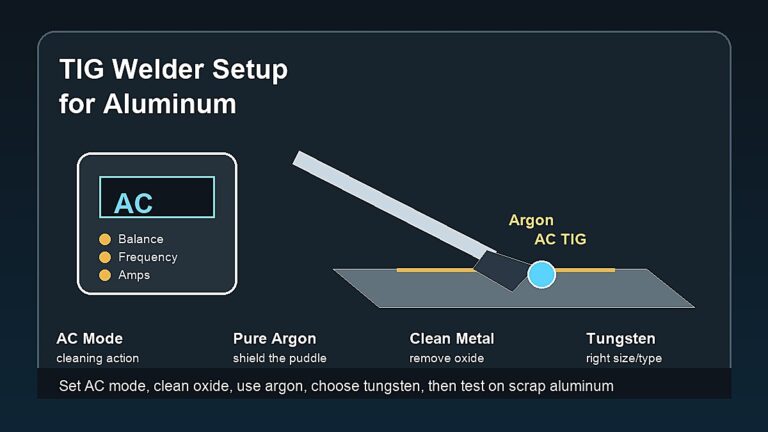
TIG welding is often the preferred process for clean, precise aluminum work. AC TIG helps clean the oxide layer while welding, and the welder can control heat and filler metal carefully. The tradeoff is that TIG takes more coordination and practice.
- Good for: thin aluminum, clean visible welds, precise work.
- Beginner challenge: controlling torch, filler rod, and heat at the same time.
- Best next hub: TIG Welding.
MIG Welding Aluminum
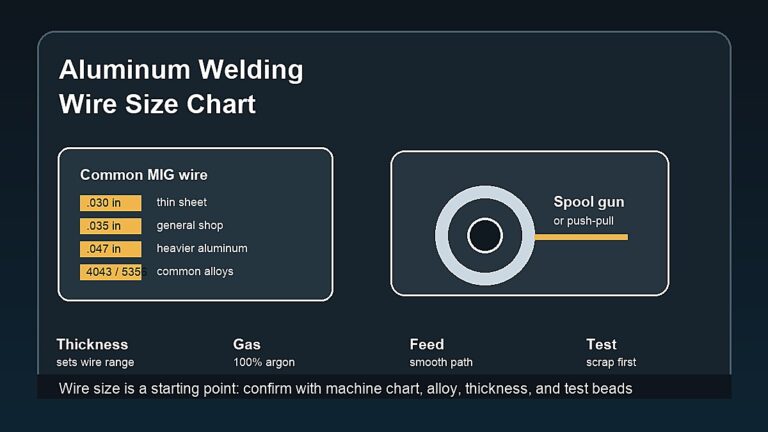
MIG welding aluminum can be faster, especially on thicker material, but wire feeding is a major issue. Aluminum wire is softer than steel wire, so it can bird-nest or feed poorly if the setup is wrong. Many aluminum MIG setups use a spool gun or push-pull system.
- Good for: thicker aluminum, faster production-style welding.
- Beginner challenge: wire feeding, machine setup, and travel speed.
- Best next hub: MIG Welding.
Basic Aluminum Welding Setup for Beginners
Your exact setup depends on your machine, process, filler, and aluminum alloy. Always follow the machine manual and filler recommendations. A basic aluminum practice setup usually includes clean aluminum coupons, the correct shielding gas, matching filler metal, a dedicated stainless brush for aluminum, clamps, PPE, and a safe work area.
- Clean aluminum practice coupons so you can repeat beads safely.
- Dedicated stainless steel brush used only for aluminum.
- Correct shielding gas for the process and material.
- Proper filler metal matched to the base material and job.
- Good work clamp contact on clean metal.
- Ventilation and PPE suitable for welding and cleaning operations.
How to Prepare Aluminum Before Welding
Preparation matters more with aluminum than many beginners expect. Dirt, oil, oxide, moisture, and cross-contamination can cause problems. Clean the metal before welding and avoid using tools that have already been used on carbon steel unless they are cleaned or dedicated to aluminum.
- Remove oil, grease, and surface contamination with an appropriate cleaner.
- Use a dedicated stainless brush to remove oxide from the weld area.
- Fit and clamp the parts before welding.
- Set up the machine according to the manual.
- Practice on scrap of the same thickness before welding the actual part.
Common Beginner Aluminum Welding Mistakes
Welding Without Cleaning the Oxide Layer
Aluminum oxide can interfere with the puddle and weld quality. Beginners often try to weld through it and then wonder why the weld looks dirty or unstable. Clean the joint before welding and keep your filler rod clean.
Using Too Much Heat
Aluminum can go from not hot enough to too hot quickly. Excess heat can cause burn-through, distortion, or a wide messy puddle. Practice short beads and learn how your material thickness responds.
Using the Wrong Filler or Wire
Filler selection depends on the base alloy and the job. Beginners should not guess on important parts. Use the machine manual, filler manufacturer guidance, or qualified instruction.
Poor Shielding Gas Coverage
Shielding protects the molten weld from contamination. Drafts, wrong gas flow, wrong cup setup, or dirty gas equipment can create weld problems. Check the setup before assuming your technique is the only issue.
Beginner Practice Plan for Aluminum Welding
- Review Welding Safety and your machine manual.
- Practice on mild steel first if you are brand new to welding.
- Prepare clean aluminum coupons of one thickness.
- Run short beads and write down settings.
- Change one variable at a time: heat, travel speed, filler timing, or cleaning.
- Inspect the bead and compare it to your previous attempt.
- Move to simple joints only after straight beads become consistent.
Is Aluminum Welding Safe for Beginners?
Aluminum welding can be practiced safely when the beginner uses proper PPE, ventilation, cleaning methods, and equipment setup. The risk increases when a beginner welds coated, painted, unknown, contaminated, or safety-critical parts without training.
Never weld on unknown containers, tanks, pressure parts, or materials that may contain hazardous residues. If the project affects safety, strength, or public use, get qualified training and inspection.
What Beginners Should Practice Before Aluminum
Aluminum is easier to learn after you already understand puddle control on simpler material. If you are brand new, spend time with basic weld beads on clean mild steel first. Learn how travel speed, torch angle, filler timing, and heat change the bead. Then move to aluminum with one process, one thickness, and one filler choice instead of changing everything at once.
For the learning path, start with What Is Welding?, then review Types of Welding Explained. If you choose TIG for aluminum, connect this guide with TIG Welding and How to Set Up a TIG Welder for Aluminum. If you choose MIG, compare aluminum wire, spool gun setup, and shielding gas before buying parts.
A good first aluminum practice session is not a real repair. Use clean coupons, consistent thickness, and short beads. If the bead turns black, balls up, or collapses, stop and check cleaning, polarity/current mode, shielding, filler, torch angle, and heat input before continuing.
FAQ
Is aluminum welding hard for beginners?
Aluminum welding is harder than basic mild-steel welding because aluminum conducts heat quickly and has an oxide layer that must be cleaned. Beginners can learn it, but they should start on clean scrap and use proper setup guidance.
Is MIG or TIG better for aluminum beginners?
TIG gives better control for clean aluminum practice, especially on thinner material. MIG can be faster on thicker aluminum, but it needs the right wire feeding setup and technique.
Do you need AC to TIG weld aluminum?
AC TIG is commonly used for aluminum because it helps with oxide cleaning action during the weld. Always check your TIG machine capabilities before planning aluminum practice.
Can you weld aluminum with a regular MIG welder?
Some MIG welders can weld aluminum with the correct setup, shielding gas, wire, and often a spool gun or push-pull system. Not every beginner MIG machine is suitable for aluminum.
Why do aluminum welds look dirty?
Dirty aluminum welds can come from oxide, oil, poor shielding gas coverage, contaminated filler, wrong settings, or poor cleaning habits. Start by cleaning the metal and checking the setup.
Final Advice
Aluminum welding is a useful skill, but it rewards patience. Start with clean scrap, keep your setup simple, and learn what heat and cleaning do before attempting real parts. If you are still building fundamentals, read What Is Welding?, Types of Welding Explained, and Beginner Welding Mistakes before moving too fast.