Stick vs Flux Core Welding for Beginners
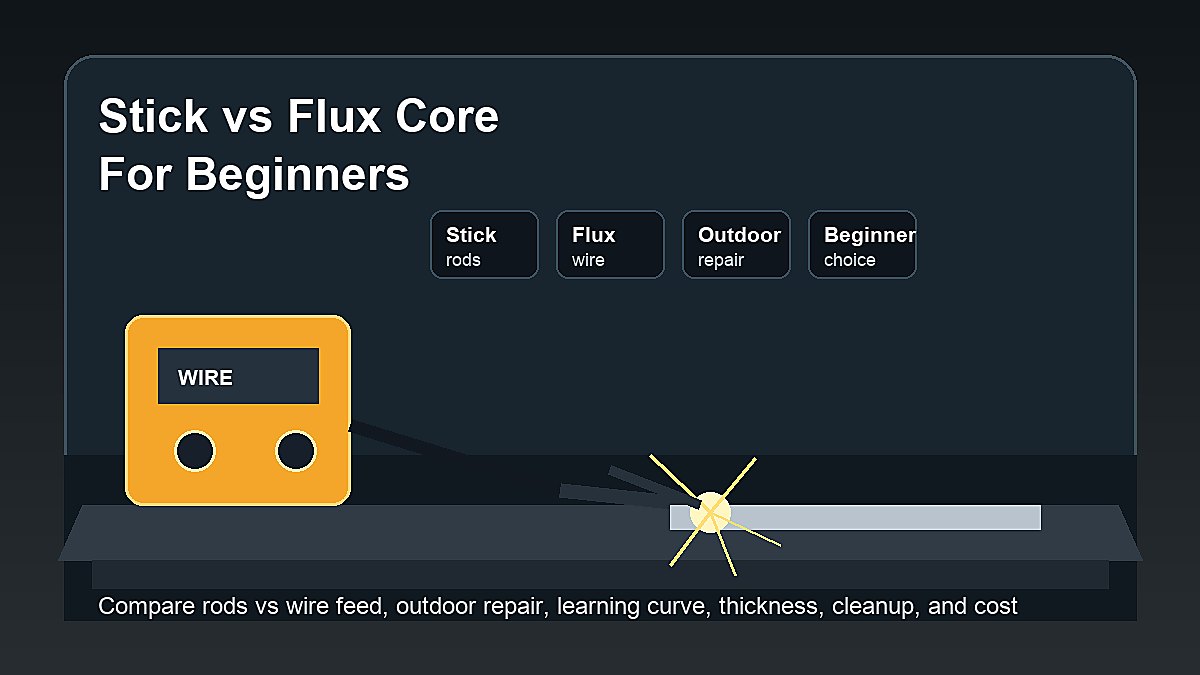
Stick vs flux core welding for beginners is really a choice between two rugged arc welding processes. Stick welding uses flux-coated electrode rods. Flux core welding uses a wire-feed gun and tubular flux-filled wire. Both can work outdoors, both create slag, and both can be useful for repair work, but they feel very different to learn.
For most home-shop beginners, flux core feels easier to start because the machine feeds wire continuously. A basic stick setup is often cheaper and can be better for thicker outdoor repair, but it takes more practice to strike the arc, hold arc length, and restart rods cleanly.
Mark Dawson beginner note: do not choose based only on which process someone calls stronger. A useful first process depends on your projects, power supply, material thickness, budget, workspace, safety setup, and willingness to practice.
Quick Answer
Flux core welding is usually easier for beginners who want a wire-feed process for garage repairs, outdoor practice, and light fabrication. Stick has the edge for thicker steel, farm-style repair, simple machine setup, and learning a traditional field repair skill. For the easiest start, choose flux core. For mostly thick outdoor repair, choose stick.
| Factor | Stick Welding | Flux Core Welding |
|---|---|---|
| Learning curve | Harder arc starts and rod control | Easier wire-feed start |
| Outdoor use | Very good | Good with self-shielded wire |
| Thin metal | Harder for beginners | Often easier, but still hot |
| Thick steel | Strong option | Depends on machine output and wire |
| Cleanup | Slag and spatter | Slag, smoke, and spatter |
| First-machine cost | Often lower | Often higher, but easier to use |
What Stick Welding Is
Stick welding, also called SMAW, uses a flux-coated rod as both electrode and filler metal. The rod melts into the joint while the flux creates shielding and leaves slag over the weld. The welder controls arc length by hand as the rod gets shorter.
This makes stick welding simple in equipment but demanding in hand control. Beginners often struggle with rods sticking, long arc length, restarts, and slag cleanup. Once learned, stick is useful for outdoor repair, thicker steel, farm equipment, and field work. Read Stick Welding Basics for Beginners for the foundation.
What Flux Core Welding Is
Flux core welding, also called FCAW, uses a wire-feed gun and tubular wire filled with flux. The common self-shielded beginner wire does not need an external gas cylinder, which makes it popular for beginners and outdoor work. The machine feeds wire continuously, so the beginner does not have to manage a shortening rod.
The wire-feed feel is one reason flux core can be easier to start. The downside is more smoke, spatter, slag, contact tip maintenance, and wire-feed setup. For a step-by-step setup, read How to MIG Weld Flux Core for Beginners.
Learning Curve
Flux core usually wins for first-day learning. Pull the trigger, keep the gun angle steady, maintain stickout, and watch the puddle. There are still settings to learn, but the continuous wire feed helps beginners run beads sooner.
Stick welding asks for more hand coordination. You have to strike the arc, keep the rod from sticking, hold a short arc, move steadily, and adjust as the rod burns shorter. That skill is valuable, but it can frustrate new welders in the first few sessions.
Material Thickness
For thicker steel and heavier repair work, stick is often favored when the machine has enough output and the correct electrode is used. It is not friendly to very thin metal in beginner hands because burn-through can happen quickly.
Flux core can be easier on light fabrication and thinner material than stick, but it still runs hot compared with gas MIG on thin sheet. A small flux core machine has limits on thick steel too. Match the process to the real material thickness, not the biggest number on the machine box.
Outdoor Welding
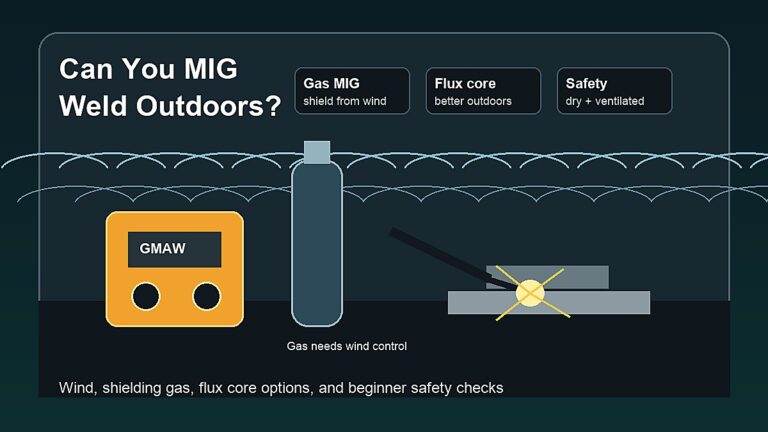
Both processes can work outdoors because both can use flux-based shielding. Stick is a classic outdoor repair process. Self-shielded wire feed also works better outdoors than gas MIG because there is no external shielding gas cloud to blow away.
Outdoor welding still needs control. Wind can push fumes into your breathing zone, sparks can travel, and dirty metal can cause defects. Use a fire-safe area, ventilation awareness, PPE, and clean prep whenever practical.
Cost and Equipment
Stick welders can be inexpensive and simple. You need a stick welder, electrode holder, ground clamp, rods, PPE, and basic cleanup tools. Rods are easy to store when kept dry and matched to the job.
Flux core needs a wire-feed machine, gun, drive rolls, contact tips, flux core wire, and polarity setup. A small flux core machine may cost more than a basic stick welder, but beginners often pay for easier starts and a more MIG-like workflow. See What Do Beginners Need to Start Welding? for a broader setup list.
Weld Cleanup and Slag
Both stick and flux core create slag. Stick usually produces a slag covering from the flux-coated electrode. Flux core also leaves slag over the bead. In both cases, clean the weld before judging it or adding another pass.
Beginners should own a chipping hammer, wire brush, safety glasses, and grinder. Slag inclusion can happen when slag is trapped in the weld. That is one reason cleanup is part of welding, not a separate cosmetic step.
Electrodes vs Wire Spools
Stick welding uses individual rods. When a rod burns down, you stop and replace it. That stop-start rhythm is part of the process. Rods are simple to carry, but they must be kept dry and matched to the material, position, and amperage range.
Flux core uses a spool of wire. The machine feeds wire through the gun as long as you hold the trigger. That makes longer beads easier for many beginners. The tradeoff is that the drive rolls, liner, contact tip, wire tension, and polarity must be set correctly.
Power and Machine Limits
Small 120V flux core machines are convenient, but they have output limits. They are good for practice, light repair, and thin to medium steel within the machine rating. Thick steel may need multiple passes, beveling, preheat considerations, or a larger machine, and beginners should not guess on critical work.
Stick machines can also run on 120V or 240V depending on the model. A small 120V stick welder may be limited in electrode size and duty cycle. A larger 240V stick welder can handle more demanding work, but it needs the right power supply and skill to use well.
Practice Path for a New Welder
If you start with flux core, practice straight beads first, then lap joints, then T-joints. Focus on polarity, stickout, drag angle, and slag cleanup. The goal is to make the process repeatable before trying bigger projects.
If you start with stick, practice arc starts and short beads before worrying about projects. Learn how rod angle, arc length, amperage, and travel speed change the bead. Expect more frustration at first. That is normal, not a sign that you cannot learn.
Which Process Teaches Better Habits?
Stick welding can teach strong discipline because arc length and rod control are unforgiving. Flux core can teach good setup and inspection habits because wire feed, polarity, contact tips, and slag cleanup all matter. Both processes can teach useful skills when practice is deliberate.
The weaker habit is jumping straight into important repairs. A beginner should practice on scrap, cut open test welds when possible, compare bead results, and learn defects before trusting a weld. The process matters, but inspection matters too.
Setup Mistakes to Avoid
With stick welding, beginners often choose the wrong rod, set amperage poorly, or let arc length get too long. Damp rods can also create problems. With flux core, beginners often forget polarity, use the wrong drive roll or contact tip, or weld over slag from the previous bead.
These mistakes are why setup matters before technique judgment. If a flux core bead looks terrible, check polarity before blaming your hands. If a stick rod keeps sticking, check amperage, rod condition, and arc-start technique. For defect examples, use the Welding Defects hub as you build troubleshooting knowledge.
What About Multi-Process Welders?
Some beginner machines support flux core and stick in one box. That can be useful if you want to try both processes without buying two machines. Check the duty cycle, input power, output range, included leads, polarity changes, and whether the machine actually performs both processes well enough for your goals.
A multi-process machine does not remove the learning curve. Flux core still needs wire-feed setup and slag cleanup. Stick still needs rod control and arc-length practice. The machine may give you options, but it does not replace practice.
First 30 Days of Practice
If you pick flux core, spend the first sessions on straight beads, then lap joints, then T-joints. Track polarity, wire speed, voltage, stickout, angle, and travel speed. Clean every bead and compare results. This is the same deliberate approach used in Flux Core Welding Tips for Beginners.
If you pick stick, spend the first sessions striking arcs and holding short beads. Do not jump straight to repairs. Practice with one rod type, one position, and clean steel before changing variables. Once starts become easier, move into simple joints and learn how slag, travel angle, and amperage change the bead.
When to Learn the Other Process
Learning one process first does not mean ignoring the other forever. A beginner can start with flux core to build confidence, then learn stick for thicker outdoor repair. Another beginner can start with stick for farm work, then add flux core for faster wire-feed projects. The skills overlap, but each process teaches different habits.
The best long-term welder is not loyal to one process for every job. The better goal is to understand what each process does well, where it struggles, and when a project needs training or inspection beyond beginner practice.
Bottom Line by Beginner Type
The garage hobbyist who wants brackets, carts, small repairs, and wire-feed practice will usually be happier starting with flux core. The farm or field repair beginner who expects thicker steel, outdoor work, and simple rod-based equipment may be happier starting with stick.
The undecided beginner should look at real projects first. Material thickness, power supply, workspace, and safety setup matter more than forum arguments. A process that fits your actual work will teach you faster.
Examples by Project Type
- Small garage brackets: flux core often feels easier.
- Outdoor farm repair practice: stick is worth considering.
- Thin sheet metal: neither is as friendly as gas MIG, but flux core often beats stick for beginners.
- Heavy plate practice: stick can be a better learning route with the right machine.
- Beginner carts and stands: flux core can be convenient.
- Field repair skill: stick has a long track record.
Which Is Better for Beginners?
The flux core route usually suits beginners who want faster early progress, easier starts, and a process that connects naturally to MIG welding later. It is a strong choice for hobby practice, small repairs, brackets, carts, and basic outdoor projects.
Choose stick when your main goal is rugged outdoor repair skill, thicker steel practice, farm-style work, or a low-cost machine. It may take longer to feel comfortable, but the skill is worth learning if those projects match your goals.
Decision Guide
- Flux core fits beginners who want the easier first process.
- Wire-feed flux practice also avoids a gas bottle.
- Stick fits thicker outdoor steel repair.
- Stick can fit a lower-cost basic setup.
- Light fabrication and beginner garage projects often favor flux core.
- Stick is worth learning for classic field repair skill.
- Neither process should be used on safety-critical work until you have training and inspection.
Safety Notes
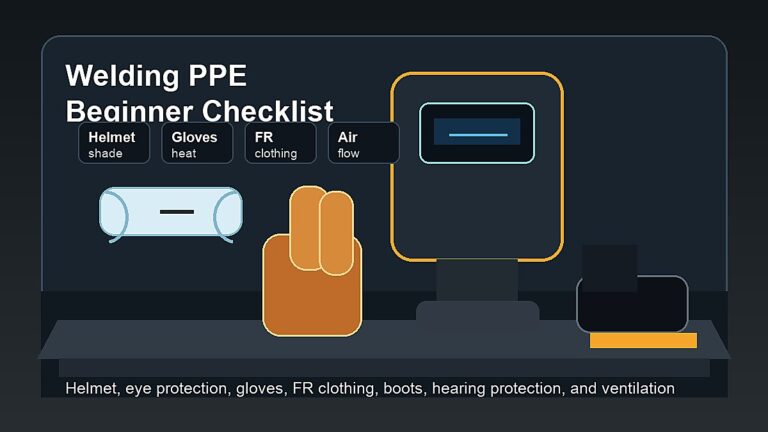
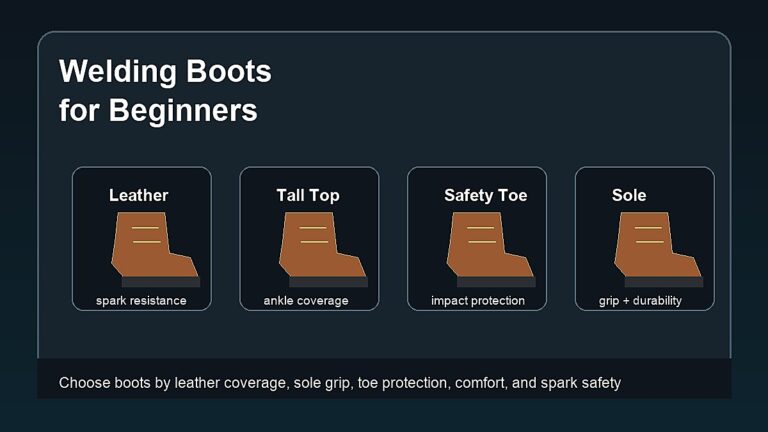
Stick and flux core both involve arc light, sparks, spatter, fumes, hot metal, slag, fire risk, and electric shock. Wear a welding helmet, safety glasses, gloves, flame-resistant clothing, and suitable footwear. Use ventilation or fume control and keep flammables away.
Do not weld unknown containers, coated metals, galvanized steel, vehicle structure, trailer frames, lifting points, or critical repairs without proper training. Useful references include OSHA welding, cutting, and brazing guidance, AWS safety and health fact sheets, and Lincoln Electric self-shielded flux-cored welding tips.
FAQ
Is stick or flux core easier to learn?
Most beginners learn flux core faster because the machine feeds wire continuously. Stick welding takes more practice with arc starts, arc length, and rod control.
Is flux core as strong as stick welding?
Either process can make strong welds when the material, joint design, filler, settings, technique, and inspection are correct. Strength is not decided by process name alone.
Which is better for outdoor welding?
Both can work outdoors. Stick is a classic outdoor repair process. Self-shielded flux core also works outside and feels easier for many beginners.
Which costs less to start?
Basic stick welding equipment often costs less. Flux core machines may cost more, but they can be easier to use for first practice.
Final Advice
For most beginners, flux core gives the easier first step. For thick outdoor repair and traditional field welding skill, stick is worth learning. The best choice is the one that matches your projects, power supply, budget, safety setup, and willingness to practice. Start on scrap, inspect every bead, and keep the work non-critical until your skills improve.