Flux Core vs MIG Welding: Which Should You Use?
For a beginner choosing between solid-wire MIG and self-shielded flux core, start with the workspace and material. MIG is often convenient for clean steel in a sheltered shop. Self-shielded flux core can remove the need for a gas cylinder, but adds slag cleanup and typically more smoke and spatter.
Compare the actual processes
| Question | Solid-wire MIG | Self-shielded flux core |
|---|---|---|
| External gas cylinder? | Required for the selected wire/process | Not required for a self-shielded wire |
| Slag cleanup? | No flux slag | Remove slag before inspection and further passes |
| Wind sensitivity? | External shielding can be disrupted | Often more suitable outdoors within wire limits |
| Thin material? | Useful with a suitable low-output setup | Check the wire's minimum thickness; not an automatic substitute |
| Setup change? | Match gas, wire and polarity | Match wire, polarity, extension and drive system |
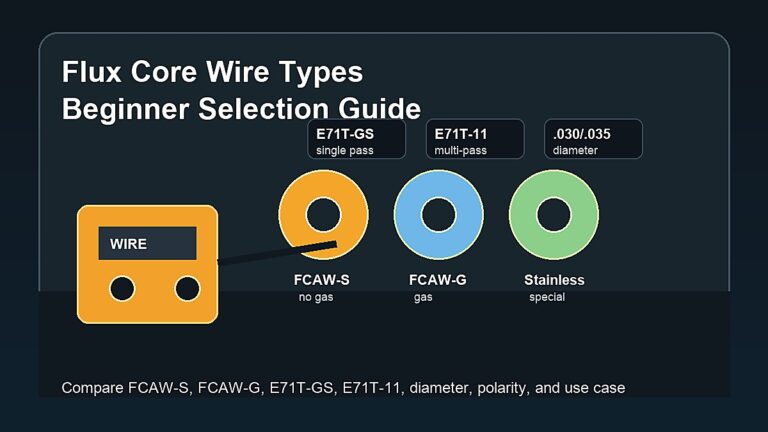
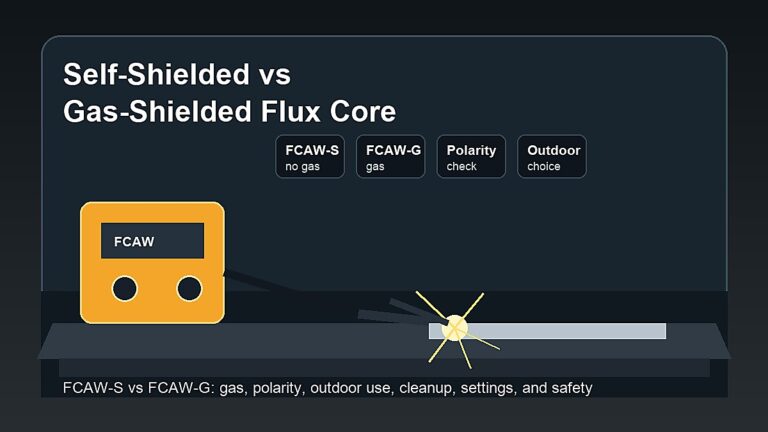
Gas-shielded flux-cored welding is a third case. It uses flux-cored wire plus external gas, so the words “flux core” alone do not tell you whether a bottle is needed.
Choose from a real example
For a sheltered garage project using clean mild steel, compare the complete cost of a MIG setup: regulator, gas supply and refill access as well as the welder. For occasional outdoor practice, compare a compatible self-shielded wire and the time needed for slag cleanup. Do not choose either process solely from a polished photograph of a finished bead.
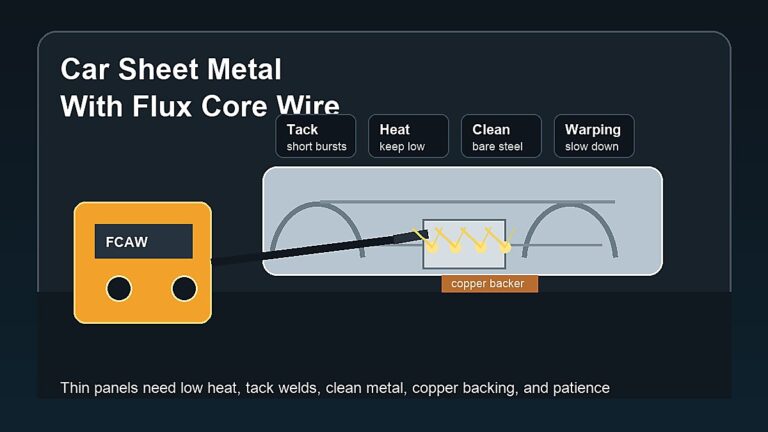
If the project involves very thin sheet, test on matching scrap before committing. A machine that can run both wires may not have the low-output control or feeding combination needed for that joint.
Switching wire requires more than changing the spool
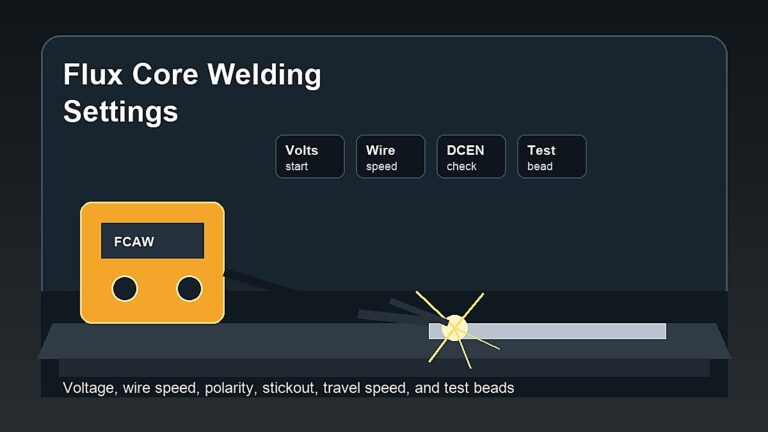
Check the manual for polarity, drive roll, tip and liner compatibility. Remove old setup assumptions from your practice notes. Run a new test coupon and label it with the wire classification so you do not mix results from two processes.
Is flux core a weaker form of MIG?
No. Either can produce suitable welds when correctly selected and applied. Process suitability, consumable limits and inspection matter more than the nickname.
Which one is safer?
Neither removes the need for PPE, ventilation and fire controls. Choose exposure controls for the actual material and process, and keep beginner practice out of critical repairs.
Continue learning
Sources and limits
This is an educational reference. Follow the exact equipment and consumable instructions; safety-critical welding needs appropriate qualifications, procedures and inspection.