Beginner Welding Projects for New Welders: 15 Easy Ideas
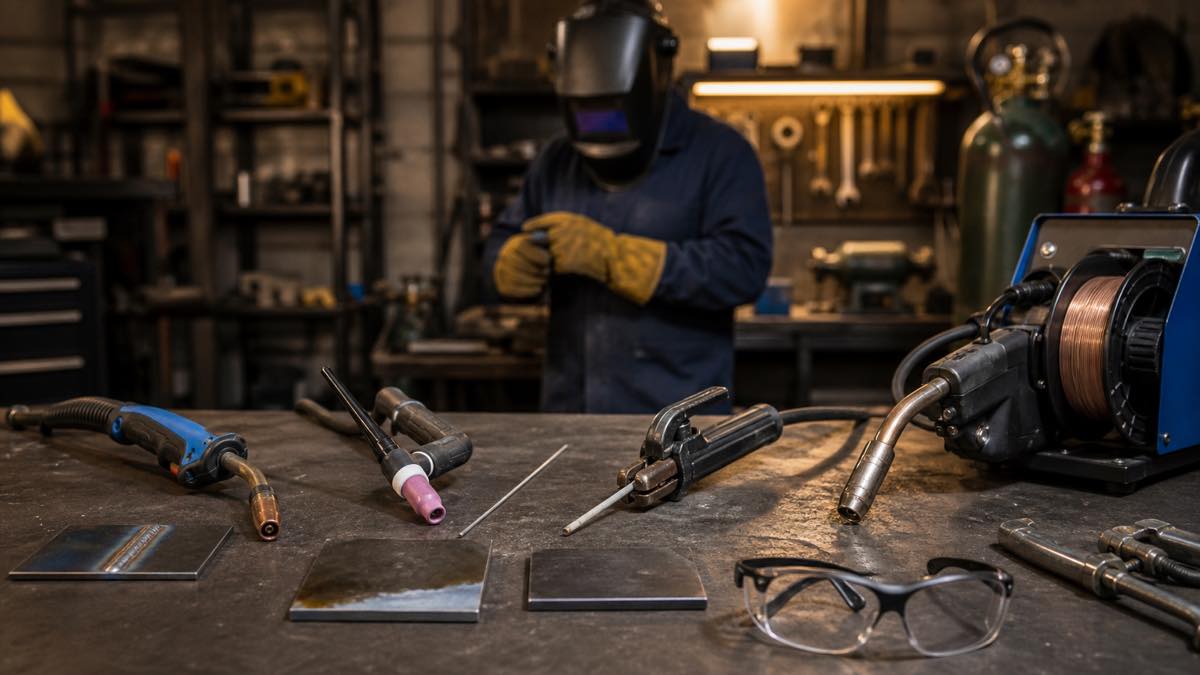
The best beginner projects for new welders are simple, low-risk projects that help you practice measuring, cutting, cleaning, clamping, tacking, welding, and finishing without putting anyone in danger. Start with scrap metal practice pieces, then move into small shop projects such as hooks, bookends, brackets, shelves, cart frames, and simple table accessories.
A good first welding project should be small enough to control, cheap enough to repeat, and safe enough that a mistake does not create a dangerous part. New welders should avoid trailers, vehicle frames, lifting points, pressure vessels, structural supports, and anything that carries people or heavy loads until they have proper training and inspection.
Mark Dawson beginner note: your first project is not really about making a perfect finished item. It is about learning fit-up, tack welds, heat control, travel speed, cleanup, and how a weld changes when your angle or settings are wrong.
Quick Answer: Best First Welding Projects
The best beginner welding projects are practice bead coupons, lap-joint practice pieces, simple steel hooks, bookends, small shelf brackets, basic angle-iron frames, welding table stops, grinder rests, small plant stands, and simple shop organizers. These projects teach useful skills without requiring advanced joint design or safety-critical strength.
- Easiest first project: straight practice beads on scrap mild steel.
- Best useful shop project: wall hooks or tool hangers.
- Best measuring practice: bookends or square frames.
- Best fit-up practice: small shelf brackets.
- Best project after a few practice sessions: a simple welding cart or small shop stool frame.
Before You Start Any Beginner Welding Project
Before building projects, make sure your workspace and safety gear are ready. Welding can involve fire, sparks, burns, UV radiation, fumes, electric shock, sharp metal, grinding hazards, and hot parts that look cool before they are safe to touch.
- Read your welder manual before changing wire, rods, polarity, gas, or settings.
- Wear a proper welding helmet, gloves, safety glasses, and flame-resistant clothing.
- Clean paint, oil, rust, and moisture from the weld area where possible.
- Clamp parts securely before tacking.
- Keep flammable materials away from the welding area.
- Use ventilation or fume control suitable for the material and process.
- Practice on scrap of the same thickness before welding the project.
New welders who are still comparing processes should review What Is Welding?, Types of Welding Explained, and Welding Safety before starting a project.
15 Beginner Welding Projects for New Welders
1. Straight Practice Beads on Scrap Steel
This is the real first project. Cut or find flat pieces of clean mild steel, then run straight beads side by side. Focus on keeping a steady travel speed, consistent stickout or arc length, and a controlled puddle.
- Skills learned: puddle control, travel speed, heat, bead consistency.
- Suggested material: mild steel coupons or flat bar.
- Practice tip: label each bead with the setting you used so you can compare results.
2. Lap Joint Practice Coupons
A lap joint is one piece of metal overlapping another. It is a simple way to practice tying the weld into both pieces. Make a few small coupons and weld short beads along the edge.
- Skills learned: edge control, weld tie-in, heat balance.
- Practice stock: two strips of mild steel.
- Fit-up tip: tack both ends before welding so the parts do not shift.
3. T-Joint Practice Pieces
A T-joint helps you practice fillet welds. Stand one piece of steel on another to form a T shape, tack it, then weld along the corner. This is useful practice before building brackets and frames.
- Skills learned: fillet welds, torch angle, arc placement.
- Material choice: flat bar or small plate.
- Control tip: aim the weld so it wets into both sides, not just the vertical piece.
4. Simple Wall Hooks
Wall hooks are useful and forgiving. Weld a short round bar, rod, or bent flat bar to a small backing plate. Drill mounting holes before or after welding, depending on your tools and layout.
- Skills learned: layout, tacking, small fillet welds.
- Good use: hanging light shop tools, cords, or gloves.
- Load warning: do not use beginner hooks for overhead loads or anything heavy enough to injure someone if it falls.
5. Steel Bookends
Bookends are excellent beginner projects because they teach square layout and clean finishing. Weld a vertical plate to a flat base plate, then grind and paint if you want a finished look.
- Skills learned: 90-degree fit-up, tacking, distortion control.
- Useful stock: small plate or flat bar.
- Shop tip: tack both sides before welding to help keep the vertical plate square.
6. Small Shelf Brackets
A simple shelf bracket can be made from flat bar or angle iron. Keep it small at first and use it for light shop storage, not heavy loads. This project teaches triangulation and basic fit-up.
- Skills learned: measuring, angles, tacks, fillet welds.
- Suitable metal: angle iron or flat bar.
- Project warning: do not trust beginner brackets for heavy shelves, overhead storage, or anything that could injure someone.
7. Welding Table Stops
Table stops are small pieces that clamp or sit against a welding table to help align work. They are useful in the shop and easy to make from scrap steel.
- Skills learned: square corners, small welds, cleanup.
- Suggested material: angle iron, flat bar, or small square tube.
- Build tip: keep the surfaces clean so future projects sit flat against the stop.
8. Grinder Rest or Tool Stand
A small grinder rest or tool stand gives you practice with a simple frame while making something useful. Keep the design compact and stable.
- Skills learned: frame layout, tack sequence, basic stability.
- Practice stock: square tube or angle iron.
- Welding tip: check the stand for wobble before calling it finished.
9. Small Plant Stand
A plant stand is a friendly project because the loads are light and the design can be simple. Use a square or round top frame and short legs. Keep it low and stable for your first attempt.
- Skills learned: repeat cuts, leg alignment, frame squareness.
- Material choice: small square tube or round bar.
- Practice tip: tack all legs before final welding so you can adjust wobble.
10. Simple Firewood Rack for Light Use
A small firewood rack can teach frame building, but do not overbuild your first one or load it beyond what your skill can support. Start with a compact indoor or porch-size rack.
- Skills learned: rectangular frames, alignment, longer beads.
- Useful stock: square tube or angle iron.
- Safety limit: avoid tall, heavy racks until your welds and design skills are proven.
11. Metal Picture Frame or Sign Frame
A small frame teaches miter cuts, squareness, and heat distortion. It is also a good project if you want something decorative rather than purely shop-focused.
- Skills learned: accurate cuts, corner tacks, finishing.
- Suitable metal: angle iron, flat bar, or small tube.
- Fit-up tip: weld short sections and let the frame cool to reduce warping.
12. Small Cart Frame
A cart frame is a good project after you have practiced beads, lap joints, T-joints, and square frames. Keep the first cart small and use it for light tools, not gas cylinders or heavy equipment unless the design is properly built and checked.
- Skills learned: frame layout, repeat parts, tacking order.
- Suggested material: square tube or angle iron.
- Control tip: measure diagonals before final welding to check for square.
13. Welding Coupon Rack
A coupon rack stores your practice pieces so you can compare progress. Weld a few vertical tabs to a base plate and label different processes or settings.
- Skills learned: repeated small welds, spacing, layout.
- Practice stock: scrap plate and small flat bar.
- Shop tip: save your early welds so you can see improvement over time.
14. Clamp Rack
A clamp rack is useful and easy to customize. Weld small hooks or rails to a backing bar, then mount it where your clamps are easy to reach.
- Skills learned: layout, repeated tacks, simple shop utility design.
- Material choice: flat bar, angle iron, or scrap rod.
- Use warning: mount the rack securely and avoid overloading it.
15. Small Practice Repair on Scrap
Before repairing real equipment, create a fake repair on scrap. Cut a piece, bevel or clean the joint, clamp it, tack it, weld it, and inspect the result. This gives you repair practice without risking a real part.
- Skills learned: joint prep, fit-up, repair thinking, inspection habits.
- Useful stock: scrap angle, tube, or plate.
- Repair warning: do not move from scrap practice to vehicle, trailer, or structural repair without training and inspection.
Best Welding Process for Beginner Projects
MIG and flux core are often the easiest processes for beginner projects because the machine feeds wire continuously. MIG can be cleaner indoors with shielding gas, while flux core can be practical outdoors and does not require a gas bottle for self-shielded wire. Stick welding is useful for outdoor repair and thicker steel, but it can be harder for some new welders. TIG gives excellent control, but it is usually slower to learn.
Still choosing a process? Read Types of Welding Explained. Starting from zero? Read What Is Welding? first.
Simple Beginner Project Plan
Use this order if you are not sure where to start:
- Run straight beads on clean scrap steel.
- Practice lap joints and T-joints.
- Make small wall hooks or bookends.
- Build a simple square frame.
- Make a light shop organizer or clamp rack.
- Try a small cart or stand only after your welds are consistent.
This path builds skill in layers. You learn bead control first, then fit-up, then squareness, then small functional projects.
What New Welders Should Avoid Building
Some projects are not beginner projects even if they look simple online. Avoid anything where a failed weld could hurt someone or damage property.
- Trailer frames or trailer hitches
- Vehicle suspension, steering, or frame parts
- Roll cages or safety equipment
- Pressure vessels or tanks
- Lifting hooks, hoists, or overhead supports
- Structural beams, stairs, railings, or platforms
- Gas cylinder carts unless designed and checked properly
These jobs need qualified training, correct material selection, proper procedure, and inspection. Beginner practice is valuable, but it is not a substitute for professional standards.
FAQ
What is the easiest welding project for beginners?
The easiest welding project is a set of straight practice beads on clean scrap steel. After that, simple wall hooks, bookends, and small brackets are good first projects.
What metal should new welders use for projects?
Clean mild steel is usually the best beginner material. It is common, affordable, and easier to learn on than aluminum, stainless steel, or very thin sheet metal.
Should beginners start with MIG or flux core projects?
MIG is often easier indoors on clean steel. Flux core can be easier to set up outdoors because self-shielded wire does not need a gas bottle. Either can work for simple beginner projects if the machine is set up correctly.
Can beginners weld furniture?
Beginners can practice small, low-risk furniture-style projects such as plant stands or small side frames. Avoid chairs, stools, beds, railings, or load-bearing furniture until your welds and designs are proven and inspected.
How do I know if my beginner weld is strong enough?
Visual appearance alone is not enough. Strength depends on joint design, material prep, settings, filler, penetration, and technique. For safety-critical work, use qualified training and inspection instead of guessing.
Final Advice for New Welders
Beginner welding projects should help you build confidence without creating dangerous parts. Start with scrap, move slowly, keep projects small, and repeat the basics until your welds become consistent. A simple hook or bookend made well teaches more than a complicated project rushed too early.
When you are ready for the next step, choose one process to practice regularly, keep notes on settings, and compare each project to the last one. That habit will make you a better welder faster than chasing bigger projects before your fundamentals are ready.