
Welding rods and electrodes must match the welding process, base metal, joint, position, machine, polarity and required result. A familiar rod number is not automatically suitable for every repair. Beginners should learn what the classification identifies, then confirm the exact product data and machine instructions before welding.
This hub organizes WeldingPilot’s electrode and filler-metal guides into a practical path from welding basics to rod types, diameter, amperage, polarity, storage and defect checks. The pillar guide introduces the main families; supporting charts and comparisons will appear automatically as they are published.
Beginner Rod and Electrode Roadmap
1. Identify the welding process
Begin with What Is Welding? and the process comparison. Stick welding uses a flux-coated consumable electrode. MIG and flux core use continuously fed wire. TIG uses a non-consumable tungsten electrode and may use a separate filler rod. These products are not interchangeable simply because they all add or control metal at the joint.
2. Learn what the classification means
The types of welding rods guide explains common electrode families and why numbers matter. A classification can communicate mechanical properties, welding position and coating or current characteristics, but the exact interpretation depends on the governing specification. Read the package, manufacturer data sheet and applicable procedure rather than decoding from memory alone.
3. Match the electrode to the base metal
Confirm the material grade and condition before selecting filler metal. Mild steel, stainless steel, cast iron, aluminum and specialty alloys have different requirements. Unknown, plated, coated or contaminated metal adds both weld-quality and fume concerns. The beginner aluminum welding guide shows why material identification and process capability matter before choosing filler.
4. Choose diameter and starting current
Rod diameter affects the practical current range, deposition and access to the joint. Material thickness, joint design, welding position and machine output also matter. Use the electrode manufacturer’s amperage range and machine chart as the starting point, then make a test weld on comparable scrap. Avoid treating one online amperage number as a universal setting.
5. Confirm polarity and current type
Some electrodes operate on AC, some on one or more DC polarities, and others have specific limitations. Polarity can change arc behavior, penetration profile and electrode performance. Check the rod data and the welder terminals before striking an arc. The Stick Welding Basics pillar provides context for machine setup, arc length and bead practice.
6. Store and handle consumables correctly
Keep rods and filler metal clean, dry, identified and protected from damage according to their requirements. Low-hydrogen electrodes can have controlled storage and exposure rules that matter for critical work. Cracked flux, moisture, oil, rust or mixed-up filler can contribute to unstable welding and defects. Do not improvise reconditioning procedures without manufacturer or job guidance.
Selection Checks Before Welding
Material and joint
Identify the base metal, thickness, joint type, position, service conditions and required properties before choosing filler.
Machine capability
Confirm current type, polarity, output range, duty cycle, holders, cables, wire-feed parts or torch components.
Consumable condition
Check classification, diameter, lot identification, packaging, storage condition, flux integrity and contamination.
Test and inspection
Run a test on comparable scrap, then inspect bead placement and visible defects through the Welding Defects hub.
Rod and Electrode Safety
Consumable selection does not replace welding safety. Arc welding can expose you to ultraviolet radiation, hot metal, sparks, electric shock, fire, fumes and grinding debris. Electrode and base-metal composition affect the fume produced. Use suitable PPE, ventilation or fume control, fire prevention and material identification.
Review the Welding Safety hub, plan the area with the home welding setup guide, and avoid the errors covered in Beginner Welding Mistakes. Structural, vehicle, pressure, lifting and other critical welds require qualified procedures, suitable consumables, controlled storage and inspection.
Latest Welding Rod Guides
-
6011 vs 6013 Welding Rod
6011 and 6013 are different mild-steel stick electrode classifications. Choose between them from the work, machine and exact product instructions, not from the assumption…
-
Welding Rod Sizes Explained
A welding rod size guide explaining diameter, material thickness, amperage range, and common uses.
-
7018 Welding Rod Amperage Chart
Reference guide for 7018 rod amperage by diameter, polarity, storage, and use cases.
-
Welding Rod Numbers Explained
Simple explanation of welding rod numbers such as 6010, 6011, 6013, 7018, and 7024.
-
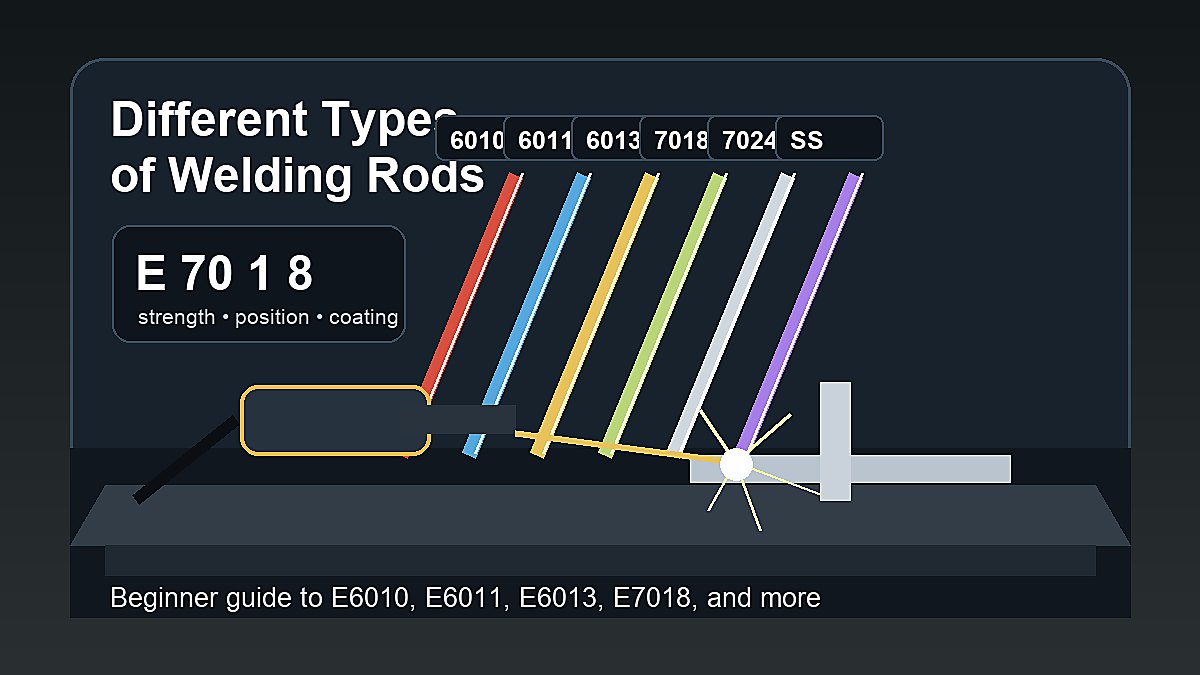
Different Types of Welding Rods Explained for Beginners
A beginner-friendly guide to different types of welding rods, what rod numbers mean, common electrodes, safety basics, and how to choose a rod for…
-

Difference Between 6011 and 7018 Welding Rods
Compare 6011 and 7018 welding rods so beginners can understand penetration, arc feel, storage, polarity, best uses, and practice differences.
Welding Rods FAQ
What welding rod should a beginner use?
There is no universal beginner rod. The choice depends on the base metal, thickness, joint, position, machine, polarity and project requirements. Practice with an electrode recommended for the machine and known mild steel.
What do welding rod numbers mean?
Rod classifications communicate information defined by the applicable specification, such as mechanical properties, welding position and coating or current characteristics. Confirm the exact meaning using reliable product data.
How do I choose welding rod size?
Match diameter to the material, joint, position, access and machine output. Use the manufacturer’s current range and test on comparable scrap before working on the actual part.
Can damp welding rods still be used?
Moisture can affect electrode performance, and some classifications have strict storage and exposure requirements. Follow manufacturer and job procedures instead of guessing or using an improvised drying method.