Different Types of Welding Rods Explained for Beginners
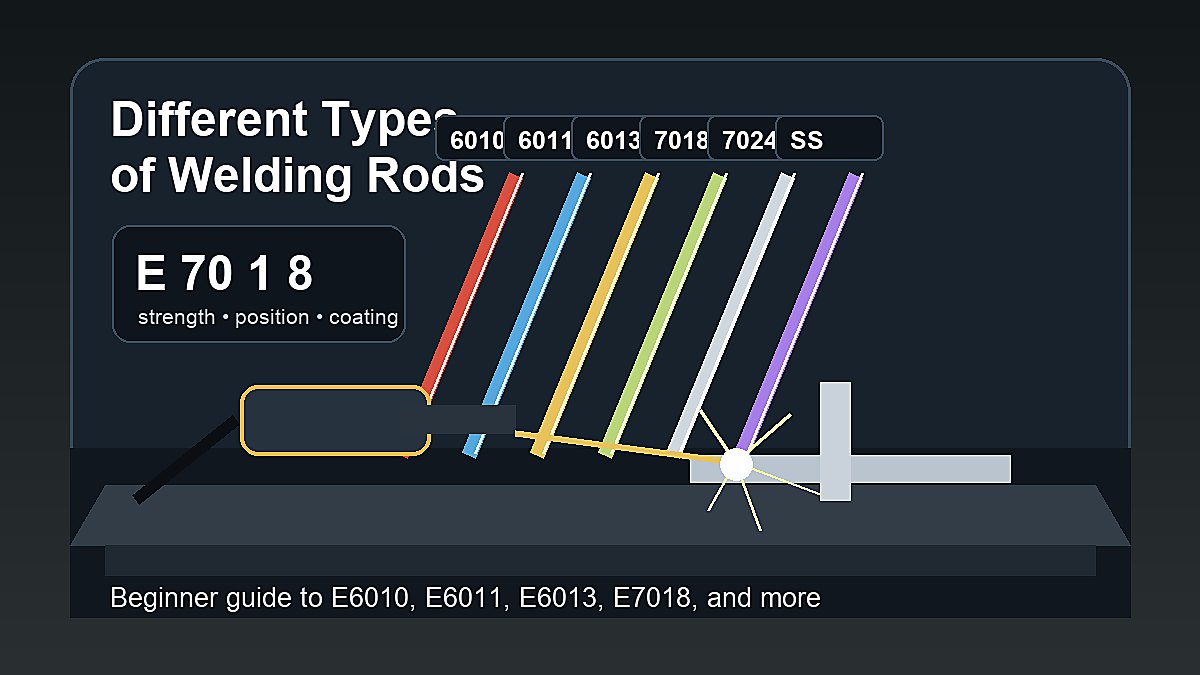
There are many different types of welding rods, but beginners usually hear about a few common stick electrodes first: E6010, E6011, E6013, E7018, E7024, and stainless steel rods. Each rod has a different coating, arc feel, penetration level, position rating, and best use.
If the numbers feel confusing, start simple. A welding rod is a consumable electrode used in stick welding. It carries the arc, melts into the joint, and has a flux coating that helps shield the weld pool. The right rod depends on the base metal, welding position, machine current, joint type, and whether the job is practice, repair, or critical work.
Mark Dawson beginner note: do not choose a rod only because someone says it is “strong.” A rod must match the material, position, current type, cleanliness of the metal, and the job. For beginner practice, consistency and safety matter more than chasing the most advanced electrode.
Quick Answer: What Are the Main Types of Welding Rods?
The main welding rods beginners compare are E6010, E6011, E6013, E7018, and E7024 for mild steel stick welding. Stainless steel rods, cast iron rods, hardfacing rods, and specialty electrodes are used for more specific materials or repair jobs.
| Rod Type | Common Use | Beginner Note |
|---|---|---|
| E6010 | Deep penetration, pipe/root passes, DC work | Useful but not the easiest first rod |
| E6011 | Repair, dirty steel, AC/DC machines | Rugged and versatile for practice |
| E6013 | Light fabrication, sheet metal, smooth beads | Often beginner-friendly on clean steel |
| E7018 | Stronger structural-style welds on clean steel | Needs proper storage and good technique |
| E7024 | High-deposition flat and horizontal welds | Less useful for early all-position practice |
| Stainless rods | Stainless steel repair and fabrication | Match rod to stainless grade and job |
What Do Welding Rod Numbers Mean?
Stick electrode numbers give clues about tensile strength, welding position, and coating/current characteristics. For example, E7018 is often read as an electrode with a 70,000 psi tensile-strength classification, a position digit, and a final digit related to coating and current characteristics. The exact meaning should always be checked against the manufacturer data and electrode classification details.
- E means electrode.
- First numbers usually indicate tensile strength classification.
- Position digit helps show whether the rod is rated for all positions or limited positions.
- Last digit relates to coating type, penetration style, and current compatibility.
If you are completely new, read What Is Welding? and Types of Welding Explained before digging too deeply into rod classifications.
E6010 Welding Rod
E6010 is known for deep penetration and a forceful arc. It is common in pipe welding, root passes, and jobs where strong penetration is needed. It is usually associated with DC welding and can be harder for beginners because the arc is aggressive and technique-sensitive.
A beginner may practice with E6010 later, but it is not always the smoothest first rod. If your machine does not support the right current or arc characteristics, it may be frustrating.
E6011 Welding Rod
E6011 is also a penetrating rod, but it is commonly used on AC or DC machines depending on the product. It is popular for repair work because it can handle less-than-perfect surfaces better than many smoother rods. That does not mean you should weld dirty metal on purpose, but E6011 is often more forgiving in repair conditions.
For beginners with a basic AC stick welder, E6011 is a common practice rod. It still takes control because the arc can dig into the metal.
E6013 Welding Rod
E6013 is often considered beginner-friendly because it can run smoothly and produce a cleaner-looking bead on light to medium work. It is commonly used for sheet metal, light fabrication, and general practice on clean mild steel.
The important caution is penetration. A bead can look nice but still be weak if technique, heat, and joint preparation are poor. Beginners should learn to inspect welds, not only admire appearance.
E7018 Welding Rod
E7018 is widely used where cleaner, stronger welds are needed on mild steel and low-alloy steel. It has a smoother arc than many digging rods and can make strong welds with the right prep, settings, and technique.
However, E7018 is a low-hydrogen electrode, so storage and moisture control matter. Beginners should follow manufacturer instructions and avoid using questionable rods for anything important. For practice, E7018 can be useful after you understand arc length, travel speed, and slag removal.
E7024 Welding Rod
E7024 is a high-deposition rod often used for flat and horizontal welds. It can lay down metal quickly, but it is not the best all-around beginner rod because position flexibility is limited compared with all-position rods.
Think of E7024 as a more specialized productivity rod, not the first rod most beginners need for learning basic control.
Stainless, Cast Iron, and Specialty Welding Rods
Not every rod is for mild steel. Stainless steel rods are matched to stainless materials and service conditions. Cast iron rods are used for certain repair jobs, often with special preparation and heat control. Hardfacing rods are used to build wear-resistant surfaces. Aluminum stick electrodes exist, but aluminum is usually better learned with the right MIG or TIG setup.
Specialty rods are not beginner guessing territory. Match the electrode to the base metal, read the product data, and get qualified guidance for critical repairs.
Which Welding Rod Should a Beginner Start With?
For simple mild-steel practice, many beginners start with E6013 or E6011, depending on the machine and practice goals. E6013 can feel smoother on clean light steel. E6011 is useful for rugged practice and AC machines. E7018 is worth learning once you can control arc length and slag, but storage and technique matter more.
- Clean practice steel: E6013 can be a smoother starting point.
- Repair-style practice: E6011 is common and versatile.
- Stronger clean weld practice: E7018 is important but needs care.
- Deep penetration practice: E6010/E6011 can teach puddle control.
If you are learning stick welding itself, use the Stick Welding hub and the Welding Rods & Electrodes hub as your next reference pages.
Common Beginner Mistakes With Welding Rods
- Using the wrong rod for the machine: check AC/DC compatibility and manufacturer guidance.
- Choosing by appearance only: a smooth bead is not automatically a strong weld.
- Ignoring storage: moisture can affect electrode performance, especially low-hydrogen rods.
- Using rods on dirty metal: clean prep still matters, even with repair rods.
- Skipping safety: stick welding creates fumes, UV radiation, sparks, slag, and hot metal.
For more troubleshooting, review Beginner Welding Mistakes and Welding Defects.
Safety Notes for Welding Rods
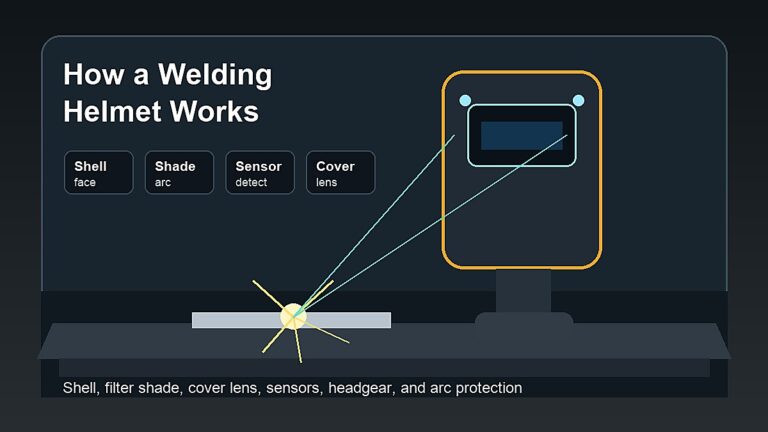
Stick welding can produce fumes, slag, sparks, ultraviolet radiation, electric shock hazards, hot metal, and fire risk. Use a proper welding helmet, safety glasses, welding gloves, flame-resistant clothing, ventilation, and fire-safe workspace. Chipping slag also requires eye protection because small pieces can fly.
Do not weld on sealed containers, coated metals, unknown alloys, structural parts, vehicle frames, trailers, pressure vessels, lifting points, or safety-critical repairs without proper training and inspection.
How to Read Rod Labels Before Buying
Before buying welding rods, read more than the large number on the package. Check rod diameter, current type, polarity, position rating, tensile class, storage guidance, and the manufacturer’s amperage range. A rod that looks right by number may still be the wrong size for your material or the wrong current for your machine.
Beginners should keep rod choice simple at first. Pick one machine, one mild-steel thickness, and one rod size. Practice until you can start the arc, hold arc length, move consistently, and clean slag without destroying the bead. Then compare another rod type so the difference is obvious.
For next steps, use How to Choose Welding Rod Size, Welding Rod Specifications, and 1/8 Welding Rod Amperage Chart. Those pages help connect rod type with diameter, amperage, and real machine setup.
FAQ
What is the most common welding rod?
E6011, E6013, and E7018 are very common rods for mild steel stick welding. The best choice depends on the machine, material, position, and job.
What welding rod is best for beginners?
E6013 is often beginner-friendly on clean mild steel because it can run smoothly. E6011 is also common for basic repair-style practice, especially with AC machines.
What is E7018 used for?
E7018 is commonly used for cleaner, stronger welds on mild steel and low-alloy steel when the rod is stored correctly and the joint is properly prepared.
Can I use any welding rod on any metal?
No. Rods must match the base metal, machine current, position, joint design, and job requirements. Specialty materials need suitable electrodes and proper guidance.
Why do welding rods have flux?
Flux helps protect the weld pool, affects arc behavior, and creates slag over the weld. The slag must usually be removed after welding or between passes.
Final Advice
The different types of welding rods are easier to understand when you connect the rod number to the job. E6013 can be smooth for practice, E6011 is useful for repair-style work, E7018 is important for cleaner stronger welds, and specialty rods should be matched carefully to the material. Start with clean mild steel, follow the rod manufacturer’s guidance, and practice before using any weld in service.