What Is the Easiest Welding to Learn for Beginners?
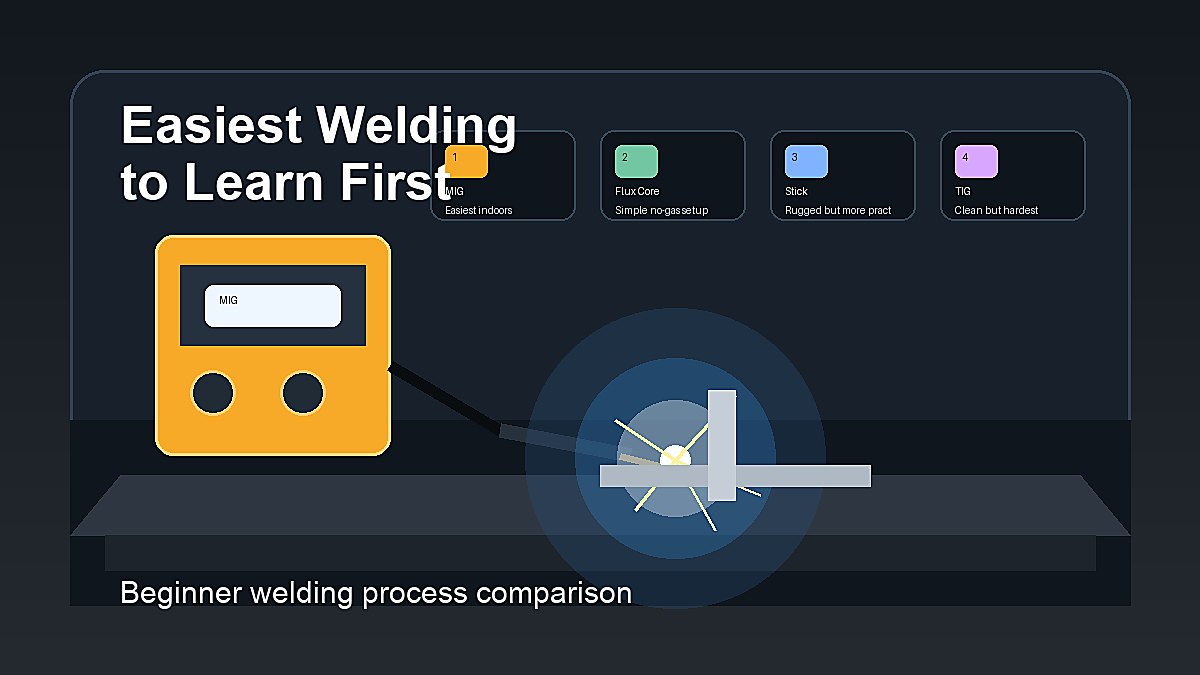
If you are asking what is the easiest welding to learn, the short answer is usually MIG welding for beginners who can practice indoors on clean mild steel. MIG is easier for many new welders because the machine feeds the wire automatically, the arc is fairly steady, and there is less slag cleanup than stick or flux core welding.
That does not mean MIG is always the best first choice. If you need a simple no-gas setup for outdoor practice, flux core welding may be more practical. If your goal is farm repair or thicker outdoor steel, stick welding can make sense even though it takes more patience. TIG welding usually has the steepest learning curve because it requires more hand coordination and cleaner technique.
Mark Dawson beginner note: the easiest welding process is the one that matches your workspace, material, safety setup, and practice goals. Do not choose a process only because it sounds simple. Choose the process you can practice safely and repeat consistently.
Quick Answer: What Welding Is Easiest to Learn?
MIG welding is usually the easiest welding process to learn first for beginners working indoors on clean mild steel. The wire feeds through the gun automatically, the controls are easier to understand than TIG for many new welders, and there is usually less cleanup than flux core or stick welding.
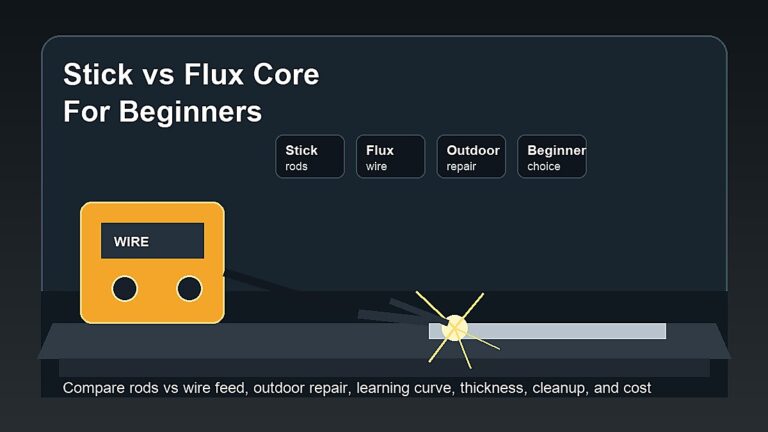
Flux core welding is often the easiest no-gas option. It is useful outdoors and can be beginner-friendly, but it creates more smoke, spatter, and slag. Stick welding is rugged and useful, but beginners often struggle with arc starts, rod sticking, and arc length. TIG welding gives excellent control, but it is usually the hardest process to learn first.
Easiest Welding Processes Compared
| Process | Beginner Difficulty | Best First Use | Main Challenge |
|---|---|---|---|
| MIG Welding | Easiest for many beginners | Indoor clean mild steel, garage projects, simple fabrication | Needs gas setup for solid wire and clean material |
| Flux Core Welding | Easy to moderate | Outdoor practice, no-gas setup, light repair work | More smoke, slag, and spatter |
| Stick Welding | Moderate | Outdoor repair, thicker steel, farm-style work | Rod sticking, arc length, slag cleanup |
| TIG Welding | Harder | Thin metal, stainless, aluminum, clean precision work | Torch, filler rod, and heat control at the same time |
Why MIG Welding Is Often the Easiest for Beginners
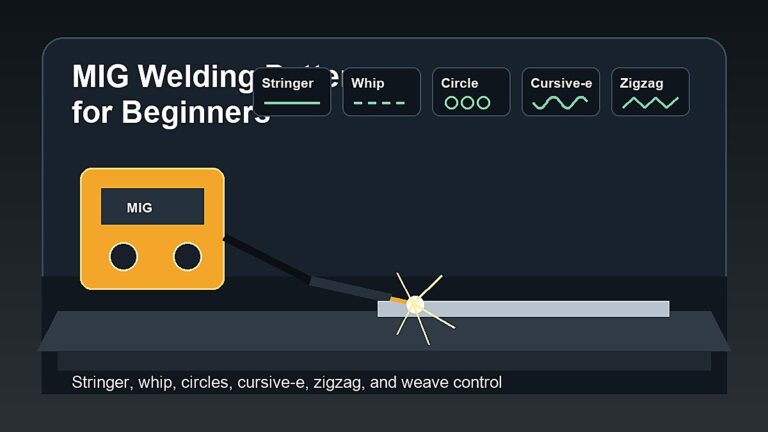
MIG welding is beginner-friendly because it removes one major challenge: feeding filler metal by hand. The machine pushes wire through the gun, so you can focus on holding the torch angle, watching the weld pool, keeping a steady travel speed, and learning how heat affects the bead.
- The wire feeds automatically.
- The arc is easier to keep steady than stick for many beginners.
- There is no separate filler rod like TIG.
- Cleanup is usually lower than stick or flux core when using gas MIG.
- It works well for common beginner projects on clean mild steel.
MIG is a strong first choice if you have an indoor workspace, can use shielding gas, and want to practice brackets, carts, small frames, shelves, repairs, and general mild-steel projects. For process differences, read Types of Welding Explained.
When Flux Core Is the Easier First Choice
Flux core welding can be easier to start if you want a simple wire-feed machine without a gas cylinder. Self-shielded flux core wire creates shielding from flux inside the wire, so it can be more practical outdoors where wind would disturb MIG shielding gas.
The tradeoff is cleanup. Flux core usually makes more smoke, spatter, and slag than gas MIG. Beginners need to chip or brush the slag and pay attention to ventilation. Still, for driveway practice, outdoor repairs, or a budget setup, flux core can be a practical first process.
Is Stick Welding Easy to Learn?
Stick welding is not usually the easiest process for a complete beginner, but it is useful. The setup is rugged, the rods are portable, and it works well outdoors and on thicker steel. Many welders like stick welding because it can handle repair conditions that are less perfect than clean shop fabrication.
The learning curve comes from starting the arc, keeping the right arc length, controlling the rod angle, and preventing the rod from sticking. Stick also leaves slag that must be removed between passes. If your future work is outdoor repair, farm equipment, or thicker mild steel, stick can be worth learning early.
Why TIG Is Usually the Hardest Welding to Learn First
TIG welding can produce very clean welds, but it is usually not the easiest first process. You may need to control the torch with one hand, add filler rod with the other hand, and manage amperage with a pedal or control. The metal also needs to be clean, and mistakes are easier to see.
TIG is excellent for thin metal, stainless steel, aluminum, and precision work. But if your goal is to learn basic weld control quickly, most beginners will progress faster by starting with MIG or flux core, then moving into TIG after they understand the weld pool, fit-up, and safety basics.
Which Welding Should You Learn First?
- Choose MIG first if you have an indoor space, clean mild steel, and want the easiest all-around learning path.
- Choose flux core first if you want a simple no-gas setup or you need to practice outdoors.
- Choose stick first if your real goal is thicker steel, outdoor repair, or farm-style work.
- Choose TIG first only if your main goal is precision work, thin metal, stainless, or aluminum and you accept a harder start.
If you are completely new to welding, start with What Is Welding?, then review Welding Safety before choosing a machine. Your first process should fit your actual practice area, not just a recommendation online.
Beginner Practice Plan for the Easiest Start
- Learn basic welding safety and PPE before striking an arc.
- Pick one process instead of switching every day.
- Read the machine manual and setup chart.
- Practice on clean mild steel scrap.
- Run straight beads before trying joints.
- Learn how travel speed, angle, and heat change the weld.
- Move to lap joints, T-joints, and butt joints.
- Study beginner welding mistakes so you can fix problems early.
Common Mistakes When Choosing an Easy Welding Process
- Choosing only by price: the cheapest welder may have poor wire feed or confusing controls.
- Ignoring the workspace: gas MIG is not ideal in wind, while flux core creates more smoke and slag.
- Starting on dirty metal: paint, rust, oil, and coatings can cause defects and unsafe fumes.
- Buying before choosing projects: auto body, farm repair, aluminum, and thick steel may need different setups.
- Skipping safety: easy welding still involves UV radiation, sparks, fumes, heat, and electric shock hazards.
Safety First, Even With Easy Welding
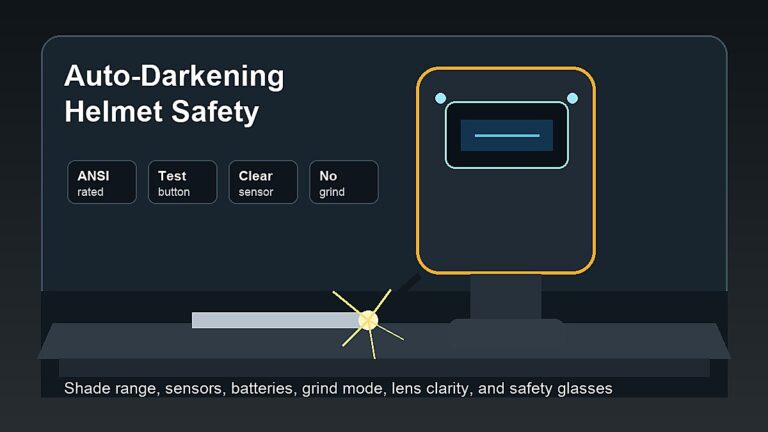
Beginner-friendly does not mean harmless. MIG, flux core, stick, and TIG welding can all involve burns, eye injury, fire, electric shock, hot metal, fumes, ultraviolet radiation, and compressed gas hazards. Use a proper welding helmet, safety glasses, gloves, flame-resistant clothing, ventilation, and a fire-safe workspace.
Do not weld on sealed containers, unknown tanks, coated metals, vehicle structures, trailers, lifting points, pressure vessels, or safety-critical parts without qualified training and inspection. For a safe first workspace, see Home Welding Setup for Beginners.
FAQ
What is the easiest welding for a beginner?
MIG welding is usually the easiest welding for a beginner who can practice indoors on clean mild steel. Flux core is also beginner-friendly when a no-gas or outdoor setup is more practical.
Is MIG or flux core easier?
Gas MIG is often cleaner and smoother indoors. Flux core may be easier to start outdoors because it does not require a shielding gas cylinder, but it usually creates more smoke, spatter, and slag.
Is stick welding harder than MIG?
For many beginners, stick welding is harder than MIG because you must control arc length while the rod burns shorter. Rod sticking, slag cleanup, and starts can be frustrating at first.
Should beginners learn TIG first?
Most beginners should not start with TIG unless their main goal is thin metal, aluminum, stainless steel, or precision welding. TIG is valuable, but it usually takes more coordination and patience.
Can I teach myself the easiest welding process?
You can practice basic beads and non-critical beginner projects, but formal training is strongly recommended for safety, better technique, and any weld where failure could cause injury or property damage.
Final Verdict
The easiest welding to learn for most beginners is MIG welding, especially indoors on clean mild steel. Flux core is a close second when you want a simple no-gas setup or outdoor practice. Stick is useful but takes more control, and TIG is usually the hardest first process. Start with the process that fits your workspace and projects, then practice safely until your beads become consistent.