7018 Welding Rod Amperage Chart
This 7018 amperage chart uses one identified product: Lincoln Electric Excalibur 7018-1 MR. It is a reference for that electrode, not a universal setting for every rod marked 7018. Compare the table with the current datasheet and the label on your own package before welding.
Manufacturer current ranges
| Electrode diameter | DC electrode positive | AC |
|---|---|---|
| 3/32 in (2.4 mm) | 70–110 A | 80–120 A |
| 1/8 in (3.2 mm) | 90–160 A | 100–160 A |
| 5/32 in (4.0 mm) | 130–210 A | 140–210 A |
| 3/16 in (4.8 mm) | 180–300 A | 200–300 A |
Source: the Excalibur 7018-1 MR datasheet linked below. Its preferred polarity is DC positive, and its listed positions exclude vertical down. A machine displaying an amperage number is not proof that it can sustain that output at the required duty cycle.
Turn a range into a practice setting
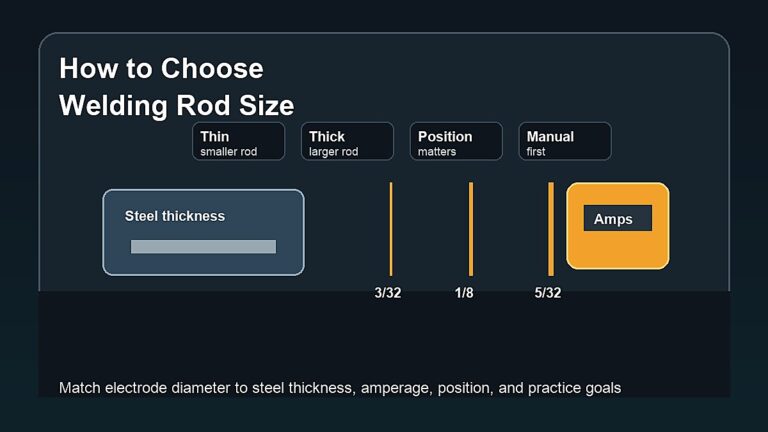
Suppose you have the listed 1/8-inch rod and a suitable DC machine. The reference range is 90–160 A; that does not make 160 A the best beginner setting. Choose a setting within the product range appropriate to the joint, position and material, then test on matching scrap. Record the current, polarity, rod diameter and result together.
If the electrode repeatedly sticks, examine arc length, connection quality and technique before assuming current is the only problem. If the edges wash away, look at travel, angle and heat together. Keep the comparison controlled: use another coupon with the same joint and change one variable.
Storage affects the result
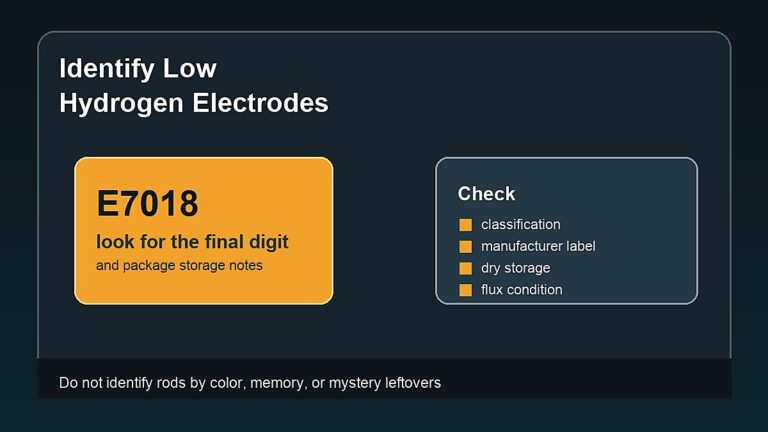
7018 is a low-hydrogen electrode family. Follow its manufacturer's exposure, storage and reconditioning requirements. A household oven is not a substitute for a controlled electrode storage procedure. Unknown, damp or damaged rods should not be used for critical work.
Can I use the AC column with any 7018?
Only when the exact electrode and your power source permit it. Some small welders cannot maintain a stable arc with a particular product even when the displayed amperage falls inside a chart.
Is a smooth bead enough to approve a repair?
No. This chart cannot establish fusion, joint strength or code compliance. Load-bearing and safety-critical repairs require competent supervision and appropriate inspection.
Continue learning
Sources and limits
This is an educational reference. Follow the exact equipment and consumable instructions; safety-critical welding needs appropriate qualifications, procedures and inspection.