Welding Safety Equipment Checklist

A welding safety equipment checklist should connect each item to a hazard. Buying a helmet and gloves leaves gaps if fumes, noise, flying particles, hot metal or nearby people are unprotected. Review the actual task before treating the list as complete.
Personal equipment and its limits
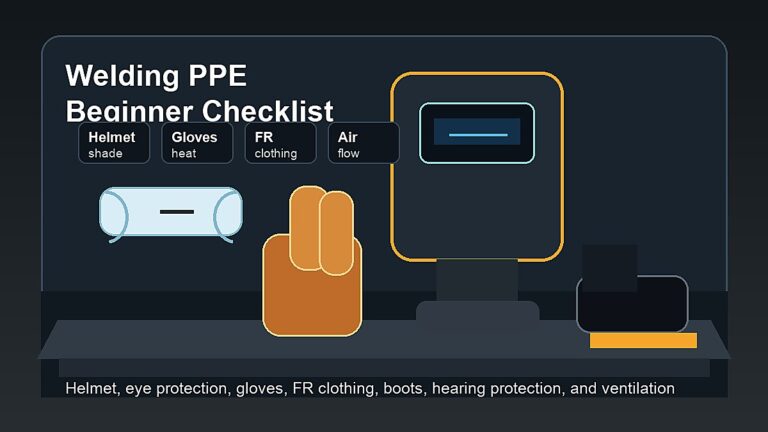
| Equipment | Hazard addressed | Check before use |
|---|---|---|
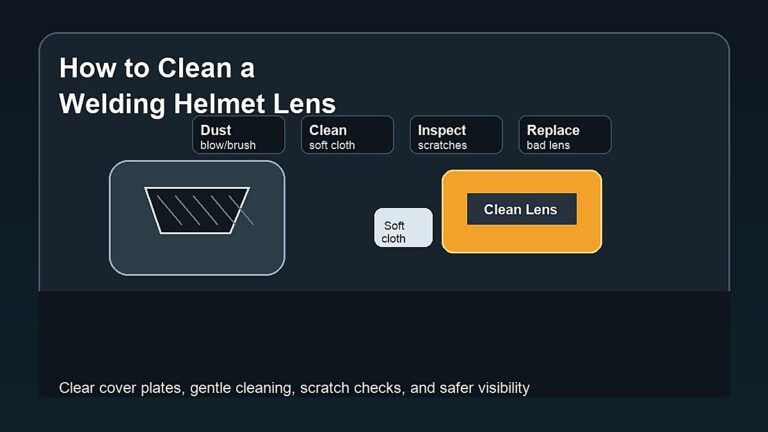
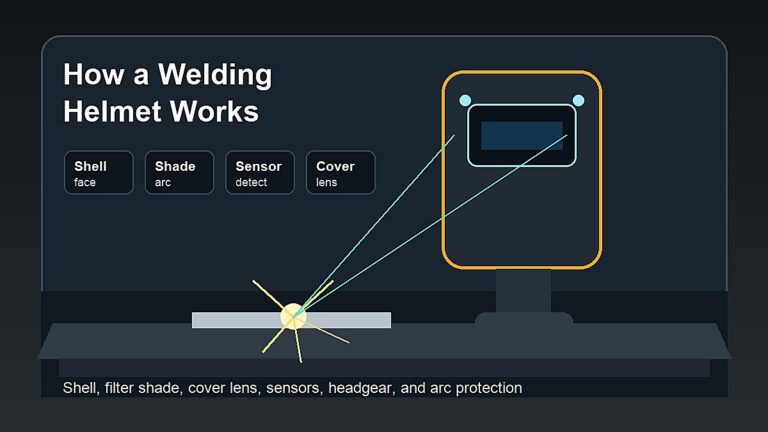
| Welding helmet with suitable filter | Arc radiation | Process/current suitability, lens condition and operation |
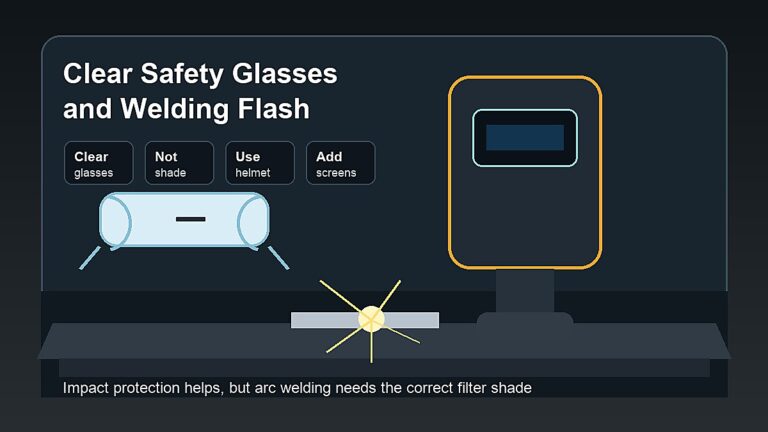
| Appropriate safety glasses | Flying particles | Fit and use during grinding or slag removal |
| Welding gloves | Heat, sparks and handling exposure | Dryness, holes and process-appropriate dexterity |
| Flame-resistant protective clothing | Spark and radiant heat exposure | Coverage, damage and places sparks can collect |
| Suitable footwear | Hot debris and handling hazards | Coverage, condition and task suitability |
| Hearing protection where required | Noise exposure | Selection based on the work and exposure |
PPE reduces exposure but does not make unsafe material or equipment acceptable. A face shield, for example, does not automatically replace the required eye protection underneath it.
Work-area equipment belongs on the list too
Arrange effective fume control, secure workholding, suitable screens and the required fire controls. Inspect leads and the work connection. Secure cylinders and keep routes clear. Select respiratory protection through the applicable hazard assessment and fitting requirements; an arbitrary dust mask is not a substitute for that process.
Inspect in the order the job happens
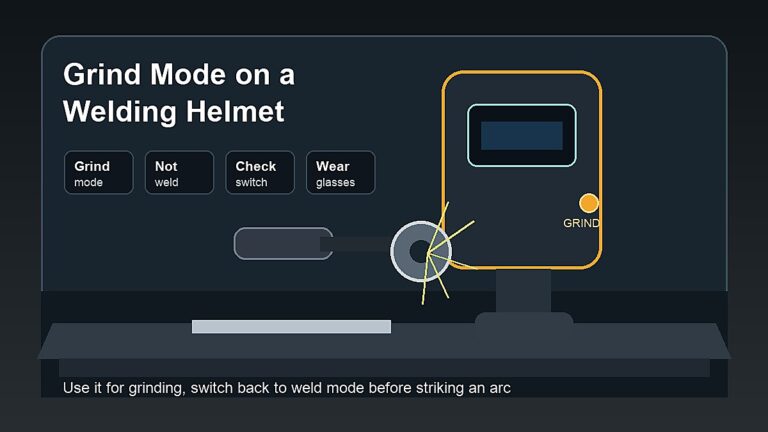
First check the unwelded material and workspace. Then check PPE fit and equipment condition. Recheck protection when changing tasks from welding to grinding or chipping. Finally, plan how hot metal, tools and cylinders will be made safe afterward.
A useful shop habit is to list “replace before next use” items separately from ordinary supplies. A glove with a hole should not return to the hook looking ready for the next session.
Do thick gloves let me hold a hot welded part?
No. Gloves have limits. Use suitable tools and allow safe cooling rather than testing a fresh weld by hand.
Do I need the same gloves for TIG and stick?
The balance of dexterity and heat protection differs. Choose suitable gloves for the process and inspect their condition each time.
Continue learning
- Welding Safety Rules Every Beginner Should Know
- Best Welding Helmet for Beginners
- Best Welding Gloves for Beginners
Sources and limits
This is an educational reference. Follow the exact equipment and consumable instructions; safety-critical welding needs appropriate qualifications, procedures and inspection.