Can You MIG Weld Aluminum With Flux Core Wire?

Can you MIG weld aluminum with flux core wire? For normal beginner welding, the answer is no. Ordinary self-shielded flux core wire is mainly used for steel. Aluminum MIG welding normally uses solid aluminum wire, pure argon shielding gas, and a spool gun or push-pull gun so the soft wire can feed without tangling.
The confusion makes sense because many beginners hear “gasless MIG” and think it should work on every metal. Gasless MIG is usually a nickname for self-shielded flux core welding. That process can be practical for mild steel repairs, but aluminum is a different material with a stubborn oxide layer, high heat conductivity, and soft filler wire that needs different equipment.
Mark Dawson beginner note: if a seller promises easy gasless aluminum welding, slow down and verify the wire type, machine polarity, shielding requirement, base metal, and real procedure. Aluminum punishes shortcuts faster than mild steel.
Quick Answer
You should not plan to MIG weld aluminum with ordinary flux core wire. Use a MIG machine that supports aluminum, solid aluminum wire such as 4043 or 5356, pure argon shielding gas, the correct drive rolls and contact tip, and usually a spool gun or push-pull setup. If you only have a small no-gas flux core welder, it is probably not the right machine for aluminum.
| Question | Beginner Answer | Why It Matters |
|---|---|---|
| Can steel flux core wire weld aluminum? | No | The filler does not match aluminum |
| Can aluminum be welded without shielding gas? | Not with normal MIG practice | Aluminum needs good shielding and clean setup |
| What gas is common for aluminum MIG? | Pure argon | It protects the weld pool from air |
| What feed setup helps? | Spool gun or push-pull gun | Soft aluminum wire feeds poorly through long liners |
Why Flux Core Works on Steel but Not Aluminum
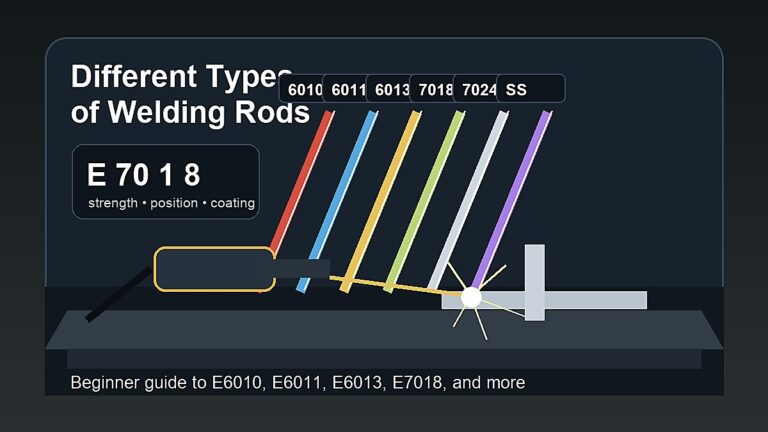
Flux core wire is a tubular wire with ingredients inside the wire. In self-shielded flux core welding, those ingredients help create shielding and slag while the arc melts the wire. This can work well on mild steel because the wire chemistry, flux system, polarity, and weld behavior are designed around steel.
Aluminum is not just “another metal” in that same setup. It melts at a lower temperature than steel, conducts heat quickly, and forms aluminum oxide on the surface. That oxide melts at a much higher temperature than the aluminum underneath. If the oxide is not cleaned and the weld pool is not shielded well, the weld can become dirty, porous, or weak.
Aluminum filler wire is also soft. Feeding it through a normal MIG liner from a large spool can cause birdnesting, shaving, slipping, or inconsistent wire feed. That is why many aluminum MIG setups use a spool gun that keeps the wire path short.
Does Aluminum Flux Core Wire Exist?
You may see online listings that claim to be aluminum flux core or no-gas aluminum wire. Treat those claims carefully. In normal welding education and shop practice, beginner aluminum MIG is not built around common self-shielded aluminum flux core wire the way steel flux core welding is.
Some specialty filler products may exist for narrow uses, and some listings use confusing wording. The practical beginner question is simpler: can you buy an ordinary no-gas flux core machine, load a common spool, and MIG weld aluminum like steel? No. That is not a reliable plan.
If a product says it welds aluminum without gas, read the data sheet, required process, compatible base metal, surface prep, temperature range, and strength claims. Many low-cost products are closer to brazing, soldering, or repair rods than true MIG welding. Do not use vague claims for structural work.
What Aluminum MIG Welding Usually Needs
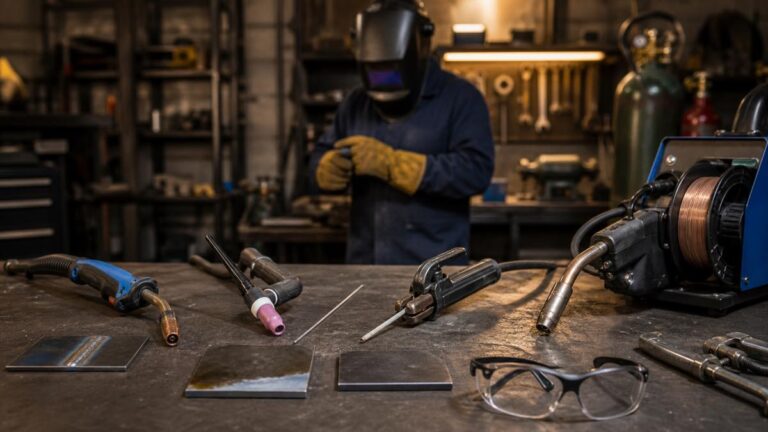
A beginner aluminum MIG setup usually needs a machine capable of aluminum welding, solid aluminum wire, pure argon shielding gas, a clean aluminum surface, and wire feeding parts made for soft wire. Your machine manual matters because not every MIG welder can run aluminum well.
- Pure argon shielding gas for most beginner aluminum MIG work.
- 4043 or 5356 aluminum wire matched to the material and job.
- A spool gun or push-pull gun to reduce feeding problems.
- U-groove drive rolls instead of aggressive knurled rolls.
- A correct-size contact tip, often slightly larger for aluminum wire expansion.
- A clean stainless brush used only on aluminum.
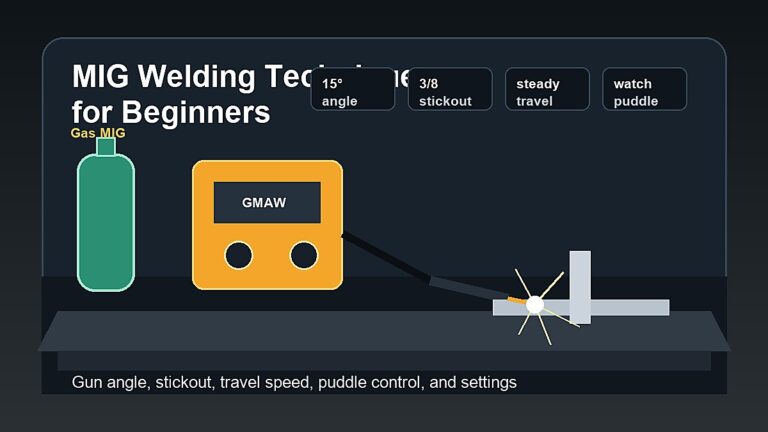
- Good fit-up, short stickout, and steady travel speed.
For a deeper settings starting point, use Aluminum MIG Welding Wire Speed and Voltage Chart. That guide is for gas-shielded aluminum MIG, not gasless flux core aluminum welding.
Flux Core vs Aluminum MIG Setup
Steel flux core and aluminum MIG can both use a welding gun, wire feed, and a constant-voltage power source. That surface similarity is where many beginners get misled. The consumables, shielding, polarity, cleaning needs, and wire feeding behavior are very different.
| Feature | Steel Flux Core | Aluminum MIG |
|---|---|---|
| Wire type | Flux-filled steel wire | Solid aluminum wire |
| Shielding | Flux, sometimes gas too | Usually pure argon |
| Slag | Yes with self-shielded wire | No slag in normal MIG |
| Wire feeding | More forgiving | Soft wire needs careful feeding |
| Best beginner metal | Mild steel | Clean aluminum with correct setup |
For general process comparison, read Flux Core vs MIG Welding and How to MIG Weld Flux Core for Beginners.
Why Aluminum Needs Shielding Gas
Molten aluminum reacts easily with oxygen and contamination. Shielding gas protects the weld pool while it is hot and liquid. Without proper shielding, aluminum welds can develop porosity, black soot, poor wetting, and weak fusion. Wind, leaks, wrong gas, dirty metal, and too much torch angle can all make the shielding worse.
Pure argon is the common beginner gas for aluminum MIG. Helium blends may be used for some thicker or specialized work, but beginners should not treat gas choice as guesswork. Start with the machine manual, wire manufacturer guidance, and a simple practice coupon before trying a real part.
Can a Gasless MIG Welder Be Converted for Aluminum?
Sometimes a basic MIG/flux-core machine can be upgraded for gas-shielded welding, but not always. You need to check whether the machine has a gas solenoid, polarity options, enough output for aluminum, spool gun support, and compatible drive parts. Many small no-gas welders are built only for flux core steel wire.
Even if a machine can accept gas, aluminum still may not feed well through the standard gun. A short liner, correct drive tension, clean wire path, and spool gun support matter. If your machine manual does not list aluminum MIG or spool gun compatibility, assume it is not a good aluminum machine until proven otherwise.
For related setup thinking, see MIG Welding Aluminum Without a Spool Gun. If that page is not built yet, keep it on the internal content plan because it naturally supports this topic.
How to Check a “No-Gas Aluminum Wire” Claim
When a wire listing says it can weld aluminum without gas, do not judge by the product title alone. Look for a real technical data sheet. The sheet should state the process, filler classification, compatible base metals, shielding requirements, polarity, recommended current range, joint preparation, and whether the result is a fusion weld, braze, solder-type repair, or temporary repair method.
Also check whether the instructions require a torch, open flame, special flux, preheat, or post-cleaning. If the product needs a propane torch or separate flux, it is not the same as feeding wire through a MIG gun. If it melts below the base aluminum without forming a true welded joint, it may be useful for a small repair but should not be described as normal MIG welding.
Be extra careful with vague phrases such as “works on all aluminum,” “no skill needed,” or “stronger than welding.” Stronger than what? On which alloy? In what joint design? Tested by whom? A clear welding product should give procedure information instead of relying on marketing language.
Why a Spool Gun Helps Beginners
Aluminum wire is soft compared with steel wire. In a standard MIG gun, the wire may travel through a long cable liner before it reaches the contact tip. Any kink, sharp bend, dirty liner, tight drive roll, or oversized contact-tip problem can make the wire buckle near the feeder. Welders call that birdnesting.
With a spool gun, a small spool of aluminum wire sits close to the gun. The wire path is shorter, so there is less chance for the wire to buckle or shave. A push-pull gun goes further by helping pull the wire at the torch while the machine pushes from the feeder. Both ideas solve the same beginner problem: aluminum wire does not feed like steel.
The spool gun does not make aluminum automatic. You still need clean metal, correct gas flow, enough heat, a steady travel speed, and practice. But it removes one common frustration so the beginner can focus on the weld pool instead of fighting the feeder.
Practice Workflow Before Welding a Real Part
Start with clean scrap aluminum close to the same thickness as the real project. Brush the surface with a stainless brush used only on aluminum, wipe away contamination if the manufacturer allows it, clamp the work securely, and set gas flow before striking an arc. Keep the torch angle moderate so the gas covers the puddle.
Run short beads first. Watch for smooth feeding, stable arc sound, wetting at the toes, soot, and porosity. If the bead looks dirty or peppered with holes, do not keep welding the project. Stop and check gas, surface prep, stickout, travel speed, voltage, wire speed, and contact-tip condition.
After a few beads, cut or bend non-critical practice coupons if you know how to do so safely. The point is not to certify the weld. The point is to learn whether your setup is close enough to continue practicing. Important parts still need qualified procedures and inspection.
What Happens If You Try Anyway?
If you try to weld aluminum using the wrong flux core setup, several things can happen. The wire may not feed, the arc may be unstable, the metal may soot badly, the puddle may not wet into the joint, or the result may only sit on top. A bead that looks attached can still have poor fusion or contamination underneath.
Another problem is wasted troubleshooting time. A beginner may keep changing wire speed, voltage, stickout, or travel angle when the real issue is that the process and consumable are wrong for aluminum. Good practice starts with a workable setup. Bad practice teaches confusing habits.
Common Beginner Problems With Aluminum MIG
- Birdnesting: soft wire tangles near the drive rolls when feed resistance is too high.
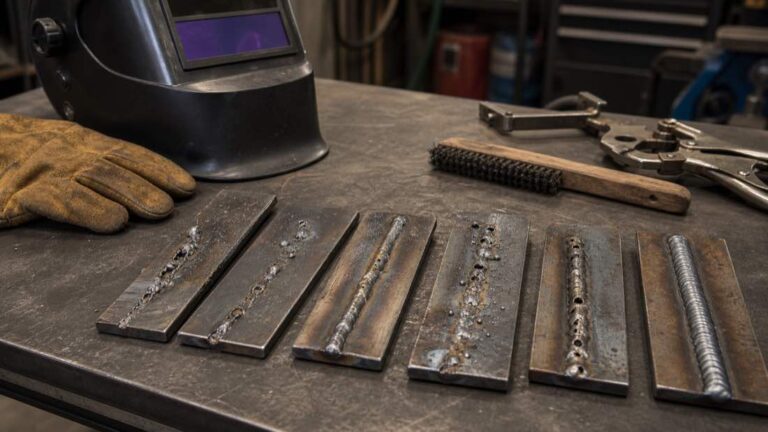
- Porosity: gas pockets form from contamination, poor shielding, moisture, or wrong technique.
- Burn-through: aluminum can overheat quickly, especially on thin material.
- Cold-looking welds: fast heat movement can make settings feel different from steel.
- Soot: often linked to poor shielding, wrong torch angle, too much stickout, or dirty metal.
- Oxide contamination: aluminum oxide must be removed before welding.
These problems are frustrating, but they are easier to diagnose with a correct aluminum setup. They are much harder when the starting assumption is wrong and the beginner is trying to make flux core behave like aluminum MIG.
Beginner Setup Checklist
- Confirm your machine supports aluminum MIG.
- Use solid aluminum wire, not ordinary steel flux core wire.
- Use pure argon shielding gas unless your procedure says otherwise.
- Install the correct drive rolls, contact tip, and liner or spool gun.
- Clean the aluminum with a dedicated stainless brush.
- Practice on scrap of the same thickness before welding the real part.
- Inspect the bead for soot, porosity, lack of fusion, and burn-through.
When Flux Core Is Still the Better Choice
Flux core is still useful. It is just useful for the right jobs. If you are repairing mild steel outdoors, learning basic bead control, or working without a gas bottle, self-shielded flux core can be practical. It is not the process to choose for aluminum panels, aluminum brackets, or aluminum tubing.
If your projects are mostly steel, keep practicing flux core and learn settings, polarity, travel angle, slag removal, and defect control. If your projects are aluminum, plan for gas-shielded aluminum MIG or TIG instead.
Safety Notes
Aluminum MIG and flux core welding both create hazards. Expect UV radiation, hot metal, sparks, fumes, electric shock risk, fire risk, sharp edges, and compressed gas hazards when shielding gas is used. Aluminum parts may also have coatings, oil, paint, anodizing, or unknown contamination.
Use a proper welding helmet, gloves, flame-resistant clothing, safety glasses, ventilation, and a fire-safe workspace. Read your machine manual before changing polarity, gas, wire type, or gun setup. Review OSHA welding hazards guidance, OSHA welding fume guidance, and AWS safety resources.
FAQ
Can you weld aluminum with gasless MIG?
Not in the normal beginner sense. Gasless MIG usually means self-shielded flux core steel welding. Aluminum MIG generally needs solid aluminum wire and shielding gas.
Can steel flux core wire weld aluminum?
No. Steel flux core wire is not a correct filler for aluminum. It will not create a proper aluminum weld.
What wire should I use for aluminum MIG?
Common aluminum MIG wires include 4043 and 5356. The right choice depends on the base aluminum alloy, service needs, and manufacturer guidance.
Do I need a spool gun for aluminum?
Many beginner aluminum MIG setups use a spool gun because it keeps the soft wire path short. Some setups use push-pull guns or carefully prepared standard guns, but feeding is less forgiving than steel.
Can I weld aluminum with 75/25 gas?
No, 75/25 argon-CO2 is a common mild steel MIG gas, not a normal aluminum MIG gas. Aluminum MIG usually uses pure argon for beginner work.
Final Advice
Do not buy ordinary flux core wire expecting it to solve aluminum MIG welding. For aluminum, plan around solid aluminum wire, pure argon, clean material, and a machine that can feed soft wire correctly. Use flux core for steel, and use the right aluminum process when aluminum is the real project.