Advanced Weld Consumable Calculator

An advanced weld consumable calculator estimates how much filler metal, electrode, wire, or rod a welding job may need. A basic estimate may only use weld length and joint size. A better estimate also considers weld volume, metal density, deposition efficiency, stub loss, spatter, starts and stops, repair allowance, and the process being used.
This guide explains the logic behind the calculator so beginners can understand what the numbers mean before buying wire, rods, or filler metal. It is useful for planning practice projects, shop work, quotes, and material lists, but it is not a substitute for approved procedure data on code, structural, pressure, vehicle, or safety-critical welding.
Mark Dawson beginner note: a calculator can help you avoid running short, but it cannot inspect the joint. Fit-up, root opening, weld size, position, technique, and rework can change consumable use more than a neat spreadsheet suggests.
Quick Answer
To estimate weld consumables, calculate the amount of weld metal needed, then divide by the deposition efficiency of the process. Add a waste allowance for starts, stops, stub ends, spatter, cleanup, test pieces, and repair welds. The simple planning formula is:
Consumable required = weld metal required ÷ deposition efficiency + waste allowance
For example, if the job needs 10 lb of deposited weld metal and your process deposits about 80% of the purchased filler into the joint, the base consumable estimate is 12.5 lb before waste. Add extra for setup, practice, repair, and packaging size.
| Input | Why It Matters | Beginner Risk |
|---|---|---|
| Weld length | Longer welds need more filler | Measuring only one side of repeated parts |
| Weld size | Larger leg, throat, or groove volume increases weight | Guessing instead of measuring |
| Metal density | Converts volume into weight | Using steel density for aluminum |
| Deposition efficiency | Accounts for filler that does not become weld metal | Assuming 100% efficiency |
| Waste allowance | Covers stubs, spatter, starts, stops, and rework | Buying exactly the calculated amount |
What the Calculator Should Estimate
A useful weld consumable estimate separates three ideas: deposited weld metal, purchased consumable, and extra allowance. Deposited weld metal is the material that actually becomes part of the weld. Purchased consumable is the wire, electrode, filler rod, or flux core wire you buy. Extra allowance covers the real-world losses that happen during setup and production.
For MIG or flux core, the calculator may estimate pounds of wire. For stick welding, it may estimate pounds of electrodes and adjust for stub loss. For TIG, it may estimate filler rod weight, though TIG use depends strongly on joint fit-up and how much filler the welder adds by hand.
When a calculator looks too exact, treat that as a warning. Welding estimates are planning numbers. The final amount depends on the drawing, procedure, joint prep, welder technique, inspection requirements, and how many parts need repair.
Core Formula
The basic path is:
- Estimate weld cross-sectional area.
- Multiply by total weld length to get weld volume.
- Multiply volume by material density to get deposited weld metal.
- Divide by deposition efficiency to estimate purchased filler.
- Add waste and repair allowance.
In plain words, the calculator first asks how much weld you are building. Then it asks how much of the consumable actually reaches the weld. That difference matters because not every ounce of rod or wire becomes part of the finished joint.
| Step | Formula Idea | Example Unit |
|---|---|---|
| Area | Joint shape size | in² or mm² |
| Volume | Area × weld length | in³ or cm³ |
| Deposited weight | Volume × density | lb or kg |
| Consumable estimate | Deposited weight ÷ efficiency | lb or kg |
| Purchase amount | Estimate + waste | spools, rods, packs |
Fillet Weld Example
A fillet weld is a common place to start because the joint shape is easier to picture. A simple equal-leg fillet can be estimated as a triangular area. In rough planning, area is often treated as one half of leg size squared when both legs are the same size.
That simple triangle estimate does not include reinforcement, convexity, root gap, overwelding, or contour changes. Still, it helps beginners see why a small increase in weld size can raise consumable use quickly. Doubling the leg size can more than double the weld metal needed.
For more background on fillet sizing, use Fillet Weld Size Chart in mm and How to Calculate Fillet Weld Leg Length. Those topics connect directly to consumable estimates because weld size controls cross-sectional area.
Groove Weld and Multi-Pass Estimates
Groove welds are harder to estimate than simple fillet welds because the joint preparation changes the volume. Bevel angle, root opening, root face, backing, plate thickness, reinforcement, and the number of passes all affect how much filler metal is needed. A calculator that ignores groove geometry can undercount a heavy weld by a wide margin.
For a beginner planning estimate, separate groove welds from fillet welds instead of using one average number. Add each weld type as its own line item. A V-groove, square groove, repair build-up, and small fillet all have different cross-sectional areas, even if the total length is similar.
Multi-pass welding also needs extra attention. Every pass has starts, stops, tie-ins, cleaning, and possible repair. If the joint needs several passes, the consumable estimate should include the total deposited metal for all passes, not only the final visible cap.
Deposition Efficiency by Process
Deposition efficiency is the share of filler metal that becomes deposited weld metal. The rest may be lost as electrode stubs, spatter, slag-related loss, fumes, or process waste. Exact values vary by consumable type, wire size, settings, position, and procedure, so use conservative planning numbers unless you have job data.
| Process | Planning Efficiency Range | Why It Varies |
|---|---|---|
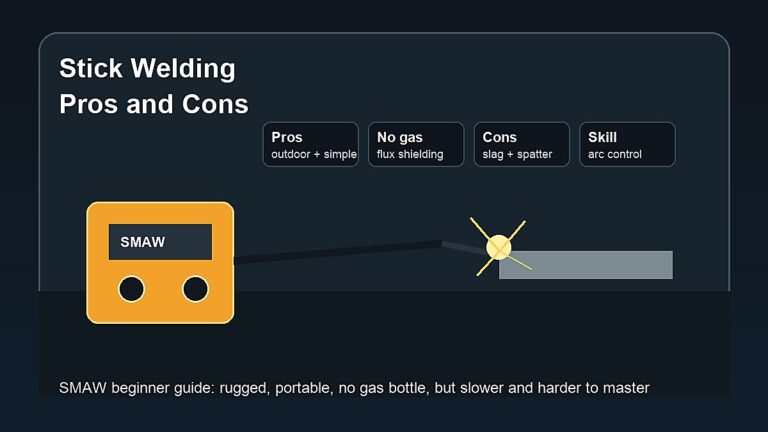
| Stick welding | Lower to moderate | Stub loss, slag, starts, and spatter |
| Solid MIG wire | High | Less stub loss, cleaner transfer when set well |
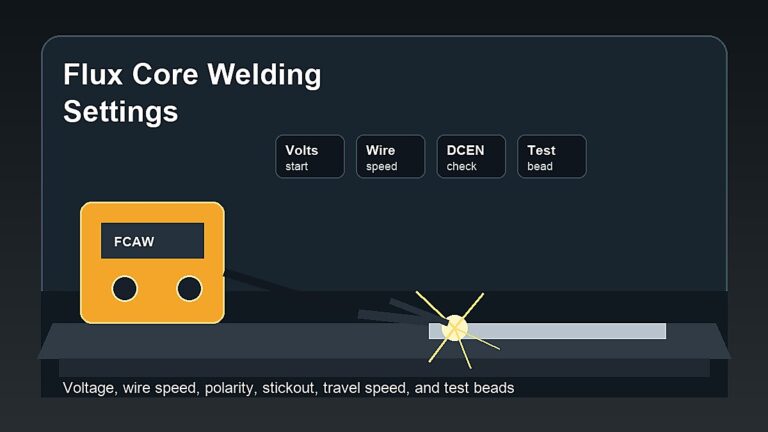
| Flux core wire | Moderate to high | Slag, smoke, spatter, and wire type |
| TIG filler rod | Varies by welder | Manual filler addition and cut rod waste |
| Submerged arc | Often high in production | Controlled process and flux recovery practices |
Do not use one efficiency value for every process. Stick electrodes leave stub ends. Flux core creates slag and process losses. MIG wire may have higher usable deposition, but poor settings, spatter, and rework still add waste. The estimate should match the actual process.
Waste Allowance
Waste allowance is where beginner estimates often fail. A perfect calculation may say the job needs 8.2 lb of wire, but real work may require more because of setup beads, test coupons, starts and stops, grinding out defects, packaging size, and leftover wire that cannot be used efficiently.
For small home projects, a waste allowance may be as simple as buying the next larger spool or rod package. For shop estimates, the allowance should be based on previous jobs, inspection level, welder skill, material condition, and the risk of rework. High-repair jobs need more cushion than clean repeat work.
A small test job might only need a modest allowance because the risk is low and the parts are simple. A field repair on dirty steel may need a much larger allowance because fit-up, grinding, access, weather, and inspection can all add extra weld time and consumable use. Keep the allowance visible instead of hiding it inside another number.
Inputs for an Advanced Estimate
A stronger calculator asks for more than one number. The more closely the inputs match the job, the more useful the estimate becomes. Keep every input visible so another person can audit the result later.
| Input | Good Practice | Common Mistake |
|---|---|---|
| Total weld length | Count every repeated part and weld segment | Measuring only the sample joint |
| Joint type | Separate fillet, groove, plug, and repair welds | Mixing different welds into one average |
| Weld size | Use drawing size or approved procedure | Estimating from appearance |
| Material | Use the right density for steel, stainless, or aluminum | Using one density for all metals |
| Process | Match efficiency to MIG, TIG, stick, or flux core | Assuming all processes waste the same amount |
| Repair allowance | Use history or inspection risk | Leaving no cushion |
Step-by-Step Estimating Workflow
- List each weld type separately instead of grouping the whole job together.
- Measure or take the total weld length from the drawing.
- Use the required weld size, not the size that looks convenient.
- Estimate cross-sectional area for each weld type.
- Convert area and length into volume.
- Apply the correct material density.
- Choose a realistic deposition efficiency for the process.
- Add waste, setup, and repair allowance as a separate line.
- Round to the spool, rod package, or filler quantity available from the supplier.
- Review the estimate against past jobs before ordering.
This workflow keeps the estimate easier to audit. If the final number looks high, you can see whether the cause is weld size, total length, efficiency, or waste allowance. If the number looks low, the line items make it easier to spot a missing joint or repeated part.
Wire, Rod, and Electrode Differences
Consumable type changes the estimate. MIG and flux core wire are bought by spool weight. Stick electrodes are bought by package weight, but not all of each rod becomes weld metal because of stub loss. TIG filler rod is often counted by diameter and length, then converted to weight if a detailed estimate is needed.
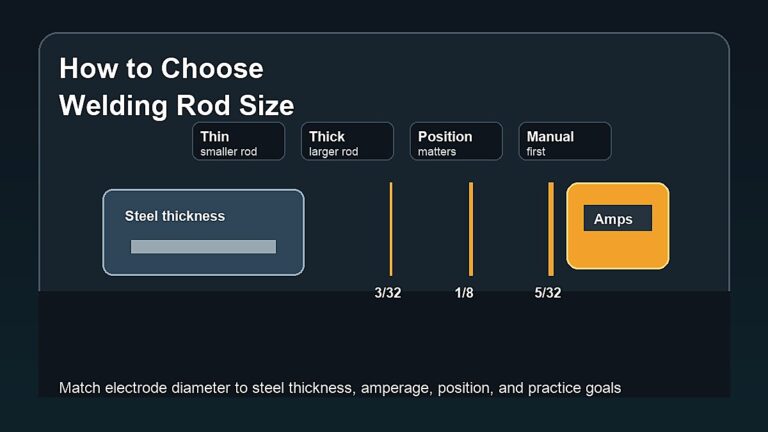
Wire size also affects how fast consumables are used. A larger wire can deposit more metal at a given feed speed, but it needs the correct machine capacity, contact tip, drive rolls, gas or shielding method, and settings. For wire selection, see Welding Wire Size Chart.
Stick welding estimates should account for electrode type and storage rules. Low-hydrogen electrodes can require specific handling, and poor storage can waste rods before they ever reach the joint. For rod basics, read Welding Rod Specifications and Low Hydrogen Electrode Storage.
Simple Worked Example
Imagine a shop estimates 10 lb of deposited weld metal for a group of mild steel welds. The process is solid MIG, and the planner uses 85% deposition efficiency as a conservative estimate. The base consumable estimate is:
10 lb ÷ 0.85 = 11.76 lb of wire
If the job needs a 12% waste and repair allowance, multiply by 1.12:
11.76 lb × 1.12 = 13.17 lb
In practice, the shop might buy a 15 lb spool or larger package depending on what the machine accepts. Buying exactly 13.17 lb is not realistic, and running out before the job ends is usually more expensive than having a reasonable leftover amount.
When a Calculator Is Not Enough
Some welding work needs more than a planning calculator. Structural steel, lifting points, trailer frames, vehicle parts, pressure equipment, pipe work, and code jobs may require approved drawings, qualified procedures, certified welders, inspection, and documented material traceability.
A consumable estimate can support planning, but it does not decide whether a weld is acceptable. Strength depends on joint design, base material, filler classification, preheat, procedure, fit-up, welder skill, and inspection. For weld size reference, compare Weld Bead Size Chart.
Safety and Handling Notes
Consumable planning also has safety implications. Welding wire, rods, flux, coatings, fumes, shielding gases, hot metal, UV radiation, fire, and electric shock can all create hazards. Use proper PPE, ventilation, fire control, dry storage, and manufacturer instructions for the process and consumable.
Do not weld unknown coated metals, sealed containers, pressure vessels, or safety-critical parts based on a calculator result. Review recognized safety resources such as OSHA welding hazard guidance, OSHA 1910.252 welding, cutting, and brazing, and AWS free resources.
Common Estimating Mistakes
- Using 100% deposition efficiency: purchased consumable is almost never fully converted into weld metal.
- Ignoring overwelding: making a weld larger than required can waste a lot of filler.
- Mixing joint types: fillet welds, groove welds, and repair welds should be estimated separately.
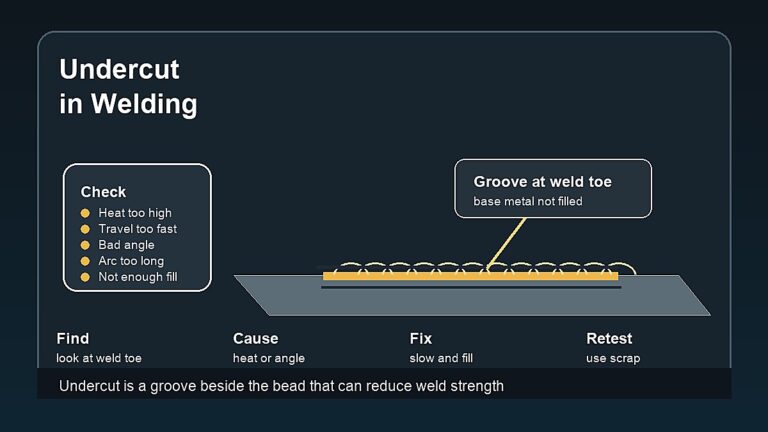
- Skipping repair allowance: inspection, grinding, and rework can change the final amount.
- Using the wrong density: steel, stainless, and aluminum do not weigh the same by volume.
- Forgetting package size: the calculated amount must be rounded to real spools, rods, or filler packs.
FAQ
What is a weld consumable calculator?
A weld consumable calculator estimates how much filler wire, electrode, rod, or other welding consumable may be needed for a job. Better estimates include weld size, length, material density, process efficiency, and waste allowance.
How do you calculate welding consumables?
Estimate the deposited weld metal first, divide by deposition efficiency, then add waste and repair allowance. The result should be rounded to the real package size you can buy.
What is deposition efficiency in welding?
Deposition efficiency is the share of filler metal that becomes deposited weld metal. Some consumable is lost through stub ends, spatter, slag, fume, starts, stops, or process waste.
Does MIG use less consumable than stick welding?
MIG often has higher deposition efficiency than stick welding because there are no electrode stubs. Actual use depends on wire size, settings, spatter, joint design, and repair rate.
Can I use this estimate for structural welding?
Use it only for planning. Structural or code work needs approved drawings, qualified procedures, proper inspection, and professional judgment. A calculator cannot approve weld design or strength.
Final Advice
An advanced weld consumable calculator is most useful when the inputs are honest. Measure the weld length, separate joint types, use the correct weld size, choose realistic deposition efficiency, and add waste allowance. Then round the result to the spool, rod, or filler package you can actually buy.
For beginner planning, the goal is not a perfect number to two decimal places. The goal is to avoid running short, avoid careless overbuying, and understand why weld size, process, efficiency, and rework change consumable use.