Can You Weld Cast Aluminum?

Can you weld cast aluminum? Yes, some cast aluminum parts can be welded, but cast aluminum is often harder to repair than clean aluminum plate or extrusion. The casting may contain pores, oil, dirt, old cracks, unknown alloy, or heat damage that makes the weld behave badly.
Beginners usually ask this after a broken bracket, mower deck, engine cover, wheel part, handle, housing, or outdoor casting cracks. The first question is not only whether the metal can melt. The better question is whether welding is the safest and most reliable repair for that specific part.
Mark Dawson beginner note: cast aluminum repair starts with inspection and cleaning. If oil keeps boiling out or the crack keeps growing, more heat is not the answer.
Quick Answer
You can weld many cast aluminum parts with AC TIG, and some can be MIG welded with the right spool gun setup, filler wire, cleaning, and heat control. TIG is usually preferred for small repairs because it gives better puddle control. The main problems are porosity, contamination, cracking, unknown alloy, and distortion. Do not weld safety-critical cast aluminum parts such as wheels, suspension parts, pressure parts, or structural components without qualified repair guidance.
| Repair Factor | Why It Matters | Beginner Note |
|---|---|---|
| Unknown alloy | Different castings weld differently | Test first if possible |
| Oil contamination | Creates porosity and dirty puddles | Clean and heat-cycle carefully |
| Cracks | Can continue beyond visible damage | Inspect before grinding away clues |
| Filler choice | Affects cracking and strength | 4043 is common but not universal |
| Part safety | Failure may be dangerous | Replace or get expert repair |
Why Cast Aluminum Is Difficult
Cast aluminum is made by pouring molten aluminum into a mold. That process can leave porosity, inclusions, and uneven structure inside the part. A casting may also soak up oil, fuel, coolant, grease, or dirt during years of service.
When you weld it, heat can pull contamination into the puddle. The weld may bubble, turn black, crack, or refuse to wet cleanly. This is why a cast aluminum repair can look worse than welding new aluminum even when the machine settings are reasonable.
For basic aluminum setup, read Beginner’s Guide to Welding Aluminum and How to Set Up a TIG Welder for Aluminum.
Common Cast Aluminum Parts
Cast aluminum shows up in mower decks, pump housings, intake parts, transmission cases, engine covers, outdoor furniture, brackets, handles, wheels, and small machine parts. Some are simple cosmetic repairs. Others carry load, seal fluids, hold bearings, or align moving parts.
The part’s job decides the repair risk. A cracked decorative handle is not the same as a wheel, case, or pressure housing. Before welding, ask what happens if the repair fails after the part goes back into service.
When Welding Is a Bad Idea
- The part is a wheel, suspension part, steering part, brake part, or lifting component.
- The casting holds pressure, fuel, oil, coolant, or gas.
- The crack reaches a machined surface or threaded boss that must stay accurate.
- The part is soaked with oil and cannot be cleaned well.
- The casting is cheap enough to replace safely.
- You do not know how the part will be inspected after repair.
Replacement is often smarter than repair when failure has real consequences. Welding can also distort a casting enough that bolt holes, bearing seats, gasket surfaces, and threads no longer line up.
TIG Welding Cast Aluminum
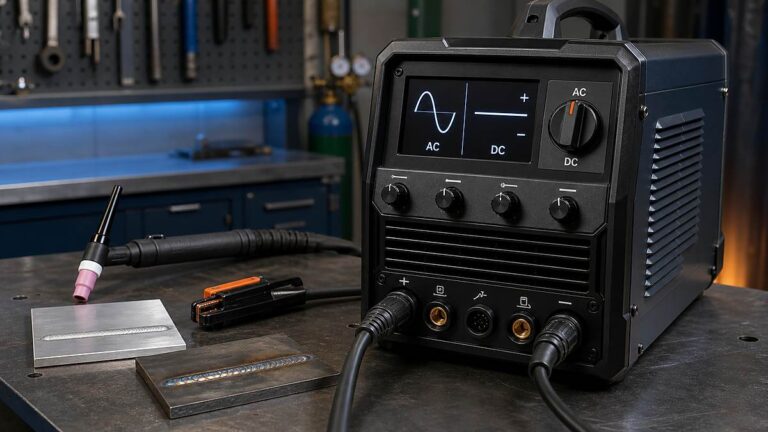
AC TIG is commonly used for cast aluminum repair because it gives control over heat, puddle size, and filler timing. The cleaning action of AC helps with aluminum oxide, but it cannot remove deep oil or contamination trapped inside the casting.
Use clean tungsten, 100% argon, a suitable filler, and short controlled welds. If the puddle turns black or boils, stop and clean again. Do not keep adding filler into a dirty puddle and expect the defect to disappear.
MIG Welding Cast Aluminum
MIG can weld some cast aluminum, especially larger or less precise repairs, but it is less forgiving on small cracks and dirty castings. A spool gun or push-pull setup is usually needed for aluminum wire feeding.
MIG adds filler quickly, which can help on larger repairs but can also hide contamination or poor fusion. If you use MIG, practice on scrap cast aluminum and review Spool Gun Aluminum Welding Settings and Aluminum Welding Wire Size Chart.
Filler Rod or Wire Choice
4043 is a common filler for many cast aluminum repairs because it flows well and can be more crack-resistant in some applications. 5356 is also common in aluminum welding, but it is not the best choice for every casting or service condition.
The problem is that many cast parts do not tell you the exact alloy. If you do not know the alloy, treat the repair as uncertain. For critical parts, get material identification and qualified repair advice rather than guessing from appearance.
Cleaning Cast Aluminum
Cleaning is the main skill in cast aluminum repair. Remove paint, oxide, grease, oil, dirt, and old repair material. Use a stainless brush dedicated to aluminum, carbide burrs, clean abrasives, and approved solvent practices. Do not smear oil into the crack with a dirty wheel.
Some welders warm the casting carefully to drive out oil before final cleaning. This must be done safely because old castings can contain flammable residue. If smoke or oil keeps appearing, the casting may not be worth welding.
Heat Cycling for Contamination
A careful heat cycle can reveal contamination before welding. Gentle heating may draw oil or residue out of pores and cracks, allowing another round of cleaning. This is not the same as overheating the casting or burning mystery chemicals out of it.
If the casting smokes heavily, smells like fuel, or keeps pushing contamination to the surface, stop and reassess. A soaked casting may need professional cleaning, replacement, or a different repair method.
Crack Preparation
Find the end of the crack before welding. Cracks often continue farther than the visible break. Grinding a groove without understanding the crack path can remove evidence and still leave a crack tip behind.
Depending on the part, the repair may need stop drilling, V-grooving, or dye penetrant inspection. Beginners should practice crack prep on scrap castings before attempting a part they care about.
Repair Examples
A broken cast aluminum lawn equipment bracket may be a reasonable practice repair if it is not safety-critical and replacement is not practical. Clean the crack, prepare the groove, tack carefully, and inspect after cooling.
A cracked transmission case, wheel, steering part, or pressure housing is a different category. Those parts may need machining, leak testing, heat treatment knowledge, or replacement. A beginner bead can make the part look repaired while leaving hidden risk.
Preheat and Heat Control
Preheat can help some cast aluminum repairs by reducing thermal shock and making the puddle more predictable. Too much heat can also make the part sag, distort, or lose strength. Use moderate, controlled heat and follow qualified guidance for important repairs.
Castings with thick and thin areas are tricky because heat does not spread evenly. A thin rib can overheat while a thick boss still feels cold. Move slowly, test on scrap, and avoid forcing the puddle to behave with excess amperage.
Cooling After Welding
Let the casting cool in a controlled way. Do not quench a hot aluminum casting to speed up the job. Sudden cooling can add stress, distort the part, or reveal cracks that were not obvious while the repair was hot.
After cooling, check alignment, bolt holes, machined surfaces, and sealing faces. Welding heat can move a casting enough that it no longer fits even if the crack is filled.
Porosity Problems
Porosity is common in cast aluminum repair. It can come from trapped gas inside the casting, oil contamination, poor shielding gas, dirty filler, oxide, or old repair material. A few small pores in a practice bead are a learning signal. Porosity in a loaded repair can be a serious defect.
If porosity keeps appearing, stop and troubleshoot instead of burying it. Clean deeper, change abrasives, check argon flow, inspect the cup or gas lens, and consider whether the casting is too contaminated. For related troubleshooting, read Welding Porosity.
Step-by-Step Repair Workflow
- Decide whether the part is safe to repair.
- Identify the casting and service conditions if possible.
- Clean paint, oil, oxide, and dirt from the repair area.
- Inspect the crack and prepare the groove.
- Choose TIG or MIG based on access and repair size.
- Select filler based on alloy or qualified guidance.
- Test on scrap or a non-critical area if possible.
- Weld short sections and clean between attempts.
- Inspect after cooling for cracks and porosity.
- Machine, seal, or finish only after the weld is accepted.
Alternatives to Welding
Some cast aluminum parts are better repaired with replacement, mechanical reinforcement, threaded inserts, brazing, epoxy, or a new part. These choices also have limits, but they may avoid heat distortion and weld cracking.
Epoxy may be suitable for a cosmetic or low-stress repair, but it is not a structural weld. Brazing may work on some non-critical castings, but it depends on surface prep, filler, heat, and service temperature.
Repair Decision Checklist
- Is the part safety-critical or load-bearing?
- Does it hold pressure, fuel, oil, coolant, or gas?
- Can you identify the crack ends?
- Can the casting be cleaned without constant oil boiling out?
- Will heat distort machined surfaces or threaded holes?
- Do you know the filler alloy and process you plan to use?
- Can the repair be inspected after welding?
- Is replacement cheaper and safer?
If several answers are uncertain, do not turn the repair into a welding experiment. Get a professional opinion or replace the part.
Signs You Should Stop
Stop if the crack keeps extending, the puddle keeps boiling, the casting collapses at the edge, or oil continues to come out after repeated cleaning. Also stop if the part moves out of alignment while hot. These are signs that the repair plan needs to change.
Machining and Finishing
Some cast aluminum repairs need grinding, filing, drilling, tapping, or machining after welding. Plan this before adding filler. Too much weld buildup can block bolt holes, cover gasket surfaces, or make the part impossible to reassemble.
If the part seals oil, coolant, air, or water, the repair may need leak testing. A weld can look filled while tiny pores still pass fluid or pressure.
Common Beginner Mistakes
- Welding a safety-critical casting instead of replacing it.
- Skipping oil removal and blaming the filler.
- Using a dirty brush or grinding wheel.
- Adding filler into a boiling contaminated puddle.
- Choosing filler without knowing the base alloy.
- Overheating thin ribs and bolt bosses.
- Ignoring cracks that extend beyond the visible break.
- Not inspecting the repair after full cooling.
Inspection After Welding
After cooling, clean the repair and inspect it under bright light. Look for pores, cracks, lack of fusion, distortion, and new cracks beside the weld. Some defects appear after the part cools, not while the weld is still hot.
Critical parts may need dye penetrant inspection, pressure testing, machining checks, or professional evaluation. Do not treat a shiny bead as proof that a cast aluminum repair is safe.
Practice and Notes
If you can find scrap cast aluminum, practice before the real repair. Record filler, amperage, AC balance, tungsten, cup size, cleaning steps, preheat, and what the puddle looked like. These notes help you separate a setting problem from a contamination problem.
Save photos before cleaning, after groove prep, after welding, and after final cleanup. Cast aluminum repairs often teach through patterns: where pores appear, where cracks continue, and where heat distorted the part.
When a test coupon behaves badly, slow down and solve that problem before touching the real casting.
Safety Notes
Cast aluminum welding can involve UV radiation, hot metal, electric shock, fumes, grinding dust, flammable residue, compressed gas, and failed repair parts. Wear proper PPE, use ventilation, clean safely, and keep fire hazards away.
Do not weld fuel tanks, pressure parts, wheels, suspension parts, steering parts, or unknown contaminated castings without qualified repair guidance. Review OSHA welding hazards guidance, OSHA welding, cutting, and brazing requirements, AWS safety resources, and Lincoln Electric aluminum welding guidance.
FAQ
Can cast aluminum be welded?
Yes, many cast aluminum parts can be welded, but the repair can be difficult because of porosity, contamination, cracks, and unknown alloy.
Is TIG or MIG better for cast aluminum?
TIG is often better for small controlled repairs. MIG can work on larger repairs when the machine, spool gun, wire, gas, and prep are correct.
What filler is used for cast aluminum?
4043 is common for many cast aluminum repairs, but filler choice depends on the casting alloy, service, and repair requirements.
Why does cast aluminum get porosity?
Porosity can come from trapped gas in the casting, oil, dirt, oxide, poor shielding gas, dirty filler, or old contaminated repair material.
Can you weld cast aluminum wheels?
Do not treat wheels as beginner repair projects. Wheel repair affects safety and should be handled only by qualified specialists or replaced.
Final Advice
Cast aluminum can be welded, but every casting deserves inspection before heat. Clean deeply, choose the right process and filler, test first, and avoid safety-critical repairs unless qualified help is involved.