Plasma Cutter vs Oxy-Acetylene Torch for Beginners
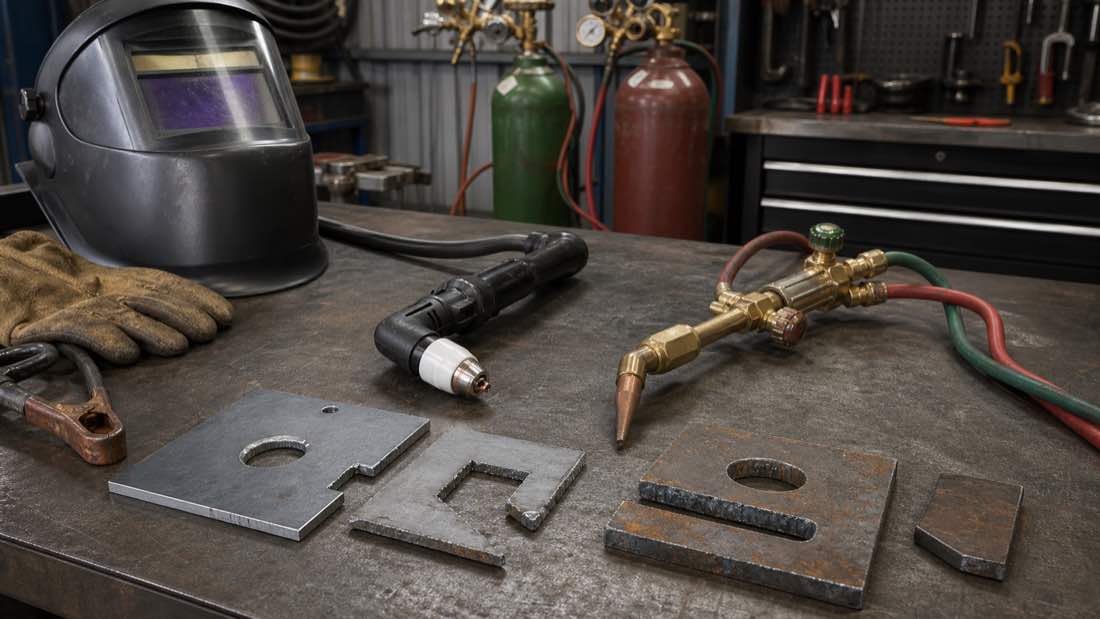
If you are a beginner comparing a plasma cutter vs oxy-acetylene torch, the quick answer is simple: a plasma cutter is usually easier for clean cutting on electrically conductive metals, while an oxy-acetylene torch is more versatile for heating, bending, brazing, and cutting steel in places where electricity or compressed air is less convenient. Neither tool is harmless, and both require proper safety training, PPE, ventilation, and fire control.
For most new home-shop users who only want to cut mild steel, stainless steel, or aluminum sheet and plate, a plasma cutter is often the easier tool to learn first. For beginners who want to heat seized parts, bend steel, braze, or cut thicker carbon steel without relying on a high-amperage electrical machine, an oxy-acetylene torch can make more sense.
Mark Dawson beginner note: do not choose a cutting tool only because it looks fast in a video. Choose the process that matches your material, workspace, power supply, gas-cylinder comfort level, ventilation, and safety training. Cutting metal creates heat, sparks, fumes, UV radiation, molten slag, and fire risk.
Quick Answer: Which Should a Beginner Use?
Choose a plasma cutter first if you mainly want fast, clean cuts on conductive metals and you have suitable electrical power, dry compressed air, and a safe indoor or covered workspace.
Choose an oxy-acetylene torch first if you need a tool for heating, bending, brazing, and cutting carbon steel, or if you are learning in a shop where gas cylinders and torch safety are already taught properly.
If you are completely new and working alone at home, a plasma cutter can feel less complicated because it does not involve oxygen and acetylene cylinders, regulators, torch lighting, flame adjustment, and flashback-control habits. But plasma cutting still has electrical, fume, fire, eye, and compressed-air risks.
Plasma Cutter vs Oxy-Acetylene Torch: Simple Comparison
| Feature | Plasma Cutter | Oxy-Acetylene Torch |
|---|---|---|
| Best beginner use | Fast cutting on conductive metals | Heating, bending, brazing, and steel cutting |
| Works on aluminum/stainless | Yes, if the metal conducts electricity | Not ideal for cutting non-ferrous metals |
| Needs gas cylinders | Usually no fuel gas; needs compressed air on many units | Yes, oxygen and acetylene cylinders |
| Needs electricity | Yes | Not for the flame itself |
| Learning curve | Often easier for straight cutting | More setup and flame-control skills |
| Extra abilities | Mainly cutting and gouging on some machines | Heating, bending, brazing, soldering, cutting |
| Main beginner risk | Arc flash, fumes, electric shock, fire, molten metal | Gas cylinders, flashback, flame, fire, fumes, molten metal |
What Is a Plasma Cutter?
A plasma cutter uses an electric arc and a stream of gas to create a high-temperature plasma jet. That jet melts metal, and the gas flow blows the molten material out of the cut. Because the process depends on an electrical arc, it works on electrically conductive metals such as mild steel, stainless steel, aluminum, copper, and brass.
For beginners, plasma cutting is attractive because the torch can be easier to guide than a cutting flame once the machine is set up correctly. Many small machines use compressed air, so the user does not need acetylene and oxygen cylinders.
Plasma Cutter Pros for Beginners
- Fast cutting on conductive metals
- Can cut stainless steel and aluminum
- No fuel-gas flame to light and adjust
- Narrower kerf on many cuts
- Often easier for templates, curves, and sheet-metal work
Plasma Cutter Cons for Beginners
- Needs suitable electrical power
- Often needs clean, dry compressed air
- Consumables such as tips and electrodes wear out
- Can create intense light, noise, fumes, and molten blowback
- Not useful for heating or brazing like a torch
What Is an Oxy-Acetylene Torch?
An oxy-acetylene torch uses oxygen and acetylene gas to create a hot flame. With the correct torch tip and technique, it can heat steel, cut carbon steel, braze, solder, and help free stuck parts. Oxy-fuel cutting works differently from plasma cutting: the flame heats steel to ignition temperature, and oxygen helps the steel oxidize and blow away through the cut.
This process is useful, but it demands respect. Beginners must learn cylinder handling, regulator setup, hose inspection, lighting sequence, flame adjustment, shutdown procedure, and flashback prevention before using a torch.
Oxy-Acetylene Pros for Beginners
- Can cut, heat, bend, braze, and solder
- Works well for many carbon-steel repair tasks
- Useful when heating is as important as cutting
- No electrical arc needed for the flame
- Common in repair shops, farm work, and metal fabrication training
Oxy-Acetylene Cons for Beginners
- Requires oxygen and acetylene cylinders
- Regulators, hoses, tips, and flashback arrestors must be handled correctly
- Higher fire risk from an open flame and hot slag
- Not the best process for cutting aluminum or stainless steel
- More setup steps before a beginner can cut safely
Which Cuts Better?
For clean cuts on thin to medium conductive metal, plasma usually wins for beginners. It can cut faster, handle curves well, and work on stainless and aluminum. A plasma cutter can also be easier for a beginner to control once the machine settings, air pressure, and travel speed are close.
For thick carbon steel, rough repair cuts, and situations where heating is useful, oxy-acetylene still has a place. A torch can preheat, cut, and heat parts for bending or removal. The cut may be rougher for a beginner, but the process is versatile.
Which Is Safer for Beginners?
Neither process is automatically safe. Plasma cutting removes fuel-gas cylinders from the setup, but it adds arc, electrical, compressed-air, fume, and bright-light hazards. Oxy-acetylene avoids the electrical arc, but it uses compressed gas cylinders, a high-temperature flame, and equipment that must be handled correctly to avoid fire or flashback risks.
A beginner should learn either process with proper instruction. At minimum, read the machine or torch manual, wear appropriate PPE, keep fire hazards away, use ventilation, and understand the emergency shutdown steps before cutting.
Best Beginner Choice by Situation
Choose a Plasma Cutter If…
- You mainly want to cut metal, not heat or braze it.
- You need to cut stainless steel or aluminum.
- You have suitable electrical power and compressed air.
- You want cleaner cuts on sheet metal or light plate.
- You prefer not to manage oxygen and acetylene cylinders as a beginner.
Choose an Oxy-Acetylene Torch If…
- You need to heat, bend, braze, solder, or loosen stuck parts.
- You mainly work with carbon steel.
- You are learning in a supervised shop or welding class.
- You need a tool that can work without relying on an electrical cutting arc.
- You are willing to learn gas-cylinder and torch safety carefully.
Beginner Setup Checklist
Plasma Cutter Setup Basics
- Confirm the machine voltage and circuit requirements.
- Use clean, dry compressed air if the machine requires it.
- Attach the work clamp securely to clean metal.
- Install the correct torch consumables.
- Set amperage and air pressure according to the manual.
- Practice on scrap before cutting a real part.
Oxy-Acetylene Setup Basics
- Secure cylinders upright before use.
- Inspect hoses, regulators, torch body, and tips.
- Use proper flashback protection where required.
- Set regulator pressure according to the tip chart and manual.
- Follow the correct lighting and shutdown sequence.
- Keep oil and grease away from oxygen equipment.
Common Beginner Mistakes
- Cutting without enough ventilation: both processes can create hazardous fumes, especially on coated, painted, or unknown metals.
- Ignoring eye protection: plasma arcs and torch work can damage eyes without the correct shade and safety glasses.
- Cutting near flammables: sparks and slag can travel farther than beginners expect.
- Using the wrong tool for the material: oxy-fuel cutting is not the beginner-friendly choice for aluminum or stainless steel.
- Skipping the manual: pressure, amperage, tip size, and safety instructions are equipment-specific.
- Trying critical work too soon: practice cuts are not the same as safe repair work on vehicles, trailers, structures, tanks, or lifting parts.
Related WeldingPilot Guides
If you are choosing your first cutting or welding setup, also read Welding Tools & Gear, Welding Safety, and What Do Beginners Need to Start Welding?. If you plan to cut aluminum before welding it, pair this comparison with Beginner’s Guide to Welding Aluminum so the cut edge, cleaning, and fit-up do not create welding problems later.
FAQ
Is a plasma cutter better than an oxy-acetylene torch for beginners?
A plasma cutter is often easier for beginners who mainly want to cut conductive metal. An oxy-acetylene torch is better when heating, bending, brazing, or carbon-steel cutting versatility matters.
Can a plasma cutter cut aluminum?
Yes. Plasma cutting can cut aluminum because aluminum conducts electricity. The exact cut quality depends on the machine, settings, thickness, air quality, and operator technique.
Can an oxy-acetylene torch cut stainless steel?
Oxy-acetylene is not the normal beginner-friendly choice for cutting stainless steel. Oxy-fuel cutting works best on carbon steel because of the oxidation process. Plasma is usually better for stainless and aluminum cutting.
Do plasma cutters need gas bottles?
Many small plasma cutters use compressed air instead of fuel-gas cylinders. Some industrial plasma systems use other gases, so always check the machine manual.
Is oxy-acetylene dangerous?
Oxy-acetylene equipment can be dangerous if handled carelessly. Risks include fire, burns, cylinder hazards, flashback, fumes, and explosion hazards. Beginners should learn correct setup and shutdown from a qualified source.
Final Recommendation
For most beginners who only need to cut metal, a plasma cutter is the easier first tool. It is fast, works on more conductive metals, and avoids fuel-gas cylinder setup. For beginners who need heat as much as cutting, an oxy-acetylene torch is still valuable, but it requires more careful training and gas-safety discipline.
The best choice is not the tool that looks most powerful. It is the tool that fits your material, workspace, safety setup, and learning plan. Start with scrap metal, keep fire control nearby, and do not use beginner practice cuts for safety-critical work.