Welding for Beginners: Start Here
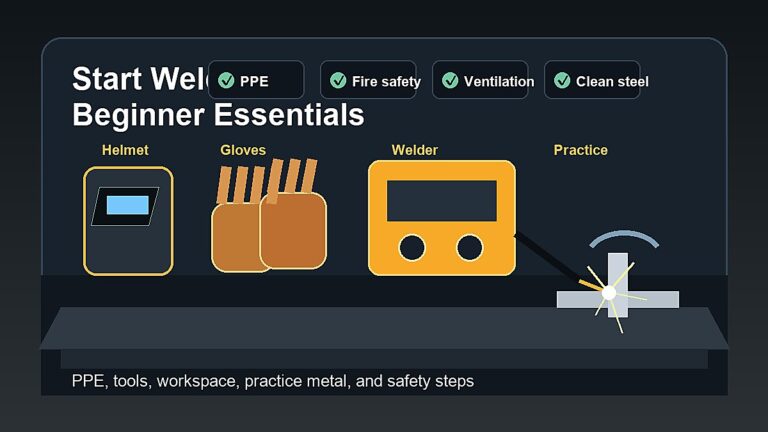
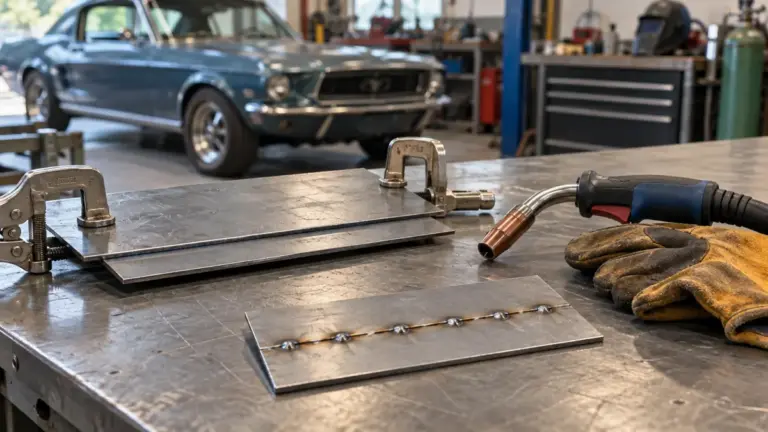
Begin learning welding by choosing one process and a controlled practice task. The useful first milestone is a repeatable setup and an inspected practice bead, not a repair that has to hold weight. This roadmap helps connect equipment choices with the skills to practise next.
Pick a learning path
| Starting situation | Path to investigate |
|---|---|
| Clean mild steel in a sheltered shop | Solid-wire MIG and gas handling |
| Suitable outdoor steel practice | Self-shielded flux core or stick within their limits |
| Precision work with time for coordination practice | TIG with the correct material setup |
The choice still depends on power, ventilation, material and available training. None of these processes makes unknown coatings or critical repairs appropriate first projects.
Progress through observable skills
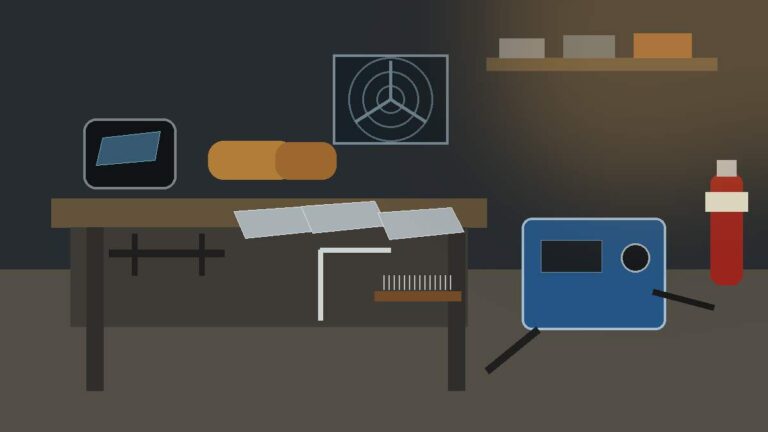
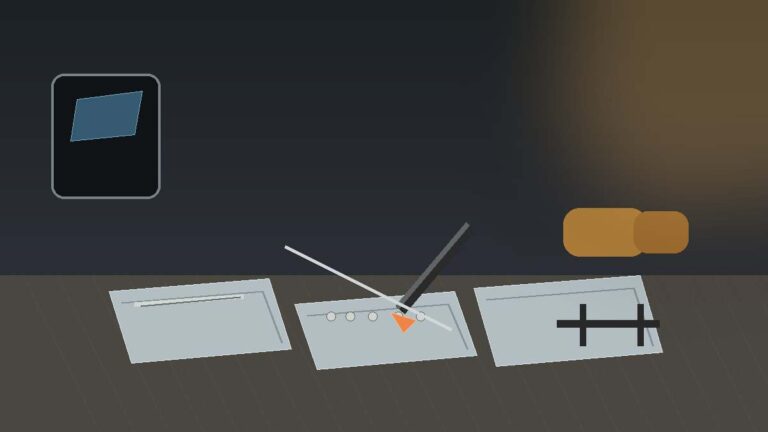
First learn setup: identify consumables, select settings from the instructions and prepare a safe work area. Then practise controlled short runs on consistent scrap. Next learn to clean and inspect the result. Only after that should you move into simple joints where fit-up, access and angle add new variables.
Keep a record of each coupon. Include material thickness, consumable, settings and what you changed. Two photos of unlabeled beads can be difficult to compare later; a modest notebook turns practice into useful evidence.
Learn what a neat bead cannot tell you
Regular ripples and low spatter do not prove internal fusion or suitability for service. Ask for competent feedback and learn the inspection methods appropriate to your practice. Do not test an uncertain weld by letting someone sit on, lift with or tow from it.
When a new task introduces a different metal, position or joint, treat it as a new setup. Success on flat mild-steel coupons does not automatically transfer to aluminum, thin panels or overhead work.
When should I build a first project?
After you can repeat the basic setup and make simple noncritical joints with informed feedback. Choose an object whose failure cannot injure someone.
What should I learn first: technique or safety?
They belong together. Material identification, fire prevention, fume control and PPE are part of every practice session, including shutdown.
Continue learning
Sources and limits
This is an educational reference. Follow the exact equipment and consumable instructions; safety-critical welding needs appropriate qualifications, procedures and inspection.