Can You Weld Aluminum to Steel?

Can you weld aluminum to steel? Not in the simple beginner sense. Aluminum and steel can be joined in some controlled ways, but direct fusion welding is difficult because the two metals behave very differently and can form brittle compounds at the joint.
If you are asking because you want to attach an aluminum part to a steel frame, bracket, cart, trailer, or repair piece, slow down before striking an arc. The best method may be mechanical fastening, brazing, adhesive, a bimetal transition insert, or a professionally designed joint rather than normal MIG, TIG, or stick welding.
Mark Dawson beginner note: aluminum-to-steel is not a place to prove bravery with a hot bead. First choose the joint method. Then decide whether welding is even the right process.
Quick Answer
You usually should not try to directly weld aluminum to steel with ordinary beginner MIG, TIG, or stick welding. Aluminum melts at a much lower temperature than steel, the metals expand differently, and a brittle iron-aluminum intermetallic layer can form where they meet. Practical joining options include bolts, rivets, structural adhesive, brazing or soldering in some non-critical jobs, and industrial bimetal transition materials for specialized welding applications.
| Method | Beginner Fit | Main Caution |
|---|---|---|
| Direct fusion welding | Poor | Brittle joint and heat mismatch |
| Bolts or rivets | Good | Needs corrosion isolation |
| Adhesive bonding | Sometimes | Surface prep and load limits |
| Brazing or soldering | Non-critical only | Strength and heat limits |
| Bimetal transition insert | Specialized | Needs correct procedure |
Why Aluminum and Steel Are Hard to Weld Together
Aluminum and steel do not melt, conduct heat, expand, or react the same way. Aluminum melts much sooner than steel. Steel needs far more heat to melt. By the time steel is hot enough for normal fusion welding, aluminum can collapse, burn away, or mix poorly at the interface.
The bigger problem is the brittle layer that can form between iron and aluminum. A small controlled layer may be managed in advanced industrial processes, but a thick brittle layer can make the joint crack or fail. That is why this is not treated like welding mild steel to mild steel.
For beginner background on each material, read Beginner’s Guide to Welding Aluminum and How to Set Up a TIG Welder for Mild Steel.
Why Direct MIG Welding Is Usually Not the Answer
MIG welding is useful for aluminum when the machine, wire, gas, and feed system are set up correctly. It is also useful for steel. That does not mean one normal MIG bead can join aluminum directly to steel in a reliable way.
Solid aluminum wire does not turn steel into an aluminum-compatible base metal. Steel MIG wire does not solve the aluminum side. A joint that looks attached on the surface may still be weak, brittle, or vulnerable to cracking. For related aluminum-wire limits, see Can You MIG Weld Aluminum to Steel?.
Can TIG Weld Aluminum to Steel?
TIG gives excellent control, but control alone does not remove the metallurgy problem. A beginner TIG torch can melt aluminum cleanly and weld mild steel cleanly, yet the dissimilar joint can still form brittle compounds and fail.
Specialized TIG-related methods may be used in controlled settings with transition materials, surface preparation, or brazing-style approaches. That is different from simply melting both pieces together. For ordinary shop practice, treat direct TIG welding from aluminum to steel as unsuitable.
What About Flux Core?
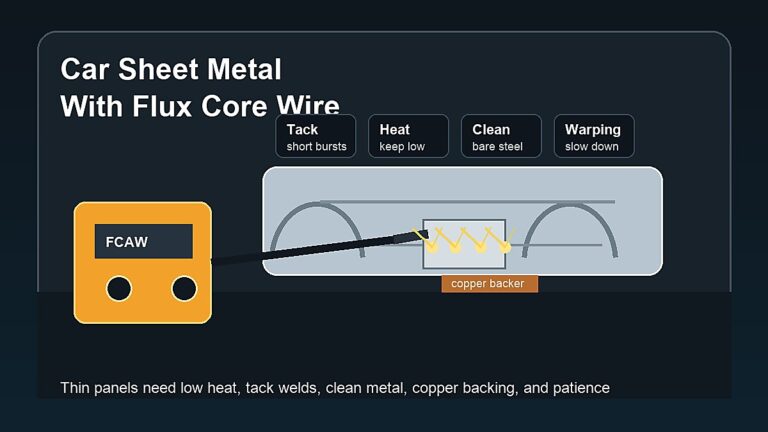
Flux core is not a shortcut for aluminum-to-steel welding. Self-shielded flux core wire is usually aimed at steel, and it does not make a reliable aluminum-to-steel fusion joint. The flux, arc behavior, filler chemistry, and heat input do not solve the dissimilar-metal problem.
Some beginners ask this because they already own a small flux core machine. That machine can be useful for steel practice, but it is not the right tool for joining aluminum directly to steel. For process boundaries, read Flux Core vs Stick Welding.
Can Stick Weld Aluminum to Steel?
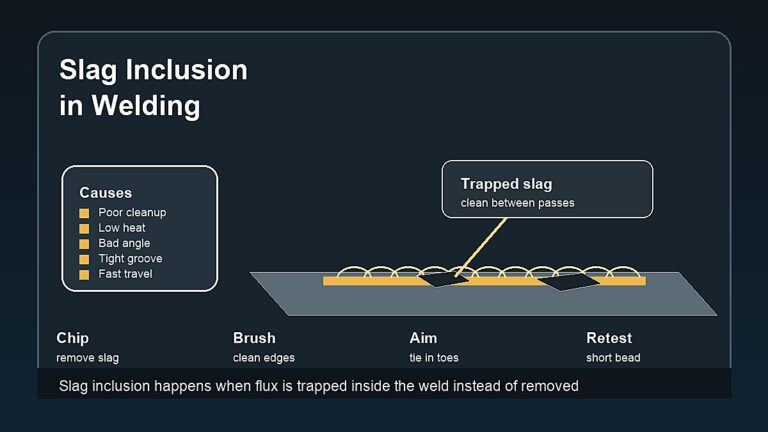
Stick welding is not a practical beginner method for joining aluminum directly to steel. Stick welding is rugged for steel repair, but aluminum-to-steel needs control that ordinary stick welding does not provide. The arc, filler, slag, and heat input are not suited to making a reliable dissimilar joint.
If a project needs a steel member and an aluminum member connected, look at mechanical design first. A bolted bracket, isolated fastener, or replaceable adapter may be safer and easier than forcing a weld that is likely to be weak.
Better Beginner Options
For many non-critical projects, mechanical fastening is the cleanest beginner option. Bolts, rivets, screws, brackets, clamps, or tabs can join aluminum to steel without melting the metals together. The design must still handle load, vibration, and corrosion.
Structural adhesive can also work in some designs, especially when large surface area and proper preparation are available. Adhesive is not magic. It needs clean surfaces, correct product selection, cure time, and realistic load expectations.
Brazing or soldering may be possible for light-duty or non-critical work, but strength, temperature limits, surface prep, and filler compatibility matter. Do not use a low-strength joining method on a part that carries serious load.
Adhesive and Fastener Limits
Mechanical fastening and adhesive bonding are often more realistic than welding, but they still have limits. A bolt can loosen under vibration if the joint is not designed correctly. A rivet can pull through thin aluminum if edge distance or backing support is poor. Adhesive can fail if the surfaces are oily, oxidized, too smooth, or loaded in the wrong direction.
Think about the load path before choosing the method. Shear, peel, vibration, bending, and temperature changes affect joints differently. A light cover panel is not the same as a bracket that carries weight. When the joint matters, design and inspection matter more than convenience.
Bimetal Transition Inserts
Industrial joining sometimes uses bimetal transition inserts or explosion-bonded transition materials. One side is compatible with aluminum welding and the other side is compatible with steel welding. This avoids trying to make one uncontrolled aluminum-steel fusion zone.
This is not usually a beginner garage solution. The insert, procedure, filler, heat control, and inspection all matter. For structural, marine, transport-related, pressure-related, or safety-critical joints, get qualified engineering and welding guidance.
Galvanic Corrosion Risk
Aluminum and steel can corrode when they are connected in the presence of moisture or an electrolyte, especially if the joint is not isolated. This is called galvanic corrosion. It can attack the aluminum and weaken the connection over time.
If you bolt aluminum to steel, consider isolation washers, coatings, sealants, paint systems, drainage, and avoiding trapped moisture. Outdoor projects, trailers, boat parts, and salty environments need more care than dry indoor brackets.
Simple Isolation Ideas
For a non-critical bolted joint, separation can be as important as strength. Nylon washers, coated fasteners, painted surfaces, rubber strips, sealant, or a designed spacer can reduce direct aluminum-to-steel contact. The exact method depends on load, temperature, water exposure, and whether the joint needs to be removable.
Do not trap water between the two metals. A joint that holds moisture can corrode faster than one that drains and dries. If the project lives outside, plan the joint so water cannot sit inside seams, holes, and overlapped plates.
Surface Prep Matters
Whether you use bolts, adhesive, brazing, or a transition part, surface preparation affects the result. Remove oil, paint, loose oxide, dirt, and burrs where the joint will sit. Do not grind aluminum and steel with the same contaminated wheel if cleanliness matters.
For adhesive bonding, follow the product instructions for sanding, cleaning, clamp pressure, temperature, and cure time. For bolted joints, deburr holes and avoid sharp edges that can start cracks in thin aluminum.
When a Welded Joint Is Not Worth It
A welded aluminum-to-steel joint may not be worth the risk when the part supports weight, sees vibration, carries people, handles pressure, or affects safety. A poor dissimilar-metal weld can look attached but fail without much warning.
Examples to avoid as beginner experiments include trailer frames, vehicle suspension parts, ladders, lifting points, pressure vessels, roll cages, structural building members, and equipment guards that protect people. Those jobs need qualified design and inspection.
Example: Aluminum Panel on a Steel Frame
An aluminum panel on a steel frame is a common reason people ask this question. In many cases, the practical answer is not welding. A bolted or riveted panel with isolation, sealant, and room for expansion may be easier to build and easier to replace later.
The aluminum panel and steel frame will expand at different rates as temperature changes. If the panel is locked too tightly, it may warp, crack around fasteners, or loosen over time. Slotted holes, washers, and flexible sealant may be part of the design, depending on the use.
Example: Aluminum Bracket to Steel
A small aluminum bracket attached to steel may also be better handled with mechanical fastening. Use enough fasteners, keep edge distance sensible, deburr the holes, and isolate the metals if corrosion is a concern. For a loaded bracket, calculate or verify the load instead of guessing by feel.
If the bracket is part of a machine guard, vehicle, ladder, rack, or lifting setup, treat it as critical. A neat-looking joint can still fail if the design does not account for vibration, fatigue, corrosion, and material thickness.
How to Choose a Joining Method
- Identify the aluminum alloy and steel type if possible.
- Decide what load the joint must carry.
- Check whether the part sees vibration, heat, water, or corrosion.
- Choose mechanical fastening, adhesive, brazing, or a transition insert before choosing a welder.
- Use test pieces before the final part.
- Get qualified help for safety-critical work.
Beginner Practice Project Idea
If you are learning, make a small non-critical aluminum-to-steel sample bracket using bolts instead of welding. Drill clean holes, deburr the parts, add isolation washers, and coat the steel. Then compare that with a scrap test where you try to melt the materials together. The difference teaches why joint method matters.
Keep the practice sample off anything important. The goal is to learn material behavior, not to prove a repair is safe.
What to Test on Scrap
Use scrap to compare joining methods. Make one bolted sample with isolation, one adhesive sample if you have the correct product, and one heat-based sample only for observation. Label each sample with material thickness, surface prep, fastener size, adhesive type, or heat method.
After curing or cooling, look for cracking, peeling, distortion, loose fasteners, burn-through, and corrosion-prone gaps. This kind of practice teaches why real aluminum-to-steel design usually starts with joint choice rather than welder settings.
Decision Checklist
- Is the joint load-bearing or safety-related?
- Will it see vibration, impact, or bending?
- Will it be outdoors or near salt, water, fertilizer, or chemicals?
- Can the metals be isolated to reduce corrosion?
- Can the joint be inspected after assembly?
- Would a replaceable bolted bracket be safer than a permanent joint?
- Do you know the exact aluminum alloy and steel type?
- Is there a qualified procedure for the method you want to use?
Common Beginner Mistakes
- Assuming any two metals can be fused if the welder is hot enough.
- Using aluminum filler on steel and expecting a structural joint.
- Ignoring brittle intermetallic layers.
- Forgetting galvanic corrosion after bolting aluminum to steel.
- Testing only by pulling on the part by hand.
- Using a practice bead on a vehicle, trailer, or load-bearing repair.
- Skipping surface prep for adhesive or mechanical fastening.
- Copying a video without knowing the materials or inspection method.
Inspection Limits
A surface that looks joined does not prove the aluminum-to-steel connection is strong. Dissimilar-metal joints may need destructive testing, bend testing, peel testing, macro examination, corrosion testing, or another qualified inspection method depending on the application.
For a beginner, visual inspection is useful for learning but not enough for a critical joint. If failure would damage property or hurt someone, do not rely on a home test.
Safety Notes
Trying to join aluminum to steel can involve hot metal, UV radiation, fumes, grinding dust, coatings, fire risk, electric shock, sharp edges, and failed joints. Coated, galvanized, painted, or unknown metals can add serious fume hazards.
Use proper PPE, ventilation, fire control, and manufacturer guidance. Review OSHA welding hazards guidance, OSHA welding, cutting, and brazing requirements, AWS safety resources, and TWI guidance on welding aluminum to steel.
FAQ
Can aluminum be welded directly to steel?
Not reliably with ordinary beginner welding. Direct fusion can form brittle compounds and weak joints. Specialized methods or transition materials are needed for serious applications.
What is the easiest way to join aluminum to steel?
For many beginner non-critical projects, bolts, rivets, brackets, or adhesive bonding are easier than welding. Corrosion isolation and load design still matter.
Can you MIG weld aluminum to steel?
Normal MIG welding is not a good direct method. A MIG welder can weld aluminum or steel separately, but joining them together needs a different approach.
Can you braze aluminum to steel?
Some brazing or soldering methods may join aluminum to steel for light-duty work, but strength, heat, surface preparation, and filler compatibility limit where they should be used.
Why does aluminum-to-steel corrode?
When aluminum and steel touch in moisture, galvanic corrosion can occur. Isolation washers, coatings, sealants, and drainage can reduce the risk.
Final Advice
Aluminum-to-steel joining is mostly a design problem before it is a welding problem. For beginner work, choose mechanical fastening or another suitable joining method unless a qualified procedure says otherwise. When the connection matters, get expert help before heat touches the metal.