Can You Weld Stainless Steel With Flux Core?
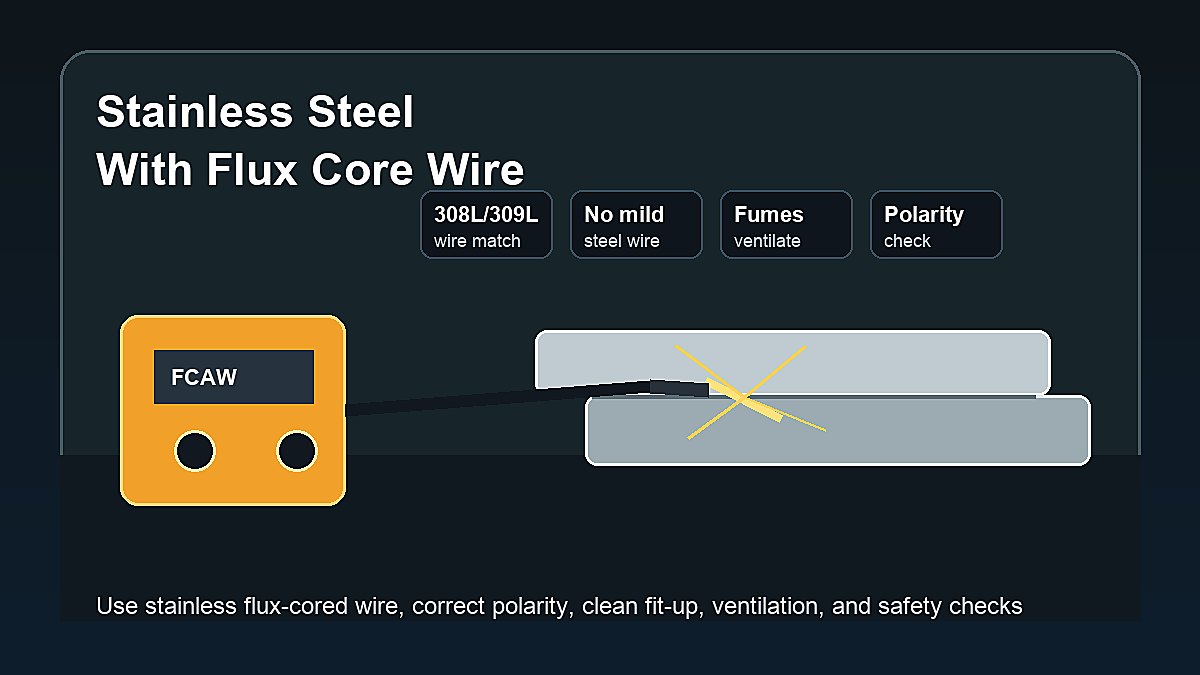
Can you weld stainless steel with flux core? Yes, but only if you use the correct stainless steel flux-cored wire for the job. Regular mild-steel flux core wire is not the right filler for stainless-to-stainless work. It can stick the metal together, but it will not give the right stainless weld chemistry, corrosion resistance, or long-term result.
For beginners, stainless flux core is possible but not always the best first choice. The wire can be expensive, the settings can be less forgiving, slag cleanup matters, and stainless welding has serious fume concerns. TIG or gas MIG is often cleaner for stainless, especially on thin stainless sheet, exhaust tubing, food-contact parts, or visible work.
Mark Dawson beginner note: do not choose flux core for stainless just because your machine already runs mild-steel flux wire. First identify the stainless grade, choose compatible filler metal, check polarity and shielding requirements, and control fumes before you weld.
Quick Answer
You can weld stainless steel with flux core when you use stainless flux-cored wire such as a suitable 308L, 309L, or 316L type for the base metal and joint. Some stainless flux core wires are self-shielded and do not need gas. Others are gas-shielded and must be used with shielding gas. Read the wire label and data sheet before setting up the welder.
| Question | Beginner Answer |
|---|---|
| Can flux core weld stainless? | Yes, with stainless flux-cored wire. |
| Can I use normal flux core wire? | No, not for a proper stainless weld. |
| Does it need gas? | Depends on the wire; check self-shielded vs gas-shielded. |
| Is it best for thin stainless? | Usually not; TIG or gas MIG is often cleaner. |
| Main safety issue | Stainless welding fumes can contain hazardous chromium and nickel compounds. |
Why Regular Flux Core Wire Is Not Enough
Most beginner flux core wire is made for mild steel. It is not designed to match stainless steel chemistry. If you use mild-steel flux core wire on stainless, the weld area may lose corrosion resistance and become a weak point for rust, staining, cracking, or poor service life.
Stainless steel gets its corrosion resistance from chromium in the alloy. The weld metal and heat-affected area need suitable filler and technique to preserve that benefit. A weld that looks attached is not automatically a good stainless weld.
This is why wire selection matters more than the word “flux.” Learn the difference between wire types in Self-Shielded vs Gas-Shielded Flux Core Wire before buying stainless wire.
Which Stainless Flux Core Wire Do You Need?
The right wire depends on the stainless grade and what you are joining. For common 304 stainless-to-304 stainless work, a 308L stainless filler is common. For joining stainless to mild steel, 309L is often used because it handles dissimilar metal dilution better. For 316 stainless, a 316L filler may be needed.
Those are general matching ideas, not a substitute for a welding procedure or manufacturer guidance. Stainless jobs can involve service temperature, corrosion exposure, food contact, exhaust heat, marine environments, or code requirements. If any of those matter, verify the filler choice before welding.
Also check whether the wire is self-shielded or gas-shielded. A self-shielded stainless flux core wire is made to run without external gas. A gas-shielded wire can create porosity and ugly welds if you try to run it without gas.
Self-Shielded vs Gas-Shielded Stainless Flux Core
Self-shielded stainless flux core is attractive to beginners because it avoids the gas bottle. It can be useful outdoors and for small repairs where a gas setup is not practical. The tradeoff is more smoke, slag, and cleanup than a clean TIG or gas MIG setup.
Gas-shielded stainless flux core belongs more often in shop or fabrication settings. It may offer better weld quality and productivity when used correctly, but it adds gas selection, flow rate, wind control, and machine setup. Do not assume a stainless flux core spool is gasless.
What Beginners Can Weld With It
Stainless flux core may be reasonable for small brackets, outdoor stainless repairs, practice coupons, non-critical shop projects, and thicker stainless where appearance is not the main goal. It is less attractive for thin decorative work, sanitary tubing, food equipment, pressure parts, or any repair that needs code-level quality.
Thin stainless moves heat poorly and can warp or discolor quickly. If you are working on exhaust tubing, thin sheet, or a visible stainless part, TIG or gas MIG may give a cleaner result with less slag and less grinding. For very thin work, flux core can be frustrating.
Basic Setup Checklist
- Identify the stainless grade before choosing wire.
- Choose compatible stainless flux-cored filler, not mild-steel wire.
- Confirm whether the wire is self-shielded or gas-shielded.
- Set polarity exactly as the wire label requires.
- Match contact tip and drive roll to wire size.
- Clean the stainless with a dedicated stainless brush or clean abrasive.
- Practice on scrap before welding the real part.
- Use ventilation or fume extraction from the start.
For general machine tuning, use Flux Core Welding Settings for Beginners. Stainless wire may need its own settings, so use the chart on the machine only as a rough starting point if it is meant for mild steel.
Cleaning and Fit-Up
Clean stainless before welding. Remove oil, paint, adhesive, shop dirt, and oxide. Use a brush or abrasive that has not been used on carbon steel. Carbon contamination can leave rust marks on stainless later, which defeats the reason for using stainless in the first place.
Fit-up should be tight enough that you are not filling large gaps. Flux core is not magic gap filler on stainless. Large gaps increase heat input, distortion, slag problems, and the chance of a messy weld. Tack the joint, check alignment, and avoid overheating one spot.
Technique Tips
Use short practice welds first. Keep stickout, travel angle, and travel speed consistent. Many self-shielded wires prefer a drag technique, but the wire data sheet should guide you. Watch the weld pool and slag line rather than simply copying mild-steel settings.
Control heat carefully. Stainless can discolor, distort, and lose corrosion performance around the weld if overheated. Let small parts cool between welds. On visible parts, test your cleanup method before grinding or brushing the final piece.
If the weld has holes, black soot, heavy spatter, or slag trapped in the bead, stop and check the basics. Wrong wire, wrong polarity, dirty stainless, missing shielding gas, or excessive stickout can all cause trouble.
Choosing Between 308L, 309L, and 316L
Beginners often see stainless wire numbers and treat them like brand names. They are not random labels. They point toward weld metal chemistry. A 308L-type filler is commonly paired with 304 stainless. A 309L-type filler is commonly chosen when stainless is joined to mild steel. A 316L-type filler is often considered when the base metal is 316 stainless or when corrosion resistance in a harsher environment matters.
The “L” usually means lower carbon, which helps reduce carbide precipitation concerns in many stainless applications. That does not automatically make every L wire correct for every job. If the part will see chemicals, salt, heat, pressure, food contact, or inspection requirements, check the wire manufacturer’s recommendation and the project specification.
For practice, choose a simple stainless coupon and matching wire. Do not learn on a customer part, exhaust component, tank, railing, boat hardware, or food-related part. Stainless repairs can look acceptable on the surface while hiding bad fit-up, wrong filler, or poor corrosion behavior.
Stainless to Mild Steel
Joining stainless to mild steel is a different problem from welding stainless to stainless. Many welders use a 309L-type filler for stainless-to-carbon-steel joints because it is designed to tolerate dilution from both metals better than a standard 308L filler.
That does not mean every mixed-metal repair is simple. The joint may still have corrosion concerns, heat concerns, or strength requirements. If the part is structural, pressure-related, food-contact, or safety-critical, do not treat it as a beginner experiment.
Corrosion and Cleanup After Welding
Stainless steel can still rust or stain when it is contaminated or overheated. Carbon steel grinding dust, a dirty wire brush, aggressive heat tint, trapped slag, and poor cleanup can all hurt the finish. Keep stainless tools separate from carbon steel tools when possible.
After welding, remove slag completely. Do not leave flux residue trapped near the bead. Brush, clean, and inspect the weld area. Some stainless work may need pickling, passivation, or a defined finishing process to restore corrosion performance. That is outside normal beginner garage practice, but it matters for serious stainless service.
If the repair will live outdoors, near road salt, around chemicals, or in a wet environment, corrosion performance matters more than a quick bead. A stainless part with the wrong filler or contaminated finish can stain faster than expected.
When TIG or Gas MIG Is Better
TIG is often better for thin stainless, clean visible welds, tubing, sanitary work, and precise heat control. It is slower and takes more skill, but it gives a welder more control over heat and filler. Gas MIG can also be cleaner than self-shielded flux core when the machine, wire, gas, and technique are matched correctly.
Flux core makes more sense when portability, outdoor work, or no-gas convenience matters more than appearance. It can be useful for a small repair where a rougher bead is acceptable. It is not the best default for polished stainless, kitchen equipment, thin exhaust tubing, or anything that must pass a professional inspection.
If you are still choosing a process, compare this with broader beginner process guidance in Types of Welding Explained. Stainless is one of those materials where the easiest machine setup is not always the best final process.
Beginner Decision Rule
Use stainless flux core only when the wire is made for stainless, the part is not safety-critical, and the finish requirements are realistic. If you cannot identify the stainless grade, cannot confirm the wire type, or cannot control fumes, pause before welding. Guessing is expensive with stainless because the mistake may show up later as rust, cracking, contamination, or a failed repair.
For a first practice session, run beads on scrap stainless, cut and bend a few samples if possible, then compare the results after cleanup. Look for porosity, slag pockets, lack of fusion, rough starts, and discoloration. Practice is cheaper than ruining a real stainless part.
If the stainless bead looks rough after cleanup, do not keep welding longer and hotter. Recheck wire classification, polarity, stickout, travel speed, and whether shielding gas is required. Stainless can punish small setup mistakes quickly, so fix the cause before adding more heat to the joint. Make every test bead teach you something specific before moving forward with the real stainless part safely.
Common Mistakes
- Using mild-steel flux core wire on stainless and expecting stainless performance.
- Buying gas-shielded stainless flux core wire and running it without gas.
- Forgetting to change polarity for the specific wire.
- Cleaning stainless with a brush already used on carbon steel.
- Overheating thin stainless and causing distortion or discoloration.
- Ignoring fumes because the weld is small.
- Grinding away too much material after slag cleanup.
For weld defect troubleshooting, connect this article with Welding Defects and Flux Core Welding Tips for Beginners.
Safety Notes for Stainless Welding
Stainless welding deserves extra safety attention. Welding stainless can release fumes that include chromium and nickel compounds. OSHA notes that chromium can be released when welding stainless steels, and hexavalent chromium is a serious health concern. Flux core can also create smoke, slag, spatter, UV radiation, and fire risk.
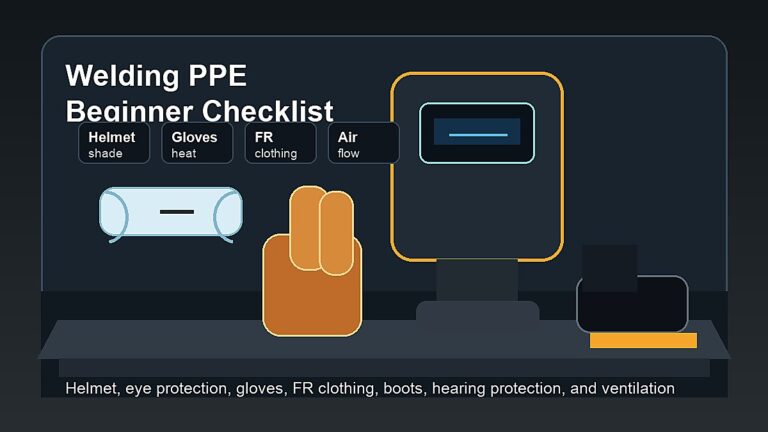
Use local ventilation or fume extraction, keep your head out of the plume, and do not weld stainless in a confined or poorly ventilated space without proper controls. Wear a welding helmet, safety glasses, gloves, flame-resistant clothing, and respiratory protection when required by the hazard assessment. Review OSHA welding fume hazard guidance, OSHA hexavalent chromium resources, and AWS safety resources.
FAQ
Can I weld stainless steel with normal flux core wire?
Not for a proper stainless weld. Normal mild-steel flux core wire may join metal, but it will not provide the correct stainless weld chemistry or corrosion resistance.
Do I need gas for stainless flux core?
It depends on the wire. Some stainless flux-cored wires are self-shielded, while others require shielding gas. Always check the wire label and data sheet.
What wire do I use for 304 stainless?
A 308L stainless filler is commonly used for 304 stainless, but the correct choice depends on the exact grade, service conditions, and manufacturer recommendations.
Can flux core weld stainless exhaust?
It may work for some repairs with the right stainless wire, but thin exhaust tubing is easy to overheat. TIG or gas MIG is often cleaner for exhaust work.
Is stainless flux core safe indoors?
Only with proper ventilation, fume control, PPE, and hazard assessment. Stainless welding fumes can contain hazardous chromium and nickel compounds.
Final Advice
You can weld stainless steel with flux core, but the wire must match the metal and shielding method. Do not use regular mild-steel flux core wire for stainless work. For beginners, stainless flux core is best kept to practice and small non-critical repairs until you understand filler selection, polarity, heat control, cleanup, corrosion, and fume safety.