Can You Weld Aluminum With a Stick Welder?
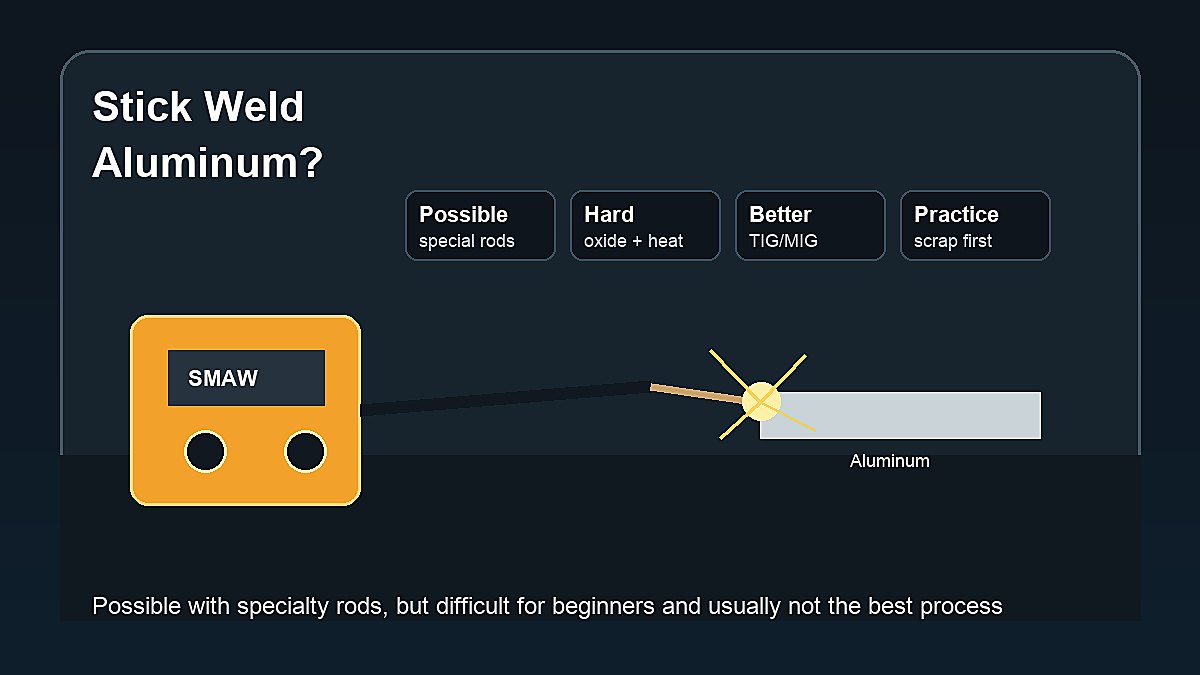
Can you weld aluminum with a stick welder? Yes, it is possible with specialty aluminum stick electrodes, but it is usually not the best choice for beginners. Aluminum stick welding is harder to control than welding steel, and the results can be messy, porous, and weak if the setup or technique is wrong.
Most beginners are better served by TIG welding or MIG welding with the correct aluminum setup. Stick welding aluminum can be useful for rough repair in limited situations, but it is not a simple replacement for TIG, MIG, or a spool gun. Aluminum needs clean material, correct rods, proper polarity, enough heat control, and realistic expectations.
Mark Dawson beginner note: aluminum stick rods can make metal stick together, but that does not mean the weld is suitable for every repair. Practice on scrap first and avoid structural, vehicle, pressure, or safety-critical aluminum parts.
Quick Answer
You can weld aluminum with a stick welder only if you use aluminum stick electrodes and a machine setup that matches the rod requirements. Ordinary steel stick rods will not weld aluminum correctly. Even with the right rods, aluminum stick welding is difficult because aluminum conducts heat quickly, forms a tough oxide layer, and is easy to contaminate. For clean aluminum welds, TIG or gas-shielded MIG is usually better.
| Question | Beginner Answer | Why It Matters |
|---|---|---|
| Can stick welders weld aluminum? | Sometimes | Requires specialty aluminum rods |
| Can steel rods weld aluminum? | No | Filler metal is wrong |
| Is it beginner-friendly? | Usually no | Fast heat, oxide, and porosity issues |
| Better process? | TIG or aluminum MIG | Cleaner control and shielding |
Why Aluminum Is Hard to Stick Weld
Aluminum behaves differently from mild steel. It conducts heat quickly, so heat spreads away from the weld area fast. It also forms aluminum oxide on the surface. That oxide melts at a much higher temperature than the aluminum underneath, so cleaning and technique matter a lot.
The weld pool can become fluid quickly and then collapse or burn through. The arc may feel unstable. Slag and flux residue can be harder to manage than on steel. Porosity can appear when moisture, oxide, contamination, or poor technique gets into the weld.
| Aluminum Problem | Why It Hurts Stick Welding | Beginner Result |
|---|---|---|
| Fast heat movement | Heat spreads away from the arc quickly | Hard starts, sudden burn-through |
| Oxide layer | Oxide melts hotter than aluminum | Poor fusion and dirty welds |
| Soft base metal | Puddle can collapse quickly | Holes, sagging, distortion |
| Contamination | Oil, moisture, and oxide create defects | Porosity and weak beads |
These problems are why many aluminum welding guides focus on TIG or MIG rather than stick. TIG gives control and cleaning action with AC. MIG with aluminum wire and shielding gas can work well with the right setup, often a spool gun or push-pull gun.
What Rods Are Used for Aluminum Stick Welding?
Aluminum stick welding requires rods made for aluminum. These are not ordinary 6011, 6013, or 7018 rods. Aluminum electrodes have special flux and filler chemistry for aluminum repair. Read the rod package carefully because polarity, amperage, storage, and technique requirements can vary by brand and rod type.
Some aluminum rods are marketed for repair work and may be used with DC settings. Others may have specific instructions for preheat, arc length, cleaning, or storage. Do not assume every aluminum rod works on every aluminum alloy or every stick machine.
Before Buying Aluminum Stick Rods
Before buying aluminum stick rods, check your machine output and polarity options. Read the rod data or package instructions first. If the rod needs amperage your welder cannot supply, or a polarity your machine does not support, the rod will not solve the problem.
Also check the rod diameter. Oversized rods can overwhelm a small practice piece. Undersized rods may be hard to use on thicker material. Buy a small quantity for testing before spending money on a full box.
Plan the practice metal before buying rods. Clean scrap aluminum that is thick enough to tolerate practice is better than starting on the broken part you want to repair.
For general electrode basics, see Arc Welding Rod Size Chart and Welding Rods & Electrodes.
Can You Use 7018, 6011, or 6013 on Aluminum?
No. Common steel rods such as 7018, 6011, and 6013 are made for steel, not aluminum. They do not provide the right filler metal or flux system for aluminum. Using them on aluminum is not a valid repair method.
A steel rod may melt, contaminate the surface, or make a mess, but it will not produce a proper aluminum weld. If the base metal is aluminum, use a filler and process designed for aluminum.
Machine Setup and Polarity
The correct machine setup depends on the aluminum electrode manufacturer. Check whether the rod needs DC electrode positive, DC electrode negative, or another setting. Check amperage range, rod diameter, and whether your machine can hold a stable arc at that setting.
Small stick welders may not run aluminum rods well. Arc starts can be difficult, and the rod can burn fast. If the rod package gives a narrow operating range, start on scrap and adjust carefully. Do not guess on a real repair.
Material Thickness and Heat Control
Aluminum stick welding is usually more realistic on thicker material than on thin sheet. Thin aluminum heats quickly, warps easily, and can disappear into a hole before a beginner understands what happened. Thicker pieces give you more room to learn, but they may need preheat and enough machine output.
Heat control is tricky because aluminum does not change color like steel before it melts. A steel practice piece may glow and warn you. Aluminum can look almost normal and then suddenly slump. That makes scrap practice important before any real repair.
Some aluminum electrodes recommend preheat for heavier sections. Preheat can help the weld start and reduce the way the base metal pulls heat away, but too much heat can create distortion or weaken the part. Follow the electrode instructions and keep the job non-critical while learning.
Slag and Cleanup After Aluminum Stick Welding
Aluminum stick rods leave flux residue and slag that must be cleaned. The finished weld may not look smooth like TIG or well-tuned MIG. Do not judge only by shine or bead shape. Clean the weld fully before deciding whether it fused properly.
Flux residue can be corrosive or irritating depending on the product, so read the rod instructions for cleanup. Brush, chip, or wash only as directed. Wear eye protection because slag and flux fragments can pop loose during cleanup.
If the weld has black residue, holes, cracks, or a bead that sits on top without tying in, stop and diagnose the cause. More amperage is not always the fix. Cleaning, arc length, travel speed, rod angle, and base alloy may be the real issue.
Cleaning and Preparation
Clean aluminum before welding. Remove oil, paint, dirt, oxide, and moisture. Use a stainless steel brush dedicated only to aluminum so you do not grind steel contamination into the surface. Clean close to the time of welding because aluminum oxide reforms quickly.
Fit-up matters too. Gaps are harder to bridge with aluminum stick rods than many beginners expect. Clamp the joint, support the work, and use practice coupons before attempting a real part. Preheat may be recommended for some rods or thicker sections, but follow the rod instructions rather than guessing.
Common Problems With Aluminum Stick Welding
- Porosity: gas holes from contamination, moisture, oxide, or poor technique.
- Burn-through: aluminum heats and melts quickly, especially on thin material.
- Poor fusion: oxide, low heat, or bad puddle control can prevent bonding.
- Messy slag: flux residue can be difficult to manage and clean.
- Cracking: wrong filler, alloy, heat control, or joint design can cause failure.
- Arc instability: rod type, machine output, and technique can make the arc hard to control.
When Stick Welding Aluminum Might Make Sense
Aluminum stick welding may make sense for a rough, non-critical repair when you only have a stick welder, the material is thick enough, the correct aluminum rods are available, and appearance is not the priority. It may also be useful as an emergency field repair where better aluminum welding equipment is not available.
That is a narrow use case. A cracked decorative casting, a non-critical bracket, or a practice coupon is different from a boat hull, trailer, vehicle part, ladder, pressure component, or structural aluminum frame. Important aluminum repairs need proper process selection and inspection.
Aluminum Alloy Matters
Not every aluminum alloy welds the same way. Some alloys are more crack-sensitive. Some are heat-treated and can lose strength near the weld. Some cast aluminum parts contain porosity or contamination that makes welding harder. One aluminum rod that works on a practice part may not be right for another alloy.
If you do not know the alloy, treat the job as uncertain. That does not matter much on scrap practice, but it matters a lot on a load-bearing repair. Manufacturer information, filler recommendations, and professional judgment are better than guessing from appearance.
How to Inspect Practice Welds
After a practice weld cools, clean it and look closely. Check for visible cracks, pinholes, black contamination, missed edges, undercut, and areas where the bead did not wet into the base metal. A bead can look bulky and still have poor fusion.
On scrap only, cut or bend practice coupons if you know how to do it safely. This does not certify the weld, but it helps you see whether the metal fused or only stuck to the surface. Keep notes on rod type, amperage, polarity, cleaning method, and metal thickness.
When TIG or MIG Is Better
TIG is usually better when the weld needs control, cleanliness, and good appearance. AC TIG is common for aluminum because it helps manage the oxide layer and gives fine control over heat and filler. It takes skill, but it is a standard path for quality aluminum welding.
MIG can be better when you need faster aluminum welding and have the correct setup: solid aluminum wire, pure argon shielding gas, proper drive rolls, correct contact tip, and usually a spool gun or push-pull gun. For related setup, see Aluminum MIG Welding Wire Speed and Voltage Chart.
| Process | Beginner Fit for Aluminum | Main Advantage |
|---|---|---|
| Stick welding | Limited | Simple machine, specialty repair rods |
| TIG welding | Harder but clean | Excellent control and oxide handling with AC |
| MIG welding | Good with correct setup | Faster welding with spool gun or push-pull feed |
| Brazing/repair rods | Job-specific | May work for small non-critical repairs |
What Not to Repair With Aluminum Stick Welding
Avoid ladders, trailer parts, vehicle frames, suspension parts, boat hulls, pressure vessels, lifting brackets, fuel tanks, and anything that protects people from injury. These parts need qualified procedure decisions, not beginner experimentation.
If the part failed once, ask why before welding it. A crack from overload, vibration, fatigue, or corrosion may come back unless the design problem is fixed. Welding the crack without understanding the cause can hide the danger for a while instead of solving it.
Beginner Practice Method
- Buy aluminum stick rods only after reading the machine and rod requirements.
- Use clean scrap aluminum thick enough for practice.
- Brush with a dedicated stainless brush.
- Set polarity and amperage from the rod instructions.
- Run short beads and let the metal cool as needed.
- Chip and clean residue before judging the weld.
- Inspect for porosity, cracking, burn-through, and poor fusion.
Common Beginner Mistakes
- Trying to weld aluminum with steel rods.
- Skipping oxide cleaning.
- Using rods that do not match the machine.
- Practicing on thin aluminum first.
- Expecting stick aluminum welds to look like TIG welds.
- Using damp or damaged rods.
- Repairing safety-critical aluminum parts as a beginner.
Safety Notes
Aluminum stick welding can involve arc flash, electric shock, fumes, burns, hot slag, fire, grinding dust, and hot metal. Aluminum parts may also have paint, oil, coatings, anodizing, or unknown contamination. Some repair rods and flux residues may produce irritating fumes, so ventilation matters.
Use proper PPE, ventilation, dry gloves, flame-resistant clothing, and a fire-safe workspace. Review OSHA welding hazards guidance, OSHA welding fume guidance, and AWS safety resources. For more site guidance, read Arc Welding Safety.
FAQ
Can a regular stick welder weld aluminum?
Sometimes, if the machine can run the required aluminum stick electrodes. The rod package and machine manual decide whether the setup is suitable.
Can you use 7018 on aluminum?
No. 7018 is a steel electrode. It is not the correct filler or flux system for welding aluminum.
Is aluminum stick welding strong?
It can be useful for some repairs, but strength depends on alloy, rod, preparation, technique, and inspection. For critical aluminum welds, use a qualified process and welder.
Is stick welding aluminum easier than TIG?
No for most beginners. Stick aluminum welding may use simpler equipment, but TIG usually gives better heat control and cleaner results when done correctly.
What is the best way for beginners to weld aluminum?
For many beginners, aluminum MIG with the right spool gun setup or TIG with proper instruction is a better path than aluminum stick welding.
Final Advice
You can weld aluminum with a stick welder in limited cases, but it is not the easiest or cleanest beginner method. Use specialty aluminum rods only as directed, practice on scrap, and choose TIG or aluminum MIG when the weld quality matters.