Different Types of Tungsten for TIG Welding
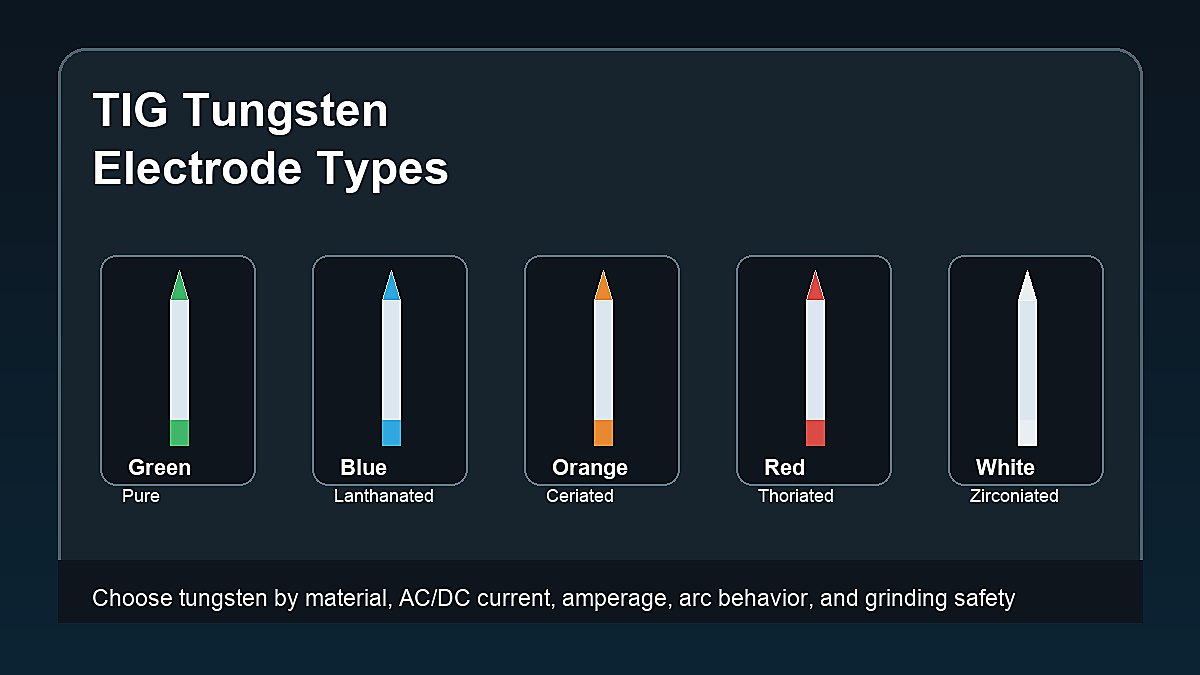
Different types of tungsten for TIG welding include pure tungsten, lanthanated tungsten, ceriated tungsten, thoriated tungsten, and zirconiated tungsten. Each type affects arc starting, arc stability, AC or DC performance, amperage capacity, tip shape, and how the electrode behaves on steel, stainless steel, aluminum, and other metals.
TIG welding uses a non-consumable tungsten electrode to create the arc. The tungsten should not melt into the weld pool, but it still needs the right type, diameter, grind, and setup for the material and machine. Choosing tungsten randomly can make TIG harder than it needs to be.
Mark Dawson beginner note: for most beginners, tungsten choice should be simple. Pick one reliable general-purpose tungsten for steel practice, learn to grind it correctly, then branch into aluminum or specialty electrodes after the basic TIG technique is steady.
Quick Answer
Lanthanated tungsten is often a good general-purpose choice for beginners because it can work well on many modern AC and DC TIG machines. Pure tungsten is traditionally associated with AC aluminum on older transformer machines. Ceriated tungsten can work well at lower amperage. Thoriated tungsten has strong DC performance but needs extra grinding safety because it contains radioactive thorium. Zirconiated tungsten is commonly associated with AC welding where contamination resistance matters.
| Tungsten Type | Common Color | Typical Beginner Use |
|---|---|---|
| Pure tungsten | Green | Older AC aluminum setups |
| Lanthanated tungsten | Blue, gold, black | General AC/DC use, depending on grade |
| Ceriated tungsten | Orange or gray | Low-amperage DC and fine work |
| Thoriated tungsten | Red or yellow | DC steel/stainless, with dust safety concerns |
| Zirconiated tungsten | White or brown | AC aluminum and contamination resistance |
Why Tungsten Type Matters
The tungsten electrode shapes the arc. A stable electrode helps create a steady puddle. A wrong or contaminated electrode can make the arc wander, spit, start poorly, or leave tungsten inclusions in the weld.
Tungsten type is only one part of the setup. Diameter, tip grind, stickout, cup size, gas coverage, amperage, AC balance, polarity, and material cleanliness all matter. Do not blame the tungsten before checking the rest of the setup.
If you are new to the process, start with the basics in TIG Welding for Beginners and Basic TIG Welding Techniques for Beginners.
Pure Tungsten
Pure tungsten is usually identified with a green color band. It contains no intentional alloying oxide. It has traditionally been used for AC TIG welding, especially on older transformer machines where a balled tip was common for aluminum.
Pure tungsten is not always the best first choice on modern inverter TIG machines. It can have lower current capacity and may not hold a pointed or stable tip as well as some alloyed tungsten types. Many modern welders use lanthanated tungsten for both AC and DC work.
Beginners may still see pure tungsten in charts and older advice. Use the manual for your machine because AC waveforms and recommendations vary.
Lanthanated Tungsten
Lanthanated tungsten contains lanthanum oxide. Common versions include 1%, 1.5%, and 2% lanthanated tungsten, with color codes that can include black, gold, and blue depending on the grade and standard. Blue 2% lanthanated is common in many modern TIG shops.
Lanthanated tungsten is popular because it can start well, hold a stable arc, and work on both AC and DC TIG with many modern machines. For a beginner who wants one practical tungsten type for steel practice and later aluminum learning, lanthanated is often a sensible starting point.
That does not mean it is perfect for every job. High amperage, unusual materials, older machines, and code work may call for a specific electrode type. But for beginner practice, it keeps the decision simple.
Ceriated Tungsten
Ceriated tungsten contains cerium oxide and is often associated with orange or gray markings depending on the classification system. It is known for good arc starting and low-amperage performance.
This can make ceriated tungsten useful for thin metal, small parts, and precise DC work. It may be helpful when the arc needs to start easily at lower current. Some welders use it for delicate TIG practice, though lanthanated tungsten has become more common as a general-purpose choice.
Beginners should not collect every tungsten type at once. Ceriated is worth understanding, but it is usually better to master one reliable electrode before testing several types.
Thoriated Tungsten
Thoriated tungsten contains thorium oxide. Red 2% thoriated tungsten is well known for DC TIG on steel and stainless steel because it can start well, carry current effectively, and hold a stable point.
The safety issue is grinding dust. Thorium is radioactive, so thoriated tungsten should be handled and ground with proper controls. Do not dry-grind it casually in a small shop without understanding the risk and dust control requirements.
Many beginners can avoid thoriated tungsten and use lanthanated alternatives instead. If a workplace or procedure requires thoriated tungsten, follow the site safety program, ventilation, dust collection, PPE, and disposal rules.
Zirconiated Tungsten
Zirconiated tungsten contains zirconium oxide and is commonly linked with AC welding. It is often used where resistance to tungsten contamination and a stable balled or rounded tip are useful, especially in aluminum applications.
For beginners, zirconiated tungsten is most relevant when learning aluminum TIG or reading older AC welding advice. Modern inverter setups may still use other tungsten types successfully, so the machine manual and electrode manufacturer guidance matter.
Do not assume the tungsten color alone solves aluminum problems. Aluminum TIG also needs cleaning, AC setup, correct gas, heat control, and practice. Tungsten is only one part of that system.
Tungsten Color Codes Can Vary
Tungsten electrodes use color bands, but color systems can vary by classification and supplier. Green commonly means pure tungsten, red often means 2% thoriated, blue often means 2% lanthanated, orange is often ceriated, and white is often zirconiated. Still, read the label instead of relying only on memory.
Keep tungsten types separated in the shop. If several electrodes are loose in a drawer, it becomes easy to mix them. Store them in labeled tubes or original packaging, especially if thoriated tungsten is present.
Color codes are helpful, but the real decision should come from the material, current type, amperage, machine manual, and safety requirements.
Tungsten Diameter Basics
Diameter affects amperage capacity and arc behavior. Smaller tungsten is useful for lower amperage and thin material. Larger tungsten handles more current but may be less responsive at very low amperage. Common beginner sizes include 1/16 inch, 3/32 inch, and 1/8 inch.
For many beginner steel practice jobs, 3/32 inch tungsten is a common starting size because it covers a useful range. Very thin work may use smaller tungsten. Higher amperage aluminum or thicker material may need larger tungsten.
Do not use diameter charts blindly. Follow your machine manual, tungsten manufacturer guidance, and practice results. If the tungsten overheats, balls unexpectedly, or the arc is unstable, diameter may be part of the problem.
Grinding and Tip Shape
Tungsten must be shaped correctly for the job. DC TIG on steel often uses a pointed or truncated point ground lengthwise. Grinding marks should run with the electrode, not around it, because circular scratches can affect arc stability.
Use a dedicated grinding wheel or tungsten grinder when possible. Grinding tungsten on a dirty wheel can contaminate the electrode. Do not breathe tungsten grinding dust, especially from thoriated tungsten.
After dipping tungsten into the weld pool, stop and regrind it. A contaminated tip can make every other technique look worse, from filler timing to torch angle. For technique practice, see Basic TIG Welding Techniques for Beginners.
Beginner Tungsten Selection Guide
- For general beginner practice, consider lanthanated tungsten.
- For DC steel and stainless, use a clean pointed tungsten suited to the amperage.
- For older AC aluminum advice, you may see pure or zirconiated tungsten.
- For low-amperage work, ceriated tungsten may be useful.
- Avoid thoriated tungsten unless you understand grinding and dust safety.
- Choose diameter by amperage range and material thickness.
- Label and separate tungsten types.
- Use the welder manual before copying random chart settings.
AC vs DC Tungsten Choice
DC TIG is common for mild steel and stainless steel. It usually uses a pointed tungsten with the machine set to electrode negative for many manual TIG welds. Lanthanated, ceriated, and thoriated tungsten are often discussed for DC work, though beginners can often keep things simple with lanthanated tungsten.
AC TIG is common for aluminum. Older advice often mentions pure tungsten and a balled tip. Modern inverter machines may recommend lanthanated or other tungsten types with a tapered or slightly truncated point. This is why the machine manual matters more than a generic chart.
If the arc wanders on AC aluminum, tungsten type may be one reason, but it is not the only one. Cleaning, gas flow, cup size, AC balance, frequency, tungsten diameter, and torch angle can all affect the arc.
Signs Your Tungsten Is Wrong or Contaminated
A bad tungsten setup often shows up as arc wandering, hard starting, spitting, an unstable puddle, black specks, or a bead that suddenly becomes dirty after the tungsten touches the puddle. The arc may feel like it refuses to point where you aim.
When tungsten is contaminated, stop and fix it. Snapping the contaminated end off, regrinding, or replacing the electrode is usually faster than fighting a dirty arc for the rest of the bead. Continuing often wastes filler, gas, and practice time.
Also check whether the electrode is too small for the amperage. An overheated tungsten may ball, split, or erode. A tungsten that is too large for low current may start poorly or feel less responsive.
How to Store Tungsten Electrodes
Store tungsten in labeled tubes or cases. Keep different types and diameters separate. This is especially important if thoriated tungsten is in the shop because you do not want it mixed into general practice electrodes by accident.
Keep electrodes dry and clean. Dust, oil, grinding grit, and metal chips can contaminate the tungsten before it ever reaches the torch. Do not leave sharpened tungsten loose on the welding table where it can collect dirt or roll onto the floor.
A simple habit helps: keep one container for clean prepared tungsten and another marked container for contaminated tungsten that needs grinding. This keeps practice moving without pretending a dipped electrode is still ready to weld.
Tungsten and Aluminum TIG
Aluminum TIG brings extra variables. Aluminum oxide melts at a higher temperature than the base aluminum, so cleaning and AC action matter. Tungsten choice affects arc stability, but it cannot overcome dirty material or poor AC settings.
Beginners often blame tungsten when aluminum TIG goes badly. Before changing electrodes, check that the aluminum is clean, the filler is correct, the gas is pure argon, the cup is suitable, and the machine is set up for AC aluminum.
Start aluminum practice only after you can run controlled TIG beads on steel. Aluminum puddles look different and move heat quickly, so basic torch control should already feel familiar.
Tungsten and Stainless Steel TIG
Stainless TIG needs clean tungsten, good shielding, and careful heat control. Overheating stainless can cause ugly color, oxidation, and reduced corrosion resistance in some applications. A stable tungsten point helps keep the arc focused.
Lanthanated and thoriated tungsten are both commonly discussed for stainless DC TIG, but beginners who want to avoid thoriated grinding concerns can often practice with lanthanated tungsten. Use the procedure or machine recommendation when the work is critical.
Keep stainless brushes and prep tools separate from carbon steel tools. Tungsten choice will not fix cross-contaminated prep.
Common Beginner Mistakes
- Using the wrong tungsten type for the machine or current.
- Relying only on color without reading the label.
- Grinding tungsten sideways around the electrode.
- Continuing after dipping tungsten into the puddle.
- Mixing thoriated tungsten with other electrodes in one container.
- Ignoring grinding dust and ventilation.
- Using a tungsten diameter too small for the amperage.
- Blaming tungsten when the real issue is gas coverage or dirty metal.
Safety Notes
Tungsten selection is a welding performance issue and a safety issue. Grinding creates dust, and thoriated tungsten contains radioactive thorium. Use proper dust control, ventilation, eye protection, and manufacturer guidance. Keep tungsten away from food, drink, and general shop dust.
Review OSHA welding hazards guidance, OSHA welding, cutting, and brazing requirements, and AWS safety resources. For TIG process context, read Advantages and Disadvantages of TIG Welding.
FAQ
What tungsten is best for beginner TIG welding?
Lanthanated tungsten is often a good general-purpose beginner choice because it can work well on many AC and DC TIG machines. Check your welder manual before buying.
What does green tungsten mean?
Green usually identifies pure tungsten. It is often associated with older AC aluminum TIG setups, but many modern machines use other tungsten types successfully.
Is red tungsten safe?
Red tungsten usually means 2% thoriated tungsten. It can weld well on DC, but grinding dust requires special care because thorium is radioactive.
What tungsten should I use for aluminum TIG?
Aluminum TIG depends on the machine. Older AC setups may use pure or zirconiated tungsten, while many modern inverter machines can use lanthanated tungsten. Follow the machine manual.
Should TIG tungsten be pointed or balled?
DC TIG on steel often uses a pointed or truncated point. Older AC aluminum setups often used a balled tip. Modern AC inverter recommendations vary by tungsten type and machine settings.
Final Advice
For beginners, tungsten choice should support practice, not complicate it. Start with a reliable tungsten type, use the right diameter, grind it cleanly, protect yourself from dust, and regrind after contamination. Once your basic TIG technique improves, different tungsten types become easier to compare.
For the full TIG learning path, continue with the TIG Welding hub before choosing tungsten, gas, and machine setup.