How to Identify Low Hydrogen Electrodes
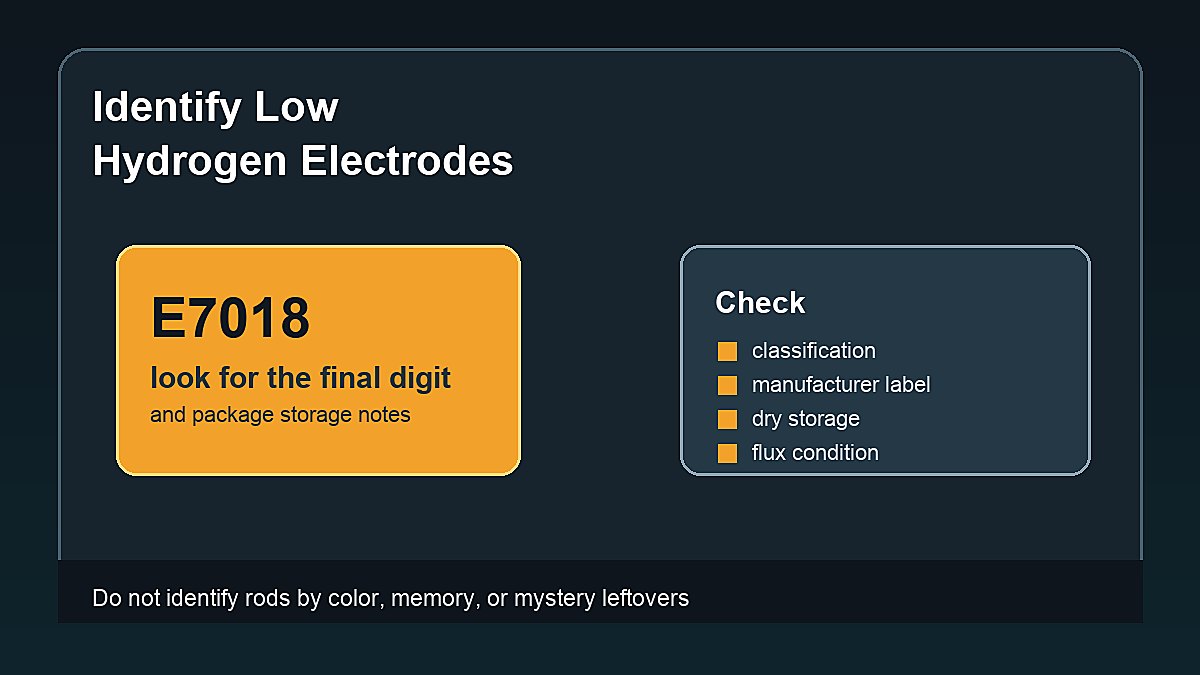
How do you identify low hydrogen electrodes? Start with the electrode classification and the manufacturer package, not the rod color or memory. Common low-hydrogen stick electrodes include rods such as E7018 and related classifications. The label, final digit, storage instructions, and rod condition all help confirm what you are using.
Low-hydrogen electrodes matter because correct handling can reduce hydrogen in the weld deposit. That benefit can be lost when rods are damp, damaged, mixed, unlabeled, or stored casually. Beginners should never use mystery rods on important welds just because the coating looks similar.
Mark Dawson beginner note: a rod is not low-hydrogen because someone wrote 7018 on a storage tube. Identify it from the package or clear stamped/container information, then check storage history before trusting it.
Quick Answer
Identify low-hydrogen electrodes by reading the rod classification, checking the manufacturer package, confirming storage instructions, and inspecting the flux coating. E7018 is the common beginner example. Low-hydrogen rods usually need dry storage discipline, and opened rods for critical work may require controlled holding ovens or exposure tracking.
| Check | What to Look For | Beginner Warning |
|---|---|---|
| Classification | E7018, E7016, or related low-hydrogen family | Do not guess from color |
| Package label | Brand, rod type, diameter, current, storage notes | Keep labels with rods |
| Storage | Sealed package, dry container, rod oven when required | Damp rods are questionable |
| Condition | Intact flux, no oil, rust, cracks, or moisture | Damaged rods are practice-only at most |
What Low-Hydrogen Means
Low-hydrogen electrodes are made to reduce hydrogen in the weld deposit compared with many ordinary stick electrodes when the rods are stored and used correctly. Hydrogen matters because, under the wrong conditions, it can contribute to cracking in welds and heat-affected zones.
The risk is not the same on every job. Base metal, thickness, joint restraint, preheat, filler choice, procedure, cooling rate, and inspection requirements all matter. Low-hydrogen rods are one part of the control system, not a magic cure for poor welding practice.
Start With the Electrode Classification
The easiest beginner clue is the classification printed on the package. E7018 is the most common example beginners see. In that code, E means electrode, 70 points to about 70,000 psi minimum tensile strength, 1 means all-position use, and the final 8 identifies coating/current characteristics associated with a low-hydrogen electrode family.
Other low-hydrogen classifications exist, and not every rod ending in a similar number should be guessed from memory. The manufacturer label matters because it provides the exact electrode type, diameter, current recommendations, storage requirements, and sometimes code or application information.
Watch for Suffixes and Brand-Specific Labels
Some low-hydrogen rods include suffixes or extra package markings that describe added characteristics. You may see labels related to moisture resistance, impact properties, chemical composition, or specific applications. Beginners do not need to memorize every suffix, but they should know that the full label matters.
For example, two rods may both say 7018 but still have different brand instructions, current recommendations, storage details, or approval information. Treat the exact package as the authority for that rod. If the package is gone, the extra details are gone too.
When buying rods for learning, keep the box flap or label even after moving rods to a storage tube. Tape the label to the tube or write the exact classification and diameter clearly. That small habit keeps future practice from turning into guessing.
For rod-number basics, read Welding Rod Specifications Explained for Beginners and Different Types of Welding Rods.
Check the Package, Not Just the Rod
A loose rod is hard to identify with confidence. Rods can look similar after they are removed from the box, especially when several electrodes have gray or tan flux coatings. The package is where you find the classification, diameter, batch information, operating range, and storage instructions.
Keep opened rods in labeled containers. Write the classification, diameter, opening date, and storage status on the container. If the label is missing, treat the rods as unknown. Unknown rods should not be used for important welds, even if they strike an arc.
Do Not Identify Rods by Color Alone
Flux coating color is not a reliable identification method. Different manufacturers can use different coating appearances, and rods can darken from age, dirt, oil, smoke, or shop handling. A 7018 from one brand may not look exactly like a 7018 from another brand.
Color may help you organize rods that are already labeled, but it should not be used as proof. If a rod is loose in a drawer with no label, it is a mystery electrode. Mystery electrodes belong on scrap practice only, not on repairs where strength or safety matters.
Storage Clues Matter
Low-hydrogen identification is tied to storage because a low-hydrogen electrode only performs as intended when handled correctly. A sealed package is easier to trust than a handful of rods that sat open in a damp shop. Opened low-hydrogen rods for critical work may need oven storage, exposure limits, and procedure-controlled handling.
If the rods were found in a toolbox, open bucket, humid shed, damaged package, or unlabeled tube, identify them as questionable even if they look like 7018. For storage details, read How Should Low Hydrogen Electrodes Be Stored?.
Look for Oven or Exposure History on Important Work
On procedure-controlled jobs, low-hydrogen identification may include more than the rod name. The shop may need to know when the package was opened, whether the rods were placed in a holding oven, how long they were exposed to air, and whether any reconditioning procedure was used.
A beginner in a home shop may not keep formal rod oven records, but the lesson still applies. A clearly labeled dry container is more trustworthy than loose rods in a drawer. A sealed package is more trustworthy than an opened package with no date. Storage history is part of identification because it affects whether the rod can be trusted.
For critical welds, a rod that is known by name but unknown by storage history may still be unacceptable. Low-hydrogen practice is about both classification and condition.
Inspect the Flux Coating
The flux coating should be intact and clean. Cracked, flaking, missing, oily, rusty, or damp coating is a warning sign. A rod with damaged flux may still burn, but it may not shield the weld correctly or behave as the classification suggests.
Look for uneven coating, exposed core wire, softened coating, water stains, oil smell, or rods stuck together. Those clues do not tell you the exact classification, but they tell you the rod should not be trusted for serious work.
Common Low-Hydrogen Rod Examples
E7018 is the common low-hydrogen electrode beginners hear about first. E7016 and other related electrodes may also appear depending on region, manufacturer, and job requirements. The exact rod family should be confirmed from the package and procedure.
Do not assume every 70-series rod is low-hydrogen. Do not assume every all-position rod is low-hydrogen. Learn the classification, then check manufacturer instructions. A short label check prevents a lot of wrong-rod mistakes.
Machine Settings Can Confirm Suspicion, Not Identity
How a rod runs can give clues, but it cannot prove identity. A 7018-style rod may feel smoother than a 6010 or 6011, and the slag may behave differently. Still, arc feel is not reliable enough for identification because amperage, polarity, machine quality, moisture, and operator technique change the result.
Use machine settings after you identify the rod, not before. Read the package, set polarity and amperage correctly, then test on scrap. If the rod does not behave like the label suggests, check storage, damage, current type, and machine output before using it on anything important.
For settings context, use 1/8 Welding Rod Amperage Chart for Beginners. The chart helps with starting ranges, but it does not identify unlabeled electrodes.
How 7018 Differs From 6010 and 6011
6010 and 6011 rods are known for more forceful digging arcs and different coating/current behavior. 7018 is used for a different purpose: smoother operation, low-hydrogen handling, and clean steel welds when storage is correct. The rod number and storage expectations tell you the family difference.
For comparisons, read Difference Between 7018 and 6010 Welding Rods and Difference Between 6011 and 7018 Welding Rods.
Beginner Identification Workflow
- Find the original package or clear container label.
- Read the electrode classification and diameter.
- Check the manufacturer storage instructions.
- Confirm the rod has been stored dry.
- Inspect flux coating for cracks, oil, rust, or moisture.
- Compare current and polarity requirements with your machine.
- Use questionable rods only on non-critical scrap, if at all.
- Get qualified guidance for important welds.
This workflow is deliberately conservative. Low-hydrogen rods are often used when weld quality matters, so casual guessing defeats the point of choosing them.
Fast Field Checklist
Before striking an arc, ask four quick questions. Is the rod classification confirmed? Is the diameter known? Were the rods stored dry enough for this job? Are the machine setting and polarity correct? If any answer is no, stop and fix that gap before welding on real work.
This checklist is especially useful when rods are moved between a garage, truck, job box, and shop shelf. The more a rod moves, the easier it is for labels and storage history to get lost.
Good notes turn rod identification into a repeatable shop habit.
When a Rod Should Be Treated as Unknown
Treat a rod as unknown when the package is gone, the label is unreadable, rods are mixed in one tube, the storage history is missing, or the coating does not look right. A rod can fit in the holder and still be the wrong electrode for the job.
Unknown rods can waste practice time because you cannot tell whether a bad bead came from technique, amperage, polarity, rod type, or rod condition. For learning, clearly labeled rods are better. For important work, known rods are mandatory.
Simple Shop Labeling System
A simple labeling system prevents most identification problems. Store one rod type per container. Write the classification, diameter, brand, opening date, and storage note on the container. Keep 6011, 6013, 7018, stainless, cast iron, and specialty rods separate.
Use a separate container for practice-only rods. If rods are old, exposed, mixed, or missing labels, mark them clearly as practice-only. That way they do not accidentally end up in a repair job later.
For low-hydrogen rods, add one more note: sealed, opened dry, oven-held, or unknown. That note helps you decide whether the rods are suitable for practice, repair, or procedure-controlled work.
What to Do With Mystery Electrodes
Mystery electrodes are common in garages. They come from old welders, estate-sale boxes, unlabeled tubes, or leftover rods from previous owners. The safest SEO-simple answer is also the best shop answer: do not use them for important welds.
If you want to learn from them, run short beads on scrap and observe the arc, slag, and bead. Label the container as unknown practice rods. Keep them far away from known 7018, 6011, or specialty rods so they do not contaminate your organized stock.
Discard mystery rods that are damp, oily, rusty, cracked, or crumbling. The small cost of replacement is cheaper than building bad habits or risking a failed repair.
Common Beginner Mistakes
- Calling any gray stick electrode 7018.
- Identifying rods by color instead of the package.
- Mixing 6011, 6013, and 7018 in one container.
- Using damp low-hydrogen rods on serious work.
- Ignoring storage instructions after opening a package.
- Assuming a smooth bead means the rod was correct.
- Using mystery rods for trailer, vehicle, structural, or lifting repairs.
The fix is simple: label everything and separate rods by type and diameter. If you cannot identify the rod, downgrade it to scrap practice or discard it. Do not gamble on important welds.
Safety Notes
Stick welding with low-hydrogen electrodes can involve electric shock, arc flash, fumes, hot slag, burns, fire, and flying slag during cleanup. Use a properly shaded welding helmet, safety glasses, dry gloves, flame-resistant clothing, ventilation, secure clamping, and a fire-safe workspace.
Review OSHA welding hazards guidance, OSHA welding fume guidance, and AWS safety resources. For related setup, read Arc Welding Safety.
FAQ
Is 7018 a low-hydrogen electrode?
Yes, 7018 is the common low-hydrogen stick electrode beginners see most often. It still needs correct storage and handling to perform as intended.
Can you identify 7018 by color?
No. Color is not reliable enough. Use the package, label, classification, and manufacturer information instead of guessing from appearance.
What happens if low-hydrogen rods get damp?
Damp rods may run poorly and can increase weld quality risk, especially on important work. Follow the manufacturer’s storage and reconditioning guidance.
Are 6011 rods low hydrogen?
6011 is not usually treated like a low-hydrogen 7018-type rod. It has different coating, arc behavior, storage expectations, and common use cases.
Can I use unlabeled rods for practice?
You may test unknown rods only on non-critical scrap, but they are poor learning tools because you cannot trust the classification, polarity, storage, or condition.
Final Advice
Identify low-hydrogen electrodes from the classification and package label first, then confirm storage history and flux condition. If the rod is unlabeled, damp, damaged, or mixed with other rods, do not trust it for serious work. Low-hydrogen welding starts with known, dry, properly handled electrodes.