Aluminum Bronze MIG Wire: Beginner Guide
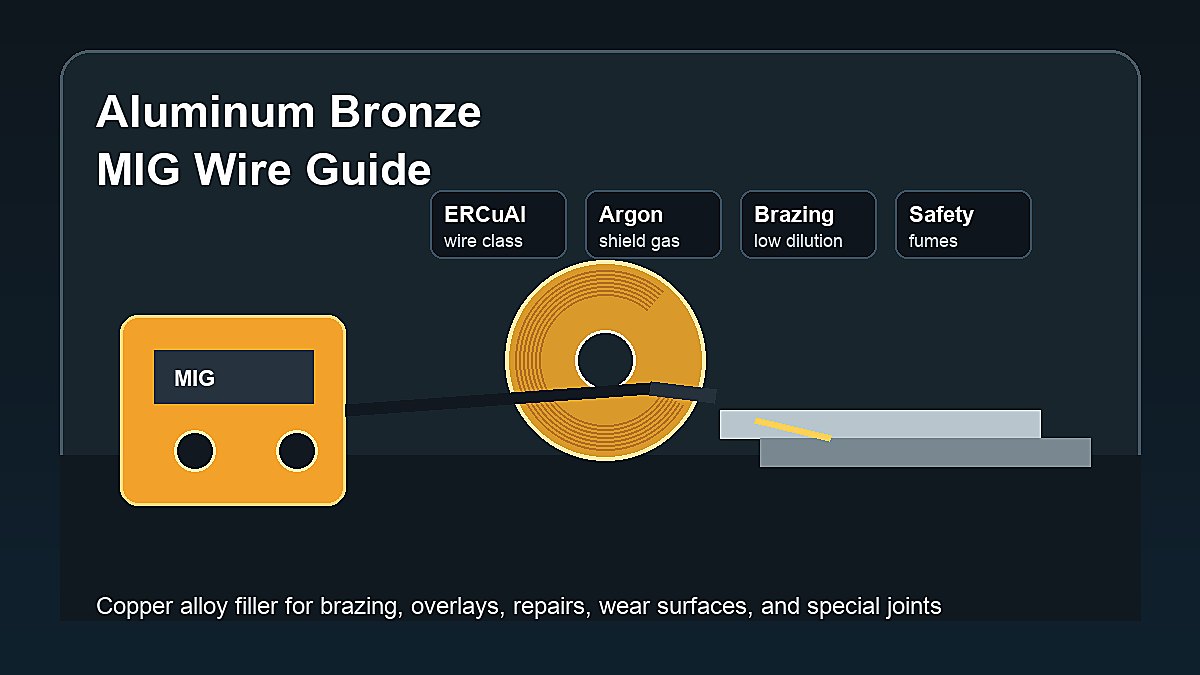
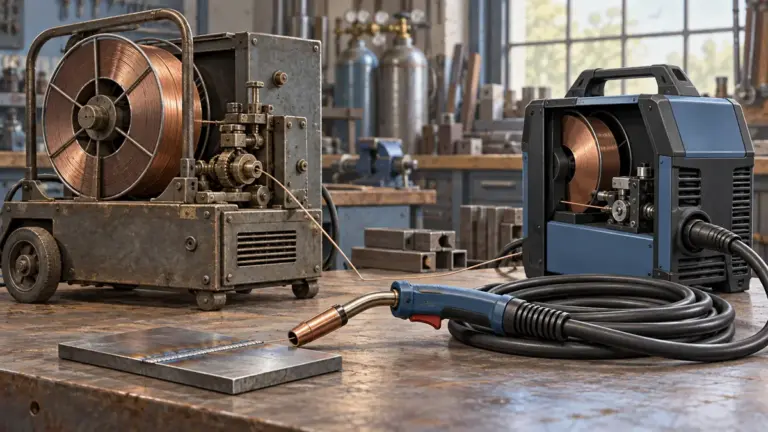
Aluminum bronze MIG wire is a copper-based filler wire used for specialty MIG welding, MIG brazing, overlays, repairs, and some dissimilar-metal work. It is not a normal mild steel MIG wire, and it is not aluminum welding wire. Beginners should treat it as a specialty filler that needs the right base metal, shielding gas, machine setup, and safety controls.
The name can confuse new welders. Aluminum bronze usually means a copper alloy with aluminum added. The wire may be sold under classifications such as ERCuAl-A2 or similar copper-alloy filler names. It can create a gold-toned deposit and is often chosen for wear resistance, corrosion resistance, build-up, joining some copper alloys, or MIG brazing applications.
Mark Dawson beginner note: do not buy aluminum bronze MIG wire just because a video shows it flowing nicely. First confirm the base metal, filler classification, shielding gas, heat input, joint design, and whether the job is welding, brazing, overlay, or cosmetic repair.
Quick Answer
Aluminum bronze MIG wire is a copper-alloy wire used for specialized joining and surfacing work. It is commonly associated with MIG brazing, copper alloy repair, wear surfaces, overlays, and some dissimilar-metal applications. It usually runs with shielding gas such as argon, but the correct gas and settings depend on the wire manufacturer. Beginners should not use it as a substitute for ER70S-6 mild steel wire or 4043 aluminum wire.
| Question | Beginner Answer |
|---|---|
| Is it mild steel MIG wire? | No, it is copper-alloy filler wire. |
| Is it aluminum MIG wire? | No, despite the name, it is aluminum bronze. |
| Common use | MIG brazing, overlays, repairs, and special joints. |
| Beginner difficulty | Moderate to advanced because setup and material match matter. |
| Main warning | Wrong filler can create weak, brittle, or unsuitable joints. |
What Aluminum Bronze MIG Wire Is
Aluminum bronze MIG wire is a filler made from a copper alloy that contains aluminum and sometimes other alloying elements depending on the exact classification. Aluminum bronze alloys are known for strength, wear resistance, and corrosion resistance compared with many ordinary copper alloys.
In practical welding language, the wire is used when a copper-alloy deposit is useful. That may mean joining aluminum bronze parts, building up a worn surface, creating a corrosion-resistant overlay, or using a lower-heat MIG brazing technique on certain steel or coated steel applications.
New welders still learning normal MIG setup should read Advantages and Disadvantages of MIG Welding first. Specialty wires make more sense after the basics are solid.
How It Differs From Aluminum MIG Wire
This filler is not the same as aluminum MIG wire. Aluminum MIG wire, such as 4043 or 5356, is used for welding aluminum alloys. Aluminum bronze filler is mainly copper with aluminum as an alloying element. The two wire families behave differently and are used for different jobs.
This distinction matters because a beginner might see “aluminum” in the name and assume the wire is for welding aluminum. That is usually the wrong conclusion. If you need to weld aluminum, use the correct aluminum filler and setup, not aluminum bronze wire.
Common Uses
- Joining or repairing some aluminum bronze and copper alloy parts.
- MIG brazing on selected steel or coated steel applications.
- Building up worn bearing or sliding surfaces.
- Creating a corrosion-resistant copper-alloy overlay.
- Decorative bronze-colored deposits where the joint requirements allow it.
- Some dissimilar-metal work when a suitable procedure supports it.
These uses are more specialized than beginner mild steel MIG welding. A home-shop beginner may not need this wire right away. It is usually a wire you choose for a specific material problem, not for general welding practice.
When It Makes Sense for a Beginner
Aluminum bronze MIG wire makes sense for a beginner only when the project clearly calls for a copper-alloy deposit or a MIG brazing style joint. A simple example is practice on scrap steel to learn how bronze filler wets the surface at lower heat than normal steel welding. Another example is a non-critical shop part where a bronze-colored build-up or wear surface is useful.
It does not make sense as a shortcut for regular steel fabrication. For a welding cart, shop shelf, gate, bracket, or mild steel frame, normal ER70S-type MIG wire is usually the correct path. This bronze filler is more expensive and more specialized, and it does not turn a weak joint design into a strong repair.
If the job is a basic beginner project, start with normal MIG practice first. The MIG Welding Wire Types article will fit naturally here once that hub is built, but for now the core idea is simple: wire choice follows material and purpose.
MIG Brazing vs MIG Welding
This wire is often discussed with MIG brazing. In MIG brazing, the filler metal melts and wets the joint while the base metal is not melted the same way it would be in normal fusion welding. This can reduce heat input and limit damage to thin or coated steel in certain applications.
That lower heat is useful only when the joint is designed for it. Brazing is not automatically a replacement for welding. Joint fit-up, overlap, surface preparation, filler choice, and service load all matter. If the part is structural or safety-critical, follow the required repair procedure instead of guessing.
Wire Classification and Matching
Many aluminum bronze MIG wires are identified with copper-alloy filler classifications such as ERCuAl-A2. The exact classification tells you more than the color of the wire. It points toward chemical composition, intended base metals, mechanical properties, and recommended use.
Do not assume every bronze filler spool is interchangeable. A wire for one copper alloy repair may not be right for another alloy, a steel brazing joint, or an overlay job. Read the wire data sheet and match the filler to the base metal and service conditions.
Compared With ER70S-6 MIG Wire
ER70S-6 is a common solid mild-steel MIG wire. It is used for fusion welding mild steel with suitable shielding gas. Aluminum bronze is a copper-alloy filler. It creates a different deposit, melts and wets differently, and is chosen for different reasons. The two wires are not interchangeable.
Using bronze filler where mild-steel wire is required can leave a joint without the expected strength, ductility, or service behavior. Using mild-steel wire where bronze filler is required can remove the corrosion, wear, or low-heat benefits that made the specialty filler attractive in the first place.
Compared With Silicon Bronze
Aluminum bronze and silicon bronze are both copper-alloy filler families, but they are not the same wire. Silicon bronze is commonly discussed for MIG brazing thin steel and coated steel in some repair contexts. Aluminum bronze is often associated with higher strength copper alloy deposits, wear resistance, and aluminum bronze base metals.
Choose the filler named by the procedure or wire manufacturer for the exact base metal and job. Do not pick a bronze wire by color. Bronze-looking filler can still have the wrong alloy content for the repair.
Shielding Gas and Polarity
Aluminum bronze MIG wire commonly uses argon-based shielding, but the correct gas depends on the wire and application. Some procedures may use pure argon; others may specify a different gas blend. The wire manufacturer’s recommendation should be the starting point.
Polarity also matters. Most solid-wire MIG work uses DCEP, but you should still check the wire documentation and machine setup. Wrong gas, wrong polarity, or poor gas coverage can cause porosity, poor wetting, spatter, or an unstable arc.
Machine Setup Basics
The copper-alloy wire can be softer than many steel wires, so feeding quality matters. Keep the gun cable as straight as practical, use the right drive roll and contact tip, and avoid crushing the wire with excessive drive tension. A poor feed can make the arc feel inconsistent even when the voltage and wire speed are close.
Start with the wire data sheet. Use scrap material that matches the real job. Tune wire speed and voltage in small steps. Watch how the puddle wets the joint. If the deposit balls up, smokes heavily, or does not wet the surface, stop and check cleaning, gas, settings, and filler compatibility.
Heat Input and Distortion
One reason MIG brazing with copper-alloy wire is attractive is lower heat input compared with melting the base steel deeply. Lower heat can reduce distortion on thin parts or coated panels when the process is approved for that job. That advantage disappears if the welder overheats the joint, moves too slowly, or tries to force filler into a poor gap.
Use short practice beads and watch the wetting action. The filler should flow and bond as intended for the process. If it piles up like a cold rope, the surface may be dirty, the settings may be wrong, or the wire may not fit the base metal.
Troubleshooting Aluminum Bronze MIG Wire
| Problem | Likely Cause | Beginner Check |
|---|---|---|
| Wire feeding poorly | Drive tension, liner, tip, or cable bend | Straighten gun lead and check tip size |
| Poor wetting | Dirty metal, wrong settings, wrong filler | Clean again and confirm wire data sheet |
| Porosity | Gas coverage, contamination, coating | Check gas flow and remove contaminants |
| Too much smoke | Coating, oil, plating, or poor ventilation | Stop and identify the material hazard |
| Weak joint | Wrong joint design or filler choice | Verify whether brazing or welding is required |
Surface Preparation
Clean material is critical. Remove oil, paint, oxide, plating contamination, dirt, and corrosion where the filler needs to wet the surface. Copper alloys and coated steel can react badly to poor preparation. A shiny wire cannot overcome a dirty joint.
Use clean abrasives and dedicated brushes when contamination matters. If you are working around galvanized coatings, old plating, or unknown coatings, identify the hazard before heating the metal. Coatings can create serious fumes and poor joint quality.
Buying Checklist
- Confirm the base metal before choosing filler.
- Check the wire classification, not just the color or brand.
- Read the manufacturer data sheet for shielding gas and polarity.
- Make sure the wire diameter matches your machine, tip, and drive roll.
- Buy enough extra wire for practice on scrap.
- Do not use it for structural repairs unless a qualified procedure calls for it.
- Check whether the job is brazing, welding, overlay, or build-up.
This checklist keeps the wire choice tied to the job. Specialty filler is useful when it solves a specific problem. It becomes expensive scrap when it is bought only because the name sounds interesting.
Practice Plan Before Real Work
Start with small scrap coupons. Clean them thoroughly, set the recommended gas and polarity, and run short beads. Watch whether the filler wets the surface smoothly. Try a second sample with slightly different travel speed or voltage, but change only one thing at a time.
After the bead cools, inspect it before grinding. Look for porosity, poor wetting, cracks, undercut, and signs that the filler only sat on the surface. If the practice piece fails, the real repair would probably fail too.
When Beginners Should Avoid It
- You do not know the base metal.
- The repair is structural, vehicle-safety, lifting, pressure, or code-related.
- You are trying to replace mild steel MIG wire for normal fabrication.
- You are trying to weld aluminum with it.
- You cannot control fumes or identify coatings.
- You do not have manufacturer settings or practice material.
For ordinary mild steel projects, use normal MIG wire and settings. For general MIG setup, use MIG Welding Techniques for Beginners and MIG Welding Tips and Tricks for Beginners.
Common Mistakes
- Confusing aluminum bronze wire with aluminum welding wire.
- Using it on mild steel without understanding brazing vs welding.
- Ignoring the wire classification and data sheet.
- Trying to weld dirty coated metal without fume controls.
- Using too much drive-roll pressure and damaging wire feed.
- Expecting bronze-colored deposits to mean the joint is strong.
- Skipping practice on scrap before the real part.
Safety Notes
Aluminum bronze MIG work can involve welding fumes, copper alloy fumes, hot metal, UV radiation, sparks, fire risk, compressed gas cylinders, and coating hazards. Copper, aluminum, zinc, paint, plating, and unknown coatings can all change the fume risk. Use ventilation or fume extraction and keep your head out of the plume.
Wear a welding helmet, safety glasses, gloves, flame-resistant clothing, and appropriate respiratory protection when required. Review OSHA welding hazards guidance, OSHA welding fume guidance, and AWS safety resources.
FAQ
What is aluminum bronze MIG wire used for?
It is used for specialty copper-alloy joining, MIG brazing, overlays, build-up, repairs, and some dissimilar-metal applications where a copper alloy filler is appropriate.
Is aluminum bronze MIG wire for welding aluminum?
No. Aluminum bronze wire is not the same as aluminum MIG wire. For aluminum welding, use the correct aluminum filler such as 4043 or 5356 when appropriate.
What gas is used with aluminum bronze MIG wire?
Argon-based shielding is common, but the correct gas depends on the wire and procedure. Always check the manufacturer data sheet.
Can beginners use aluminum bronze MIG wire?
Beginners can practice with it, but it is a specialty wire. Learn normal MIG setup first, then use aluminum bronze only when the job calls for it.
Is aluminum bronze MIG brazing strong?
It can be strong for the right joint and procedure, but it is not automatically a substitute for fusion welding. Joint design, preparation, filler choice, and service load matter.
Final Advice
Aluminum bronze MIG wire is useful, but it is not a general beginner wire. Use it when a copper-alloy filler, MIG brazing method, overlay, or specialty repair actually fits the job. Confirm the base metal, read the wire data sheet, control fumes, practice on scrap, and avoid safety-critical repairs without qualified guidance.