How to Set Up a TIG Welder for Aluminum
Beginner guide to setting up a TIG welder for aluminum: AC mode, argon gas, tungsten, cleaning, cup size, amperage, balance, frequency, and safety.

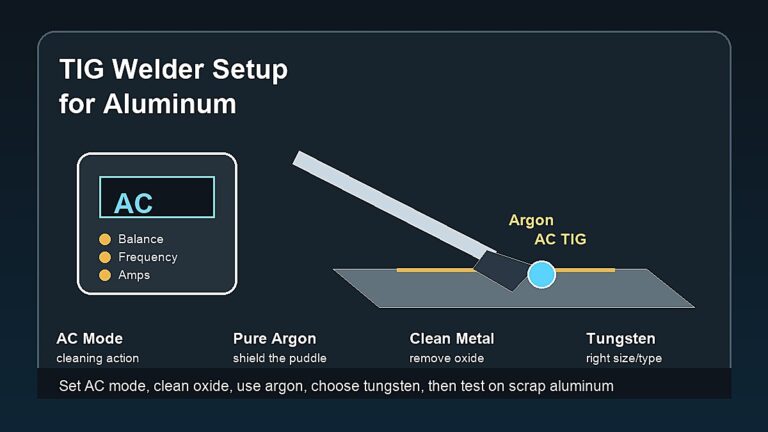
Beginner guide to setting up a TIG welder for aluminum: AC mode, argon gas, tungsten, cleaning, cup size, amperage, balance, frequency, and safety.
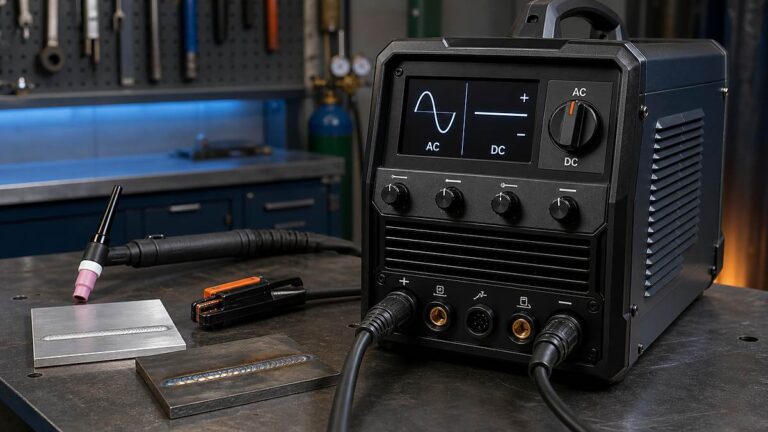
Understand AC and DC welding output, DCEN/DCEP polarity, TIG and stick applications, arc blow, process compatibility, and common setup mistakes.
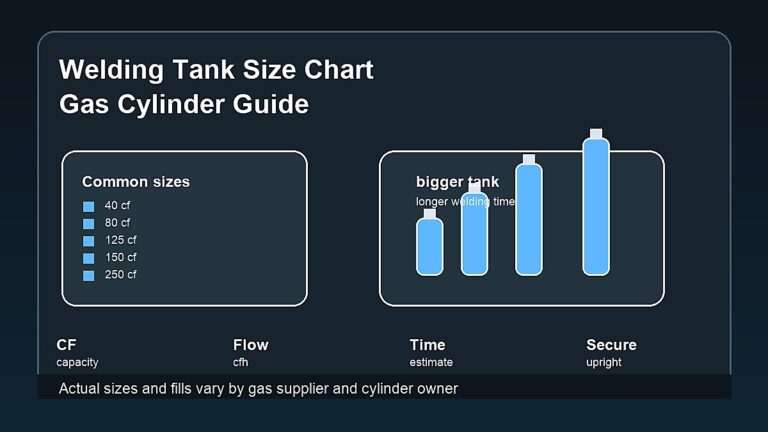
Beginner welding tank size chart for shielding gas cylinders, common cubic-foot sizes, run-time estimates, MIG/TIG gas use, and safety notes.
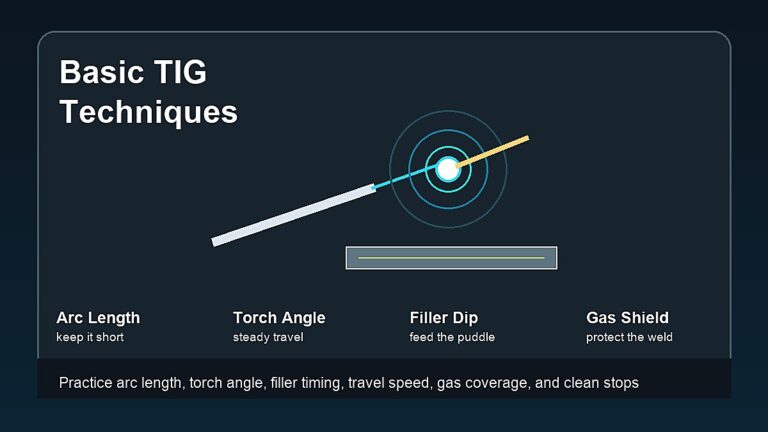
Beginner guide to basic TIG welding techniques: arc length, torch angle, filler timing, travel speed, puddle control, gas coverage, starts, stops, and safety.
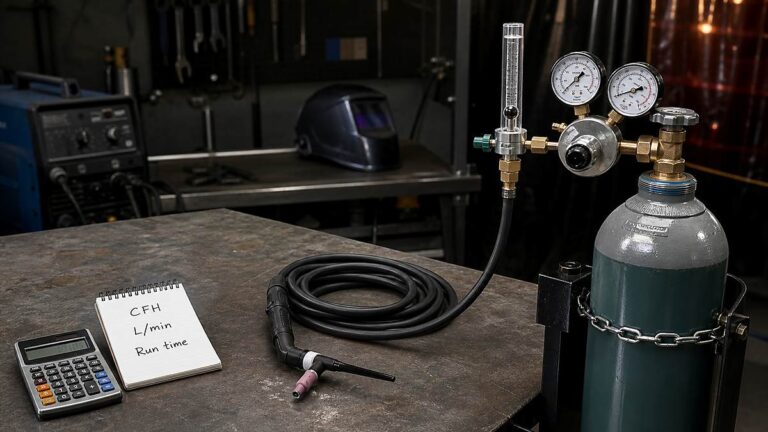
Calculate welding shielding gas flow, CFH and L/min conversions, cylinder run time, consumption, and cost with practical formulas and examples.
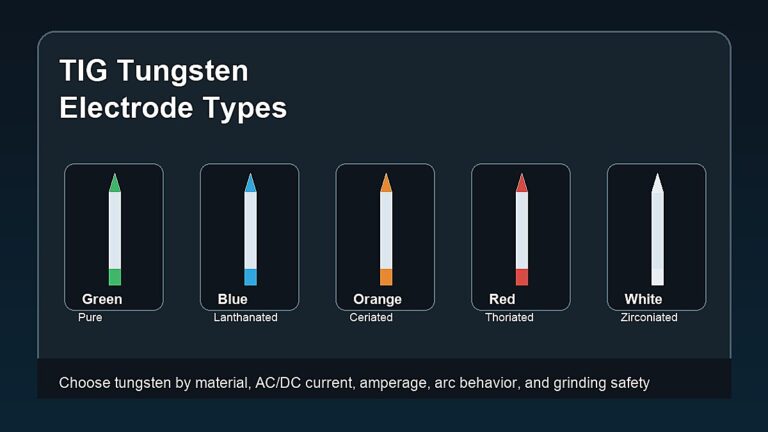
Beginner guide to TIG tungsten types: pure, lanthanated, ceriated, thoriated, zirconiated, color codes, AC/DC use, grinding, and safety.
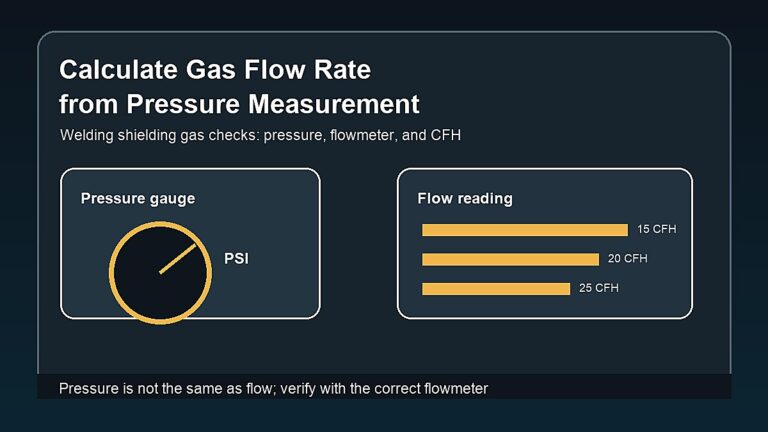
Learn how pressure, CFH, regulators, flowmeters, nozzle flow, and shielding gas safety fit together when checking welding gas flow.
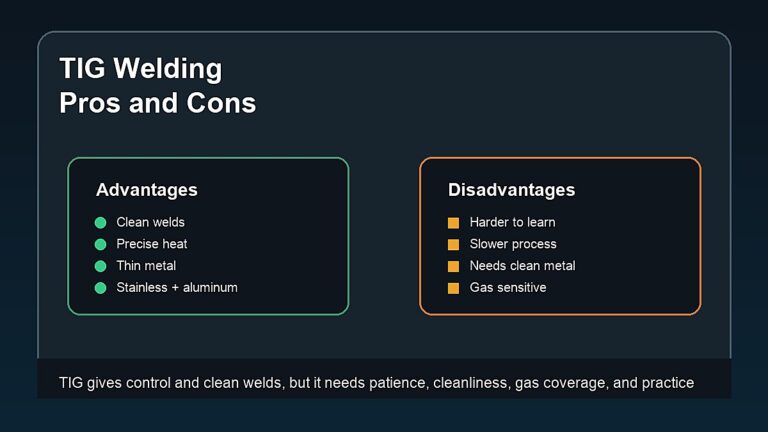
Compare TIG welding advantages and disadvantages for beginners, including clean welds, heat control, thin metal, gas, cost, speed, and learning curve.
Learn how aluminum welding works for beginners, why it is harder than mild steel, which process to choose, and what mistakes to avoid before practicing.
Learn beginner chromoly welding basics, including what 4130 chromoly is, why fit-up and heat control matter, which process to use, and what safety-critical jobs to avoid.