How to TIG Weld Stainless Steel for Beginners
A beginner practice sequence for stainless TIG welding, covering known material, clean preparation, filler selection, shielding, heat control and inspection limits.

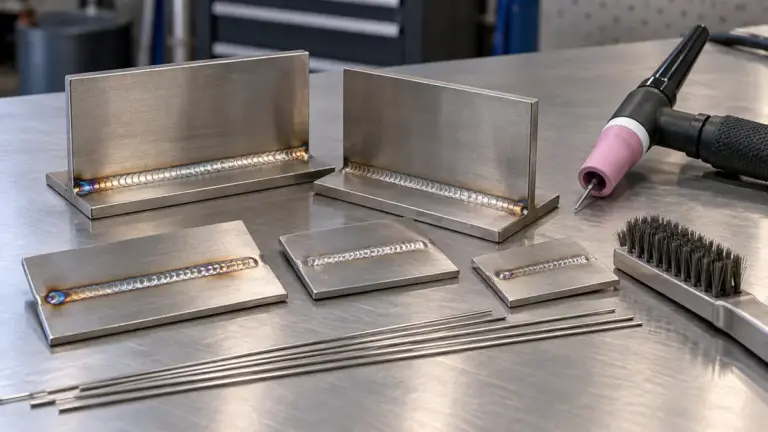
A beginner practice sequence for stainless TIG welding, covering known material, clean preparation, filler selection, shielding, heat control and inspection limits.
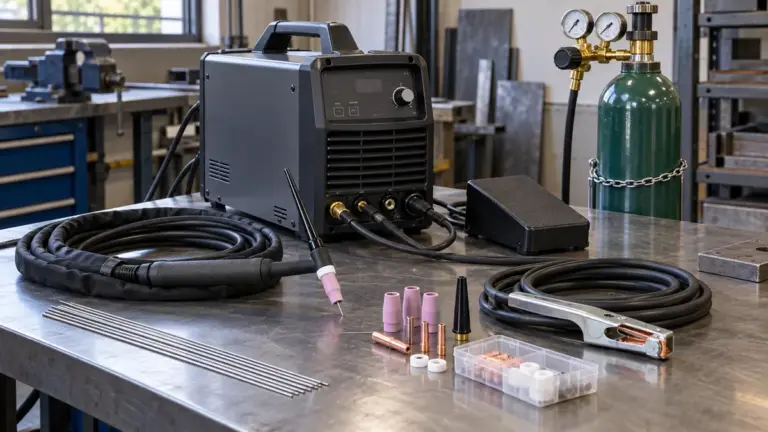
Choose your first TIG welder around your material, available power and learning setup. Check AC/DC capability, controls, duty cycle, accessories and support before buying.
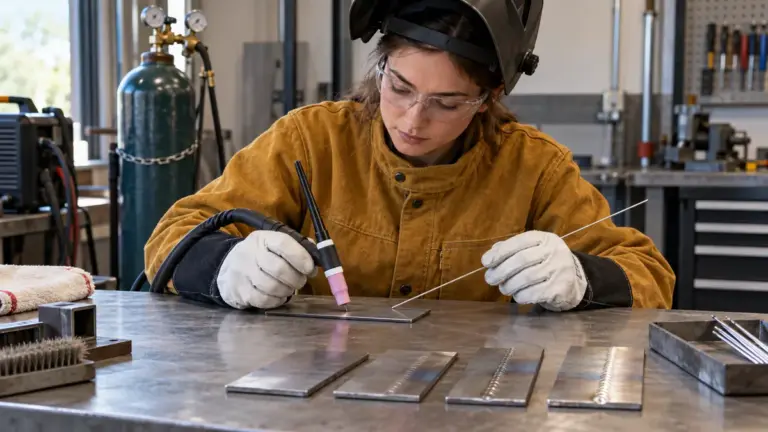
Plan your TIG welding learning around repeatable skills, useful practice and feedback. Compare beginner milestones with job-specific qualification requirements.

Beginner guide to grinding TIG tungsten: lengthwise grinding, tip angle, truncated points, AC/DC setup, contamination, safety, and common mistakes.

Learn how 2T and 4T trigger modes work in MIG and TIG welding, when each mode helps, and how to avoid start-stop and latch-mode mistakes.

Beginner guide to TIG welding: how it works, tungsten electrodes, argon gas, filler rod, torch control, safety, common mistakes, and practice steps.

Beginner guide to choosing TIG tungsten electrode size by amperage, metal thickness, AC/DC current, collet fit, tip shape, overheating, and safety.

Beginner guide to setting up a TIG welder for mild steel, including DCEN, argon, tungsten, filler rod, amperage, cleaning, practice, and safety.

Beginner guide to TIG welding gas: pure argon, helium blends, flow rate, mild steel, stainless, aluminum, cup setup, leaks, and shielding safety.
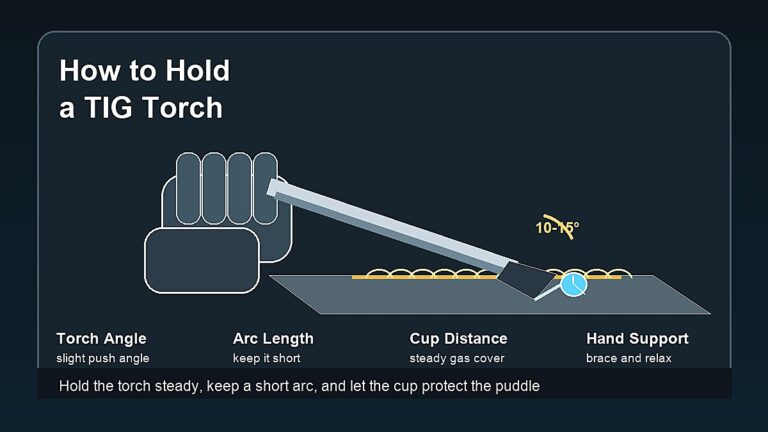
Learn how to hold a TIG welding torch with steady hand support, correct torch angle, short arc length, cup distance, filler rod position, and beginner safety tips.