Welding Rod Specifications Explained for Beginners

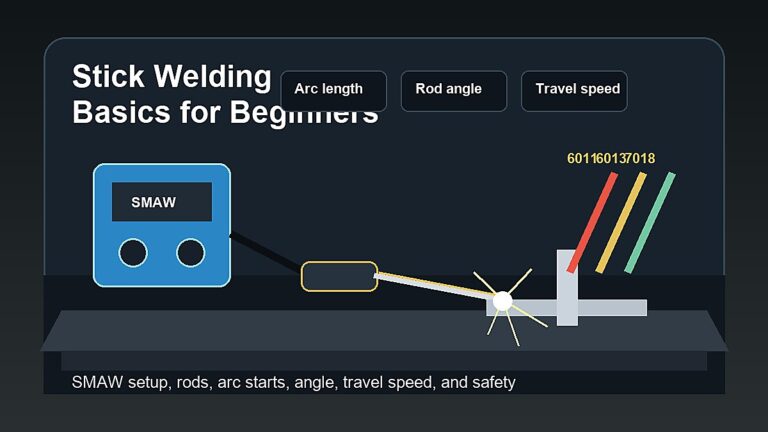
Welding rod specifications tell you what a stick electrode is meant to do before you strike an arc. The numbers and letters on rods such as E6010, E6011, E6013, and E7018 point to strength, welding position, coating type, current type, penetration style, and sometimes storage needs.
For a beginner, the goal is not memorizing every electrode ever made. A better first step is learning how to read the common rod code, then matching the rod to the metal, position, machine, safety requirements, and practice goal. That habit prevents a lot of weak welds, rough starts, and confusing machine settings.
Mark Dawson beginner note: a welding rod number is useful only when the rest of the setup matches. Clean steel, correct polarity, enough amperage, proper storage, and a safe work area matter just as much as the printed classification.
Quick Answer
Welding rod specifications usually describe the electrode classification, tensile strength, welding position, flux coating, current type, penetration behavior, diameter, amperage range, and storage instructions. In the common AWS-style stick electrode code, E7018 means an electrode with about 70,000 psi tensile strength, usable in all positions, with a coating and current type identified by the final digit.
| Specification Item | What It Tells You | Why Beginners Should Care |
|---|---|---|
| Rod number | Classification such as E6011 or E7018 | Helps identify strength, position, and coating family |
| Diameter | Rod size such as 3/32 in or 1/8 in | Affects amperage and metal thickness |
| Current/polarity | AC, DC+, DC-, or more than one option | Wrong polarity can make the rod run badly |
| Storage | Dry storage, sealed package, or oven needs | Low-hydrogen rods need extra care |
How to Read a Welding Rod Number
Most beginner stick welding rods use an electrode classification that starts with E. The E means electrode. The first two or three numbers usually show minimum tensile strength in thousands of pounds per square inch. The next number shows the welding position. The final digit points to coating type, current compatibility, and arc behavior.
Take E7018 as the example. E means electrode. The 70 points to about 70,000 psi minimum tensile strength. The 1 means the rod is commonly used in all positions. The 8 tells you about the coating and current characteristics, and it is also associated with a low-hydrogen electrode family that needs dry storage discipline.
E6011 works differently. It points to about 60,000 psi tensile strength, all-position use, and a coating/current type that allows a forceful digging arc. That is why 6011 is often discussed for repair work, outdoor jobs, and less-than-perfect steel, while 7018 is often discussed for cleaner, stronger weld applications.
What the Rod Package Usually Shows
The printed rod package is often more useful than a random online chart because it is tied to that exact electrode. Look for the classification, diameter, recommended amperage range, current type, polarity, storage notes, and any warnings from the manufacturer. Some packages also list suggested positions, deposition notes, or code approvals.
Read the label before opening the package. Once rods are loose in a tube or drawer, the classification can become unclear. If you store several rods in the same area, keep the label with the rods. A correct label prevents using a 6013 when you meant to grab 7018, or using a damp low-hydrogen rod because it looked close enough.
A good beginner habit is to write down the rod, diameter, machine setting, polarity, base metal thickness, and result after practice. Those notes turn specifications into real learning. After a few sessions, you will see why a rod number alone does not tell the whole story.
Common Rod Specifications at a Glance
| Rod | General Personality | Beginner Use | Storage Note |
|---|---|---|---|
| E6010 | Deep penetration, DC-focused rod | Practice only after basics and with a suitable machine | Keep dry and protected |
| E6011 | Deep digging arc, often AC/DC capable | Useful for repair-style practice | More forgiving than 7018, but still protect it |
| E6013 | Smoother, lighter penetration rod | Friendly for thin mild steel and bead practice | Keep clean and dry |
| E7018 | Low-hydrogen, stronger clean-steel rod | Good once storage and technique are understood | Moisture control matters |
This table is a beginner summary, not a substitute for the rod package or a qualified welding procedure. Always check the manufacturer’s data for amperage, current type, diameter range, and storage instructions.
Tensile Strength in Rod Specs
The strength number helps describe the minimum tensile strength of the deposited weld metal under the classification system. In simple terms, E6011 and E6013 are often thought of as 60-series rods, while E7018 is a 70-series rod. That does not mean a 7018 weld is automatically safe or stronger in every real job.
Actual weld strength depends on joint design, base metal, preparation, fit-up, procedure, heat input, preheat, filler selection, welder skill, and inspection. A poorly made 7018 weld can fail. A correctly made 6011 weld may be fine for a repair that matches that rod’s purpose. Specifications guide the choice; they do not replace technique or engineering judgment.
Welding Position Numbers
The position digit tells you where the rod can be used. A 1 in common stick rod classifications usually means all-position use. That can include flat, horizontal, vertical, and overhead welding when the rod and procedure allow it. A 2 is usually more limited, often flat and horizontal fillet work.
Beginners should still practice in flat position first. All-position does not mean all positions are equally easy. Vertical and overhead welding add puddle control, heat control, slag management, and safety challenges. Learn bead control on flat scrap before moving into harder positions.
Final Digit: Coating, Current, and Arc Behavior
The last digit is where beginners often get lost. It does not describe only one thing. It connects to coating type, current compatibility, penetration behavior, and how the rod runs. That final digit helps explain why one rod needs a different technique than another rod with a similar strength number.
For example, 6011 and 6013 may both be 60-series all-position rods, but they do not feel the same. 6011 has a more forceful digging arc. 6013 is usually smoother with lighter penetration. E7018 has a different slag system and low-hydrogen handling needs. The last digit is part of that difference.
Arc behavior also changes how you practice. A digging rod can punish long arc length and poor angle by making spatter worse. A smoother rod may hide some technique problems until the weld is cut, bent, or inspected. Low-hydrogen rods can make strong welds when handled correctly, but damp rods or wrong polarity can make the bead misleading.
For a deeper comparison, read Difference Between 6011 and 7018 Welding Rods and Different Types of Welding Rods.
Rod Diameter and Amperage Range
Diameter is one of the most practical welding rod specifications. Common beginner sizes include 3/32 inch, 1/8 inch, and 5/32 inch. Smaller rods generally need less amperage and are easier on thinner material. Larger rods need more heat and are usually better suited to thicker steel.
The rod package or manufacturer chart should be your first amperage reference. A 1/8 inch 7018 does not use the same range as every other 1/8 inch rod. Classification, brand, current type, welding position, joint design, and machine output all affect the practical setting.
Use How to Choose Welding Rod Size when you want a beginner path for matching diameter to steel thickness, position, and practice goals.
Current Type and Polarity
Rod specifications often tell you whether the electrode can run on AC, DC electrode positive, DC electrode negative, or a limited combination. This matters because a rod that runs well on DC+ may behave poorly on the wrong current setting.
Wrong polarity can create unstable arc starts, excess spatter, poor penetration, strange slag behavior, and frustrating beads. Before blaming your hands, check the rod label, machine setting, work clamp connection, and electrode holder lead. Many beginner problems are setup problems wearing a technique disguise.
Storage Specifications
Storage is part of the specification because rod condition affects weld quality. Low-hydrogen rods such as 7018 deserve special attention. Keep packages sealed until needed, protect opened rods from moisture, and follow oven or exposure rules when a weld is procedure-controlled.
Casual practice rods should still stay clean and dry. Damp flux, cracked coating, oil, rust, and mixed labels make troubleshooting harder. For important welds, storage needs to follow the manufacturer, code, job procedure, and qualified welding guidance.
Read How Should Low Hydrogen Electrodes Be Stored? before using 7018 on anything that matters.
How Specifications Affect Rod Selection
Good rod selection starts with the job. What metal are you welding? How thick is it? Is the joint clean or rusty? Will the weld be flat, vertical, or overhead? Does the machine support the rod’s current and amperage range? Is the weld just practice, or could failure hurt someone?
Once those answers are clear, the specification becomes useful. A 6011 rod may fit outdoor repair practice. A 6013 rod may fit smoother practice on thinner mild steel. A 7018 rod may fit clean steel where low-hydrogen handling is understood. A larger diameter may fit thicker steel, while a smaller diameter may fit lower heat and easier control.
When Specifications Are Not Enough
Specifications narrow the choice, but they cannot inspect the weld for you. Two welders can use the same E7018 rod and get very different results because their joint prep, arc length, travel speed, angle, heat input, and slag control are different. The rod classification is only one part of the welding procedure.
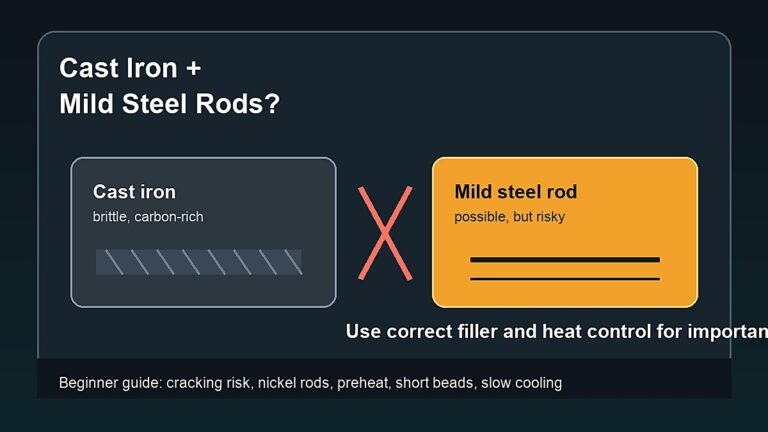
Base metal also matters. A rod that works on clean mild steel may not be the right choice for cast iron, stainless steel, hardfacing, galvanized material, or unknown scrap. If the metal is coated, oily, painted, plated, cracked, or safety-critical, slow down and identify the material before choosing a rod.
Inspection requirements can change the answer too. A practice bracket in a home shop is not the same as a structural weld, trailer repair, vehicle frame, lifting point, pressure part, or workplace job. Important welds need qualified procedures, qualified welders, and proper inspection rather than guesswork from a chart.
Specification Checklist Before Welding
- Confirm the rod classification, such as E6011 or E7018.
- Check the rod diameter before setting amperage.
- Read the package for current type and polarity.
- Match the rod to the base metal and joint condition.
- Check whether the rod is suitable for the welding position.
- Inspect the flux coating for cracks, oil, rust, or moisture.
- Keep low-hydrogen electrodes stored correctly.
- Practice on scrap before welding anything important.
This checklist turns specifications into a shop habit. You are not just reading a number; you are checking whether the rod, machine, metal, and job all agree.
Common Beginner Mistakes
- Choosing a rod only because it was included with the welder.
- Using 7018 without understanding dry storage.
- Running a rod on the wrong polarity.
- Using too large a diameter on thin material.
- Assuming all 1/8 inch rods use the same amperage.
- Welding dirty steel and blaming the rod.
- Using mystery rods with unreadable labels.
- Using practice weld logic on safety-critical repairs.
A simple correction helps: identify the rod before welding. If the label is missing, the flux is damaged, or the storage history is unknown, treat the rod as practice-only at most. Mystery electrodes do not belong on important work.
Safety Notes
Stick welding can involve electric shock, arc flash, fumes, hot slag, burns, fire, and flying slag during cleanup. Use a properly shaded welding helmet, safety glasses, dry welding gloves, flame-resistant clothing, ventilation, secure clamping, and a fire-safe workspace.
Some rods and base metals can create more fume risk depending on coating, metal, paint, plating, or contamination. Avoid welding unknown coated metal without proper training. For structural, vehicle, trailer, lifting, pressure, or workplace welding, use qualified instruction, approved procedures, and inspection.
Review OSHA welding hazards guidance, OSHA welding fume guidance, and AWS safety resources. For beginner setup safety, use Arc Welding Safety.
FAQ
What does E7018 mean?
E7018 is a stick electrode classification. E means electrode, 70 points to about 70,000 psi minimum tensile strength, 1 indicates all-position use, and 8 identifies coating and current characteristics commonly associated with low-hydrogen handling.
What is the difference between 6011 and 7018?
6011 is often used for deeper penetration and repair-style welding, including less-than-perfect steel. 7018 is a low-hydrogen rod commonly used on cleaner steel where strength and controlled handling matter. The best choice depends on the job.
Does rod diameter change amperage?
Yes. Larger diameter rods usually need more amperage, while smaller rods usually need less. Always start with the rod package or manufacturer chart, then test on scrap and adjust carefully.
Can I use any welding rod with any stick welder?
No. The welder must support the rod’s current type, polarity, and amperage needs. Some small AC machines will not run every rod well, especially rods that prefer specific DC output.
Are welding rod specifications enough to choose a rod?
No. Specifications help narrow the choice, but you also need to consider base metal, thickness, joint design, position, preparation, storage, machine output, safety, and whether the weld is critical.
Final Advice
Welding rod specifications are the map printed on the electrode package. Learn the classification, diameter, current type, position, coating behavior, and storage notes before welding. Once you understand those details, rod selection becomes less guesswork and more controlled practice.