Can You MIG Weld Outdoors?
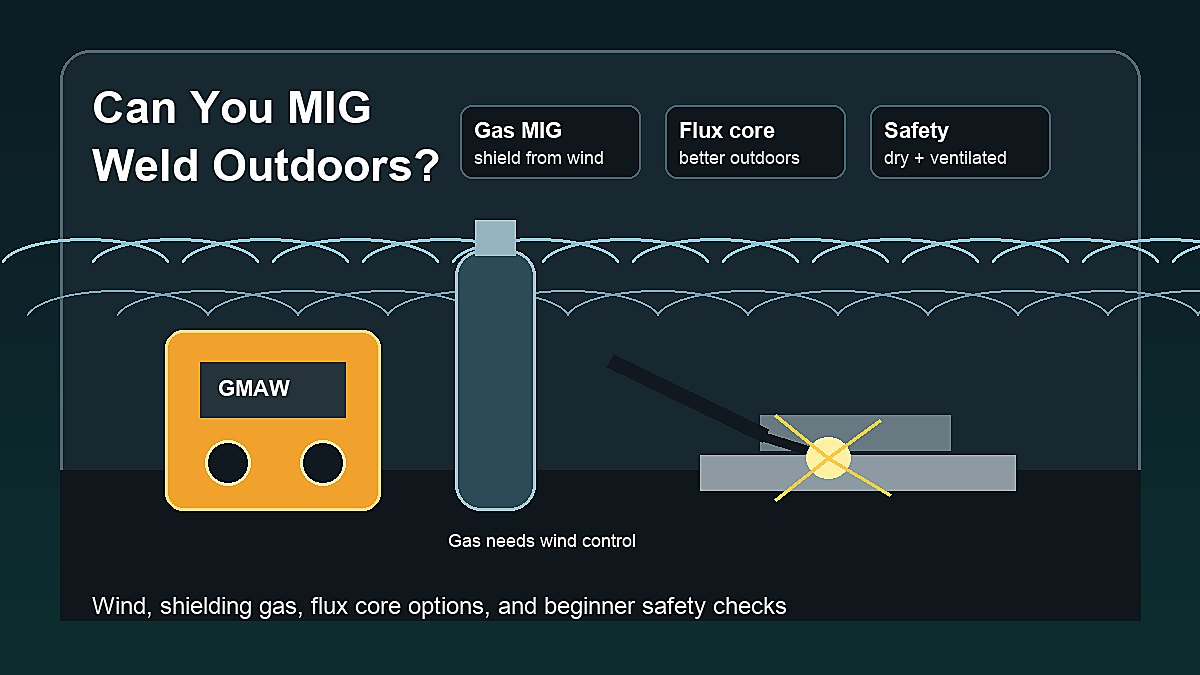
Can you MIG weld outdoors? Yes, but standard gas MIG welding is difficult outside because wind can blow away the shielding gas that protects the weld pool. If that gas coverage is disturbed, the weld can develop porosity, spatter, poor fusion, and a weak bead. For outdoor beginner work, self-shielded flux core wire is usually the more practical wire-feed option.
MIG welding works best in a controlled area where the shielding gas can stay around the arc. A calm driveway, a three-sided wind screen, or a sheltered shop doorway may work for practice. An open yard with moving air is a different story. Even a light breeze can make a clean-looking setup behave badly.
Mark Dawson beginner note: do not judge outdoor MIG by one bead that looks shiny on top. Break, bend, cut, or inspect practice welds before trusting the setup. Outdoor wind problems often show up as pinholes, soot, erratic arc sound, and inconsistent tie-in.
Quick Answer
You can MIG weld outdoors only when the weld area is protected from wind and the machine, gas, wire, and workpiece are set up correctly. Gas MIG needs shielding gas coverage, so it is best for indoor or sheltered work. For open outdoor repair, self-shielded flux core is usually better because it does not need an external gas bottle.
| Outdoor Situation | Gas MIG | Flux Core |
|---|---|---|
| Calm sheltered area | Possible | Good |
| Light wind | Risky without screens | Usually better |
| Open yard | Not ideal | Better choice |
| Thin clean steel | Good if shielded | Can run hot |
| Dirty repair steel | Needs cleaning | More tolerant, still clean first |
Why Wind Is a Problem for MIG Welding
Gas MIG, also called GMAW, uses a shielding gas such as argon and carbon dioxide blend or carbon dioxide. That gas protects the molten weld pool from oxygen, nitrogen, and moisture in the air. When wind moves the gas away, the weld pool is exposed before it solidifies.
The result is often porosity, which looks like small holes in or under the weld. You may also see extra spatter, a rough bead surface, soot, and a harsh arc. The weld may still stick the pieces together, but it may not be sound enough for the job.
This is why indoor MIG advice does not always transfer to outdoor work. A setting that works perfectly in a garage can fail in a driveway if wind reaches the arc. For general technique first, read MIG Welding Techniques for Beginners.
How Much Wind Is Too Much?
There is no simple beginner rule that makes outdoor gas MIG safe in all conditions. The problem depends on wind speed, direction, joint shape, nozzle position, gas flow, travel speed, and how exposed the work area is. A tiny gust across the nozzle can matter more than a steady breeze from behind a wall.
If you can feel air moving across your face or see dust, smoke, grass, curtains, or shielding screens moving near the weld, assume gas coverage may be affected. Raising gas flow too high is not a perfect fix because turbulent flow can pull air into the shielding zone.
The practical beginner test is simple: make a weld on scrap, clean it, inspect it, and compare it with an indoor bead using the same settings. If the outdoor bead is full of pinholes or the arc sounds unstable, stop and improve shielding or switch processes.
Can You Use Wind Screens?
Wind screens can help if they are fire-safe and placed so sparks, heat, and slag cannot ignite them. Metal panels, welding blankets rated for the job, or a sheltered welding table can reduce air movement around the weld. A cardboard box, plastic sheet, dry plywood, or cloth near sparks is not a good safety plan.
A three-sided screen is often better than one panel because wind can wrap around edges. Leave enough room to work safely, route cables without tripping, and keep fumes from collecting around your helmet. Blocking wind should not mean trapping smoke in your breathing zone.
When Flux Core Is Better Outdoors
Self-shielded flux core wire is a wire-feed process that creates its own shielding from flux inside the wire. It still makes fumes, slag, and spatter, but it does not rely on an external shielding gas cloud in the same way gas MIG does. That makes it a better beginner choice for many outdoor repairs.
The tradeoff is cleanup and visibility. Flux core usually creates more smoke and slag than gas MIG, so you need ventilation, a chipping hammer, a wire brush, and patience. You also need the correct polarity, wire size, drive-roll setup, and stickout for the wire you are using.
For deeper no-gas setup help, read Gasless MIG Welding for Beginners and How to MIG Weld Without Gas for Beginners. If you are choosing between rod and wire-feed repair, compare Flux Core vs Stick Welding.
Gas MIG Outdoors: Setup Checklist
- Choose the calmest part of the day.
- Set up fire-safe wind screens around the work area.
- Clean the metal to bright steel where practical.
- Check gas cylinder, regulator, hose, and flowmeter.
- Keep the nozzle clean and close enough for gas coverage.
- Make test welds on scrap before touching the real part.
- Inspect for porosity, soot, spatter, and poor tie-in.
- Stop if wind changes or shielding becomes unstable.
Do not solve every outdoor MIG problem by turning up gas flow. More flow can help in some cases, but too much can create turbulence. First protect the weld area from moving air, then tune flow according to your machine, gas, nozzle, and joint.
Gas Flow, Nozzle Position, and Stickout
Outdoor MIG problems often come from small setup details. The nozzle needs to be clean enough for shielding gas to flow evenly around the wire. Spatter packed inside the nozzle can disturb the gas before wind even reaches the weld. Keep spare contact tips and clean the nozzle during practice.
Stickout also matters. If the wire sticks out too far, the nozzle sits farther from the weld pool and gas coverage becomes weaker. Beginners sometimes pull the gun back because outdoor welding feels hot and awkward. That extra distance can make porosity worse.
Gas flow should follow the machine manual, regulator, nozzle size, and joint conditions. If you raise flow, make a test bead and inspect it. If the bead gets worse, the issue may be turbulence, wind direction, a leak, a dirty nozzle, or contaminated metal instead of too little gas.
Rain, Moisture, and Electrical Risk
Moisture is a separate problem from wind. Wet gloves, damp clothing, wet ground, water on the workpiece, or rain on the machine can increase electric shock risk. Welding equipment should be used according to the manufacturer instructions and kept out of unsafe wet conditions.
Water on steel also creates weld-quality problems. Moisture can contribute to porosity, steam, contamination, and unstable arc behavior. If the metal has been outside, dry it, clean it, and grind the joint area before welding. A dry surface is not optional for a clean practice weld.
Skip the job when rain starts, when the ground is wet enough to affect footing or electrical safety, or when extension cords and leads cannot be routed safely. Waiting for dry conditions is cheaper than damaging a machine or risking injury.
Material Prep Matters More Outside
Outdoor repair metal is often rusty, painted, oily, wet, or galvanized. MIG welding already needs clean material, and outdoor conditions make contamination harder to control. Grind away paint, rust, mill scale, oil, and moisture before welding. Clean both sides of the joint when possible.
Galvanized, coated, unknown, or contaminated metal can produce hazardous fumes. Do not weld on unknown coatings without identifying the material and using proper controls. For beginner projects, clean mild steel is the safest learning material.
Outdoor MIG vs Indoor MIG
| Factor | Indoor MIG | Outdoor MIG |
|---|---|---|
| Shielding gas | Easier to control | Needs wind protection |
| Fire risk | Shop hazards nearby | Grass, leaves, vehicles, hidden gaps |
| Fumes | Needs ventilation | Wind can help or blow fumes back |
| Moisture | Usually easier to avoid | Rain, dew, wet ground, damp steel |
| Practice quality | More repeatable | Conditions change quickly |
Indoor MIG is easier to learn because the variables stay more consistent. Outdoors, the same beginner has to manage wind, footing, cables, sparks, sunlight, shade, surface moisture, and changing conditions. That does not mean outdoor MIG is impossible; it means the setup needs more attention.
Good outdoor practice starts with repeatability. Use the same metal thickness, same wire, same gas, same joint, and similar travel speed for test beads. Change only one thing at a time so you can tell whether the wind screen, gas flow, nozzle cleaning, or material prep actually improved the weld.
Common Outdoor MIG Problems
Porosity is the classic outdoor MIG problem. It can come from wind, moisture, dirty metal, bad gas coverage, leaks, long stickout, or a contaminated nozzle. If the bead has pinholes, do not just weld over it. Grind out the bad section and fix the cause first.
Spatter can increase when gas coverage is poor, settings are off, or the metal is dirty. Burn-through can happen on thin outdoor sheet if the machine is too hot or the fit-up has gaps. Lack of fusion can happen when the bead sits on top without tying into both sides of the joint.
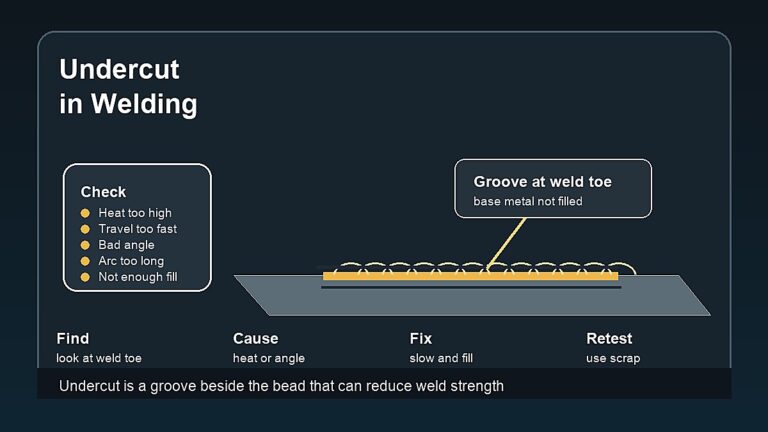
For troubleshooting help, use Welding Defects. It will help you connect porosity, undercut, slag inclusion, spatter, overlap, and lack of fusion with likely causes.
Outdoor Safety Checks Before MIG Welding
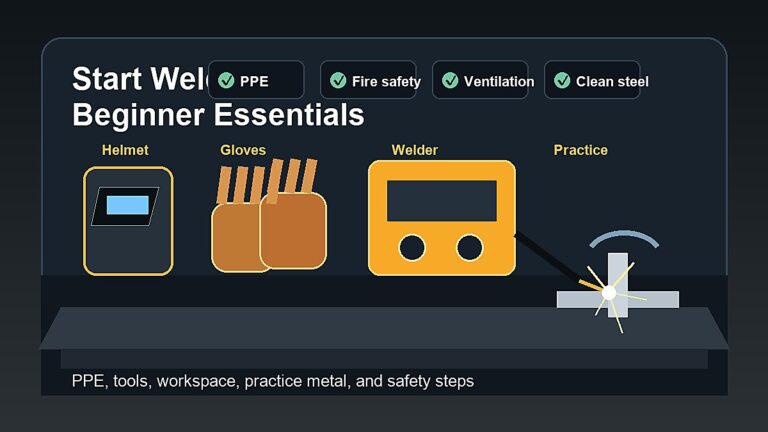
Outdoor welding still needs a full safety setup. Wear a properly shaded helmet, dry welding gloves, flame-resistant clothing, safety glasses for grinding, and hearing protection when needed. Keep a fire extinguisher nearby and clear dry leaves, sawdust, fuel, rags, cardboard, and other flammables from the area.
Avoid welding in rain, on wet ground, with wet gloves, or around standing water. Electric shock risk matters more when moisture is present. Also avoid welding where sparks can travel into hidden spaces, grass, vehicles, insulation, or open containers.
Review OSHA welding hazards guidance, OSHA welding fume guidance, and AWS safety resources. For site basics, start with Welding Safety.
Can You Weld Outside With 75/25 Gas?
Yes, 75/25 argon and carbon dioxide can be used outdoors only if the wind is controlled well enough to protect the gas shield. The gas mix itself does not make the weld windproof. If air reaches the arc, porosity can still happen.
A sheltered area, clean nozzle, reasonable stickout, and test welds are more important than guessing. If you cannot block wind consistently, switch to self-shielded flux core or move the work indoors.
Can You MIG Weld Outside With CO2?
Carbon dioxide shielding gas can be used for MIG welding steel, but it still needs coverage at the weld pool. CO2 may give deeper penetration and more spatter than many argon blends, yet wind can still push it away from the arc.
Beginners sometimes assume CO2 fixes outdoor welding because it is heavier than air. In real outdoor conditions, moving air around the nozzle can still disrupt shielding. Test welds and wind control remain necessary.
When You Should Not MIG Weld Outdoors
- Wind is reaching the arc and you cannot block it safely.
- The ground, gloves, machine, or work area is wet.
- The metal is galvanized, coated, unknown, or contaminated and you do not have proper controls.
- Sparks can reach dry grass, fuel, wood, vehicles, or hidden cavities.
- The job is structural, trailer-related, vehicle-related, lifting-related, pressure-related, or safety-critical.
- You cannot inspect or test the practice weld before using the part.
Choosing Between Gas MIG and Flux Core Outside
Choose gas MIG outside only when the weld area is genuinely sheltered and the job benefits from a cleaner bead with less slag. This can make sense for a calm, protected area where you are practicing on clean steel and can inspect the result immediately.
Choose self-shielded flux core when the work is more exposed, when a gas bottle is inconvenient, or when the project is a rough outdoor repair rather than cosmetic shop welding. Flux core is not magic, though. It still needs clean metal, correct polarity, proper wire, ventilation, and slag cleanup.
If the project is important, the best answer may be neither process until you have training, inspection, or a controlled work area. Beginner outdoor welding is fine for practice coupons and non-critical projects. It is not a shortcut for repairs that carry people, loads, pressure, or road vibration.
Beginner Practice Plan
Start with clean mild steel coupons in a sheltered area. Run one bead indoors or in a protected garage if possible, then run a similar bead outdoors with wind screens. Clean both welds and compare bead shape, spatter, sound, porosity, and tie-in.
Next, try a simple lap joint and T-joint on scrap. If the outdoor weld keeps showing pinholes, do not keep adjusting blindly. Move the screens, check gas flow, clean the nozzle, shorten stickout, and verify there are no gas leaks. If the problem continues, use flux core or move inside.
Keep notes during practice. Write down wire size, voltage, wire speed, gas flow, weather, wind control, and what the cleaned bead looked like. Those notes help you avoid guessing the next time the same machine behaves differently outside.
FAQ
Is MIG welding outside safe?
It can be safe only with dry conditions, proper PPE, fire control, ventilation, stable footing, and wind control. Do not weld outside in rain or near flammable material.
Why does MIG welding outside cause porosity?
Wind can blow shielding gas away from the molten weld pool. Air contamination can then leave gas holes as the weld cools.
Is flux core better than MIG outdoors?
Self-shielded flux core is usually better outdoors than gas MIG because it does not need an external shielding gas bottle. It still creates fumes, slag, and spatter.
Can I use a gas MIG welder in a driveway?
Yes, if the driveway work area is dry, fire-safe, and sheltered from wind. Make test welds first and inspect for porosity before using the part.
Should I turn up gas flow for outdoor MIG?
Only within a sensible range for your setup. Too much flow can cause turbulence. Wind screens and proper nozzle position are usually more important.
Final Advice
Gas MIG can work outdoors when the area is sheltered and the weld is protected from wind. In open air, self-shielded flux core is usually the smarter beginner choice. Either way, do not skip safety, material prep, or test welds. Outdoor conditions change quickly, and a weld that looks acceptable before cleaning can still hide porosity or poor fusion.
Continue with the MIG Welding hub for the complete beginner path, including setup, settings, technique, troubleshooting and related guides.