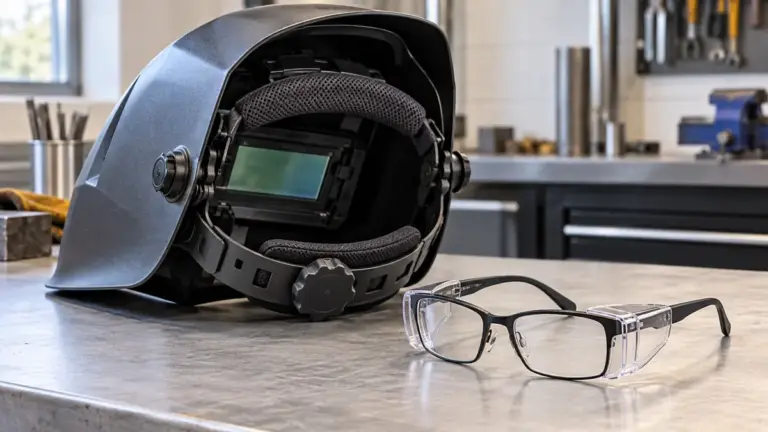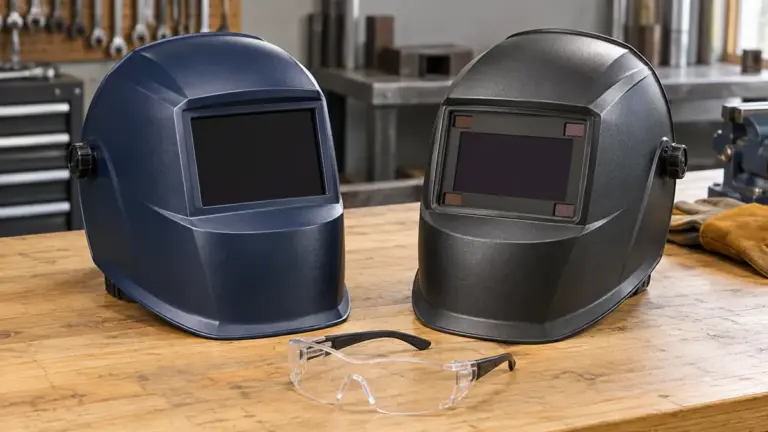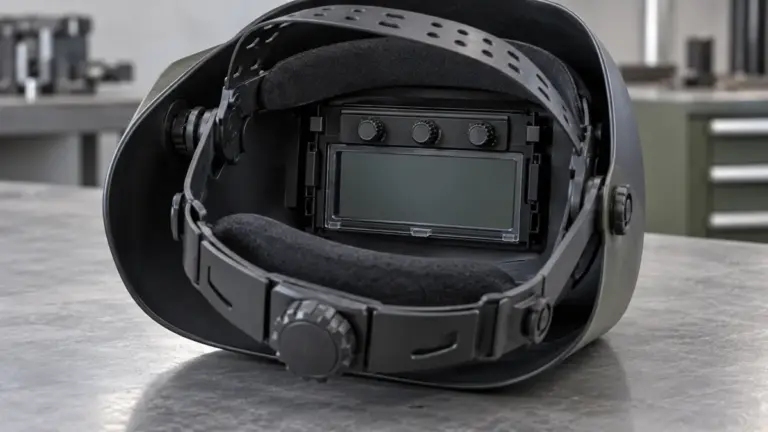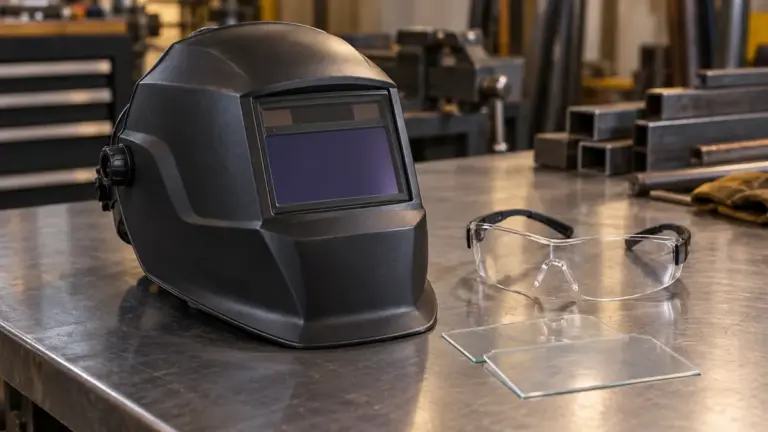
Best Passive Welding Helmets: 3 Models Compared
For a passive welding helmet, start by comparing the Jackson Safety HSL-100 14975, Miller MP-10 Black 238497, and Hobart 770003. The Jackson offers a narrow fixed-front shell, the Miller lists a magnifying-lens holder, and the Hobart provides a large flip-front arrangement. All three cited configurations come with a shade-10 passive filter.
The best choice depends on whether that shade suits your work, how the shell fits, and how you position between welds. A passive filter remains dark rather than changing electronically when the arc starts. That makes it a different working style from an auto-darkening helmet, not a shortcut around protective requirements.
Research basis: manufacturer product pages and literature checked October 15, 2026. This is a specification-based shortlist. WeldingPilot has not tested these helmets’ comfort, optical quality, coverage or durability, and does not rank one as universally safest.
Three passive helmets worth comparing
| Exact configuration | Documented feature | Reason to shortlist | Check before purchase |
|---|---|---|---|
| Jackson Safety HSL-100 Black 14975 | Fixed front; shade-10 filter; 370 Speed Dial ratcheting headgear | Narrow shell profile | Clearance, coverage and fit with your required PPE |
| Miller MP-10 Black 238497 | Passive shade-10 lens; magnifying-lens holder | A documented holder if you use a compatible magnifier | Exact insert, cover and filter compatibility |
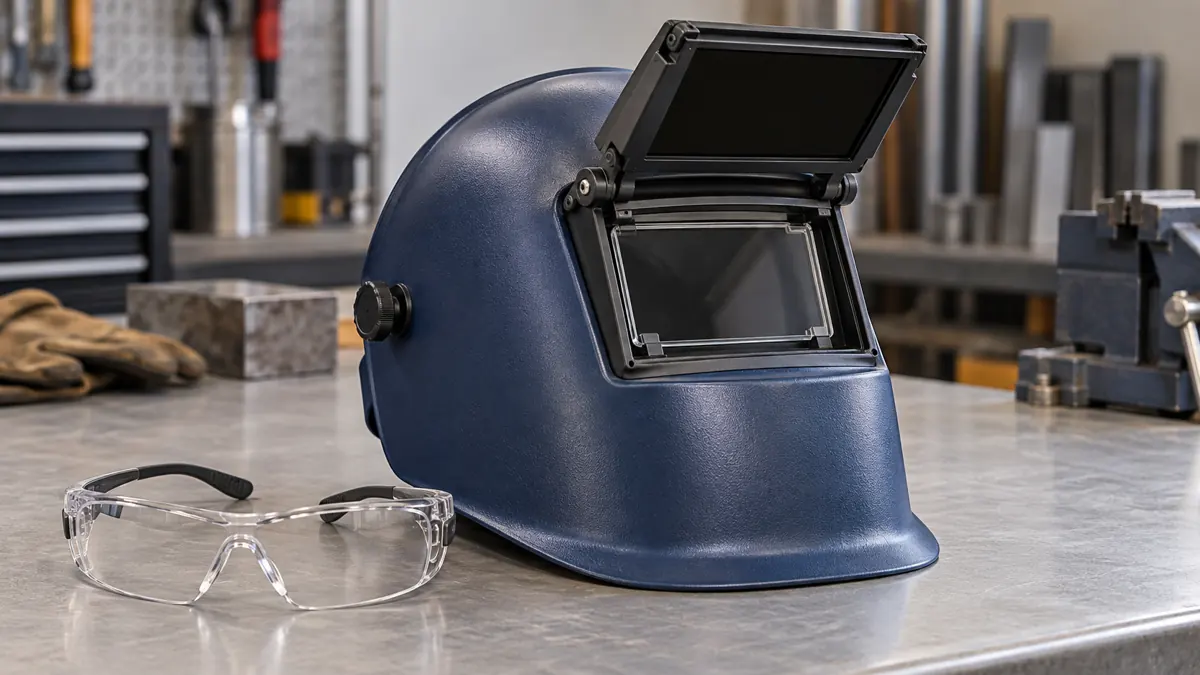
| Hobart 770003 | Large flip-front lens arrangement; supplied shade 10 | Inspecting and repositioning between welds | Proper closure and intended use of the complete lens assembly |
This is a functional comparison rather than a lowest-price list. Ask local suppliers for complete quotes, included components and replacement-part availability. A familiar model name is not enough to identify every supplied lens or mounting option.
Jackson HSL-100: investigate the shell profile
Jackson’s listing for Black 14975 specifies a fixed front, a 4.5 × 5.25-inch shade-10 polycarbonate filter and 370 Speed Dial ratcheting headgear. The manufacturer describes the shell as narrow and provides model-specific replacement-part references.
Shortlist it if shell clearance is a concern around your normal work. Check that in a dry fit with the equipment off: look at the joint from your usual position, move your head, and see whether the helmet contacts nearby work or other PPE. A narrow shell description is not proof that it fits every tight location or provides adequate coverage in every posture.
The standard helmet is not a respirator. Do not interpret extended front coverage as filtration of welding fumes. See Jackson’s HSL-100 14975 product information for the exact configuration.
Miller MP-10: check the magnifier and lens arrangement
Miller identifies MP-10 Black 238497 as a passive, non-auto-darkening helmet with a shade-10 lens. Its page lists a 4 × 4-inch viewing area and a magnifying-lens holder. Those are useful starting details if a compatible magnifier is part of your normal setup.
Confirm the exact approved insert and how it fits with the filter and clear covers. A holder does not mean every loose magnifier fits, and a magnifying lens does not replace the required protective shade. Ask for the correct service-part numbers before buying spares.
Compare the usable view while wearing your normal safety eyewear. Do not confuse the dimensions of a replacement plate with the opening you actually see through. See Miller’s MP-10 Black listing.
Hobart 770003: compare the flip-front workflow
Hobart’s Passive Series sheet distinguishes the 770003 large flip-front helmet from the fixed-front 770264 and smaller flip-front 770257. The 770003 is supplied with shade 10, adjustable headgear and two protective lens covers.
A flip-front arrangement can be useful when you frequently inspect or reposition between welds. Practise operating it with the welding equipment off. Check that the dark-lens assembly closes correctly and stays in the intended position before any arc is struck.
Do not assume that opening the dark filter automatically creates suitable grinding protection. Follow the complete helmet’s intended-use instructions and use the required primary eye protection. A clear plate is not permission to use the assembly for every impact hazard.
The Hobart Passive Series technical sheet identifies the different models and replacement lenses. Match the supplied model rather than ordering by appearance.
Choose the shade before choosing the helmet
The supplied shade-10 filters are a starting configuration, not a universal recommendation for every process and current. OSHA’s eye and face protection standard requires a shade appropriate to the operation. Our welding lens shade chart explains the variables alongside the equipment instructions.
If the work requires a different shade, establish whether the exact helmet accepts an approved replacement that meets the need. Confirm material, dimensions, retention and any required covers. Do not cut a plate to fit, stack improvised lenses or modify the shell to force compatibility.
If your jobs regularly need different shades, also consider whether a suitable variable-shade helmet would be easier to manage. A passive helmet remains a valid option only when its actual configuration matches the work.
Try the working style with the power off
A passive lens is already dark when you lower the helmet. Before buying, practise the positioning routine with the equipment off: find the joint, lower the helmet, and check whether you can maintain the intended start position. Adjust the work, lighting and headgear as needed.
If repeated raising or lowering moves your hands away from the start point, consider whether you can improve the setup or would prefer a suitable auto-darkening helmet. The right decision depends on your work and habits; there is no need to choose a passive design simply because someone calls it traditional.
Keep the helmet correctly positioned before every arc, including short tacks. Looking away or closing your eyes is not a replacement for protective equipment. Do not turn a fit check into an exposed-eye arc test.
What still needs inspection on a passive helmet?
The absence of an electronic filter removes that filter’s battery and sensor checks. It does not remove maintenance. Inspect the shell, filter, clear protective plates, retainers, seals where fitted, and headgear using the manufacturer’s instructions.
Replace damaged or unsuitable components with the specified parts. Check that the filter is retained securely and the assembly closes without unintended gaps. If the view is poor, investigate dirty or damaged covers, lighting and positioning before assuming you need a lighter shade.
Wear suitable primary eye protection with the helmet. OSHA’s eye-protection guidance describes welding helmets as protection used with spectacles or goggles. Prepare grinding, chipping and cleanup protection separately for those tasks, including when the welding lens is raised.
Common passive-helmet questions
Which model should I compare first?
Start with the Jackson if shell clearance is your main question, the MP-10 if its magnifier arrangement matters, or the Hobart if you want to evaluate a flip-front routine. Then check shade suitability, fit and local parts support before making the purchase.
Are passive helmets safer than auto-darkening helmets?
That cannot be decided by the category name. Suitability, condition, the correct filter, assembly and use matter. A damaged or incorrectly configured passive helmet is not acceptable just because it has no electronics.
Can I use any replacement lens of the same size?
No. Size alone does not establish protective performance or compatibility. Follow the exact manufacturer’s requirements for the filter, covers and retention system.
Does passive mean fixed front?
No. Passive describes the filter’s operation. Fixed front and flip front describe the lens assembly. For the wider comparison, see our welding helmet types guide.