Best 3M Speedglas Welding Helmet: Which Model Fits?
The best 3M Speedglas welding helmet depends on the work and the complete configuration. For a trained workplace welder comparing current models, start with the G5-03 Pro for varied welding tasks, the G5-02 for a TIG-focused setup, and the G5-03 Pro Air when the workplace assessment calls for an approved respiratory welding system. The G5-03 E is also worth comparing if you want a simpler route into the G5 range.
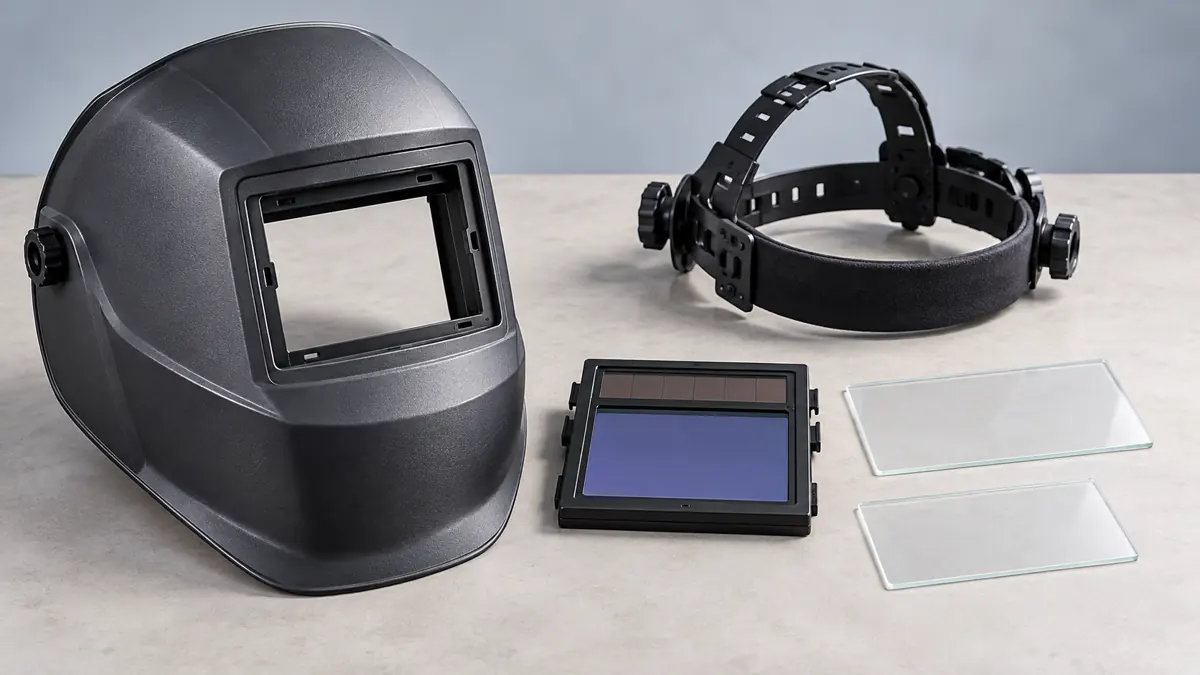
Choose the helmet family first, then the welding filter and any required respiratory equipment. Otherwise, two listings with similar names can describe very different purchases—including a replacement shell with no auto-darkening filter at all.
Research basis: 3M product pages and technical literature checked October 15, 2026. This is a specification-based selection guide, not a hands-on ranking. WeldingPilot has not measured these helmets’ clarity, comfort, switching performance, or service life. The US product pages identify these products for industrial and occupational use; workplace selection should follow the applicable instructions and safety program.
Which Speedglas model should you compare first?
| Your main requirement | Starting shortlist | What to confirm before ordering |
|---|---|---|
| Varied welding with frequent task changes | G5-03 Pro | VC or TW filter, operating ranges, mode controls and required coverage accessories |
| TIG-focused work and a wide curved viewing filter | G5-02 | Required shade range, low-current application and fit with other PPE |
| Welding with assessed respiratory-protection needs | G5-03 Pro Air system | Approved headtop, air unit, tube, filter, battery and task-specific suitability |
| A G5-series option with fewer additional features to evaluate | G5-03 E | Included filter; compare its complete quoted cost with the Pro |
These are conditional starting points. A shop that already stocks compatible service parts may make a different choice from a new operation. A required protection function should take priority over a preferred display feature.
G5-03 Pro: a starting point for varied shop work
3M positions the G5-03 Pro for versatile welding. Its published features include adjustable head suspension, grind and cut modes with G5 auto-darkening filters, and a tap function for mode changes. The US page lists VC and TW lens options, with optional task lighting and coverage accessories.
Shortlist it if you move between welding, preparation and inspection and want to compare those controls in a demonstration. Ask to operate the controls while wearing your usual gloves. That will tell you more about usability than reading an additional feature name.
The Pro name alone does not specify the filter. 3M associates variable color with the VC option and tack-welding mode with the TW option. Compare the exact configuration rather than treating all Pro listings as identical. The regular Pro is also a different purchase from a Pro Air respiratory system. See 3M’s G5-03 Pro product information.
G5-02: the TIG-focused comparison
The G5-02 stands out for its curved auto-darkening filter. 3M lists a 150 × 76 mm viewing area, a shade-2.5 light state, and sensitive arc detection aimed at TIG applications. The US complete-helmet listing is 08-0100-50iC and includes the curved ADF and headband.
The G5-02 technical data sheet lists dark shades 8–12 and four photosensors. That shade range is a practical selection limit: if your assessed task needs a shade outside it, the curved view does not solve the mismatch. Check the literature supplied for your local version.
Consider the G5-02 if TIG makes up much of your day and you want to evaluate the curved viewing geometry. Do not assume a wider published view automatically feels better to every wearer. Arrange a properly supervised demonstration at the intended settings and compare your normal working posture. See the US G5-02 product listing.
G5-03 Pro Air: select the respiratory system as a whole
Choose a respiratory configuration because the hazard assessment calls for it. The G5-03 Pro Air with Adflo is a different system from the non-air Pro. 3M describes the Adflo combination as providing high-efficiency particulate respiratory protection and offers VC and TW filter configurations.
On the Pro Air system page, 3M lists customizable airflow, coverage options, and low-airflow and low-battery alarms. Those features do not establish suitability for every contaminant or atmosphere. Have the workplace respiratory-program administrator specify the approved combination and the required protection.
A helmet or headtop listing does not establish that a blower, battery, breathing tube, charger, or appropriate filter is included. Request an itemized system quote and compare it against the approved configuration. Do not mix components because the connectors appear to fit.
For operations that need a flip-up clear visor, also compare the G5-01. Its 3M technical sheet identifies a flip-up design suitable for grinding. That makes it a useful alternative to investigate where frequent visor changes are part of the actual workflow; it does not make it the default choice for everyone.
G5-03 E: compare the included filter and complete quote
The G5-03 E offers a compact shell, adjustable suspension, and compatibility with several G5 welding-filter options. The US listing 09-0100-20 specifically includes a G5NC auto-darkening filter. Other listings can describe the helmet without an ADF.
Start here if you want the core helmet configuration and plan to assess optional features individually. Compare the complete E and Pro quotes after including the filter and accessories you need. A low shell-only price is not a useful comparison with a ready-to-configure helmet package.
Do not transfer every Pro feature to the E because both names contain G5-03. Check the controls, filter, coverage options and supplied components on the exact order line. See 3M’s G5-03 E with G5NC listing.
VC, TW, NC and “No ADF” explained
The shell name and filter name answer different questions. The shell determines the physical helmet arrangement; the filter determines the viewing and darkening functions available in that configuration.
- VC: compare this option if variable viewing color is relevant to your work.
- TW: compare this option if the specified tack-welding mode addresses a frequent task.
- NC: identifies the Natural Color filter option on the cited G5-03 E package.
- No ADF: the listing does not include an auto-darkening filter. It is not a complete auto-darkening helmet purchase by itself.
Read the G5 filter instructions for shade, sensitivity, delay and mode operation. For a concrete shell-only example, 3M lists Pro 10-0100-00 with no ADF included. A trade name is not a substitute for an operating range. Our welding lens shade chart explains the process-and-current basis of shade selection.
How to compare two supplier quotes fairly
Ask each supplier to quote the same requirements in writing. Include the exact shell and filter identifiers, headgear, cover plates, coverage accessories, and any respiratory components. Then add replacement-cover prices, local service support, delivery, tax and any training or commissioning requirements.
For example, a regular Pro with a VC filter and a Pro Air shell without a filter are not competing complete packages. The apparent price difference says little until both quotes include everything required for their intended jobs.
Check older Speedglas listings just as carefully. A familiar family name does not tell you which filter is fitted, whether the listing is a replacement part, or whether local consumables are readily available. This guide does not claim older models are discontinued.
Before committing, arrange a fit check with your usual eye protection and other required PPE. Look at the normal joint position with the arc off, adjust the suspension, and check whether the equipment stays stable when you bend or turn. Do not improvise an exposed-eye arc test.
Protection comes before preference
OSHA’s eye and face protection standard requires filter shades appropriate to the operation and addresses protection against flying objects. Use the required primary eye protection with the helmet and confirm the correct welding mode before starting.
A standard helmet does not provide respiratory protection by itself. Under OSHA’s respiratory protection requirements, selection depends on the hazards and the respirator’s approved use. An air-purifying system does not supply oxygen and is not a solution for oxygen-deficient or immediately dangerous atmospheres.
Keep engineering controls, inspection, training and maintenance in the selection discussion. Buying a respiratory helmet does not replace those responsibilities. For broader equipment planning, see our guide to welding helmet types.
Common Speedglas buying questions
Is the G5-03 Pro the best overall?
It is a sensible starting comparison for varied work, but “best overall” would conceal the decision that matters: whether you need a different filter, a curved TIG view, a flip-up visor or a respiratory system.
Is Pro Air simply a Pro with a fan?
No. Treat it as a respiratory-system configuration with approved components, operating limits and maintenance requirements. A fan-like airflow sensation is not evidence of adequate protection.
Should I buy the most expensive filter?
Buy the functions your tasks need and that you can use correctly. Ask for a demonstration of the exact VC, TW or NC configuration before paying for an advantage that exists only in the product description.