Best Welding Helmet Under $200: 3 Models Compared
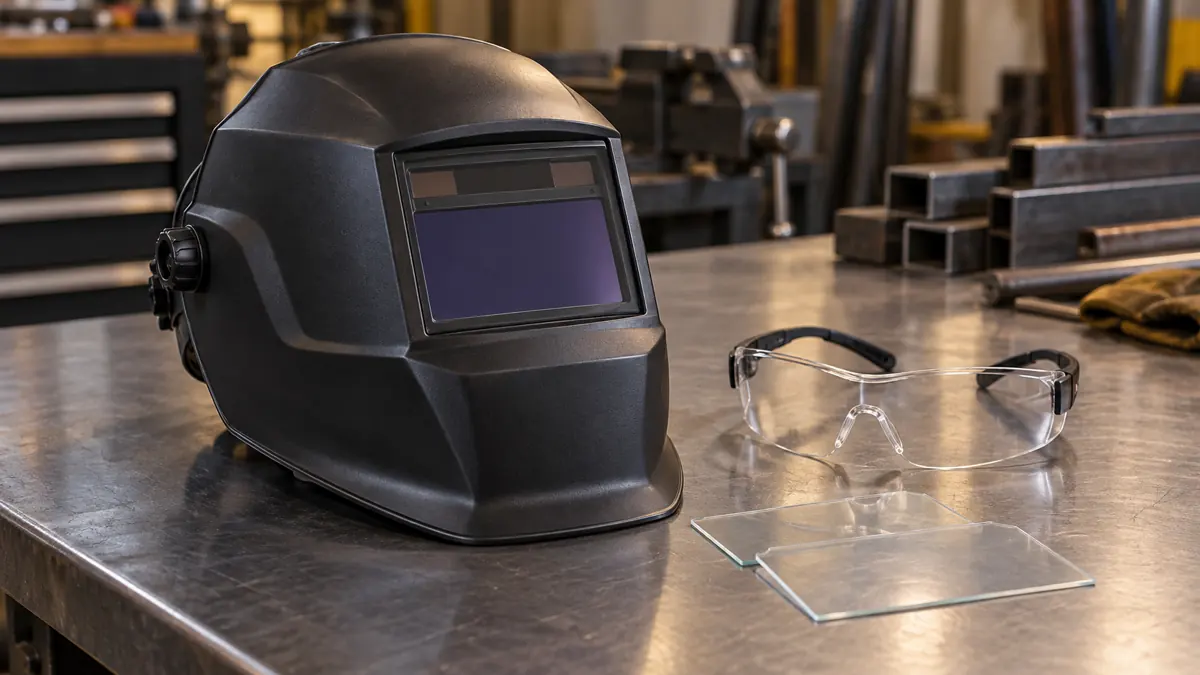
For a welding helmet under $200, start by comparing the Hobart Creator Black 770866, Miller Classic Black 287803, and Hobart Inventor Black 770890. The Creator leaves the most room in this shortlist for spare lenses. The Classic offers a broader selectable shade range, while the Inventor offers the largest viewing area and most arc sensors of these three.
Those are useful differences, but none establishes a universal winner. A helmet that fits badly or lacks the right operating range for your welding is a poor purchase at any price. Below is a specification-based shortlist with dated US prices, followed by a practical way to choose.
Research note: specifications and advertised prices checked October 15, 2026. WeldingPilot has not hands-on tested these helmets. Recommendations reflect published specifications and the buying scenarios explained here, rather than measured comfort, optical performance, or durability.
Three welding helmets to compare under $200
| Exact model | Advertised US price | Published lens features | Reason to shortlist |
|---|---|---|---|
| Hobart Creator Black, 770866 | $115.84, Hobart Weld Shop | 7.1 sq. in.; three sensors; welding shades 9–13; grind mode | Lower initial cost with a variable welding shade |
| Miller Classic Black, 287803 | $140.00, Baker’s Gas | 6 sq. in.; two sensors; welding shades 8–13, cutting shades 5–8; grind mode | Broader selectable shade range |
| Hobart Inventor Black, 770890 | $167.34, Hobart Weld Shop | 9.3 sq. in.; four sensors; welding shades 9–13; grind mode | Larger window and additional sensor coverage |
Prices are advertised item prices before any applicable tax, shipping, or accessories; availability and checkout totals can change. Price sources: Creator listing, Classic listing, and Inventor listing. Specifications come from the manufacturer pages linked below.
Hobart Creator: when keeping money for consumables matters
The Creator is the lowest-priced helmet in this comparison. Hobart lists a 7.1-square-inch PureColor lens, three independent arc sensors, and adjustable shade, sensitivity, and delay controls. Its welding range is shades 9–13, with a light state of shade 3.
That makes it worth comparing for a home learner whose required welding shades fall within that range. At the listed price, the difference below a $200 item budget is $84.16. You can use that margin when planning cover lenses and other PPE, while allowing for tax and delivery.
The limitation is equally clear: a 9–13 welding range does not offer the lower selectable shades listed for the Classic. Do not choose it for a task requiring a different range just because the window is larger. See Hobart’s Creator specifications.
Miller Classic: when shade selection matters more than window size
Miller’s current page for Black 287803 lists welding shades 8–13, cutting shades 5–8, and weld, cut, and grind modes. It also lists two arc sensors, a 6-square-inch viewing field, and a 16-ounce helmet weight. Five outside and two inside cover lenses are listed as included.
Shortlist the Classic if those operating ranges match the work you actually do. Its published viewing area is smaller than either Hobart here, so check whether you can see your normal joint comfortably before choosing on specifications alone.
Older seller descriptions for the same stock number can show different viewing-area or shade figures. For this comparison, the manufacturer’s current page takes precedence; confirm the supplied version with the seller. See Miller’s Classic specifications. Cutting shades do not make an auto-darkening helmet suitable for every cutting process; check the exact instructions.
Hobart Inventor: when you want a larger viewing area
The Inventor Black has the largest published window in this shortlist: 9.3 square inches. Hobart lists four independent arc sensors, adjustable shade, sensitivity, and delay, plus weld and grind modes. Its welding shades are 9–13, with a shade-3 light state.
Consider it if you find a smaller window restrictive and the headgear fits comfortably. Four sensors give more possible sight lines to the arc than two or three, but sensor count alone does not prove that a helmet will work reliably in every obstructed position.
The listed price leaves $32.66 before reaching $200, before tax, shipping, or extras. That margin deserves attention if $200 is your complete delivered budget. The manufacturer lists 19.7 ounces; actual comfort still depends on fit and balance. See Hobart’s Inventor specifications.
Choose with your work in mind
Write down your process, normal current range, required shade, and any other PPE worn under the helmet. Then remove unsuitable models before comparing viewing area or appearance. Our welding lens shade chart explains why a single shade recommendation does not fit every operation.
For low-current TIG, ask for the exact model’s documented minimum-current capability and any AC/DC or process restrictions. A broad “TIG suitable” description is not enough to establish performance at your intended settings. None of the comparisons above is a low-current triggering test.
Next, arrange a fit check or confirm the seller’s return terms. Wear your normal safety eyewear, adjust the crown and headband, and look down as you would at a bench. Check whether the helmet slips, contacts your glasses, or forces you to crane your neck. Do this without exposing yourself to an arc.
Finally, identify the replacement outside cover, inside cover, headgear, and battery arrangement for that exact version. A seller who cannot identify ordinary replacement parts leaves an avoidable question unanswered. Save the manual and part numbers with your purchase record.
Keep the complete purchase below $200
Use this calculation before ordering: helmet + shipping + tax + immediately needed accessories = actual starting cost. A headline price below $200 can still exceed a hard checkout limit.
For example, the Inventor’s larger window may appeal to you, but its smaller budget margin gives less room for delivery and spare covers. The Creator may be the more practical purchase if both fit and your work fits its shade range. This is a budgeting decision, not evidence that either filter offers better protection.
Compare plain black versions first when the budget is tight. If you want a graphic version, check its stock number and price separately. Do not assume an entire product family costs the same or shares every specification.
Protection checks before the first weld
OSHA’s eye and face protection standard requires a filter shade appropriate to the operation and addresses protection against flying objects and compatibility with prescription lenses. A price tag is not a protective specification.
Read the supplied instructions, inspect the shell and filter assembly, fit the specified covers, and perform the manufacturer’s prescribed checks. Wear appropriate safety glasses or goggles under the helmet; OSHA’s eye-protection guidance describes helmets as secondary protection used with primary eye protection.
Confirm welding mode before striking an arc. Stop if the lens behaves inconsistently or any protective component is damaged. Do not expose your eyes to an arc to investigate a questionable filter. For the control distinction, see what grind mode does.
Common buying questions
Which one would you compare first?
Start with the Creator for lower initial cost, the Classic for its listed shade ranges, or the Inventor for its larger viewing field. Fit and suitability must decide the final choice; these are conditional recommendations.
Does a larger window mean better optical clarity?
No. Viewing area describes window size. It does not measure distortion, color reproduction, or how easily you personally read the puddle. We have not performed a side-by-side optical test.
Should I spend the full $200?
Only if the additional features solve a need. Keeping money for the correct covers and other required PPE can be more useful than buying graphics or a larger window you do not need.
What if I am buying my first helmet?
Use our beginner helmet selection guide alongside this price comparison. Establish the right protection, fit, and usable controls before narrowing the purchase by budget.