
Welding tools and gear should match the process, material, workspace and work you intend to do. A beginner does not need every accessory on day one, but the machine, PPE, power supply, workholding and preparation tools must work together safely.
This hub helps you plan a practical setup without buying equipment only because it has a long feature list. Start with welding fundamentals, compare the main welding processes, then use this guide to build a tool list around real projects and suitable training.
Build Your Beginner Welding Setup in the Right Order
1. Choose the process before the machine
Decide whether your first work suits MIG, flux core, TIG or stick welding. The easiest welding process to learn depends on the workspace and project. Use the MIG hub for wire-feed setups, the Stick hub for rugged outdoor work and the TIG hub for clean, controlled work on suitable materials.
2. Check input power and output range
Confirm the available voltage, circuit capacity, plug and manufacturer requirements before buying. Compare the machine’s rated output and duty cycle with the material thickness and joint types you expect to practice. Marketing claims are not a substitute for the manual, electrical requirements or a qualified installation.
3. Buy protective equipment before accessories
A suitable welding helmet, safety glasses, process-appropriate gloves, flame-resistant clothing and protective footwear belong in the starting budget. Ventilation and fume controls depend on the process, material, coating and location. PPE does not make an unsafe workspace acceptable, so review the complete Welding Safety hub before striking an arc.
4. Add workholding and preparation tools
Secure fit-up often matters more than another machine feature. A stable steel work surface, clamps, squares, magnets used appropriately, measuring tools and a reliable ground connection help keep parts aligned. Wire brushes, chipping tools and grinders must suit the process and material. Keep stainless and aluminum cleaning tools separated when contamination matters.
5. Match consumables to the manual
Wire, electrodes, filler rods, contact tips, nozzles, cups, tungsten and shielding gas are not universal. Check diameter, classification, polarity and compatibility. The Welding Rods and Electrodes hub explains selection basics, while the machine and consumable manufacturer documents provide the required setup details.
Essential Welding Tool Groups
Welder and process equipment
The core setup may include a power source, gun or torch, work lead, regulator, gas hose, wire feeder or electrode holder. Multi-process machines can save space, but confirm what accessories are included and whether each process has the controls you need. Beginners benefit more from stable operation and clear documentation than from rarely used modes.
Cutting and metal preparation
Cut quality affects fit-up and welding difficulty. Abrasive tools, saws, plasma cutters and oxy-fuel equipment have different material, power, ventilation and fire-control needs. Read the plasma cutter vs oxy-acetylene comparison before choosing a cutting system.
Workspace and project tools
Plan storage for dry consumables, gas-cylinder restraint, leads and hot work. Good lighting and uncluttered access make puddle control and cleanup easier. Use beginner welding projects to identify the measuring, cutting and clamping tools your first practice work actually requires.
How WeldingPilot Evaluates Gear
Buying guides should explain who a product suits, what it cannot do and which specifications matter. We consider process compatibility, input power, output range, duty cycle, controls, safety information, included parts, consumable availability, warranty and total setup cost. A higher price or larger amperage number does not automatically make equipment better for a beginner.
When affiliate links appear, WeldingPilot may earn a commission without changing the reader’s price. Recommendations should remain based on practical fit rather than commission. Confirm current specifications, certification markings, warranty terms and included accessories with the manufacturer or seller before purchase.
Safety and Buying Limits
Welding and cutting can involve fumes, UV radiation, electric shock, fire, compressed gas, noise, hot metal and moving abrasive tools. Follow the equipment manual and applicable workplace rules. For broader guidance, consult OSHA welding hazards and solutions and the American Welding Society safety resources.
Do not choose equipment for structural, vehicle, trailer, lifting, pressure or other safety-critical work from a general buying guide alone. Obtain qualified training, an appropriate procedure and inspection. The beginner mistakes guide can help with practice planning, but it does not replace professional qualification.
Latest Welding Tools and Gear Guides
-
Welding Tool List for Beginners
A beginner welding tool list is most useful when it separates tools for preparation, welding and inspection. Buy for the process you are learning…
-
Best Welder for Beginners
Choose a beginner welder by the material, workspace and power supply you have. A large advertised maximum amperage is less useful than stable control…
-
Best Welding Gloves for Beginners
Beginner welding gloves should match the process and the movements you need to make. A thick glove that works for heavy spark exposure may…
-
Best Welding Helmet for Beginners
The best welding helmet for a beginner is one that provides appropriate protection, fits securely and lets the wearer use its controls correctly. This…
-

Types of Welding Gloves for Beginners
Compare the main types of welding gloves for beginners, including MIG, TIG, stick, flux core, leather, heat-resistant, and cut-resistant glove choices.
-
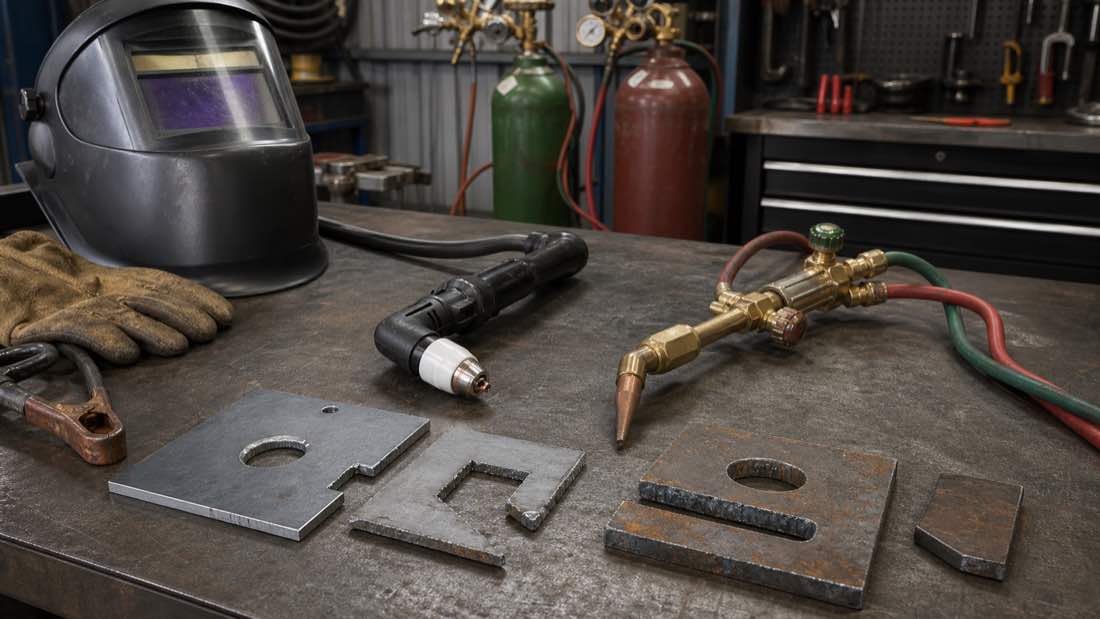
Plasma Cutter vs Oxy-Acetylene Torch for Beginners
Compare plasma cutters and oxy-acetylene torches for beginners, including how they work, what they cut, safety risks, setup needs, and which tool to learn…
Welding Tools and Gear FAQ
What tools does a beginner welder need first?
Start with a suitable welder, complete PPE, safe power and ventilation, a stable work surface, clamps, measuring tools and process-appropriate cleaning tools. Add specialized equipment when a real project requires it.
Is a multi-process welder best for beginners?
It can be useful when you genuinely need several processes, but it may add cost and complexity. Compare the performance, controls and included accessories for the process you will practice first.
Should safety gear be included in the welder budget?
Yes. Helmet, eye protection, gloves, flame-resistant clothing, footwear and suitable ventilation or fume control are part of the setup, not optional purchases after the machine.
How should beginners compare welding machines?
Compare process, input power, realistic material range, output, duty cycle, controls, documentation, consumables, warranty and total setup cost. Match those factors to the intended workspace and projects.