Best Flux Core Welder for Beginners: 7 Easy Starter Picks
If you want the best flux core welder for beginners, start with a simple machine that runs on household power, supports self-shielded flux core wire, has predictable wire feed control, and comes with clear setup instructions. For most new welders, the best first choice is a 120V no-gas flux core welder that can run .030 or .035 in. wire and handle light home repairs, practice beads, brackets, carts, and basic mild-steel projects.
Our best overall beginner pick is the Forney Easy Weld 141 FC-i because it is simple, flux-core focused, portable, and powerful enough for many beginner practice jobs. If you want the cheapest practical starter machine, the Titanium Easy-Flux 125 is a strong budget option. If you want a machine you can grow with, the Hobart Handler 140 gives you both flux core and gas MIG capability.
Mark Dawson beginner note: do not buy your first welder only by the highest amp number on the box. A good beginner flux core welder should help you set up safely, feed wire smoothly, repeat practice beads, and understand what the puddle is doing. For structural, vehicle, trailer, pressure vessel, lifting, or safety-critical welding, get qualified training and inspection before using the weld in service.
Quick Picks: Best Flux Core Welders for Beginners
- Best overall: Forney Easy Weld 141 FC-i
- Best budget pick: Titanium Easy-Flux 125
- Best trusted-brand portable pick: Lincoln Electric / Century FC-90
- Best upgrade path: Hobart Handler 140
- Best multi-process beginner option: YESWELDER Flux-135 PRO
- Best lightweight digital-style option: ARCCAPTAIN MIG130
- Best dual-voltage growth pick: PrimeWeld MIG160
Prices, bundles, and availability change often, so use this guide to compare machine type, voltage, duty cycle, wire support, and beginner fit before checking the latest price from the manufacturer or retailer.
Best Flux Core Welders for Beginners Compared
| Welder | Best For | Input Power | Output / Duty Cycle | Beginner Note |
|---|---|---|---|---|
| Forney Easy Weld 141 FC-i | Best overall simple flux core starter | 120V | Up to 140A; 30% duty cycle at 90A | Flux-core only, simple two-knob setup |
| Titanium Easy-Flux 125 | Budget no-gas welding | 120V | 30-125A; 30% duty cycle at 90A | Low-cost lightweight inverter |
| Lincoln Electric / Century FC-90 | Portable trusted-brand flux core | 120V | 30-90A; 80A at 30% duty cycle | Simple and light, but lower output |
| Hobart Handler 140 | Flux core now, gas MIG later | 115V | 25-140A; 20% duty cycle at 90A | Heavier and pricier, but durable |
| YESWELDER Flux-135 PRO | Multi-process value | 110V | 35-135A flux range; 40% duty cycle | Synergic controls can help beginners |
| ARCCAPTAIN MIG130 | Lightweight digital-style starter | 110V | 20-130A; 60% duty cycle claim | Very light, newer budget brand |
| PrimeWeld MIG160 | Dual-voltage growth pick | 110/220V | 30-120A on 110V; 30-160A on 220V | More machine than many beginners need |
How We Chose These Beginner Flux Core Welders
This roundup focuses on machines that make sense for first-time welders, DIY users, and home-shop learners. We looked for simple setup, household power compatibility, self-shielded flux core support, common wire sizes, realistic duty cycle, portability, brand support, and room to grow.
We did not rank machines only by maximum amperage. A beginner welder that feeds wire consistently, explains polarity clearly, and lets you practice safely is often more useful than a higher-output machine with confusing controls.
1. Forney Easy Weld 141 FC-i: Best Overall Flux Core Welder for Beginners
The Forney Easy Weld 141 FC-i is one of the easiest machines to recommend to a beginner who specifically wants flux core welding. It is a 120V gasless FCAW machine, supports .030 and .035 in. flux core wire, and is rated up to 140A. Forney lists a 30% duty cycle at 90A and says it can weld mild steel up to 1/4 in. under suitable conditions.
The main advantage is simplicity. Because it is a flux-core-only machine, there is no gas bottle, regulator, or MIG conversion decision to worry about on day one. Beginners can focus on polarity, wire speed, travel angle, stickout, and practice beads.
- Best for: beginners who want a straightforward no-gas flux core welder.
- Why beginners may like it: simple controls, household power, and common .030/.035 wire support.
- Watch out for: it does not give you a gas MIG upgrade path.
- Verdict: the best all-around pick if your first goal is learning flux core without extra setup complexity.
2. Titanium Easy-Flux 125: Best Budget Flux Core Welder
The Titanium Easy-Flux 125 is a budget-friendly 120V flux-core-only welder commonly sold by Harbor Freight. Its manual/spec information lists a 30-125A output range, .030/.035 in. flux core wire support, a 30% duty cycle at 90A, and wire feed speed from 60 to 200 IPM.
This is the kind of machine that makes sense for a learner who wants to practice without building a full gas MIG setup. It is light, simple, and affordable compared with many name-brand MIG/flux machines.
- Best for: budget-minded beginners and occasional home repair practice.
- Why beginners may like it: low cost, light body, no gas setup, and simple controls.
- Watch out for: it is flux-core only, and warranty/support may not match premium brands.
- Verdict: a practical cheap starter if you understand its limits.
3. Lincoln Electric / Century FC-90: Best Portable Trusted-Brand Pick
The Lincoln Electric / Century FC-90 is a compact 120V flux-cored wire feed welder. Lincoln/Century documentation lists a 30-90A output range, 80A at 30% duty cycle, and compatibility with .030, .035, and .045 in. wire diameters.
It is not the highest-output machine in this list, but it is easy to understand and portable. That makes it a reasonable choice for small repairs, practice beads, hobby work, and learners who want a compact machine from a familiar welding brand family.
- Best for: simple portable flux core practice and light work.
- Why beginners may like it: trusted name, compact size, and straightforward setup.
- Watch out for: lower max output than 125-140A starter machines.
- Verdict: a good portable pick if your projects are light and you value brand familiarity.
4. Hobart Handler 140: Best Upgrade Path for Beginners
The Hobart Handler 140 is not the cheapest beginner option, but it is one of the best choices if you want a machine you can grow into. Hobart lists it as a 115V MIG/flux-core-capable welder with a 25-140A output range, .030/.035 in. flux-cored wire support, and a 20% duty cycle at 90A.
The big advantage is flexibility. You can start with self-shielded flux core wire, then later add shielding gas and learn MIG on cleaner indoor projects. It is heavier than small flux-only machines, but the build quality and upgrade path make it attractive for serious home-shop users.
- Best for: beginners who want flux core now and gas MIG later.
- Why beginners may like it: strong brand support, durable wire feed, and real growth path.
- Watch out for: higher price, heavier body, and more setup options to learn.
- Verdict: the best pick if you would rather buy once and grow into the machine.
5. YESWELDER Flux-135 PRO: Best Multi-Process Value Pick
The YESWELDER Flux-135 PRO is a 110V multi-process machine marketed for flux core MIG, lift TIG, and stick welding. YESWELDER lists a 35-135A flux range, a 40% duty cycle, and support for common flux core wire sizes such as .030 and .035 in. Some spec listings also show metric wire sizes, so check the current manual or product page before buying consumables.
For beginners, the attraction is value. Synergic-style controls can reduce some setup guesswork, and the multi-process design gives you room to explore beyond flux core. The tradeoff is that multi-process budget machines can feel less straightforward than a dedicated flux-only starter.
- Best for: budget buyers who want more than flux core.
- Why beginners may like it: synergic controls, light weight, and multiple processes.
- Watch out for: confirm wire sizes and included accessories before buying.
- Verdict: a strong value pick if you like digital controls and want future flexibility.
6. ARCCAPTAIN MIG130: Best Lightweight Digital-Style Option
The ARCCAPTAIN MIG130 is a compact 110V no-gas MIG/flux-core style machine that also supports lift TIG and stick according to the brand’s product information. ARCCAPTAIN lists a 20-130A range, 0.8/0.9/1.0 mm applicable wire, and a 60% duty-cycle claim.
Its main appeal is portability and modern controls. It is light enough for small shops, garages, and mobile practice setups. Because it is from a newer budget brand, beginners should read the manual carefully, verify consumable sizes, and make sure replacement tips and wire are easy to source.
- Best for: learners who want a compact, lightweight, digital-style machine.
- Why beginners may like it: light body, simple no-gas use, and multi-process features.
- Watch out for: newer budget-brand support and consumable compatibility.
- Verdict: a good lightweight option if portability matters more than premium-brand reputation.
7. PrimeWeld MIG160: Best Dual-Voltage Growth Pick
The PrimeWeld MIG160 is a dual-voltage 110/220V machine with MIG, flux core, and stick capability. PrimeWeld lists .030-.035 in. flux-cored wire support, 30-120A output on 110V, 30-160A output on 220V, and duty-cycle information including 20% at 90A and 100% at 45A for MIG/flux operation.
This machine is more than many beginners need for first practice beads, but it makes sense if you already know you want a dual-voltage setup. The 220V option gives more room to grow, while 110V use keeps it accessible for home shops.
- Best for: beginners who want dual voltage and long-term flexibility.
- Why beginners may like it: 110/220V operation, flux core support, and stick capability.
- Watch out for: it may be overkill if you only need a simple practice welder.
- Verdict: a good growth pick if your budget and shop power support it.
How to Choose the Best Flux Core Welder as a Beginner
Start With 120V Unless You Know You Need More
Most beginners should start with a 120V or 115V machine because it plugs into common household power. A 240V machine can offer more output, but it also requires the right outlet and a better understanding of your electrical setup.
Check Flux Core Wire Support
Common beginner flux core wire sizes are .030 and .035 in. A good starter machine should clearly list which wire sizes it supports and which drive roll or contact tip you need.
Do Not Ignore Duty Cycle
Duty cycle tells you how long the welder can run in a 10-minute period before it needs to cool. Beginners often weld in short practice bursts, so you do not need industrial numbers. Still, a realistic duty cycle keeps practice less frustrating.
Look for Smooth Wire Feed
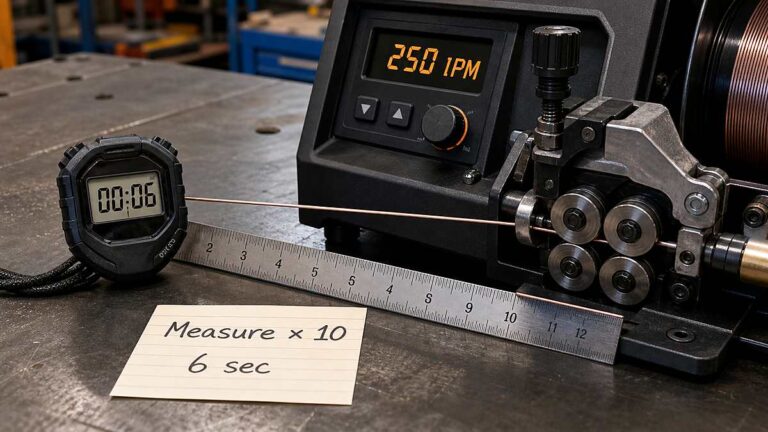
Wire feed matters more than many beginners realize. If the wire feed is jerky, the arc can feel unstable and spatter can increase. A good beginner welder should feed wire consistently and make adjustment easy.
Think About Your Next Step
If you only want no-gas welding for occasional repairs, a flux-only machine is fine. If you may want cleaner indoor welds later, consider a MIG/flux-capable machine like the Hobart Handler 140 or PrimeWeld MIG160.
Flux Core vs MIG for Beginners
Flux core and MIG both use a wire feed, but they shield the weld differently. Self-shielded flux core wire has flux inside the wire, so you do not need a gas bottle. MIG welding usually uses solid wire plus shielding gas.
- Choose flux core if you want a simple no-gas setup, need better outdoor tolerance, or want a lower-cost first machine.
- Choose MIG if you work indoors on clean metal and want cleaner-looking welds with less slag cleanup.
- Choose a MIG/flux machine if you want to learn flux core first and later add gas MIG.
Safety Tips for First-Time Flux Core Users
Flux core welding creates heat, sparks, slag, smoke, fumes, ultraviolet radiation, and fire risk. Before welding, read the machine manual and use proper personal protective equipment.
- Wear a properly shaded welding helmet.
- Use welding gloves and flame-resistant clothing.
- Keep flammable material away from the work area.
- Work with ventilation or suitable fume control.
- Clamp the work securely before welding.
- Use safety glasses when chipping slag or grinding.
- Let hot metal cool before handling it.
- Do not weld unknown containers, coated metals, or sealed parts without proper training.
For safety basics, review the Welding Safety hub and official references such as OSHA welding guidance and American Welding Society safety resources.
Related Beginner Guides Before You Buy
Before choosing a machine, read Flux Core Welding, Gasless MIG Welding for Beginners, and Flux Core Welding Tips for Beginners. Those guides explain polarity, drag angle, slag cleanup, wire size, fumes, and the practice habits that matter after the box arrives.
If you are comparing flux core with other processes, use Types of Welding Explained and MIG Welding. A small flux core welder may be perfect for no-gas outdoor practice, while a gas MIG setup may be better for cleaner indoor sheet-metal work.
Common Beginner Mistakes to Avoid
- Using the wrong polarity: many self-shielded flux core wires need the correct polarity to run properly.
- Welding dirty metal: rust, oil, paint, and moisture can cause porosity and weak welds.
- Moving too fast: excessive travel speed can create narrow welds with poor tie-in.
- Ignoring wire stickout: too much or too little stickout can make the arc harder to control.
- Buying too much machine: a complicated machine can slow your first learning steps.
- Skipping practice coupons: practice on scrap before touching a real repair.
FAQ
What is the best flux core welder for a beginner?
For most beginners, the best flux core welder is a simple 120V no-gas machine that supports .030 or .035 in. self-shielded wire and has stable wire feed control. The Forney Easy Weld 141 FC-i is our best overall pick for a simple flux-core-focused starter.
Is flux core welding easier than MIG welding?
Flux core is often easier to set up because it does not need shielding gas. MIG can be smoother and cleaner indoors, but it requires a gas bottle, regulator, and better shielding control.
Can you flux core weld without gas?
Yes, self-shielded flux core wire is designed to weld without an external shielding gas cylinder. Always confirm that your machine is set up for the correct wire type and polarity.
What size flux core wire should beginners use?
Many beginners start with .030 in. or .035 in. flux core wire, depending on the machine and material thickness. Check your welder manual before buying wire, contact tips, or drive rolls.
Is a 120V flux core welder enough for home use?
A 120V flux core welder is enough for many beginner practice jobs, light repairs, brackets, carts, and mild-steel home projects. It is not the right choice for every thick, structural, or safety-critical job.
Can beginners use flux core on auto body metal?
Flux core can be difficult on very thin sheet metal because it runs hotter and creates more spatter than gas MIG. For cosmetic auto body work, gas MIG is often easier to control.
Final Verdict
The best flux core welder for beginners is the one that matches your outlet, project thickness, budget, and learning style. If you want the simplest no-gas starter, choose the Forney Easy Weld 141 FC-i. If price matters most, compare the Titanium Easy-Flux 125. If you want a machine that can grow into gas MIG, the Hobart Handler 140 is the strongest upgrade path.
Whatever you buy, start with safety, clean scrap steel, short practice beads, and careful manual reading. A beginner welder should help you learn control, not tempt you into guessing on work that needs professional training or inspection.
Product Sources and Safety References
- Forney Easy Weld 141 FC-i product information
- Titanium Easy-Flux 125 product information
- Lincoln Electric / Century FC-90 specification PDF
- Hobart Handler 140 specification PDF
- YESWELDER Flux-135 PRO product information
- ARCCAPTAIN MIG130 specifications
- PrimeWeld MIG160 product information
- OSHA welding, cutting, and brazing guidance
- American Welding Society safety and health resources