How to Weld Stainless Steel
Stainless steel welding begins with identifying the grade and the job's service requirements. A filler that produces an attractive bead is not necessarily suitable for corrosion resistance or an unknown dissimilar joint. Use a filler supplier's selection guidance or the specified welding procedure.
Decide what the weld needs to do
| Job detail | Why it changes the plan |
|---|---|
| Known stainless grade | Determines compatible filler and process choices |
| Dissimilar material | May need a different filler and procedure |
| Thin sheet | Makes heat input and distortion especially important |
| Pipe or enclosed root | May need root shielding and specified inspection |
| Food, pressure or structural service | Requires standards beyond cosmetic appearance |
Do not prescribe filler from the word “stainless” alone. If a part is unidentified, postpone the weld until the material and requirements are established.
Keep preparation separate from carbon-steel work
Use appropriate dedicated cleaning tools to avoid transferring contamination. Remove oil and coatings before heating. Clamp and plan the sequence so you do not need a long hot run to pull a poorly fitted joint together.
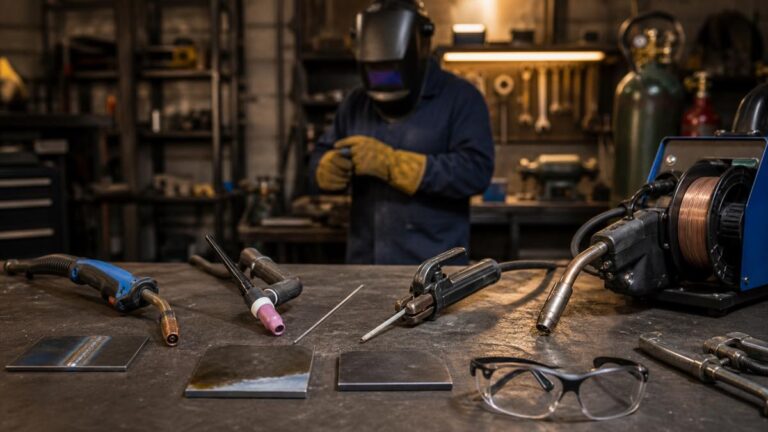
For TIG, check tungsten condition and gas coverage when the arc becomes unstable or the surface oxidizes heavily. For MIG, use the wire and shielding combination specified for the stainless application rather than assuming a mild-steel mixture transfers unchanged.
Treat fumes as part of the setup
Stainless welding can generate hazardous fumes, including chromium-related exposures. Select extraction and any respiratory protection from an exposure assessment, not from whether the smoke looks light. A small indoor job still needs appropriate controls. Do not place your face over the plume to see the bead.
Can I use mild-steel wire on stainless for a quick repair?
Not as a general recommendation. A joint may lose the properties required in service even if it appears joined. Identify the materials and obtain a suitable procedure.
Does bright color prove corrosion resistance?
No. Filler, shielding, heat history, cleaning and service conditions all matter. Pressure, hygienic and safety-critical work needs competent procedure selection and inspection.
Continue learning
Sources and limits
This is an educational reference. Follow the exact equipment and consumable instructions; safety-critical welding needs appropriate qualifications, procedures and inspection.