Best Lincoln Welding Helmet: VIKING Models Compared
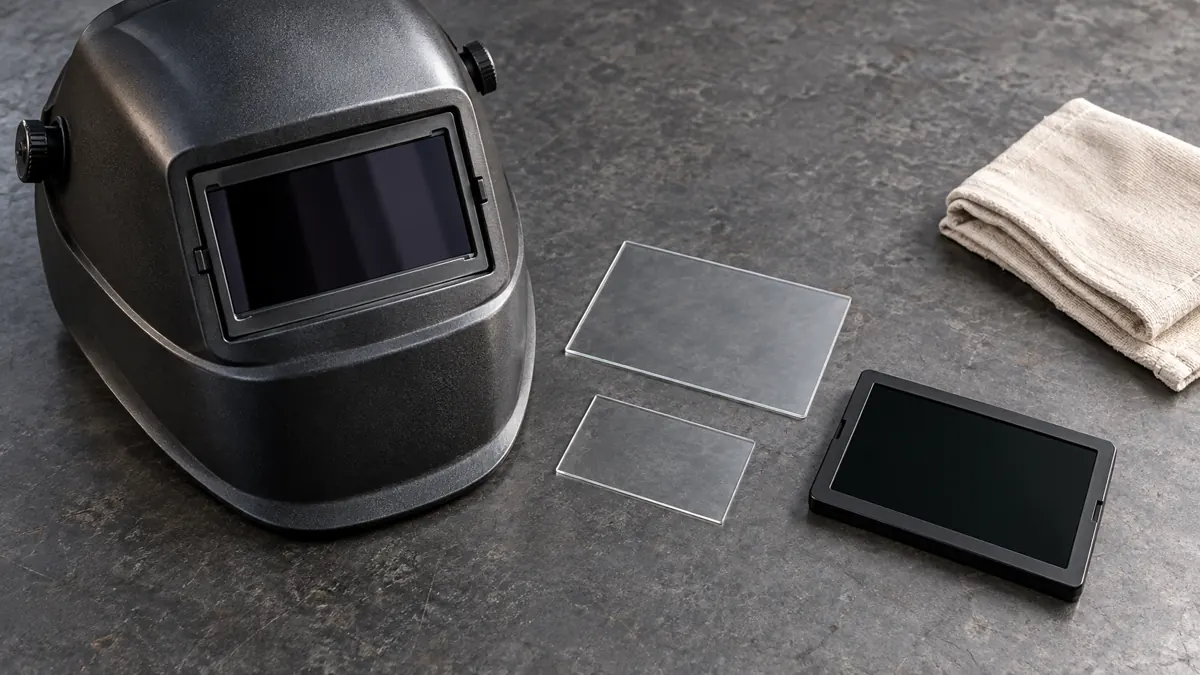
The best Lincoln welding helmet is the model whose filter, controls and fit match your work. Start by comparing the VIKING 1740 for a simpler setup, the 2450 ADV for digital controls and task lighting, and the 3350 ADV when saved settings and more advanced controls would be useful. Compare the complete local quotes before deciding that a higher series number is worth more to you.
The model suffix matters as much as the family name. A standard 3350 and a 3350 ADV are different configurations. Older specifications, replacement-part listings and current product descriptions can appear together in search results.
Research note: manufacturer literature checked October 15, 2026. This is a specification-based comparison, not a hands-on product test. WeldingPilot has not measured these helmets’ clarity, comfort, triggering reliability or service life. Confirm the exact supplied model and local instructions before purchase.
Lincoln VIKING models to compare
| Model identified in cited literature | Published viewing area | Reason to investigate | Main check |
|---|---|---|---|
| 1740 Black K3282-3 | 6.3 sq. in. | A simpler starting comparison in the VIKING range | Current supplied suffix, local operating range and controls |
| 2450 ADV Black K3028-5 | 9.3 sq. in. | Digital adjustment, external controls and modular LED light | Whether those task-change features justify your quote |
| 3350 ADV Black K3034-5, October 2025 brochure | 11.8 sq. in. | Auto Shade, settings memory and expanded digital functions | Exact revision; do not substitute older standard-3350 specifications |
These are documented configurations, not a statement that every region currently supplies the same revision. The 1740 entry is identified in Lincoln’s US Welding Gear Ready-Paks literature. The ADV entries use their separate technical brochures linked below.
VIKING 1740: compare the simpler configuration first
Lincoln’s US Ready-Paks document identifies the 1740 Black K3282-3 with 4C optics and a 6.3-square-inch viewing area. It places that helmet in its standard equipment bundle. That gives you a documented starting model rather than a generic “Lincoln helmet” recommendation.
Consider the 1740 if your priority is a straightforward helmet and the supplied version meets the work requirements. Ask the seller for its manual and a demonstration of the controls. A smaller window may be perfectly workable from your normal position; check it rather than ruling it out by area alone.
The regional Lincoln Powercraft 1740 page also identifies K3282-3, but regional information should not replace the instructions for your supplied unit. Do not copy a battery type, shade range or low-current TIG claim from an older 1740 listing simply because the helmet looks similar.
VIKING 2450 ADV: evaluate the controls and task light
The 2450 ADV Black K3028-5 adds a digital interface, a modular LED light and external grind/light controls. Lincoln lists a 9.3-square-inch view, four sensors and an adjustable 5–13 shade range in the 2450 ADV brochure.
Compare it if you often move between setup, welding, grinding and inspection. Try finding the controls with your normal gloves and check the work light’s usefulness around your typical joint. Those are practical questions a feature list cannot answer for you.
The brochure describes the light as independently powered and removable. Include its battery and service parts in the maintenance discussion, rather than assuming that the helmet filter’s battery handles everything. Confirm what the quoted package includes.
Do not use K3028-4 specifications for K3028-5. Likewise, a 2450 ADV review is not evidence that every feature operates identically on the 3350 ADV.
VIKING 3350 ADV: compare memory and automatic-shade functions
Lincoln’s October 2025 3350 ADV brochure identifies Black K3034-5 with an 11.8-square-inch viewing area, five arc sensors, three settings-memory slots, Auto Shade, Bluetooth connectivity and a modular LED light. The larger feature set is a reason to investigate, not proof of a better fit or a better weld.
Shortlist it if you repeatedly return to several setups and want to evaluate saved settings or the automatic-shade workflow. Ask for a demonstration of the exact revision. Decide whether you would use those functions before paying for them.
Automatic shade selection does not remove the need to establish the appropriate operating mode, protective range and equipment suitability. Read the instructions for that function and any user offsets. See Lincoln’s 3350 ADV brochure, publication E14.512, October 2025.
Standard 3350 versus 3350 ADV: keep the generations separate
The standard 3350 brochure, publication E14.502, December 2022, identifies Black K3034-4 and a 12.5-square-inch view. The October 2025 ADV brochure above lists 11.8 square inches for K3034-5. Copying 12.5 into the newer ADV comparison would mix two documents.
That difference does not by itself prove a better or worse user experience. It shows why the full part number and document revision belong in a product comparison. Before ordering, match the helmet, filter and manual to the seller’s actual stock.
Replacement parts need the same care. The standard brochure lists inside cover KP3044-1 and ADF KP3045-4; the cited ADV brochure lists inside cover KP5244-1 and ADF KP3045-5. Shared family branding is not permission to interchange components. Confirm current compatibility with Lincoln or the supplier.
Which model makes sense for your work?
- You want a straightforward starting helmet: investigate the actual 1740 version offered locally, then check shade suitability, fit and service support.
- You want a light and accessible task-change controls: compare the complete 2450 ADV package. Establish whether the controls improve your normal routine during a demonstration.
- You frequently repeat several setups: evaluate the 3350 ADV’s memory and Auto Shade functions. More menu options are useful only if you understand and use them.
- You already own a serviceable standard 3350: identify a specific unmet need before upgrading. Correct cover lenses, fit and lighting may address the problem without replacing the helmet.
These are editorial selection rules, not measured productivity or comfort findings. We have not calculated time savings or claimed that any model will pay for itself.
Compare the complete quote and the maintenance plan
Request the full part number, included filter, headgear, cover plates, task light and accessories in writing. Compare delivered cost after tax and shipping. If a bundle includes clothing or tools, separate those items from the helmet comparison.
Next, ask for the specified outside and inside covers, headgear and filter replacement options. Find out which parts are stocked locally and who handles a warranty claim. A long warranty headline is less useful if you do not know its conditions or the local service route.
Keep any rebate separate from the amount due at checkout. Verify eligible models, purchase dates, dealer terms and claim deadlines before treating a later reimbursement as part of your budget. This guide does not quote a guaranteed current price or promotion.
Fit and protection checks before choosing
With the arc off, wear your required eye protection, adjust the headgear and look at a typical joint. Check whether the helmet stays stable when looking down, whether the window lines up naturally, and whether glasses or other PPE interfere. Ask for a supervised demonstration or suitable return terms.
OSHA’s eye and face protection standard requires an appropriate filter shade for the operation and addresses flying-object protection and prescription compatibility. Use primary eye protection with the helmet, as described in OSHA’s eye-protection guidance.
For low-current TIG, confirm the exact filter’s published capability and conditions. Sensor count alone is not a trigger-response test. Stop if the filter behaves inconsistently, and follow the manufacturer’s prescribed checks rather than exposing your eyes to an arc to investigate.
Our welding lens shade chart explains process-based shade selection. Our helmet-use guide covers preparation. Standard helmets do not provide respiratory protection by themselves; evaluate that requirement separately.
Common Lincoln helmet questions
Is the 3350 ADV always the best Lincoln helmet?
No. It offers functions worth comparing for repeated setups, but those functions do not establish suitability, fit or value for everyone. Choose against a defined requirement, not the series number.
Does the 4C name mean every VIKING has the same functions?
No. A shared optical-technology name does not make the viewing area, controls, filter or service parts identical. Read the complete model-specific information.
Can I use a standard 3350 review for the ADV?
Use it only for questions that are independently confirmed for your exact model. The viewing-area and replacement-part examples above show why copying an entire older review is unreliable.