How to Weld Galvanized Pipe

If you want to learn how to weld galvanized pipe, start with the safety problem: galvanized pipe is coated with zinc, and welding through that coating can create zinc oxide fumes. Those fumes can make welders sick and can also hide poor weld quality under contamination.
Galvanized pipe can be welded in some situations, but it should not be treated like clean mild steel. The coating must be handled, the workspace must be ventilated, the weld area must be prepared, and the finished repair needs corrosion protection because welding removes the galvanizing near the joint.
Mark Dawson beginner note: if you cannot control fumes, sparks, coating removal, and corrosion repair, do not weld galvanized pipe. Choose a mechanical fitting or get qualified help instead.
Quick Answer
To weld galvanized pipe safely, remove the zinc coating from the weld area and nearby heat-affected zone, clean the steel underneath, use strong ventilation or fume control, wear proper PPE, weld the pipe using a suitable steel process, then clean and recoat the bare area to restore corrosion protection. Do not weld galvanized pipe in confined spaces, near flammables, on unknown pipes, or on pressure, gas, structural, or safety-critical systems without qualified procedures and inspection.
| Step | Beginner Action | Why It Matters |
|---|---|---|
| Identify pipe | Confirm it is galvanized steel | Unknown pipe can be dangerous |
| Remove coating | Grind back zinc near weld | Reduces fumes and contamination |
| Control fumes | Ventilation or extraction | Zinc fumes are hazardous |
| Weld steel | Use suitable process/settings | Pipe still needs sound fusion |
| Recoat | Protect bare steel | Prevents rust after welding |
Why Galvanized Pipe Is Different
Galvanizing protects steel from rust by coating it with zinc. That coating is useful in service, but it becomes a problem under the arc. Heat can vaporize zinc and create fumes. The coating can also contaminate the weld pool, causing porosity, spatter, poor tie-in, and ugly bead shape.
The base pipe may be weldable steel, but the coating changes the job. A clean weld on bare mild steel is not the same as welding through zinc, paint, dirt, pipe scale, or old corrosion products.
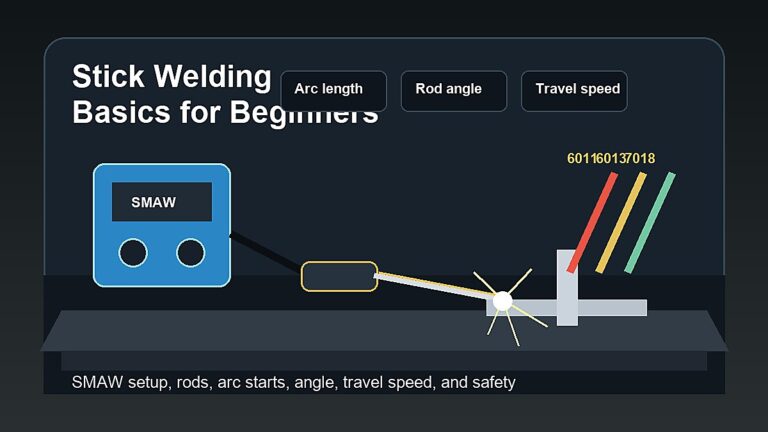
For related steel basics, read Stick Welding Basics for Beginners, MIG Welding Techniques for Beginners, and How to Set Up a TIG Welder for Mild Steel.
Zinc Fume Risk
Welding galvanized steel can produce zinc oxide fumes. Exposure can cause flu-like symptoms often called metal fume fever, and welding fumes can contain other hazardous components depending on the metal, coating, filler, and workspace. Do not rely on smell or visible smoke as your safety test.
Ventilation matters, but ordinary airflow may not be enough in a tight space. Confined areas, basements, trenches, tanks, and indoor corners can trap fumes. A beginner should not weld galvanized pipe where fume control cannot be planned.
When Not to Weld Galvanized Pipe
- Inside confined or poorly ventilated spaces.
- On gas, fuel, pressure, or unknown service lines.
- Near flammable materials, insulation, dry wood, or stored chemicals.
- Where the pipe carries structural load or protects people.
- When you cannot remove the zinc coating safely.
- When you cannot recoat or protect the bare steel afterward.
- When local code, workplace rules, or manufacturer guidance prohibits welding.
Many pipe jobs are better handled with threaded fittings, clamps, couplers, flanges, replacement pipe sections, or a qualified pipe welder. The safest weld is sometimes the one you choose not to make.
Remove the Galvanized Coating
Before welding, remove zinc coating from the weld area and nearby area that will get hot. Grinding is common, but it creates dust and sparks, so use eye protection, respiratory planning, and cleanup. Do not grind toward people, open containers, or flammable materials.
Remove enough coating to expose clean steel where the arc and heat will affect the pipe. If zinc remains close to the puddle, it can still fume and contaminate the weld. After grinding, wipe or brush the area so loose dust does not enter the weld.
How Far Back Should You Remove Zinc?
There is no single beginner measurement that fits every pipe, because heat spread depends on wall thickness, process, amperage, joint type, and bead size. The practical idea is to remove coating from the weld area and enough nearby metal that the arc and heat are not burning zinc during the weld.
If you still see white smoke, yellowish residue, heavy porosity, or dirty puddle behavior, stop and reassess the prep and fume control. More grinding is not the only answer; the job may need better ventilation, a different repair method, or a qualified setup.
Ventilation and Respiratory Planning
Ventilation should move fumes away from the breathing zone, not across your face. A fan behind the weld can push fumes toward you if it is placed badly. Local exhaust or planned airflow is better than simply hoping smoke drifts away.
Respiratory protection may be required depending on the work, coating, space, and exposure. A random dust mask is not a welding fume plan. Follow workplace rules, product instructions, and qualified safety guidance when respiratory protection is needed.
Choose the Welding Process
After the coating is removed, the pipe is welded as steel. MIG, stick, or TIG may be possible depending on pipe thickness, access, position, and required strength. The process choice does not remove the zinc hazard; preparation and fume control still matter.
Stick welding can work outdoors and in less clean conditions, but it produces slag and fumes. MIG can be cleaner on prepared steel but needs shielding gas protected from wind. TIG can be clean and precise but requires very clean material and good access.
MIG, Stick, and TIG Notes
With MIG, watch for porosity, popping, and unstable arc behavior if any zinc remains near the joint. Keep gas coverage steady and protect the weld from drafts. With stick welding, clean slag between passes and avoid using the rod to burn through coating as a shortcut.
TIG is usually the least forgiving of contamination. If the tungsten becomes dirty or the puddle looks cloudy, stop and clean the material and tungsten. TIG may be useful for small prepared areas, but it is not a license to weld coated pipe without prep.
Fit-Up and Tack Welding
Pipe fit-up affects weld quality. Gaps, misalignment, and poor cuts make it harder to get fusion around the joint. Cut the pipe square where possible, deburr the edge, remove coating around the joint, and clamp or fixture the pipe so it does not move during tacking.
Small tack welds should be placed with the same safety care as the final weld. Tacks still heat zinc, create fumes, and remove corrosion protection. Inspect tacks before welding over them.
Check What the Pipe Carries
Never weld pipe until you know what it carried or currently carries. Old pipe may contain fuel, gas, chemical residue, pressure, water, sewage, oil, or unknown deposits. Heating a sealed or contaminated pipe can create fire, explosion, toxic fume, or pressure hazards.
For plumbing, gas, sprinkler, railing, fence, or structural systems, replacement or approved fittings may be required. Welding may violate code, manufacturer guidance, or workplace rules even when the metal itself can be welded.
Welding Steps
- Confirm the pipe is safe to weld and not part of a live system.
- Move the work to a ventilated, fire-safe area if possible.
- Remove the galvanized coating around the weld zone.
- Clean the exposed steel and fit the joint.
- Set up ventilation, PPE, and fire control.
- Tack the pipe and check alignment.
- Weld with suitable steel settings and technique.
- Clean slag, spatter, and residue.
- Inspect the weld after cooling.
- Recoat the bare steel for corrosion protection.
Common Weld Problems
Galvanized pipe can show porosity, heavy spatter, poor tie-in, soot, and rough bead shape when coating contamination remains. If the weld has pinholes, compare the issue with Welding Porosity. If the bead throws too much spatter, review How to Reduce Weld Spatter.
Do not bury a contaminated bead under another pass and hope it improves. Stop, clean back to sound metal, remove more coating if needed, and test on scrap galvanized material before touching the real joint again.
Recoat After Welding
Welding and grinding remove galvanizing near the joint. Bare steel can rust quickly outdoors or in damp spaces. After the weld is cleaned and accepted, use a suitable zinc-rich coating, galvanizing repair product, paint system, or other corrosion protection matched to the environment.
Do not paint over slag, soot, loose zinc dust, or spatter. Clean the area first and follow the coating instructions for surface preparation, temperature, and cure time.
Alternatives to Welding
For many galvanized pipe projects, threaded fittings, compression couplings, clamps, flanges, U-bolts, brackets, or replacement pipe sections are safer than welding. These options avoid zinc fume exposure and preserve more corrosion protection.
Mechanical options still need correct load rating, sealing, corrosion control, and code compliance. For plumbing, gas, railing, structural, and workplace systems, check the rules before choosing a repair method.
Example: Fence or Gate Pipe
A fence rail or gate frame is a common galvanized pipe project. Even here, preparation matters. Remove coating near the joint, support the pipe so it stays aligned, keep flammable grass or wood away, and recoat the weld area after inspection. If the gate carries heavy load or public safety risk, use stronger design and inspection.
Example: Old Plumbing Pipe
Old galvanized plumbing pipe should not be treated like clean shop tubing. It may contain water, scale, corrosion, pressure, thread damage, or unknown residue. In many plumbing situations, cutting out the section and using approved replacement fittings is safer and more code-friendly than welding.
Post-Weld Checklist
- Weld cooled and cleaned for inspection.
- No obvious porosity, cracks, undercut, or missed spots.
- Slag, soot, zinc dust, and spatter removed.
- Joint checked for alignment and fit.
- Bare steel recoated with a suitable corrosion product.
- Fire watch completed after sparks and hot metal are gone.
Practice Drill
Use scrap galvanized pipe only in a safe, ventilated setup. Prepare one sample by removing the coating properly and another small area with poor prep for comparison. The goal is to see how contamination affects arc behavior, bead quality, and fumes without using the sample for any real service.
Record process, settings, coating removal width, ventilation setup, bead appearance, porosity, spatter, and cleanup time. This teaches why preparation is the main skill on galvanized work.
What Good Prep Looks Like
Good prep leaves clean steel at the weld area, a stable fit-up, no loose zinc dust in the joint, and a clear plan for fumes. The work clamp should connect to clean metal. The pipe should be supported so the joint does not move while you weld.
After welding, the repair should be cleaned enough to inspect. Slag, spatter, soot, and zinc residue can hide defects. Only after inspection should the bare area be coated for corrosion protection.
Beginner Mistakes
- Welding through zinc coating without removal.
- Working indoors without real fume control.
- Assuming a small tack weld is harmless.
- Grinding zinc coating without eye and respiratory planning.
- Welding unknown pipe that may contain gas, fuel, pressure, or residue.
- Skipping corrosion repair after welding.
- Ignoring porosity because the bead looks mostly filled.
- Using galvanized pipe welding for critical work without inspection.
Inspection
After cooling, clean the weld and inspect for porosity, cracks, undercut, incomplete fusion, burn-through, and missed areas around the pipe. Pipe welds can fail from poor fit-up, contamination, or incomplete coverage around the joint.
Critical pipe welds may need pressure testing, leak testing, visual inspection by a qualified person, or other code-required checks. Beginner visual inspection is not enough for gas, pressure, structural, or safety-related pipe systems.
Safety Notes
Galvanized pipe welding can involve zinc oxide fumes, welding fumes, grinding dust, sparks, fire risk, hot metal, UV radiation, electric shock, sharp edges, and failed pipe joints. Use proper PPE, ventilation or local exhaust, respiratory protection when required, fire watch, and safe work positioning.
Review OSHA welding hazards guidance, OSHA welding, cutting, and brazing requirements, AWS safety resources, and NIOSH welding health information.
FAQ
Can galvanized pipe be welded?
Yes, but the zinc coating must be handled safely. Remove coating near the weld, control fumes, weld the steel underneath, and recoat the bare area afterward.
Is welding galvanized pipe dangerous?
It can be dangerous because heating zinc creates fumes. Poor ventilation, confined spaces, coatings, and unknown pipe contents increase the risk.
Do you have to grind galvanized coating before welding?
Yes, the coating should be removed from the weld area and nearby heat-affected area to reduce fumes and weld contamination.
What process is best for galvanized pipe?
The best process depends on thickness, access, and requirements. MIG, stick, or TIG may work after proper prep, but safety and coating removal matter more than process choice.
How do you prevent rust after welding galvanized pipe?
Clean the welded area and apply a suitable zinc-rich coating, galvanizing repair product, or paint system after inspection and cooling.
Final Advice
Welding galvanized pipe is mostly a safety and preparation job before it is a welding job. Remove zinc where heat will reach, control fumes, weld clean steel, inspect the joint, and restore corrosion protection. If you cannot do those steps, choose a non-welded repair or approved replacement fitting instead today.