Best Welding Helmet for Overhead Work: Check the Limits
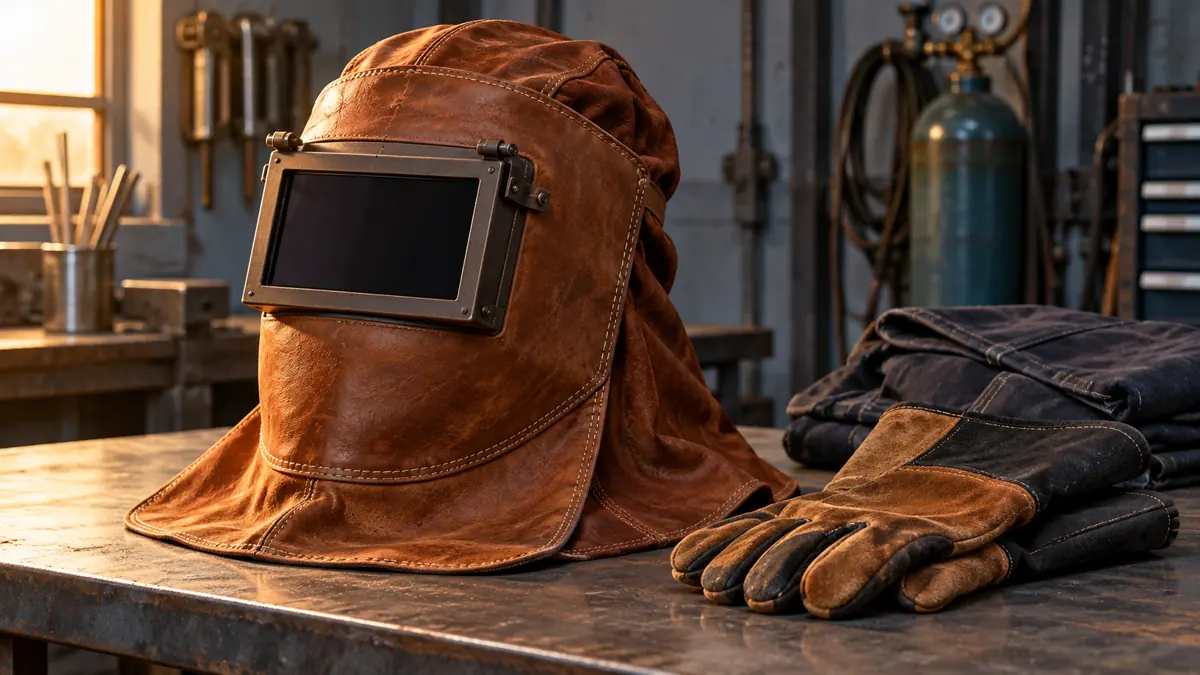
For the best welding helmet for overhead work, start with documented suitability for the position. One specialist option worth investigating is the Jackson Safety Huntsman 860P, SKU 14531: its manufacturer specifically lists overhead welding among its intended applications. That makes it a more useful starting point than choosing a general-purpose helmet by window size alone.
It is still a conditional choice. The complete helmet, filter, coverage and other protective equipment must match the actual job. Neither a leather hood nor an expensive auto-darkening helmet makes every overhead operation acceptable.
Research basis: manufacturer product information, instructions and OSHA guidance checked October 15, 2026. This guide compares documented applications and limitations. WeldingPilot has not tested these products against falling molten metal or ranked their burn protection.
The overhead helmet shortlist starts with the instructions
Overhead work changes where hot material can travel and which parts of your head and clothing are exposed. A helmet that works well at a bench may have a restriction that matters when the joint is above you.
Before comparing price, get the exact model number, supplied filter details and applicable instructions. Look for overhead welding, falling molten metal, spatter, head coverage and accessory limitations. A product title such as “heavy duty” does not resolve those questions.
| Product or document | What the manufacturer says | Buying decision |
|---|---|---|
| Jackson Huntsman 860P, SKU 14531 | Lists overhead welding as an application; leather lift-front design | Investigate the exact complete configuration for the task |
| Jackson 430P fiber shell, SKU 14528 | Lists overhead welding as unsuitable | Do not substitute it because it is lightweight or from the same brand |
| 3M Speedglas G5-01 technical sheet | Excludes overhead welding/cutting with burn risk from falling molten metal | Do not infer suitability from the heavy-duty name or coverage accessories |
| Miller Digital Performance manual OM-289777D | States the helmet is not rated for overhead welding and identifies additional-precaution requirements | Resolve the exact instructions and job controls before considering use |
The table shows why a broad “top ten” list can be misleading. These products are not interchangeable overhead solutions, and the limits of one model should not be applied automatically to an entire brand.
Jackson Huntsman 860P: a documented specialist candidate
The manufacturer’s 14531 listing describes a flexible leather hood, a 2 × 4.25-inch lift-front arrangement, and a supplied shade-10 passive filter with a clear safety plate. It explicitly includes overhead welding and tight working areas among the applications.
That documentation earns it a place on the shortlist; it does not prove universal suitability. Confirm the current instructions, required shade and complete supplied assembly. Do not treat the included shade 10 as correct for every process or current.
Try the hood with your required eyewear and clothing before buying. You need to see the joint and operate the lift front without disturbing the protective arrangement. For the different positioning routine of a passive filter, our helmet types guide explains the basic distinction.
Why some familiar helmets stay off this shortlist
A light fiber shell can still exclude overhead work
Jackson’s 430P product information describes a lightweight fiber-shell design but specifically lists overhead welding as unsuitable. Comfort, a lift front and a familiar manufacturer name do not override that limitation.
Extra coverage does not erase a molten-metal limitation
The G5-01 technical sheet says the helmet is not designed for overhead welding or cutting where falling molten metal presents a burn risk. It also lists additional protective accessories. Those two facts must be read together: an accessory list is not permission to disregard the limitation.
A conditional warning needs a job-specific answer
The Miller manual finder (look for Digital Performance OM-289777D) says the helmet is not rated for overhead welding. Its warning addresses direct overhead use unless additional precautions protect against arc rays, spatter and other hazards.
Do not translate that into “add any bib and proceed.” Establish the applicable instructions for the supplied helmet and have the responsible welding or safety professional resolve the job controls. This guide does not specify an improvised accessory arrangement that satisfies the warning.
Compare coverage in your actual working position
With the equipment off, put on the complete proposed PPE arrangement and assume the intended position. Check what changes when you look upward or turn toward the end of the joint. A comfortable fit while standing upright may shift during the job.
Review the crown, ears, neck and shoulder interfaces. Look for openings, displaced clothing and contact that moves the helmet or eyewear. Ask whether the selected components are intended to work together. Do not tape on household fabric, cut the shell, drill new holes or improvise a hard-hat attachment.
This fitting exercise reveals interference; it does not test molten-metal resistance. Never expose a person or a helmet to falling hot metal as a home suitability test. An unresolved coverage question needs a different approved arrangement or a changed work setup.
Choose the lens for the welding process
Overhead describes position, not a universal shade number. The protective filter still has to suit the operation. OSHA’s eye and face protection standard addresses appropriate filter shade and eye protection for the hazards present.
Use the equipment instructions and our welding lens shade chart to understand the process and current variables. If a passive helmet needs a different filter, confirm the specified replacement and retention arrangement. Plate dimensions alone do not establish compatibility.
If an auto-darkening helmet remains under consideration after its position limits are resolved, check its instructed mode, settings and function. Sensor count and optical ratings cannot establish shell coverage or falling-metal protection.
Budget for the complete arrangement
Ask for a quote that identifies the complete hood or helmet, filter, protective plates, headgear and specified accessories. Include replacement parts you can obtain locally. A cheap shell becomes a poor purchase if the required components cannot be identified.
The surrounding work also matters. OSHA’s welding requirements address protective clothing, arc shielding, fire precautions and ventilation. Treat those as part of planning the operation, alongside suitable primary eye protection and any required head or respiratory protection.
Where practical, consider repositioning the work to reduce the need to weld above your body. If the work must stay overhead, resolve the position, access, protection and job authorization before buying equipment on the assumption that a helmet will handle everything.
Questions to send the supplier
- Which current instructions apply to this exact model and supplied filter?
- What overhead and falling-molten-metal limitations apply to the complete assembly?
- Which covers, headgear and accessories are specified, and what protection remains outside their scope?
- Can the arrangement accommodate the required eyewear and other PPE without interference?
- Which replacement filters and protective plates are available locally?
Keep the answer with the purchase information. If a seller offers only “welders use it all the time,” ask for the actual product documentation before deciding.
Common overhead-helmet questions
What should I investigate first?
The Huntsman 860P 14531 is a documented specialist starting point. Confirm its current supplied configuration and job suitability rather than treating it as a blanket recommendation.
Is a passive helmet automatically better overhead?
No. Passive describes filter operation. The shell, coverage, assembly, instructions and actual hazards determine whether the configuration is suitable.
Does a neck bib make any helmet suitable?
No. A specified accessory can address its intended coverage need, but it does not cancel the helmet’s limitations or establish protection against every falling-metal exposure.
Can I use the clearest or largest window as the deciding factor?
Only after suitability is established. A good view is useful, but a larger window cannot resolve a prohibited application or an uncovered part of the protective arrangement.